 Seattle Family Calendar
 Subscribe

Eat your way to luck!
The new year is a time for new beginnings, celebration and of course, food. Traditional New Year’s dishes vary by culture and country, and all are symbolic of a hope for good luck for the coming year. Boy do we need it for 2022!
Whether you eat greens for prosperity, or cake to make the next year sweet, any of these traditional foods will lead to a lucky start for January — let’s hope. Use the arrows above the image for tasty ideas from around the world!
Pork and candy pigs

Pork symbolizes both progress and prosperity. This tradition began hundreds of years ago in Europe, when wild boars were hunted on New Year’s Day. Pigs came to be associated with progress because they root for food by pushing their noses forward. The rich, fatty meat of the pig also symbolizes having plenty to eat. Whole, roasted suckling pig is the centerpiece of New Year’s Day dinner in many countries such as Cuba, Spain, Hungary and Portugal. In Austria and Germany, candy pigs made of marzipan are exchanged to bring good luck in the coming year.
How to say Happy New Year in German: Glückliches neues Jahr!
Pickled herring
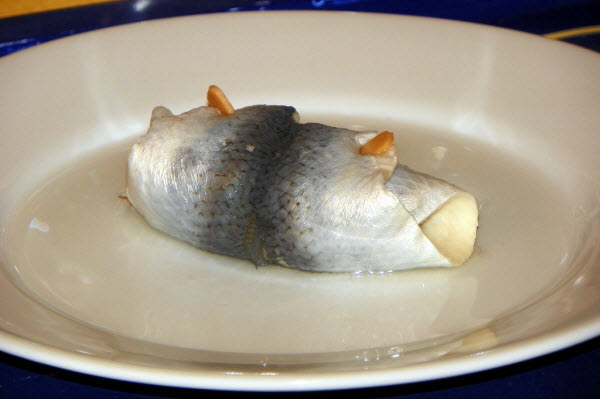
In Poland, Germany, and parts of Scandinavia, pickled herring is eaten to ring in the New Year. These silver fish are thought to bring good luck in finance to those who eat them because of their color. Herring also symbolize bounty because they are an abundant food source in Western Europe. Scandinavians often serve a midnight smorgasbord on New Year’s Eve, and pickled herring served in a cream sauce or with onions is often the centerpiece of the feast.
Happy New Year in Polish: Szczęśliwego Nowego Roku!
Grapes
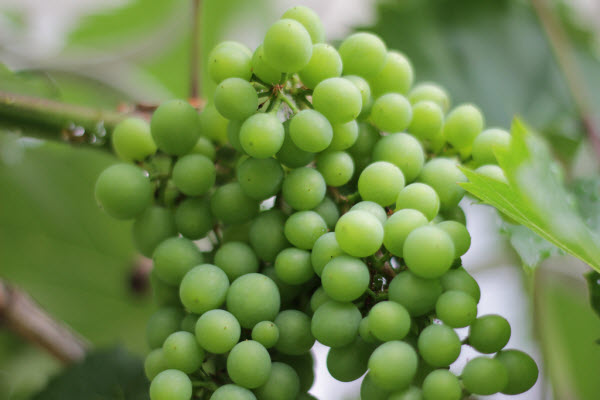
In Spain, it is a tradition to eat twelve grapes before midnight on December 31. Each grape corresponds to a month in the coming year, so if your third grape is a sour one, well, your March may not be as sweet as the other months. Some say that you must start eating the grapes as the clock begins striking and finish all twelve before the last chime at midnight.
Happy New Year in Spanish: Feliz Año Nuevo!
Lentils
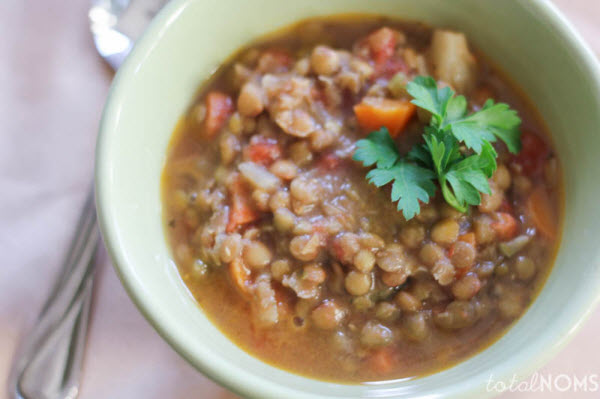
A bowl of lentils made with pork sausage is a traditional January 1 dinner in Italy. The round shape of the little legumes resemble coins, and the way lentils expand when cooked speaks to expanding fortunes. Adding pork not only flavors the lentils, but brings prosperity and symbolizes forward progress.
Happy New Year in Italian: Buon anno!
Black-eyed peas, greens and cornbread
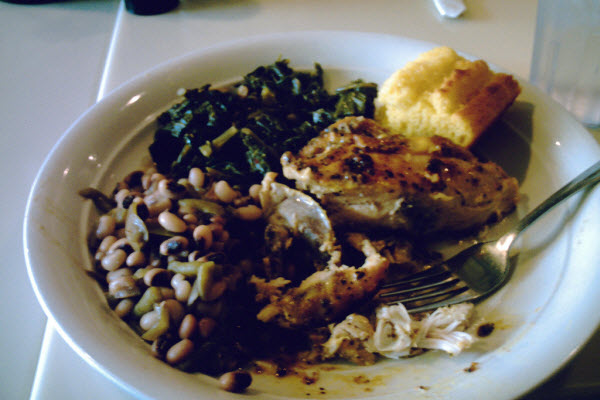
In the American South, black-eyed peas are served on New Year’s Day to ensure good luck all year, but you have to eat at least 365 peas — one for each day. The meal is usually accompanied by greens and cornbread. Greens, whether collard, mustard or cabbage resemble paper money and bring good fortune in finance. Cornbread — the color of gold — adds more luck with money. Smart Southerners cover all their bases by cooking the peas with pork.
Happy New Year, y’all!
Soba noodles
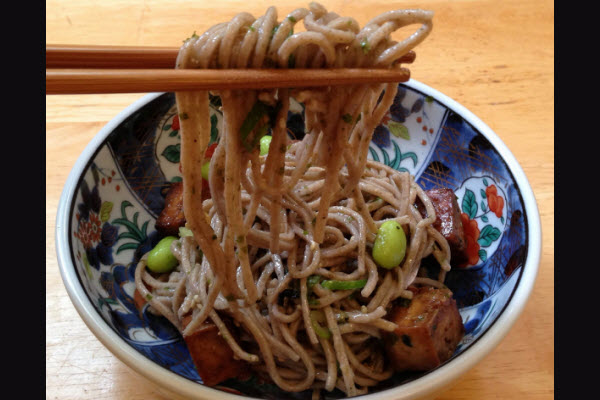
In Japan, soba noodles are eaten on New Year’s Eve, either for dinner or as a snack. Toshikoshi Soba or “Passing the Year Noodles” are made from buckwheat and are associated with longevity. Buckwheat is a resilient plant that pops back up even after being battered by the weather, making this grain a symbol of resilience. According to Lonely Planet, it’s not bad table manners to slurp your noodles — it is even expected! However, you should finish your slurping before the clock strikes midnight because eating soba on New Year’s Day is considered bad luck!
Happy New Year in Japanese: Akemashite Omedetô Gozaimasu!
Vasilopita
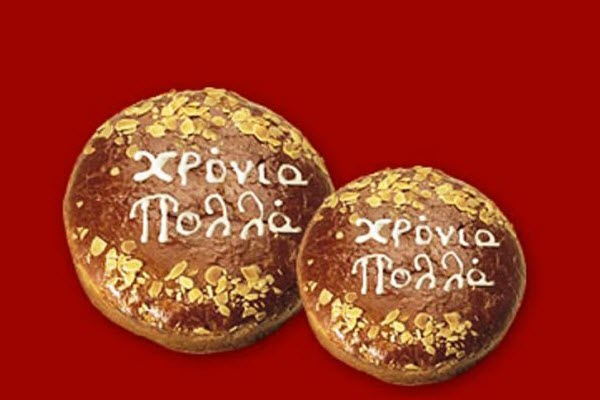
In Greece, New Year’s Day corresponds with the feast day of St. Basil. Many families celebrate with a cake called Vasilopita, which translates to “Sweet Bread of Basil.” At midnight on December 31, the head of the household etches a cross onto the top of the cake with a knife and says a prayer. The cake is then cut and distributed to family members from oldest to youngest. In some traditions, the first pieces are set aside for Christ, the House, the Poor, or St. Basil. A coin is baked into the cake, and whoever gets the piece with the coin will have extra good luck. Visit My Greek Dish for more information and a recipe for Vasilopita.
Happy New Year in Greek: Eutychismenos o kainourgios chromos!
Kransekake
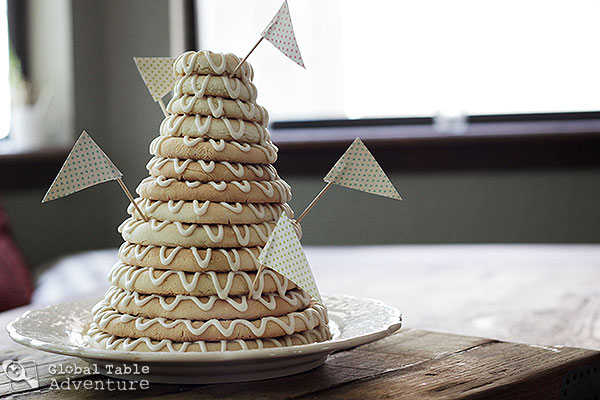
Kransekake translates to “wreath cake” and is a centerpiece at Danish and Norwegian celebrations, including New Year’s Eve. The dessert is built of concentric rings stacked to form a cone shape. Sometimes a bottle of Aquavit or wine is placed in the center, and the cake itself is decorated with flags or bonbons. When turned on its side, this treat looks like a cornucopia, or horn of plenty, symbolizing plentiful food. If you want to try Kransekake but don’t want to bake one, Larsen’s Danish Bakery in Seattle’s Ballard neighborhood sells and ships these complicated cakes.
Happy New Year in Danish: Godt Nytår!
Editor’s note: This article was originally published in 2017 and updated for 2021.