 Seattle Family Calendar
 Subscribe

When parents explore schools, they check test scores, graduation rates and college acceptance trends. Discerning families consider school culture. Is it cutthroat or collaborative? Does it have sports or an academic focus? Global majority families often consider whether their child will be the only one who looks like them. But few parents ask: Does this school authentically reflect the cultures and values most students bring with them?
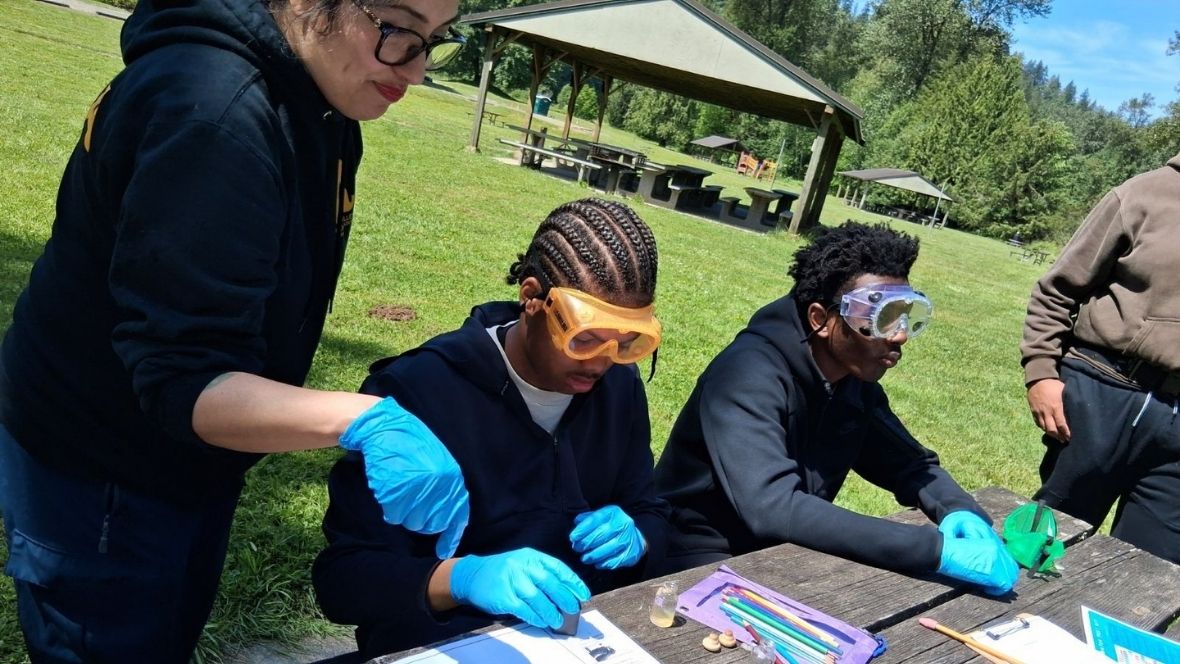
For the families who do, schools like Rainier Valley Leadership Academy are building a model where cultural belonging isn’t a diversity initiative, it’s the foundation. RVLA is a Seattle-area free public charter school intentionally established to provide anti-racist education centering the cultural experience of global majority families. They aim to meet the culturally specific needs of all their students, no matter the background.
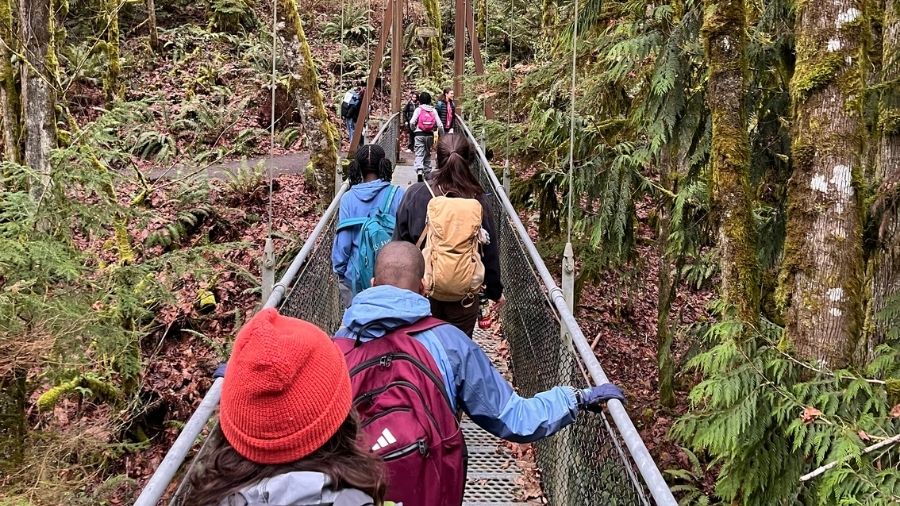
RVLA offers dedicated prayer spaces for Muslim students and students also have access to a Zen Room for reflection, self-regulation and one-on-one support meetings. In partnership with the Buffalo Soldiers of Seattle, RVLA offers an equine therapy program that connects students with nature through hands-on experiences working with horses and other animals. The primary languages spoken within the RVLA community are English, Tagalog, Spanish, Somali and Tigrinya.
“We are a tuition free public charter school in South Seattle, designed by and for our parents, elders, and community. While traditional public schools often unintentionally distance themselves from families, we intentionally flip that model to keep community at our core. We are deeply purposeful about our culture because we know there is a small window of time to build a strong foundation for a young person,” says Lenny Emperado, Dean of Recruitment and Community Engagement at RVLA.
When school culture doesn’t fit
With political currents trending toward the erasure of minority history and cultures, many local families are looking for places that allow their children to feel safe being who they are, without leaving their own cultural practices/identity at the door. Kadin Coleman, an 18-year-old senior at RVLA, credits much of his own success to the school’s culturally appropriate approach.
In sixth grade, he went to a school with a strong academic reputation. But he wasn’t thriving there.
“I was really struggling. Most of my teachers did not look like me, I felt like I wasn’t being challenged, and I didn’t feel seen or heard as a young man at that time. I had a tough time with teachers [not] expecting greatness for me. And I honestly don’t know why, because I was really capable like any other student. But that battle of struggling at the school I was in, I kind of felt like I was a bad kid and I wasn’t a kid that did bad things,” says Coleman.
“I came [to RVLA] in seventh grade, and the first year, I went from C’s to a straight-A student. I had teachers that looked like me and understood the things that I dealt with. Having somebody that simply understands and knows the things that helped them get through the struggle made the biggest difference, honestly. Once I made the shift, I was actually engaged in the curriculum. I was learning about heroes that weren’t labeled as Black heroes, they weren’t labeled as African American heroes. They are labeled as American heroes, part of American history. Now history is one of my favorite subjects.” As he finishes his senior year, he is deciding among three universities to attend in the fall.
Emperado says most students who transfer to RVLA have a similar story, but their struggle is not always as visible as Coleman’s.
“I have families that have come from private school. Students may gain the academic skills to excel in college, but in predominantly white school environments, they can miss the daily cultural experiences that help them understand their identity. They’re learning how to succeed academically, but not always how to understand who they are. This will always be a concern at some point for global majority families.” Says Emperado.
Sandra Wilson enrolled her son in RVLA when she moved to Seattle from a small Midwestern town in 2024.
“The biggest draw was the fact that when I walked into the school, they had so many things honoring our culture as BIPOCs. It was something that we had not experienced during his educational career. In previous schools, he was always the minority,” says Wilson. “One thing that was really important for me as a newly single mom, that made me feel like this is going to be a fit, was seeing Black and Brown educators that were male.”
Bringing in the community
Especially as a recent transplant to the city, it was also important for Wilson to find connection in her son’s school. At RVLA, she found a school that partners with parents, students and the broader community.
“I’ve seen children fall behind and the teachers say nothing until parent-teacher conferences. That means you’re not vested in making sure that they do well and you’re not trusting the parent to partner with you. If I didn’t see partnership, that would have been a big no for me,” she says.
Coleman recalls, “Every single day, we had to recite the core values. In the beginning, as a kid it seemed corny. But all of us got very used to the feeling of community and I feel like that’s not an easy thing to create at school.”
Emperado says, “We wanted to give space to community. We have free after-school programming where our elders, our community members, will come into the school and teach skills based on what the kids want to learn. People use our space as meeting and event space; we have a Jewish school here, we have a church here. Because we share our space, the kids get access to some of those resources that the community is bringing in. Our goal after all is to create access points for our students to the resources that aren’t usually readily available.”
Last year, Coleman won a scholarship for a tour of historically black colleges and universities led by a school community member. He was also one of the first students to participate in Dr. Saul’s after school leadership program.
“I remember, I pulled up to the first leadership class, and nobody was in there. Dr. Saul said, ‘Your first task is to get as many students as you can.’ That class has grown to over 30 people. When you have 30 students in a relatively small school being trained to become leaders, they go back into their classroom trying their best, and I feel like that really helped change the culture as well,” says Coleman.
Today, Wilson’s son learns entrepreneurship and money management in that program.
“RVLA not only teaches them the system, but how to make the system work for them. They are all about making sure these kids not only get an education, but they also get social intelligence,” she says.
Culture of support
“They make sure these kids are loved and that’s something that you typically don’t get in a public school. Imagine getting an email from a teacher that says ‘Your son really knocked it out of the park today in class.’ Most teachers only send emails when there’s a problem,” says Wilson.
Wilson’s son also serves as an advisory ambassador for the Tubman Center, a holistic community health organization with an on-campus clinic for RVLA students, faculty and families.
“He’s sitting at a table with doctors, politicians, people much older than him, but they actually listen to him. That’s major for a 12-year-old,” she says.
Wilson has received texts from the administration looking for volunteers to drive students to school when a parent’s car broke down. And she personally experienced the depth of care when there was a death in the family.
“My son was having a meltdown, and I was basically grasping at straws,” she recalls. The Dean took time to personally offer assistance and made sure she knew the clinic’s mental health services were available for both parents and students. “They advocate for not just the children but the whole family. I expected it to be a good school, but I didn’t expect them to care as much as they do,” says Wilson.
Coleman agrees. Things that felt corny when he was younger now feel like supportive family traditions.
“Even for a student that didn’t care about academics, and they were just pulling up to eat breakfast, or coming because they were going to sports practice right after. You had multiple teachers showing up to kids’ sports games. And those are the type of teachers we really need right now.”
One size doesn’t fit all
No matter how inclusive a school strives to be, no environment will be the right fit for everyone.
“In a traditional school, it’s a bigger system, and bigger systems take longer to move or accommodate. Or they just might not have the right resources that you need. At a smaller school like RVLA, the issue comes in where we don’t have the resources for students who need services that are very specific,” says Emperado.
Different families’ values can clash with school culture, such as when parents don’t want to be involved in their child’s education, or when they expect advocating for a child to mean being antagonistic to the school.
Coleman says, “RVLA really wouldn’t be the right fit for anybody that doesn’t want to see positive change. It wouldn’t be good for anybody that isn’t against racism, it wouldn’t be good for anybody that is against kids expressing themselves, it isn’t good for anybody that’s not willing to put the work in to be successful.”
Finding your fit
Emperado has advice for families looking for a culture of community in their child’s school. “If you want to see if the culture is real or if it’s just a tagline, then visit. Do you see your family represented in the building, artwork, staff, programs or the languages? Depending on where you live, sometimes it may be hard to have a super diverse school staff, but do their staff, especially the staff of color, have any voice or power in the school? [If not], that tells you that the dominant voice in the school may or may not be understanding of your community needs,” he says.
Consider whether the curriculum, particularly in history and social studies, is community-centered, culturally responsive, and encourages students to critically examine multiple perspectives and engage with the world around them. Look for schools that value family and community voice by creating meaningful opportunities for parents and community members to participate in decision-making and help shape the educational experience.
Whether you’re looking for a reflection of your family’s culture, or trying to fulfill a different priority, Wilson encourages parents to keep their child at the center of their search. “Make sure that the school you place your child in fits their needs, not just what looks good on paper or what sounds good to your circle of friends.”
The right school looks different for every family. But Coleman’s advice is simple: visit, talk to students in the hallway — not the ones the school handpicked — and ask yourself: Is this a place where my child can be themselves?
Editor’s note: This article was sponsored by Rainier Valley Leadership Academy.