 Seattle Family Calendar
 Subscribe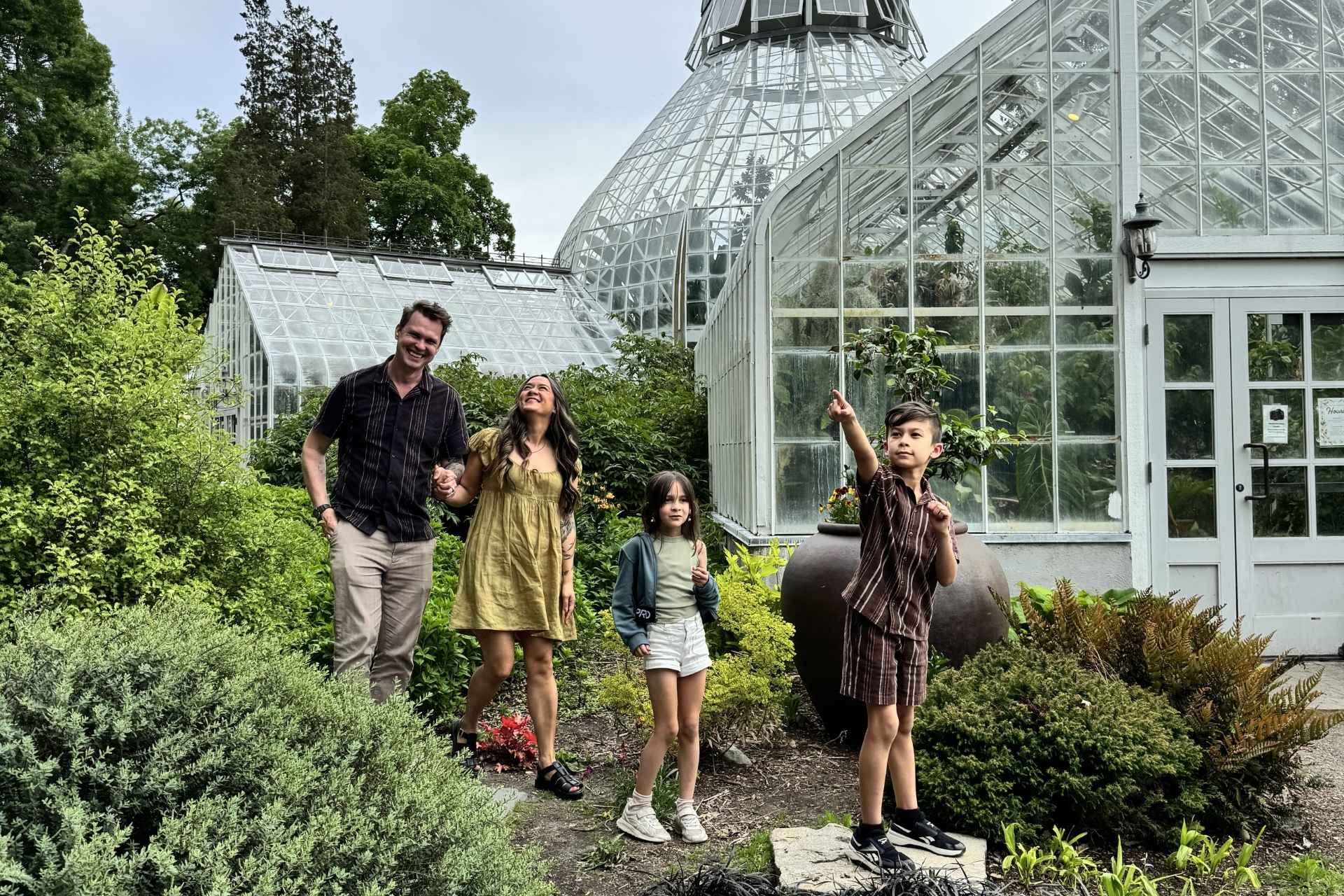

During the early days of the pandemic, when we were all committed to experiencing the world in our jammies while lounging on the couch, a local tour company popped up on my feed and reeled me in with a gripping virtual ghost tour of Tacoma’s Stadium High School. It was the perfect antidote to the horrors unfolding around us.
Pretty Gritty Tours founder Chris Staudinger led the virtual tour, and even then, from behind the glowing light of my tiny screen, two things were obvious to me: first, Staudinger’s passion for Tacoma and its history, and second, his vast knowledge of the subject. This infectious combination is why he’s found such success introducing both locals and visitors alike to the area.
This spring, Staudinger’s first book, “Secret Tacoma: A Guide to the Weird, Wonderful and Obscure,” dropped, providing yet another way for folks to tap into his knowledge. I sat down with the father of two to talk about the book’s release and how, after a decade, he still can plumb Tacoma’s depths to uncover new and fascinating angles that keep people interested.
“What I love about Tacoma,” Staudinger explains, “is that every time there’s a big national collapse, Tacoma seems to be at its best. It’s a city that — unlike a bigger city with a defined industry — has thrived on a certain lack of rules. Different industries have come here and had the opportunity to explore, make mistakes, try something new, get good at it and then go beyond.
“During the collapse of 1893, when the railroad was drying up and industries were on their way out, the entrepreneurs in Tacoma turned inward and said, ‘All right, we’re just going to take care of the people.’ That’s when we got the humane society, the food kitchens and all these boarding houses. Those would later become big, impactful institutions, but they wouldn’t have had that opportunity somewhere else,” he explains.
Another example of the grit for which the city is known? Renowned glass artist Dale Chihuly. “In the early ’90s, Tacoma was really looking to reinvent itself — it wasn’t at its best — but that provided a vacuum for Chihuly to start to become famous. Tacoma was all too willing to celebrate a glass artist, which now we look back and say, ‘Oh, glass art is the greatest thing.’ But in the early ’90s, it wasn’t a thing yet,” says Staudinger. “I always tell people: If something is famous in Seattle now, it’s because it got good in Tacoma first.”
At the conclusion of our interview, I felt like I had just completed a masterclass in Tacoma lore and was itching to get out and explore. I hope you are too, because I asked Staudinger for his take on local itineraries for families who love history, nature and food. Here are his recommendations:
A Tacoma itinerary for history buffs of all ages
There’s no better guide to the area’s history than Staudinger. You’d be hard-pressed to find a fascinating tidbit that’s not on his radar. His ability to turn the events, locations and people that have made Tacoma what it is today into captivating stories is a real gift.
For families interested in getting a taste of Grit City’s (Tacoma’s storied nickname) rich and varied history in a tangible, kid-friendly way, Staudinger recommends visiting the Old City Hall Historic District, Foss Waterway Seaport and Freighthouse Square. Why? Because this is where families can “see the impact the railroad had on forming Tacoma,” he explains. “The train is the most influential force in the city’s development, start to finish. You can still see and feel and smell its impact at these places.”
Old City Hall Historic District
Start at the Old City Hall District where the railroad headquarters were once located. Perched above Commencement Bay, Staudinger points out it’s where you can see Port of Tacoma and the buildings that grew out of the railroad’s development. Take note of the architecture as you pop in and out of the buildings, whether you’re browsing for antiques or simply window shopping as you explore.
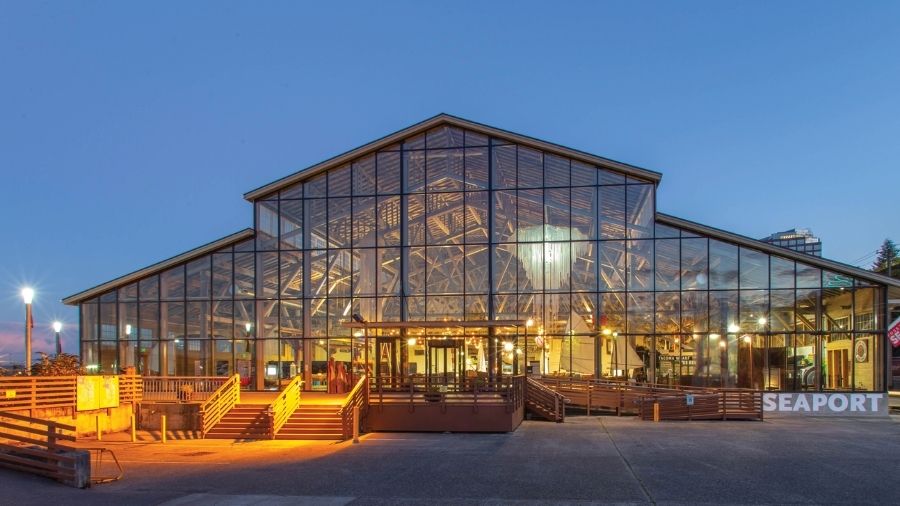
Foss Waterway Seaport
For Staudinger, the Foss Waterway Seaport is where the train and waterfront connect. “Even now, when you’re in the museum, you hear the trains rolling past on the historic track,” he says. He groups the Foss family in with Chihuly, pointing out that, like the artist, “when they started doing boat rentals, tenders and tugboats, it wasn’t the industry we think of today.”
The free museum is open Thursdays through Sundays, from 10 a.m.–4 p.m., and until 8 p.m. on third Thursdays.
Freighthouse Square
Just down the street from the Tacoma Dome and LeMay – America’s Car Museum is Freighthouse Square. Staudinger included it on this itinerary not just for its many shops and international food court, but also because it’s the Amtrak and Sounder stop; a place to “see the tracks and hear the trains coming and going,” he says.
Also in the area: Tacoma Book Center and the Brown and Haley factory store, home of Almond Roca.
A curated itinerary for nature lovers
Thanks to our temperate-rainforest climate, enjoying the natural world isn’t confined to the hot summer months. No matter when you want to explore, Staudinger recommends visiting Snake Lake, Point Defiance Park and Wright Park, with Swan Creek as a bonus.
“What I love about each of them is that they’re an escape from the urban environment even though you’re totally surrounded by it,” he says. “Point Defiance, for me, is always the best access to the water — you can rent those little motorboats and get out to see the water that defines Tacoma. It’s the same with Snake Lake and Swan Creek — you get this glimpse of what the area looked like before it was developed into a city. Even though you’re completely surrounded by that urban environment, you can disappear back into the woods for a moment.”
Point Defiance Park
Even if you don’t live in the Tacoma area, chances are you’ve visited, or at least heard of, Point Defiance Park. Home to the Point Defiance Zoo and Aquarium, Fort Nisqually, Owen Beach and miles of hiking, biking and walking trails, it hardly needs an introduction.
Of the old-growth forest, Staudinger says: “The fact that it was preserved because of the military is always fascinating. Having this section of old-growth forest that didn’t get logged is really special.”
Wright Park
For Staudinger, Wright Park has a similarly funny and fascinating history. I was surprised by all he shared: “I always find Wright Park hilarious because they clear-cut it right down to nothing and then spent the next several years putting trees back in, creating the champion tree arboretum we have today,” he explains.
“The idea was to strip it down and sell the trees to the lumber mills. But then as the city was expanding, the railroad realized, ‘People don’t want to live in a desert, they need public spaces to unwind.’ So they created Wright Park as an arboretum to preserve and showcase trees from around the world. There’s a delicious irony in killing all the forest to make room to plant trees; it’s like sweeping away cobwebs to put up fake ones for Halloween,” he says. The irony of “having this little sanctuary for these record-holding trees built on top of the graveyard of their ancestors” is not lost on Staudinger. “It’s kind of remarkable,” he says. “As I said, someday they’ll dig them up, put them in Seattle, and then they’ll be famous,” he jokes.
Wright Park’s playground has recently been updated, and walking through the W.W. Seymour Conservatory is always worth the extra steps.

Snake Lake at Tacoma Nature Center
For me, one of the defining characteristics of Snake Lake is the way the city disappears once you set foot on the trial. I shared my observation with Staudinger — how I’m always caught off guard when I remember that there’s a highway just beyond the trees when I’m hiking. He agreed, mentioning the section of the trail where you go under the bridge and realize it’s the same freeway people drive over all the time.
Whether you sign up for a Family Nature Walk, stop in to play at the playground or spend time exploring the exhibits at the Interpretive Center, there’s always something to do.
Swan Creek Park
Editor’s note: At the time of publication, Parks Tacoma is reporting that parts of this park are closed to the public through summer 2026.
This Tacoma park has undergone significant renovations in the past few years, including the addition of mountain bike trails and an off-leash dog area. Staudinger covers some of that in his book. “And then the outlet where the Salishan flows into the Puyallup River was recently developed as well — they put in new logs to slow down the water and create salmon habitat,” he explains.
It’s also where students from Tacoma Public Schools release coho and chum salmon every year as part of their salmon release program.
A culinary itinerary for families
When it comes to local restaurants that have a few secrets to spill, Staudinger recommends Frisco Freeze, Elks Temple and Engine House No. 9.
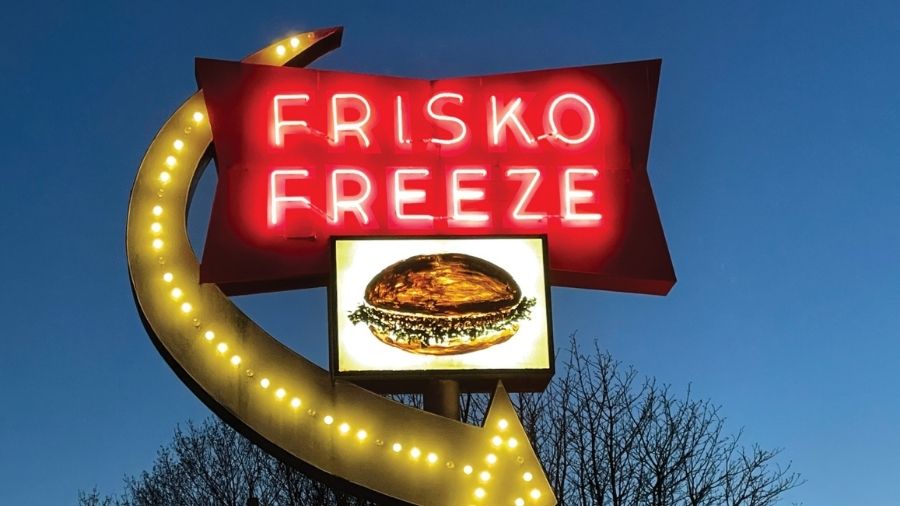
Frisko Freeze
Bring the kids to one of the first drive-throughs in the state. While you’re enjoying your burger and fries — Staudinger points out they still make all their burgers “exactly the way they used to back in the day” — take note of the distinct Googie architectural style. “It’s that Jetsons-era futurist design from the 1950s, when everyone was asking, ‘What will the future look like?’ Frisko Freeze has become an icon for the region ever since. And their blackberry shakes are truly the stuff of legend,” he says.
Elks Temple
According to Staudinger, Elks Temple is “another classic Tacoma icon” and I’d have to agree. “It began in 1916 as a Benevolent and Protective Order of Elks hall,” he explains. “The Elks were there until about the 1970s. Then, it became a venue and bar for a period, and by the 1980s it was completely empty. It stayed empty for decades until McMenamins bought it. They’ve not only restored the history and grandeur of that 1916 building, they’ve also filled it with little codes, secret walls and storytelling about Tacoma’s history. Visually, if you want to become entranced by Tacoma’s history, there are few places as good for it. From UFOs to important artists to Sasquatch, they’ve told it all through imagery — it’s like the Sistine Chapel of Tacoma history. All of our great deeds are painted on the walls.”
Walk around with the kids to see this remarkable visual representation of the history, and when you’re done, stop in at the family-friendly pub for lunch.
Engine House No. 9
If your kid loves fire engines and firefighters (and let’s be real, what kid doesn’t?), Engine House No. 9 is a can’t-miss. Staudinger says it’s “really cool, and not just because it’s a brewery and restaurant, but because of what it represents. Tacoma had the first professional fire department in Washington state, and they built a series of brick engines and firehouses. Engine House No. 9 was one of the historic ones from the turn of the century. By the 1970s it stopped being a firehouse and became a restaurant.” He continues: “They were actually the last of the engine houses to keep using horses to draw the pumps. So the section in the back has all these little stalls where people can sit, but they’re the original stables for the fire horses.”
Personal favorites
As for Staudinger’s family’s local favorites, he likens choosing one to having to “choose a favorite star from the heavens” and explains that, like most things in the Pacific Northwest, it depends on the season. In the summertime, Charlotte’s Blueberry Park is a favorite, according to his kids. It’s the same with Point Defiance. “We love to go regularly, but each season there’s something different we like to access about it,” he says. In the end, “I don’t know that I have a single favorite, but Tacoma as a whole offers something for every season.”