 Seattle Family Calendar
 Subscribe

As parents, we’re used to answering a never-ending stream of “why” questions. But lately, our kids are no longer turning to us or a textbook for answers. Instead, they’re asking AI. From homework help to quick Google searches, AI has become the ultimate source of instantaneous information. But now that our kids have answers at their fingertips, this AI world introduces a whole new list of challenges for families.
When an AI bot summarizes scientific information, it can sometimes miss important details, context and nuances, which could result in misinformation or more confusion for our kids who are trying to learn. Suddenly, raising a scientifically literate child isn’t just about teaching them how the natural world works. It’s about giving them the tools to question the digital world, too.
Fortunately, you don’t need a doctorate degree to nurture this mindset at home. You can encourage scientific literacy and raise curious, critical thinkers with some practical, everyday techniques.
What is scientific literacy?
According to the National Academies, scientific literacy is “the knowledge and understanding of scientific concepts and processes required for personal decision making, participation in civic and cultural affairs, and economic productivity.” A scientifically literate person has the capacity to:
- Understand, experiment and reason as well as interpret scientific facts and their meaning.
- Ask, find or determine answers to questions derived from curiosity about everyday experiences.
- Describe, explain and predict natural phenomena.
- Read articles with understanding of science in the popular press and engage in social conversation about the validity of the conclusions.
- Evaluate the quality of scientific information on the basis of its source and the methods used to generate it.
- Pose and evaluate arguments based on evidence and apply conclusions from such arguments appropriately.
Science is a tremendously critical part of our lives, and we rely on scientific data to protect us from contaminated food, polluted air and water, and transportation accidents — just to name a few. Every time we go to the doctor, our lives depend on accurate medical information. When we go shopping, our health and safety are tied to numerous scientific studies that have identified which products are safe for us to use. If we no longer understand science, then we are no longer safe.
How to raise scientifically literate children
Neil deGrasse Tyson is an American astrophysicist, cosmologist, author and science communicator — and also a father. During an interview a few years ago, he explained the importance of raising scientifically literate children. He said that it is so important for children to be surrounded by situations that force them to think about how the world works. Understanding science empowers them to not be taken advantage of and helps them to be able to confront critical issues that impact their lives and society as a whole. He emphasized that if children do not grow up to be scientifically literate, they will be disenfranchised from the democratic process.
We may not be able to control technology, but as parents we have the power to raise educated children who have the ability to evaluate the information presented to them. Here are some ways that you can instill a sense of inquisitiveness and scientific literacy in your children.
- Read: From a very young age, read books about science topics to your children to encourage their curiosity and broaden their knowledge base. As they get older, encourage them to read about science topics that interest them, whether it be dinosaurs, outer space, climate or computers. Check out the National Science Teacher’s Association book recommendations, subscribe to magazines like National Geographic Kids and find websites geared toward science education for children.
- Watch: Seek out children’s television programming and videos that focus on science. My children loved watching ”Sid the Science Kid” on PBS when they were younger, which is all about the scientific discovery process. Now that they are older, they enjoy watching Discovery Channel shows such as “Mythbusters,” which tests scenes from books or movies using experiments. I love this show because it really teaches the value of not believing everything we see, but to test ideas using the scientific method.
- Visit: Take your children to awe-inspiring places where they can learn about science, such as museums, planetariums, botanical gardens, aquariums, nature centers and zoos. Incorporate science into your vacations by hiking, skiing, fishing and visiting places like national parks, lakes and beaches. During these activities, encourage your children to ask questions about what they observe and enjoy a back-and-forth discussion. If you are unable to travel, check out the numerous online resources from science museums, nature centers and more.
- Experiment: When it comes time to make birthday and holiday wish lists, be sure to add some science kits to your children’s list. My children have always enjoyed playing with kits where they can do science experiments. They have built their own model volcano, hooked up electric circuits to make things spin or buzz, and learned about measuring and chemical reactions using everyday products. Or set up your own experiments. It can be as simple as filling up the kitchen sink with water and testing different items to see what sinks and what floats. Be sure to ask your children to predict what will happen before doing the test and ask why they thought it happened after their observations.
- Attend: Sign up your kids for extracurricular science and technology classes or summer camp. A few summers ago my son enjoyed a week at Camp Invention, and he also took coding classes online for a few years. These have been wonderful opportunities for him to learn in depth about science topics that especially interest him.
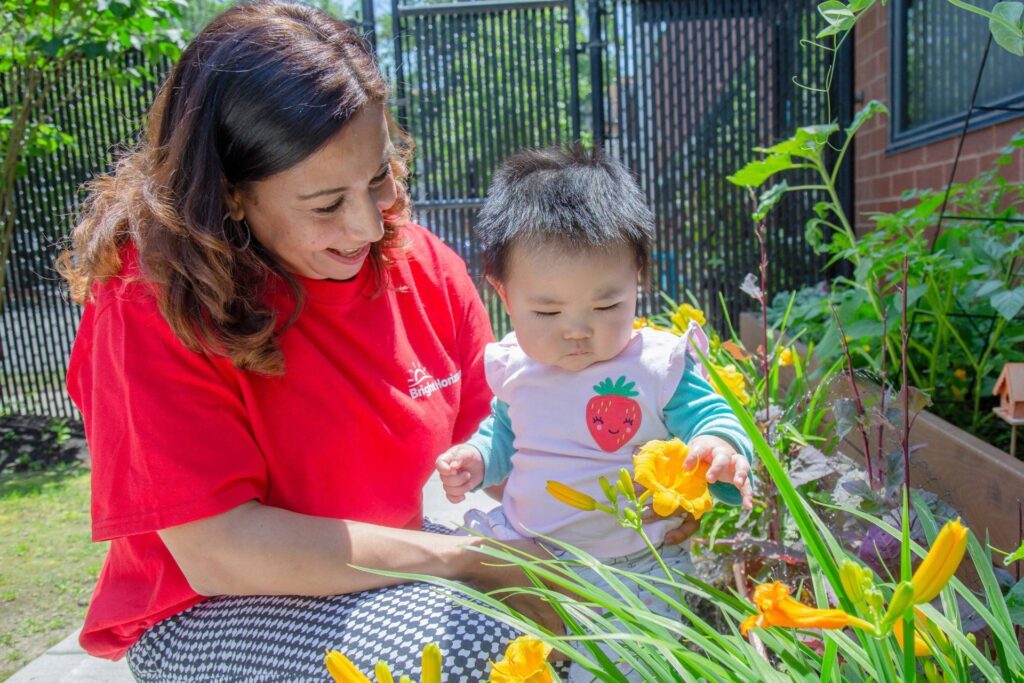
- Create: By incorporating simple science-based activities and lessons into your children’s daily life, you can inspire their interest in and love for science. Spend time together in the kitchen baking and explaining how measuring works and why baked goods rise in the oven. Plant a family garden and appreciate spending time outside learning about nature and then enjoying the food that grows. When your children need to take medicine, explain how important it is to follow the directions on the bottle and how chemicals affect us.
As you can see, there are endless opportunities to bring science to the forefront of your children’s lives so they begin to see the world through a scientifically literate lens. And when you learn together, you make it incredibly meaningful. Most of all, have fun!