 Seattle Family Calendar
 Subscribe
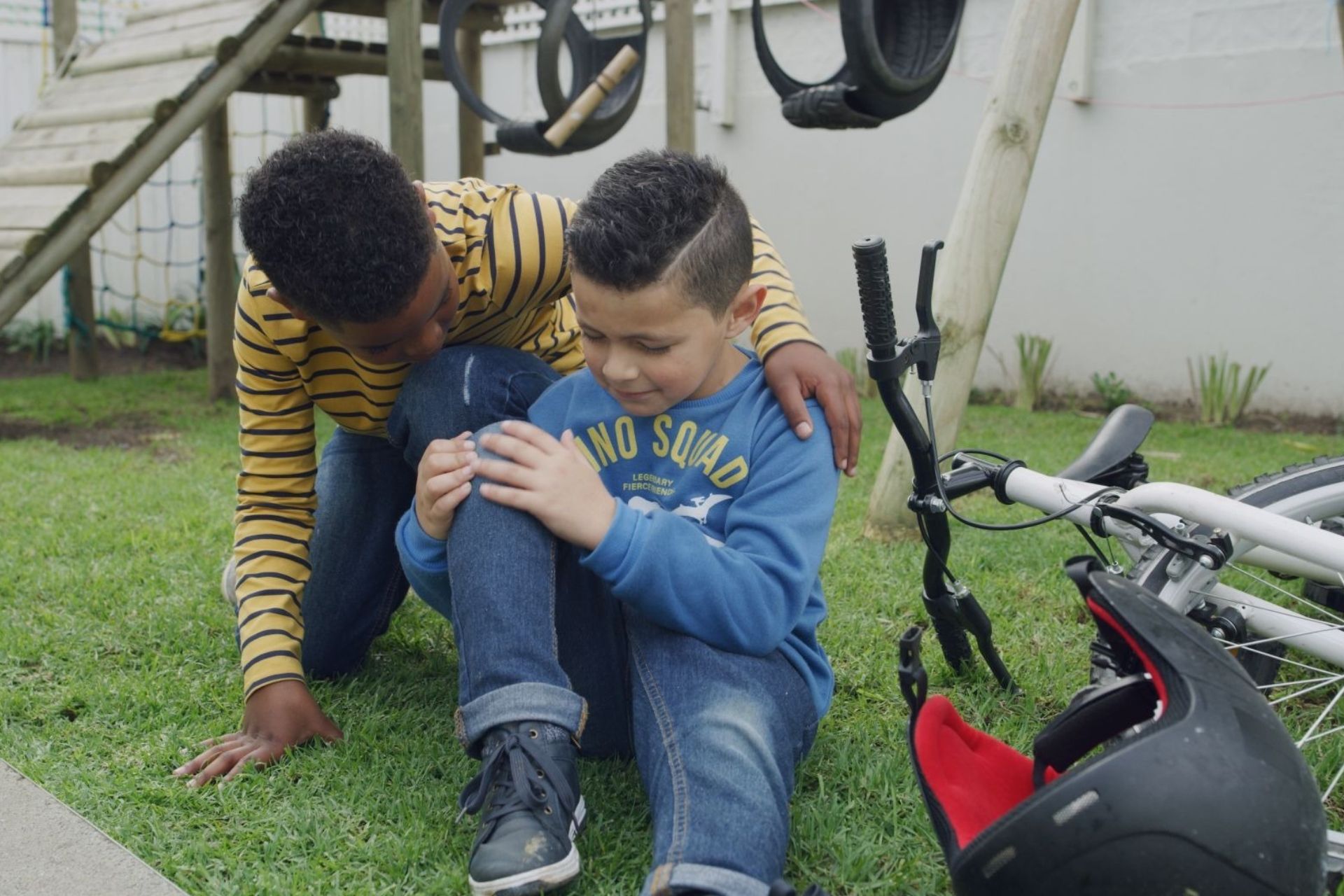

It seems like every time we turn on the news or scroll social media, we see examples of people being selfish or unkind — behavior that’s unappealing to most and definitely not what we want our children to emulate. It’s enough to make you wonder if kindness is, in fact, something most people still value.
The short answer is yes. According to a recent Gallup poll, more than 60 percent of American adults say they witness “people treating others with kindness ‘very often’ (20 percent) or ‘often’ (40 percent).” Another 65 percent say they’ve personally experienced an act of kindness from someone in their community. These data points bode well for parents who want to raise children in a kind world and instill kindness as a value in them. After all, parents are well aware of the effect modeling has on shaping children’s behavior.
When it comes to teaching kids kindness, the answer is complex, weaving together the developmental concepts of nature and nurture with subtle, important nuances. It’s worth noting that our kids’ kindness doesn’t just benefit others, it can also have profound impacts on their well-being and social development.
“Kindness is foundational to friendship, cooperation and belonging,” says Lindsay Emmerson, Ph.D., clinical psychologist and parenting expert. “Kids who can read others’ emotions and respond with care tend to have stronger relationships, and those relationships protect their own well-being.”
How do kids develop kindness?
When it comes to understanding and developing kindness, kids rely heavily on their environment and what they witness in the world around them.
“Children develop kindness through a combination of their natural capacity for connection, their relationships with others and the experiences that shape their understanding of how people should treat one another,” says Michelle Harris, LCSW, psychotherapist and founder of Parenting Pathfinders. “As they move through the world, children are constantly learning about human relationships; they notice how people respond when someone is upset, how adults handle disagreements and whether others are treated with patience, dignity and respect. Everyday interactions help to cultivate a child’s understanding of what kindness looks and feels like.”
As parents, we need to be aware of how we handle everyday situations around our kids, especially those that involve kind acts. For example, if an elderly person needs help carrying groceries, offer assistance rather than passing them by. These simple, everyday acts of kindness — which may seem mundane or be brushed aside as “too obvious” — become important when kids are observing.
It’s not just about whether kids witness others being kind, but also if they are on the receiving end of others’ kindness.
“When a child is treated with compassion (especially during difficult moments), they learn what it means to be cared for and understood,” says Harris. “These experiences provide a blueprint for how they will recognize and respond to the needs of others.”
Think of it this way: If your child witnesses a classmate having trouble opening a juice box and they’ve seen you help them solve a similar problem, there’s a good chance they’ll follow your lead and show the classmate how to poke the straw in the hole.
Does kindness come naturally for kids?
Being inherently kind has some nuance to it. According to Emmerson, parents are the most influential figures when it comes to teaching kids how to be kind. “I encourage parents to take a teaching style of parenting: Instead of reacting only when a child is unkind, you explain, demonstrate and practice kindness ahead of time, the same way you’d teach reading or riding a bike,” she explains.
This idea comes from the framework developed by psychologist Albert Bandura, whose social learning theory explained that children copy the behavior they see modeled, especially by people they love and trust. Hence, parents play a significant role in this process.
“Children watch how their parents treat family members, strangers, service workers and people they disagree with,” says Harris. “These interactions communicate powerful messages about whose feelings matter and how people deserve to be treated.”
Although parents can have a pivotal role in developing this characteristic, research on twins indicates that some kids are more prone to being kind than others. “Twin research suggests a meaningful part of that trait is inherited,” says Emmerson. “Some children really do lean toward kindness more naturally.” If you notice your child is more inclined toward kindness and compassion than others their own age, it may be in their genes and require less effort on your part.
Whether your kid arrives hard-coded for kindness or needs continued examples to crack the code, experts agree: Teaching kids kindness is possible.
How to teach kids kindness
If you’re looking to teach your kids how to be kind, experts recommend the following:
Help build emotional intelligence
For starters, it’s important to help kids develop their emotional intelligence so they can connect the dots when it comes to kindness. If children don’t know what they are feeling, it’s harder to attach meaning to their actions.
“Name feelings during everyday moments (‘Your brother’s face looks disappointed; what do you think happened?’), or when reading together, pause to ask how a character feels,” says Emmerson. “Empathy starts with emotional vocabulary.”
Model kindness
Next, try to model kindness in front of your children. “They need opportunities to see what that looks like,” says Harris. “You can also make their thinking visible by saying something like, ‘Our waiter seems overwhelmed, so I’m going to be extra patient. We all have difficult days sometimes.’”
Practice kind behaviors
Kindness comes with practice, and parents can involve children in small acts of care such as helping a neighbor carry groceries, making a card for someone who is sick, including a new student in a game or helping prepare a meal for a family member who needs support, says Harris.
“You might ask, ‘What’s one thing we could do today to make someone’s day a little easier?’” Harris explains. “Kindness is not a special event; it’s something that can be practiced every day in ordinary moments, including helping a sibling, caring for a family pet or checking on someone who seems upset.”
How to teach kindness based on a child’s age
How you teach kids to be kind depends greatly on their age. Here’s what the experts recommend for different ages:
Birth to 1 year
During infancy, kindness begins with the experience of responsive care. “Infancy is when children develop the foundations of trust and emotional connection,” says Harris. “When caregivers respond to their crying, offer comfort, smile and engage in warm interactions, they help to establish a relational foundation upon which empathy and compassion can develop.”
Toddlers
Toddlers typically begin to recognize emotions in themselves and others at this age, but they are still developing the ability to understand different perspectives, express emotions effectively and manage their impulses, says Harris.
“Parents can nurture kindness in toddlers by naming emotions, modeling gentle behavior, helping children to take turns and providing simple explanations,” says Harris. “For example, a parent might say, ‘Your friend is crying because she fell. Let’s see if she’s okay.’ At this age, brief demonstrations of kindness are generally more effective than lengthy lessons.”
Preschoolers
Preschoolers are typically developing their ability to recognize emotions, consider other people’s perspectives and participate in cooperative play. “Parents can use stories, pretend play and everyday conflicts to help children practice kindness,” says Harris. “For example, after reading a story about a character who is excluded, a parent might ask, ‘How do you think they felt when nobody invited them to play? What could someone have done to help?’”
School-age children
Children at this age tend to become better equipped to understand fairness, intentions, consequences and different perspectives.
“Parents can encourage conversations about friendship, exclusion, fairness and responsibility,” says Harris. “For example, if a child witnesses a classmate being teased, a parent might ask, ‘What do you think that experience is like for them? What are some safe ways you could help? What would you want someone to do if that was happening to you?’”
When to worry or seek help
If your child doesn’t seem to grasp the concept of kindness despite your best efforts to model this behavior, you may want to consider involving a professional if the challenges last a year or longer. “Often it does come with time and practice,” says Emmerson. “However, if you’re still concerned during the elementary years, it’s reasonable to get an evaluation. The goal usually isn’t to rule out something alarming; it’s to understand whether a child processes social information differently.”
Some kids genuinely miss social cues — due to a neurodivergence (such as autism or ADHD) or general lack of situational awareness. They may struggle to read facial expressions or have trouble with perspective-taking and can benefit from targeted support.