 Seattle Family Calendar
 Subscribe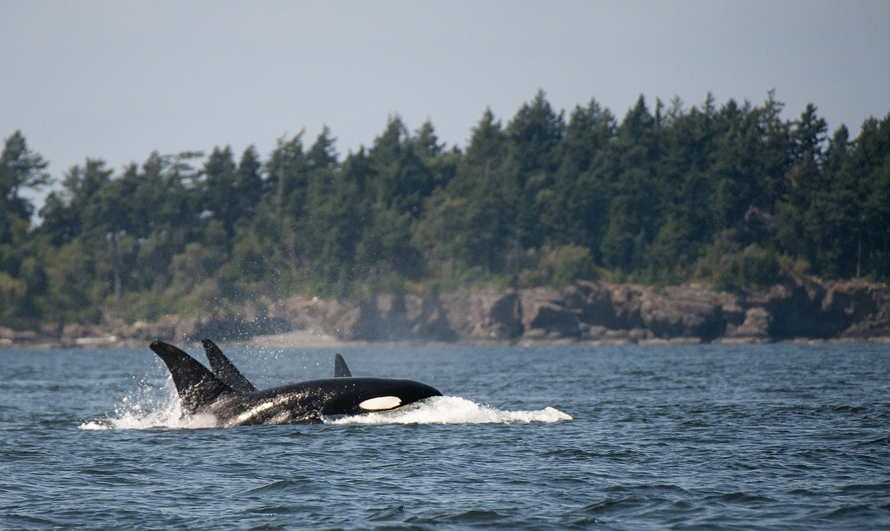

How to honor and protect our orca neighbors
There are few things more impactful than looking into the eye of your neighbor when that neighbor is … a whale.
The Puget Sound region, and the greater Salish Sea extending into Canada, is home to abundant sea life, including whales. Orca (or killer) whales are actually dolphins, taxonomically speaking, and are especially charismatic marine creatures, given their iconic graphic black and white appearance. As someone who’s seen these magnificent whales from both land and boat, I can tell you that nothing compares to witnessing the power and confidence of an orca pod cutting through the water like they own it.
Yet our orca neighbors are vulnerable to the pressures of human activity and are in fact declining in numbers. They need our help.
A few things have put our local orca whales in the news recently: the birth of two calves in September 2020 in the beleaguered J Pod. In March 2023 it was announced that Tokitae, (also known as Lolita) who was captured and sold to Miami Seaquarium in 1971, when she was just 4 years old, will finally be returned home. Members of the Lummi Nation have been fighting for her return to the Salish Sea for 52 years.
What can families do to honor and protect our orca neighbors, and also enjoy their magnificent presence in Puget Sound?
Let’s get started: Educate yourself
Educate yourselves
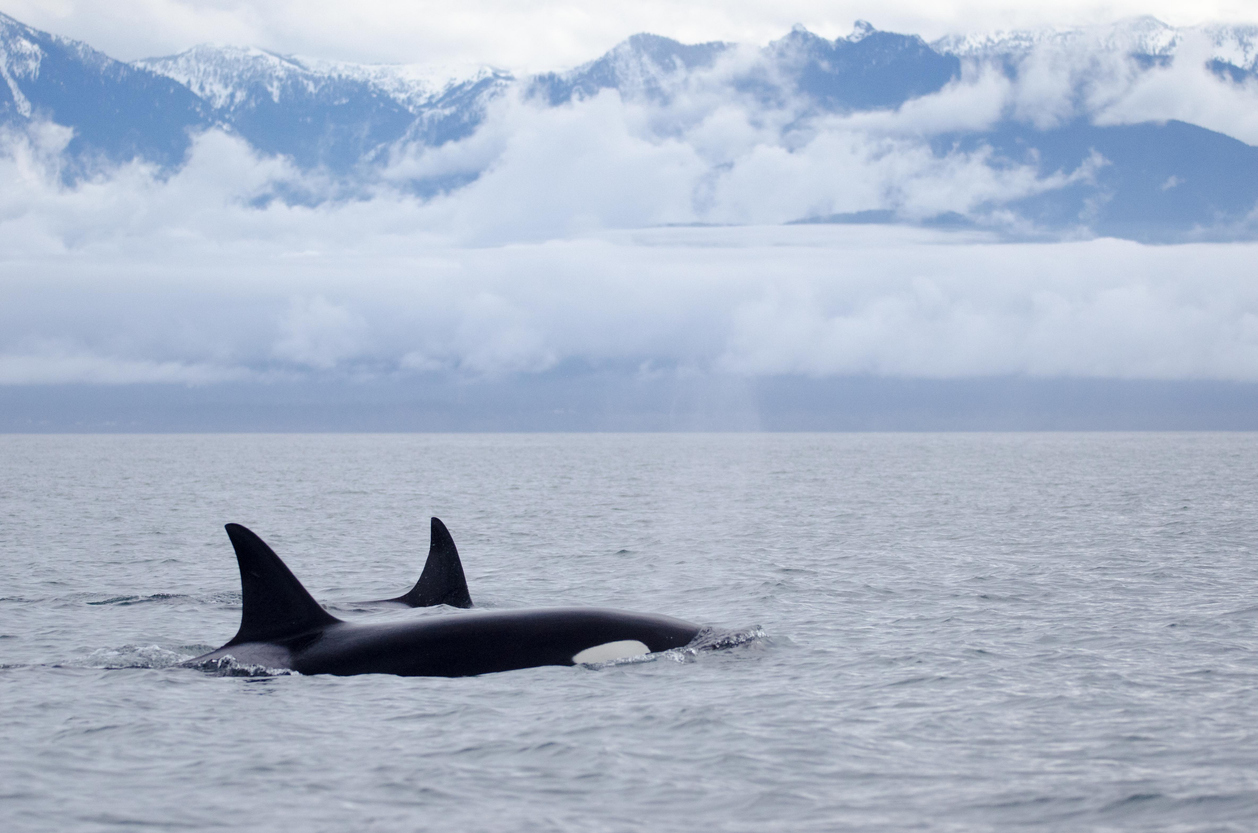
Killer Whale Tales (KWT) is a classroom education program for school-age kids dedicated to local orca whale conservation. Founded in 2000 by middle-school science teacher Jeff Hogan, the organization draws on conservation talent from different fields, united by a desire to educate children about the Salish Sea and create positive change for the endangered southern resident killer whales.
“This generation of kids might be the one to really change things,” said Hogan. “With a program like this, kids can go home and keep the torch lit, empowered by actionable information to engage their families.” KWT provides kids with tip sheets and at-home conservation ideas to make their home orca-friendly, no matter where in the region they live.
“Kids in Spokane are shocked that their decisions impact the whales in Puget Sound,” said Hogan.
Since 2004, KWT has reached over 124,300 school-age kids throughout Washington, California and Alaska. They have worked in 3,618 classrooms across 907 schools.
Local museums and aquariums also offer learning opportunities. The Whale Museum in Friday Harbor, San Juan Island, focuses exclusively on the whales of the Salish Sea, including the beloved local orcas. Their education programs and tours foster a love for whales starting at a young age.
The Whale Museum also offers the opportunity for individuals, families or classrooms to symbolically adopt an orca. At the individual level you receive a picture of and information about “your” whale, a monthly orca update, an “Orca Steward” patch and a one year membership to the museum. Throw in a whale stuffy, and you’ve got the perfect birthday gift (speaking from experience)!
The Seattle Aquarium features orca information alongside a broader message about the conservation of marine life in Puget Sound waters. A newly opened virtual reality experience called Swim With Humpback Whales allows aquarium visitors to go on an immersive adventure that really feels like they are swimming alongside whales.
Resources about our orcas by local writer Lynda Mapes of The Seattle Times, and local author Amanda Abler’s book “The Spirit of Springer” (with illustrations by Levi Hastings) will further instruct and inform your family’s whale advocacy.
Next: Take a trip to whale country
Take a trip to whale country
We live near them, but few of us see orcas without some advance planning or good timing. You can check a pod’s location for possible sightings from land at the Center for Whale Research, which monitors the movement and social life of area orcas, and is the main source of data to the media for events such as births and deaths among the pods.
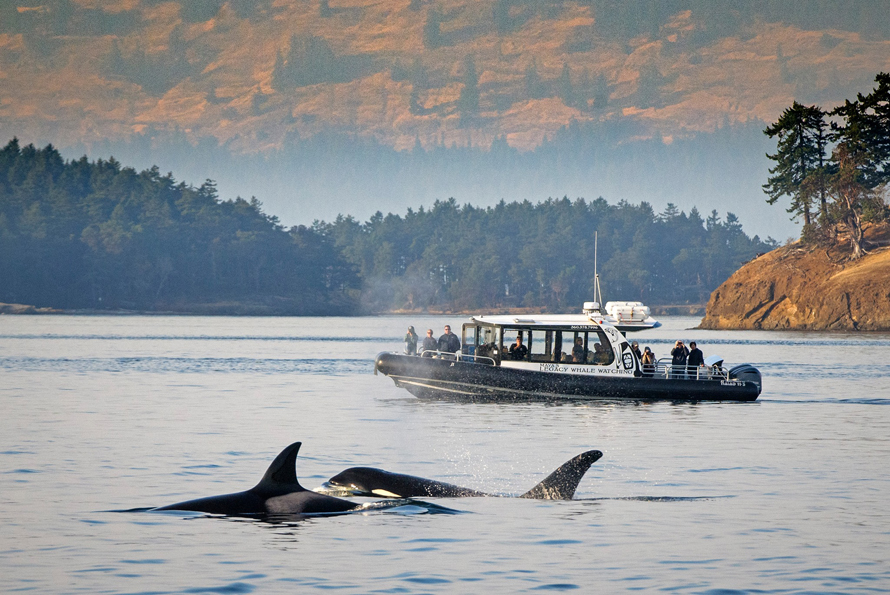
Or you can get on the water with the whales on a whale-watching trip. The Pacific Whale Watch Association (PWWA) lists over 30 member whale-watching companies from Olympia in south Puget Sound to Nanaimo in British Columbia, offering trips of various sizes and durations. “I’ve had kids as young as 2 months old on a trip,” said Brooke McKinley, a veteran whale-watching guide. “A family can expect an educational experience while spending time with the whales, moving with them, from the water, without the restrictions of land.” At a respectful distance, of course.
PWWA’s mission statement encompasses education and conservation, and the association helped develop the Whale Wise rules for recreational and commercial boats in Puget Sound. “We educate other boaters about appropriate distance and speed around whales,” said Jeff Friedman, U.S. vice president of PWWA and owner of Maya’s Legacy Whale Watching out of Friday Harbor. “We’ll use the bullhorn, wave flags to alert recreational boaters to the presence of the whales. Most of [the boaters] are appreciative and slow down.”
Not everyone is pro-boat-based whale watching. “Boat-based tours can be a platform for education and conservation, [but] I feel it is not well studied,” said Hogan of KWT. “We know that whales are foraging less in the presence of vessels. The impact doesn’t justify the cost [to whales], in my opinion.”
PWWA is trying to address those concerns. The organization encourages guests to donate to the Center for Whale Research and is looking at ways to track those donations and the outcomes of their on-boat education about mitigating the population decline of resident whales. “We haven’t found a way yet, but we’re actively trying to determine how,” said Friedman.
Next: Support your child’s advocacy efforts
Support your child’s advocacy efforts
“Children’s passion is fresh and inspiring,” said Katie Fellows, a former student of the Killer Whale Tales program. “Adults need to tell kids it’s okay to speak up, and then help kids do it.”
Now an adult, Fellows credits the hands-on learning of KWT as well as her parents’ guidance for inspiring and supporting her decision to pursue a career in environmental education. “Kids need a way to feel like they’re contributing and [that contribution] will fuel a kid who will grow up to be an advocate.”
She suggests kids contact organizations directly to learn about ways and opportunities to help. If age restrictions are preventing them from volunteering, try finding a junior ranger program, science camp or club where a kid can meet like-minded peers. “Give your kid the room they need to grow into their passion,” said Fellows. The whales — and world — will benefit.
Editor’s note: This article was originally published in 2020 and was updated most recently in 2023.