 Seattle Family Calendar
 Subscribe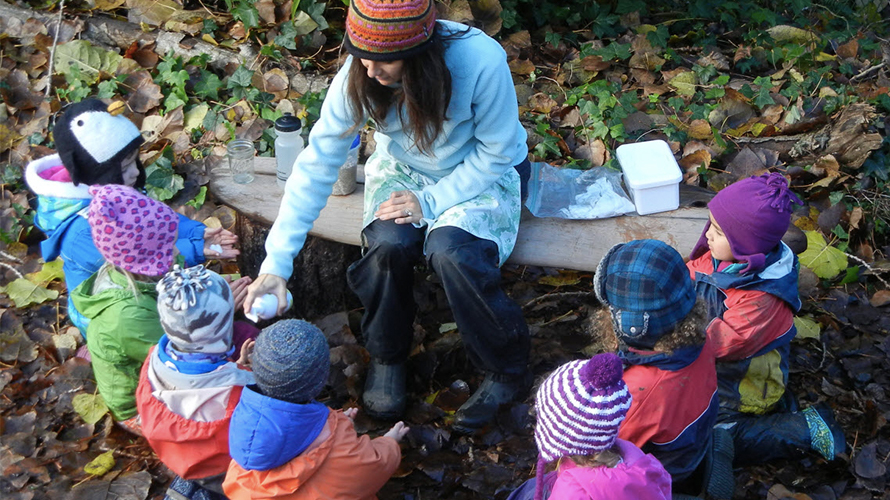

What is an outdoor preschool?
The preschoolers at Fiddleheads Forest School at Seattle’s Washington Park Arboretum are outdoors for every minute of their four-hour school day.
This means the children become firsthand witnesses to everything happening in their forest grove classroom: a Cooper’s hawk eating a squirrel while they eat their own lunches, baby owls learning to hunt and fly every spring, even the occasional evidence of coyotes (don’t worry — coyotes are scared of even the littlest people).
“It was such an awe-inspiring experience to have in the city,” says Sarah Heller, former director and teacher at Fiddleheads Forest School. “Just noticing things on a small scale — a tiny insect or leaves that have fallen, bright red against the green grass — how exciting it is to see that, too.”
There are at least a dozen preschool programs in the Seattle area that have an outdoor focus. Heller says the book “Last Child in the Woods” by Richard Louv, published in 2008, helped early childhood educators realize that exposing kids to nature is vital.
Interest in outdoor preschools has been growing for decades. The concept took shape in the 1950s in Sweden and Denmark, in the late 1960s in Germany, which is now home to hundreds of “forest kindergartens,” and more recently in the United Kingdom. In these schools, children spend almost all of their preschool day outdoors.
Local outdoors-focused preschools have varied philosophies and curricula, but all of them focus on getting young children into nature for long stretches of time. Some area educators say they look for inspiration to Vashon Island’s Cedarsong Forest Kindergarten and its founder Erin Kenny, a national leader in outdoor preschool education who has traveled to Europe to study forest kindergartens and who authored a book called “Forest Kindergartens: The Cedarsong Way.”
At Cedarsong Forest Kindergarten, families decide how long their children (ages 2–6) spend at school every day (from three to five hours), and the children spend the entire day outside.
“There’s no structure or schedule. We ask, ‘What do you kids feel like doing today?’” says Kenny. “We follow them and we make notes at the end of the day. At the end of each month, we write a newsletter from these notes, so the children write the curriculum.”
Two other outdoors-focused preschools in our area have been operating even longer than Cedarsong: Discovery Park Nature Kids and Seattle Waldorf School’s preschool.
At Discovery Park Nature Kids in Seattle’s Magnolia neighborhood, attendees spend roughly an hour and a half hiking, playing and exploring outdoors (rain or shine) as part of a nature-based curriculum, partnered with “traditional” school elements, such as circle time and being introduced to learning about letters and numbers in a play-based learning environment.
At Seattle Waldorf School’s preschool, children spend an hour to an hour and a half in the play yard, where there are places to climb, pour water and play with sand; the yard also features fruit trees and a cob oven for baking activities. The students also take daily walks in the neighborhood.
“Play and nature combine as a powerful teacher for young children,” says Meg Petty, director of enrollment at the Seattle Waldorf School. “By providing them with open-ended opportunities to observe and engage with the natural world, we are laying a strong foundation for a love of nature and an affinity for the outdoors. This keen observational sense will serve our students later in their education and throughout their lives.”
Other preschool directors second these notions, speaking to how being outside supports young children’s natural instincts to explore and be on the move, which helps their development in a very innate way.
“Have you seen a child talking to themselves while engaging in play?” asks Katrina Luters, founder and teacher at Matthews Beach Playschool. “That is their executive function developing. And if you give them a chance to be outside and respect the play that they are doing, you can naturally see any red flags regarding their development, too.”
“When they are ready to learn letters and numbers, they will; we see it happen. Everybody nearing kindergarten [age], will start saying, ‘Hey Katrina, how do I write this word?’”
Of course, each outdoor preschool has its own unique curriculum, with some schools offering traditional curricula with letter and number learning time woven in on a regular basis, while other schools follow the children’s lead for learning at all times.
Find local outdoor preschools in our area
Click through the arrows above to browse our whole list, or jump to a specific location by selecting your area below:
Seattle-area outdoor preschools
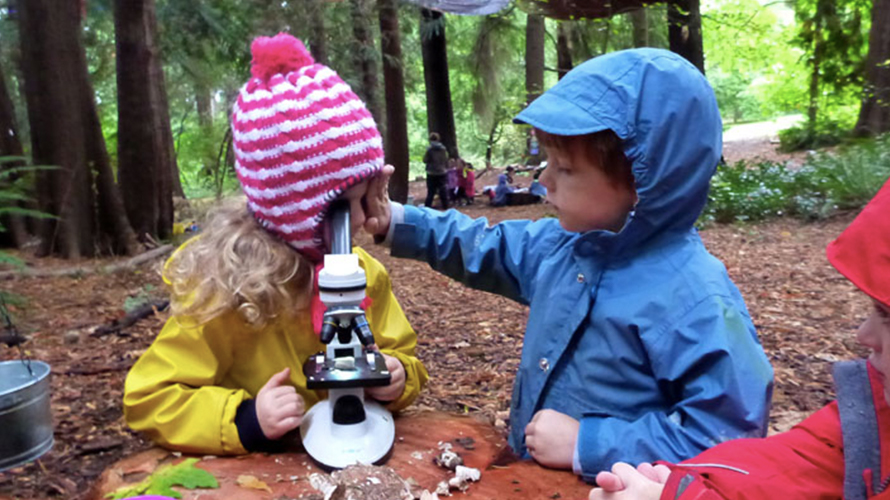
Tiny Trees Preschool — 9 parks in Seattle, Kirkland and greater King County
Tiny Trees Preschool offers an innovative model that combines affordability and nature orientation, and aims to provide children with a joyfully muddy childhood. At Tiny Trees, kids ages 3–5 spend three and a half hours outdoors in either a morning or afternoon class. Many Seattle locations are part of the Seattle Preschool Program, providing financial assistance for qualifying families.
Anna’s Little Farm Preschool — Columbia City
Children ages 3–6 spend all day outdoors, including lots of time interacting with animals on the farm. There is the added benefit of a bilingual teacher and Spanish-speaking staff members weaving language lessons into the day. Teachers emphasize emotion coaching and play-based education.
Seattle Children’s PlayGarden Preschool — Mount Baker
Children ages 3–5 spend most or all of their school day outside in the PlayGarden, an innovative park, garden and play space designed to be inclusive for kids of all abilities.
Little Wildlings Nature School — Mount Baker
This urban forest preschool welcomes children 3–5. Hours are 8:30 a.m. to 12:30 p.m., with aftercare options available.
Discovery Park Nature Kids Preschool — Magnolia
Note: Due to renovations, Discovery Park Nature Kids Preschool is closed and planning to reopen for the 2023–2024 preschool year. Check the website for up-to-date details.
The first nature-based preschool program in Seattle, Nature Kids Preschool is a program of Seattle Parks and Recreation located at Seattle’s largest green space: Discovery Park. Children ages 3–5 enjoy a blend of indoor time with free play, art, lunch and opening and closing circles, along with at least an hour to an hour and a half of hiking, exploring and playing outdoors, rain or shine!
Fiddleheads Forest School — Washington Park Arboretum
The only building at this University of Washington program is a greenhouse; children spend their time exclusively outdoors, barring extreme weather. The kids love making western red cedar tea and climbing downed tree logs. For children ages 3–5, there are two-, three- and five-day options for classes that go from 9 a.m. to 1 p.m. For children ages 4–6, there is full day (9 a.m.–3 p.m.), five-day preschool or afternoon enrichment class options.
Woodland Park Cooperative Preschool — Fremont
Children ages 2–4 spend half of their school day outside. This school is part of the North Seattle College’s Cooperative Preschool program. Teacher Tom (who writes a popular blog on play-based education) was a former teacher and led preschool classes for 16 years at the school. Teacher Althea joined the school as a preschool teacher in 2017. Teacher Cheryl has spent 6 years as a parent and assistant teacher in both preschool and kindergarten. The school is known for its creative, child-led curriculum.
Tara’s Tots Preschools — four North Seattle locations
Tara’s Tots offers three play- and nature-based preschool programs in North Seattle. Each school has a fully fenced play yard as well as an indoor play area. A home-school enrichment program called Roots of Connection (ROC) is offered for kids ages 4 and older; ROC takes place at Woodland Park, where children play while learning about wildlife, native plant species, birds, edible plants and much more!
Matthews Beach Playschool — Northeast Seattle
Children ages 3–5 spend all their time outdoors, alternating between nature explorations in Matthews Beach Park and a fenced-in outdoor space with a sandpit, playhouse, planter boxes, fairy garden and covered areas for projects. Kids help decide on the agenda for the day, and are encouraged to explore, be social and take on projects of their own design.
Seattle Waldorf School Preschool Program — Northeast Seattle
Children ages 3–5 spend an hour to an hour and half every day in the outside play yard, where there are places to climb, pour water and play with sand; the yard also features fruit trees and a cob oven for baking activities. Kindergartners at Seattle Waldorf School similarly spend two hours outdoors during their school day.
Wildflowers Preschool — Columbia City
This nature-based preschool program for children ages 3–5 is located at the Columbia City Church of Hope. Affordable and accessible due to its below-market-rate tuition rate, Wildflowers has created a partnership with Tiny Trees Preschool at Jefferson Park so children have the potential to have a full day of nature-based preschool with a seamless transition from Tiny Trees (mornings) to Wildflowers (afternoons). Children spend nearly the full program day outside, and the natural world is incorporated into the indoor environment.
Eastside-area outdoor preschools
Field & Forest Outdoor Preschool — Woodinville
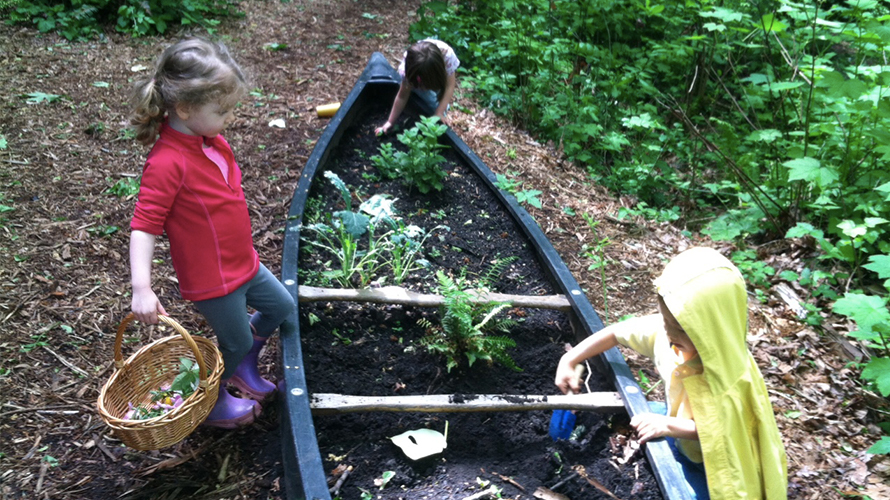
Scandinavian and German forest kindergarten models inform classes for children ages 3–5. Children spend the day on a 5-acre wooded site, enjoying play-based learning with an emphasis on natural materials, inquiry, autonomy and community; circle time takes place in an authentic 18-foot-tall tipi. Field & Forest Outdoor Programs are an outreach of The Attic Learning Community.
Roots & Wings Nature Preschool — Duvall
Roots & Wings outdoor nature program encourages children ages 4–6 to have fun and explore the natural world around them. Through nature activities for kids, including songs, stories and walks, as well as plant and animal observation, the curriculum plants seeds for children’s growth and connection with nature. The preschool is currently offering classes on Wednesdays and Fridays. Roots & Wings is a program of popular Wilderness Awareness School.
Nature Explorer — Cougar Mountain Park and St. Edward State Park
Through creative play and exploration, participants ages 4–6 work together in small groups, gaining nature awareness and knowledge of plants, mammals, birds, and tracking and survival skills. Programs are monthly on either Fridays or Saturdays. Nature Explorer is a program of Wilderness Awareness School.
Tike Hikes Outdoor Preschool — Redmond Ridge
This Reggio-Emilia-inspired, 100-percent outdoor preschool with a nature-based curriculum is located on 5 private acres that were once a nature preserve. Classes for ages 2–5 are available in the morning, and afternoon classes are for kids ages 4–8.
Tiny Treks Outdoor Preschool — The Enso Center Forest in Redmond
Children ages 3–5 enjoy outdoor preschool at the Enso Center Forest, with a play and exploration curriculum patterned after the forest kindergartens of Europe. Each day, the children play outside, explore and learn in the forest, hike on trails, play along the creek and tend the garden.
Natural Start Preschool — Eastgate Park, Bellevue
Children ages 3–5 spend 45 to 90 minutes outside during each class day; they play in the large gym at South Bellevue Community Center during extreme weather conditions. The school has access to 39 acres of natural habitat that includes forests, meadows, hiking trails and a stream, and there is a preschool garden where students grow vegetables and flowers, as well as two outdoor playgrounds and a sports field.
Cedar Valley Forest School — Maple Valley
Cedar Valley Forest School is an all-outdoors-in-all-weather forest school located at Royal Arch Park. In this “hands-in-the-earth and feet-in-the-puddles kind of program,” kids ages 3–6 get dirty and learn to follow the rhythms of the Earth and seasons of nature, right down to the snacks they eat.
The Mason Jar Farm School — Enumclaw
The Mason Jar Farm School program developed out of the idea that working farms are full of experiences that engage all of the senses. Students learn about the weather, for example, because they can feel it on their face or notice changes in the behaviors of their bird and animal friends. This play-based, all-outdoors program for children ages 3–6 convenes two mornings a week and is located on a working CSA farm that includes raised garden beds, fruit trees, chickens, rabbits, mini horses and a seasonal creek.
Nature Nuts Outdoor Preschool — Maple Valley
This South King County preschool provides year-round, mixed-age classes for students ages 2–7. This accredited forest kindergarten program combines unstructured nature-immersion time, flow learning and an inquiry-based teaching style.
South Sound and Vashon Island
Nurture in Nature Preschool — Tacoma Nature Center
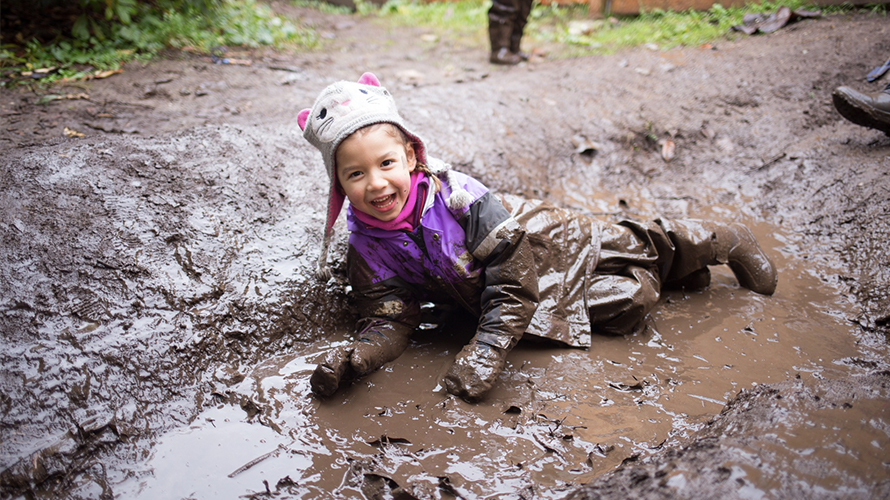
With Metro Parks Tacoma as its parent organization, Nurture in Nature offers multiple sessions each week for 3- and 4-year-olds and for 4- and 5-year-olds. Preschoolers spend at least an hour each day outside at this nature- and discovery-based program, which is located on 71 acres of land at the Tacoma Nature Center at Snake Lake.
Chavitos! Nature School — Tacoma
This bilingual school located on almost an acre of Native land is 100 percent outdoor nature immersion, with a child-driven approach based on discovery rather than a set curriculum. Chavitos! serves students ages 2–5 with morning, afternoon or full-day options.
Wind Gatherer Nature Program — Vashon Island
Children ages 4–6 spend the entire day outside in this place-based, nature immersion program. Flowing with the seasons, this approach fosters self-reliance and community through compassionate communication, beach and woodland exploration, awareness skills, quiet time in nature, journaling and improvisational play.
Sticks ‘n Stones Preschool — Puyallup
At this small, home-based preschool, children ages 3–5 spend most of their time enjoying a play-based, emergent curriculum in the outdoor classroom, but come indoors for lunch and story time. The outdoor area is equipped with climbing structures, art and project areas, and covered areas to escape the weather.
Editor’s note: This article was first published in 2014 and updated most recently in August 2022.