 Seattle Family Calendar
 Subscribe
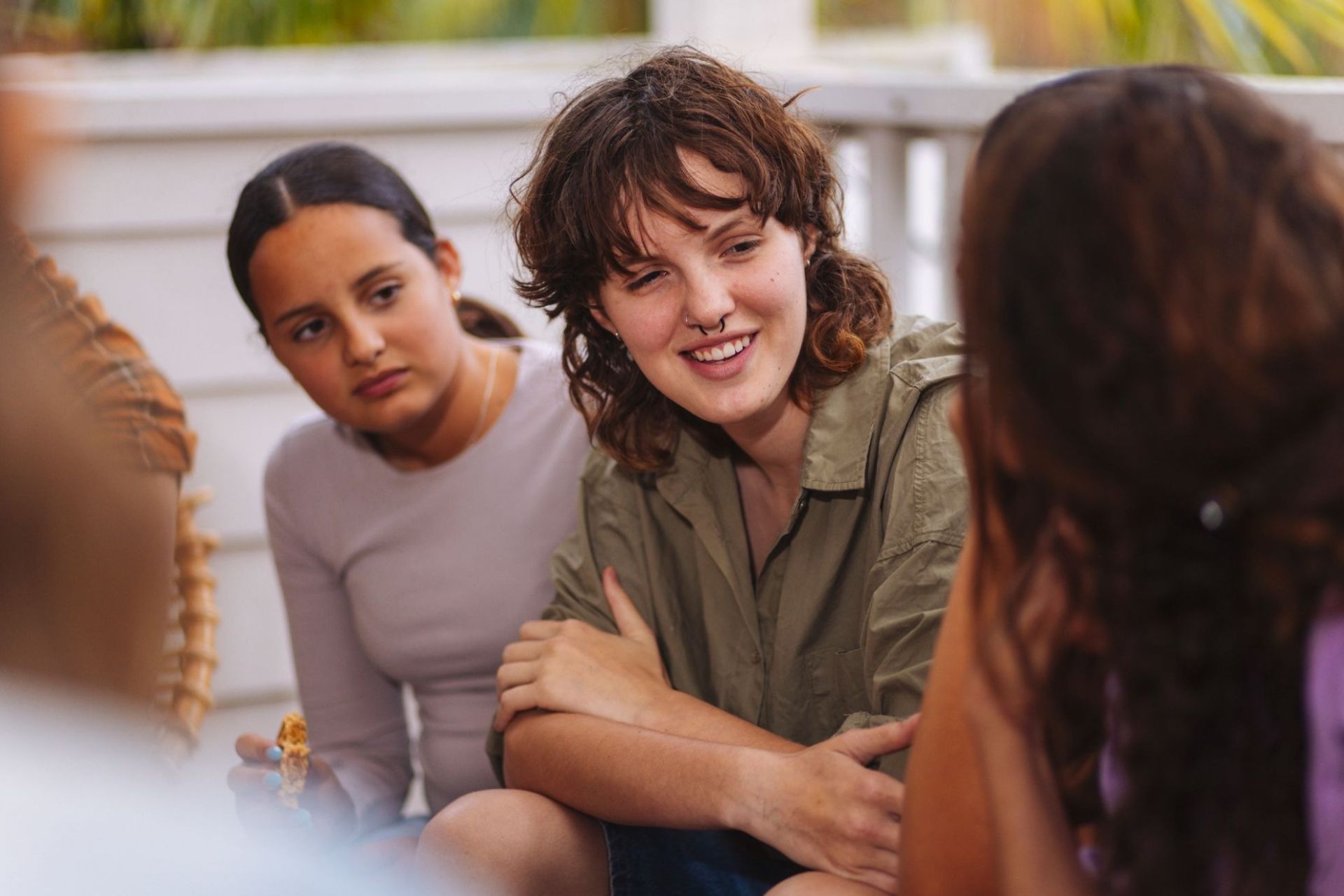

When Sam (name changed to protect privacy) was 13, his mom lost her job, and his family lost their home. For a few years he stayed with his mom and sister, moving from “place to place, shelters, parking lots at churches and stuff,” he explains, while they lived in their car. When he was 15, he was on his own. Sam kept his housing insecurity hidden from everyone, which he says was “pretty easy. … If you have a car you can just sleep in your car and take showers at your friend’s house and no one really knows. Wash your clothes at laundromats, that’s what I would do.”
Hawraa Carana’s family became homeless when she was 11 years old. “It started because there was an unattended pot left on the stove. And that small detail got rid of the entire house,” she says. “Me and my family lost our home and it was really hard to adapt to that instability. Because I was really young it reshaped the way I saw security and I needed to grow resilience early on.”
Sam and Carana represent a population that works tirelessly to remain invisible. For thousands of young people across the state, surviving homelessness isn’t just about finding shelter, it’s about navigating high school, managing stigma and carrying the stress of survival while trying to build a future.
The scope and impact of youth homelessness
A 2024 Point in Time count of homelessness in King County identified 1,959 youth younger than 18 living outside or in shelters, and an additional 187 individuals between the ages of 19–24. However, this count is notoriously low and does not include a significant group of youth experiencing homelessness: those living temporarily with friends or family, often referred to as couch surfing.
One organization that responds to the reality of what youth homelessness looks like every day is Cocoon House, a nonprofit in Everett that opened 35 years ago as an emergency shelter for teens. Today it offers a variety of programs, from emergency shelter to transitional housing to support for struggling families and parents. Joe Alonzo, the chief executive officer at Cocoon House, says this misunderstanding of what youth homelessness largely looks like is why people are surprised at how widespread the issue is. “I think people picture youth standing at the street corner with a sign, like you might see once in a while. But youth homelessness is incredibly hard to spot,” says Alonzo. “These young people have been victimized or have been put in positions where they can’t trust adults in their lives. So they blend in. They’re masters at trying to blend in. … A lot of young people are couch surfing; they’re staying with friends. They’re doing everything they can to not be visible.”
The actual number of youth experiencing homelessness or housing insecurity is better reflected in data from the Office of Washington State Superintendent of Instruction. In Washington state, 39,978 (3.6 percent) of enrolled students identified as homeless at any point during the 2025–26 school year. For the Seattle School District — our state’s largest district — 4.3 percent of students identified as homeless. Students are counted through the McKinney-Vento Homeless Assistance Act, a federal law that ensures educational rights, stability and support for children and youth experiencing homelessness. According to McKinney-Vento, youth are considered homeless who are living:
• With other families or friends (i.e. doubled-up housing)
• In hotels or motels due to lack of other alternatives
• In homeless shelters, domestic violence shelters or transitional housing
• In cars, abandoned buildings, parks, on the street or other public spaces
• As a runaway or in homeless youth shelters
• In temporary foster care placement
Homelessness and housing insecurity does not impact everyone equally. Kids who identify as LGBTQ+, have experienced foster care and kids of color are disproportionately impacted. According to YouthCare:
• One-third have been in foster care and age out
• One-quarter are kicked out of the homes
• One-third identify as LGBTQ
• Half are navigating mental health issues
According to the Data on Students Experiencing Homelessness report produced by OPSI, students of color are more likely to be homeless. Students who identified as Native Hawaiian/Other Pacific Islander were the most likely to experience homelessness compared to their peers, followed by Black/African American students, and American Indian/Alaskan Native students.
Homelessness also has a negative impact on school performance, partly due to the stress of insecurity. “You are worrying where you are staying, who you are staying with, if you are going to get to class, if you have a quiet place to study. It just takes a lot of mental energy at first,” says Carana. “It’s just really hard to focus on being a student when survival is constantly on your mind and you are constantly worrying in the classroom. It’s hard to connect with those around you.”
Sam experienced this disconnection too. “I didn’t talk to anyone when I was homeless. When I moved to Seattle that was the first time I ever made friends,” he says. “I kept myself isolated a lot because I didn’t want people to know I was homeless. It was hard to make friends if you’re always moving so I was just like there’s no point, and I’d just go outside by myself.”
The graduation rate for students experiencing homelessness is also lower: 63.2 percent compared to an overall state graduation rate of 83.6 percent.
Youth homelessness is also an indicator for homelessness as an adult. According to YouthCare, almost half of adults experiencing homelessness first became homeless before the age of 25.
Why youth become homeless
Alonzo says that while no two stories are the same, there are some issues he frequently sees that can result in a youth experiencing homelessness. One is simply the lack of affordable housing, which he thinks is a big driver for families becoming homeless in our area. “If a family becomes homeless and they’re living in a car, four or five people in a car is not conducive to anybody’s well-being,” Alonzo says. “And so a lot of times the older teenager gets pushed out. So we see that from time to time. We see youth dealing with parents with incredible mental health challenges or substance use issues so that they choose to leave to be safe.”
This is almost exactly what Sam experienced. His family lost their home, started living in their car and then he left for Seattle when things no longer felt sustainable. He feels like people think that all homeless youth are abusing drugs just because they want to, but he says, it’s not always like that. He says substance abuse was “all I knew when I grew up. All I’d see is my parents and my family just drinking and smoking and shooting up and I was like okay, it’s just what I was around.” Leaving became his safest option.
Family conflict is another reason youth face housing insecurity. “We have a disproportionate number of young people that identify LGBTQ that end up either being kicked out or leaving the home because it’s not safe or they don’t feel like they would be welcomed if they came out,” Alonzo says. “There’s so many different drivers as to why young people leave home. That’s why it’s so important for folks like Cocoon House to get in as early as we can to whatever that family dynamic is and see if there’s some triage we can do.”
Alonzo recognizes that parenting is stressful, and a lot of parents who are struggling with their teens feel alone. Cocoon House works to help parents normalize their stress and understand that they are not the only ones struggling. “If we can get resources to the parents — parenting classes, parent support groups — we tend to see those things diffuse. … Even if a youth has been disconnected from family for years we try to see if there is a connection to make or to reestablish,” he says.
Misconceptions about youth experiencing homelessness
Youth experiencing homelessness are often deeply misunderstood and unfairly judged. Alonzo puts it simply: People are scared of teenagers. “It’s so baffling to me how misunderstood teens are, especially teens that fit a certain image in your head of being homeless,” he says. “Youth are easily just considered delinquent. They’re homeless because they did something wrong. They’re clearly a troublemaker. They’re clearly a rebel. They don’t want to follow rules. They don’t receive discipline.”
But the reality is quite different. “The young people that come seeking help from Cocoon House, they look like every other kid. They have the same goals and aspirations; they want to have a future. They have dreams for themselves. And once we can build trusting relationships with them, we can start working on some of those things,” says Alonzo.
Carana also feels like society is quick to judge youth experiencing homelessness. But, she says, in her experience of going through housing insecurity, things are incredibly complex every day. “Housing status, I realize, never ever determines someone’s intelligence, ambition or potential,” Carna says. “I think young people like myself need flexibility and something stable, and I am super grateful to the people who believed in me. Having someone see you as another person rather than a person who doesn’t have a home is important.”
Programs that help
There is not a single reason youth become homeless, nor is there a single solution to the problem. In addition to Cocoon House’s emergency shelter and transitional housing, it also offers a drop-in center called U-Turn where youth can walk in six days a week and have access to showers, laundry, tutoring and a warm meal. U-Turn also has pool tables, a music recording studio, connections to mental health services, a medical examination room, on-site nursing and more. Alonzo says they try to make it a one-stop shop for anything a young person might need in the moment, plus case management and housing resources.
Information about Cocoon House’s programs often spread by word of mouth through kids in the community. For example, Alonzo says, “We had a huge group of young people show up one time because a couple people got services and the reputation was really positive. And so all of a sudden we had this groundswell. We had, for a while, a group of young teenagers, like 12 and 13 years old, all on scooters. And the group just got bigger and bigger and bigger over the course of a couple of weeks. These kids were all not necessarily homeless, but clearly without supervision and clearly at risk. And so we kind of tailored programming to meet the needs of that younger group at that time. So the staff are really responsive to whatever things are looking like at a given point in time.”
For Carana, school became her refuge when she was dealing with housing insecurity. “No matter how much instability I was experiencing, school became an anchor I could turn to,” she says. Since she was in kindergarten, Carana attended Washington Virtual Academy. The flexibility online school offered her became vital as other areas of her life started to shift beneath her feet. For Carana school went with her everywhere. “I didn’t have to worry about transportation, my parents coordinating school stuff for me or falling behind during transitions,” she says. “The teachers and the staff cared about me as a person and they made me realize it was okay to reach out for help for this. It was a space to become a person and grow up as a teenager. … Everything else was gonna change, but here, I still had my classmates, all my friends and my teachers and all I need is a laptop and some Wi-Fi.”
Carana wants parents to know that nontraditional education paths do work. “Having the flexibility of online learning gives you the space to stay on track academically. For me, I believe online schooling is a great tool for hard times. For anyone who feels like traditional school or path isn’t fitting their life circumstances, it’s worth knowing that options exist across the state,” she says.
What you can do to help
Societal problems, such as homelessness, can feel huge and overwhelming. It’s easy to look at the scope of the issue and feel like there is nothing you can do to help. But, luckily, there are a lot of ways to have an impact, and it’s easier than you might think. Since there are so many youth facing housing insecurity, you might find this issue becoming very real, very quickly, no matter where you live. So what do you do if your child tells you they have a friend who might not have a place to sleep?
If you are concerned about one of your child’s friends, Alonzo says start by asking questions to try and understand the situation. “Youth are never going to say, ‘I’m homeless’” he says. “But if we’re asking questions, we seem a little bit more open and curious. We can ask, ‘Where does Joe stay? Is Joe getting his needs met, food, whatever?’. … I think it’s okay to ask, ‘how are you?’ Youth are not going to come out and divulge right away. But if you don’t force them to answer and just say, ‘Hey, if you need anything, I’m here,’ and just keep extending that olive branch, you’ll get information.”
Alonzo says you have to respect how much information you’re allowed to receive from youth. But he’s found that if you’re consistent and extend that unconditional support, you’ll see them start to open up. “For some youth,” he says, “it takes time. I mean, we’ll have youth come into our drop-in center that won’t identify that they’re homeless or need anything, but they show up.”
Sam agrees that adults can help a kid by “giving them food and helping them get on their feet and just be open and friendly.”
“What I needed the most was help transitioning to the next chapter of my life after high school, which was going to university,” says Carana. She wants to encourage people to remember that “there is a next part to this person’s life and they are going to need a support system in order to transition into that next part of their life, no matter what it is they choose to do next. So I believe that asking them, ‘What is the next chapter after this’ and then helping them build steps to get there is something that might be applicable across all scenarios.”
Carana thinks that listening and understanding people’s stories is incredibly important. She thinks listening can come in many forms, “whether that’s reading someone else’s story or talking to someone and hearing about what is happening in their life and what caused them to be in the position they are in today. I think that noticing our judgements is also very important to be able to listen. It’s not a matter of pushing away anything that you’ve been taught to believe, it’s a matter of thinking, ‘okay I notice that and I am going to listen to this person’s experience because they are an individual I care about.’”
Learning more about youth homelessness is another great step to take. Cocoon House offers a quarterly educational forum where the community can learn about youth experiencing homelessness in Snohomish County. “We don’t want the world thinking that homeless teens are scary people. We actually don’t want them thinking of them as homeless teens. We want them thinking of people with a name who just need some help. It’s an incredibly stigmatizing identity to be labeled homeless,” says Alonzo.
Hope for the future
It’s important to remember that there is hope and bright futures are possible. Carana is currently a student at the University of Washington studying psychology. “Living through uncertainty gave me a deep curiosity about human resilience. I want to be able to use what I learned from my experience and help someone navigate their own,” she says.
Sam recently completed a training program, is currently pursuing his GED and hopes to land a job as a barista soon. He sees himself renting an apartment with friends in a few years.
“We have so many young people who are motivated,” says Alonzo, “One of the things I want the community to understand is if you can unlock opportunities for these youth, they have the motivation already within them. It’s just that they don’t believe in themselves a lot of the time. So if you can funnel that, it’s great. It’s a beautiful thing.”
Resources for youth and families experiencing homelessness in Greater Seattle
- YouthCare, Seattle: Provides emergency shelter, drop-in centers, housing, education and job training for youth ages 12–24. Call 206-694-4500 or visit youthcare.org.
- Friends of Youth, Eastside and South King County: Offers shelter, street outreach and transitional housing for youth and young adults up to age 24. Visit friendsofyouth.org for more information.
- Cocoon House, Snohomish County: Provides housing, emergency shelter and outreach services for teens and young adults in Everett and surrounding areas. Learn more at cocoonhouse.org.
- Washington 2-1-1: Free, confidential resource referral for emergency shelter, housing assistance, food and family support. Call 2-1-1 or 877-211-9274. You can text “211WAOD” to 898211 or look for resources online.
- National Runaway Safeline: A 24/7 hotline and chat for youth in crisis or thinking of running away. Call or text 1-800-RUNAWAY (1-800-786-2929) or visit 1800runaway.org.
Editor’s note: AI was used to generate the resources list in this article. The information was edited for clarity and verified by the writer.