Seattle Family Calendar
 Subscribe

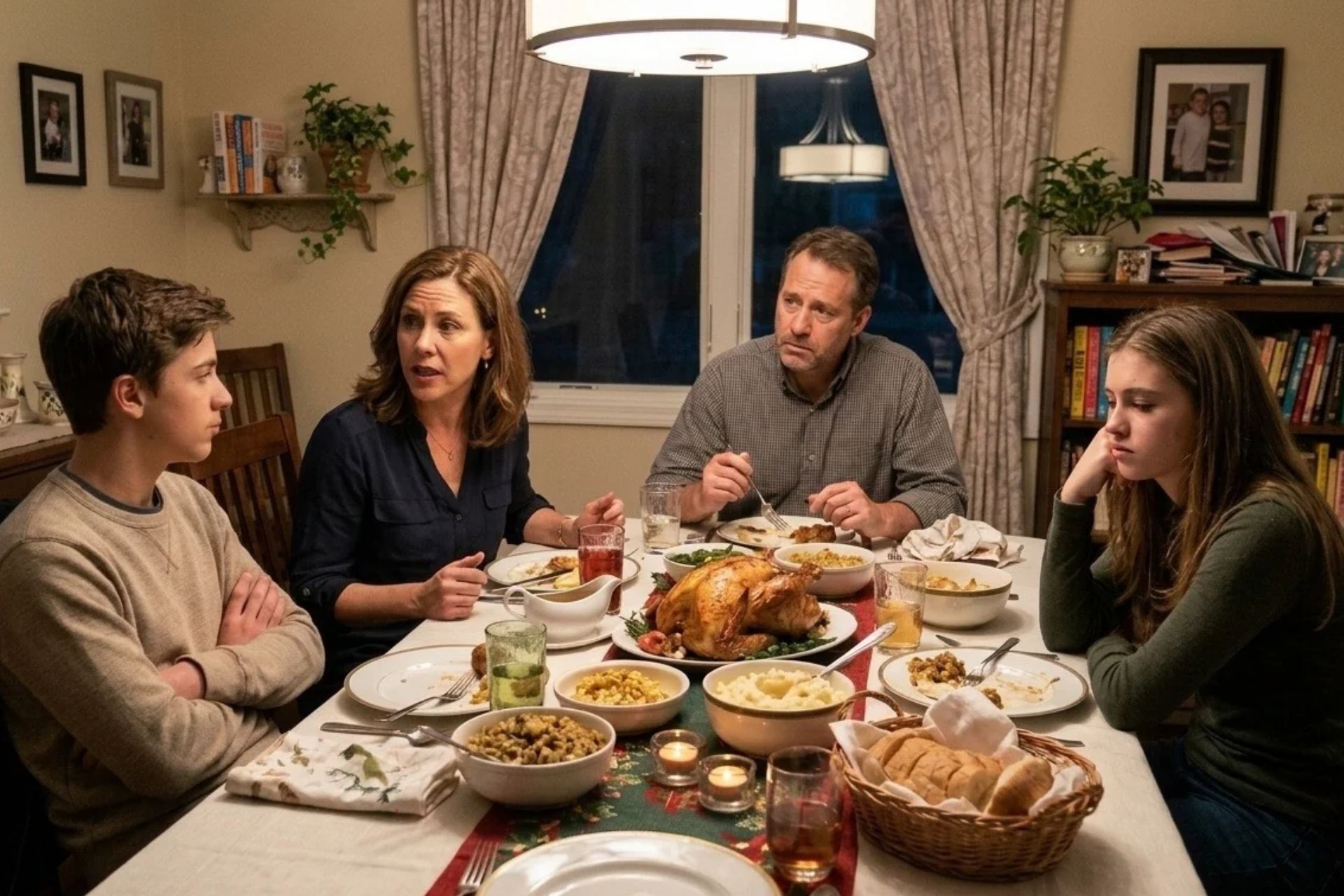

Imagine this scenario: Your teenager announces they want to spend Thanksgiving with a friend instead of family. Within moments, voices rise, tempers flare and the conversation escalates into a full-blown argument.
“Emotions are running high and both parties feel that the stakes are high,” says Sheena Friesen, Ph.D., an attending psychologist with Seattle Children’s. “During the holidays, there’s a lot of extra pressure.”
Enter the Six Hour Rule, a ceasefire call that tables the discussion for a later, agreed-upon time. This family conflict-resolution technique buys everyone valuable time to restart with a fresh outlook and a calmer mind. More broadly, it provides families with a structured plan for stepping away from escalating conflict, using coping strategies to regulate, and coming back together to resolve the disagreement more effectively.
The tool, which can be used with a wide range of ages, may be especially relevant during the holiday season when our vulnerability to intense emotions and conflict tends to be higher. Traditions, rituals and extra family gatherings can create heightened feelings. Plus, there may be external expectations and obligations that compound the stress. The rule is helpful for everyone involved, including adults.
“The Six Hour Rule comes in handy when verbal conflicts aren’t going anywhere or when in fact, we may accidentally be making the situation worse,” Friesen says. “As parents, we’re not as effective when we’re not regulated ourselves.”
Cooler heads prevail
The premise of the technique stems from neurobiology. When emotions run high, it can be harder to regulate our responses, consider different perspectives and engage in effective problem-solving. Taking a break provides an opportunity to regulate our emotions and allow our bodies to return to baseline, so we can come back to the conversation better equipped to work through the disagreement.
“If we keep thinking about how frustrating it is that my mom won’t let me have a sleepover and how inflexible she is, we’re likely to stay stuck in those feelings,” Friesen says. “The goal during the break is to step away from the conflict and intentionally do something that helps us regulate. That might mean listening to music, going for a walk, watching something funny or engaging in another coping strategy. We want to interrupt the cycle of escalating thoughts and emotions and give our minds and bodies an opportunity to settle. Time, combined with intentional coping, can be really beneficial.”
The break can be even more effective when someone engages in a coping strategy that helps shift their emotional experience. For example, humor can be a useful way to interrupt rumination, reduce tension and create some emotional distance from a frustrating situation.
“Sometimes something as simple as watching a funny video or laughing can help shift our emotional state,” Friesen says. “It doesn’t mean the frustration has disappeared or that the underlying disagreement has been resolved. It gives us an opportunity to experience a different emotion, take a step back and return to the conversation feeling less emotionally activated.”
Tailor the technique
The label of “six hours” can be misleading since the approach does not require waiting for precisely six hours. Sometimes, families might only need — or have — 30 minutes or an hour to break. Maybe the conflict needs to get resolved by a certain timeline, or a school day gets in the way.
“You can tailor the rule depending upon your kid,” Friesen says.
Before a conflict arises, families can select a random phrase to signify the break, from an obvious “break and wait” to something oddly memorable like: “I have to water ski.” Anyone can call out the phrase, which puts an immediate pause on the burgeoning argument.
One ground rule: The break cannot be used as prep time for your next rebuttal. Similarly, don’t spend the time stewing, Friesen advises. Instead, busy yourself with a self-soothing activity, or distract yourself with a chore like laundry or loading the dishwasher. Encourage your child to do something they enjoy. You could also do something together, like bake cookies or go on a walk.
Make a plan — and practice
Just like a soccer team scrimmage before the big game, practicing the rule is critical. That rehearsal will likely make it easier to follow when emotions escalate.
Consider holding a family meeting to introduce the Six Hour Rule as a plan for navigating disagreements before they happen. Then practice the steps using a low-stakes, pretend scenario, such as disagreeing over vanilla vs. chocolate ice cream. Have family members practice saying the code phrase, stopping what they’re doing and stepping away to take a break.
It’s also helpful to talk in advance about what each family member might do during that break to help themselves regulate. Consider what activities help them feel calmer, shift their attention or take their mind off the disagreement. You may want to brainstorm a list of ideas and post it on the refrigerator as a reminder.
Admittedly, older kids and teenagers might engage in some eye rolling. Validate that reaction, Friesen advises, saying “Thanks for hanging in there with me. I know this seems so silly.”
Regulation and resolution
If the conflict happens just before bedtime, the decision whether to sleep on it depends on the family. Postponing to the next day might be even more stressful amid the morning scramble. And, delaying even further runs the risk of sweeping things under the rug. Set a firm time to revisit and commit to it.
Indeed, returning to the discussion — even if moods have improved — is critical. Otherwise, the strategy morphs into avoidance instead of problem-solving.
Once tempers settle, all family members involved should ideally return more regulated and ready to problem solve. If that’s not the case, simply add more time to the clock. The hope is that time will shift the discussion from defending individual perspectives to collaborating and understanding.
As a parent, return to the contentious conversation with curiosity. People tend to be more effective problem solvers when they approach an argument with genuine interest, Friesen notes.
Ask your child to go first, and refrain from interrupting. The goal is to listen, not lecture or advance your rebuttals. After they finish, practice active listening approaches to reflect back what you heard. For example, in the Thanksgiving anecdote, a parent might say: “I think I heard you say that you’re angry and it doesn’t feel fair that you can’t spend Thanksgiving at your friend’s house. You want to be more independent. Did I hear that right?”
From there, focus on slowing things down, and demonstrating your desire to understand and collaborate. Even if you disagree with a child’s proposal, you can still validate the emotions behind it. Once someone feels heard, they’re more likely to collaborate. In the Thanksgiving scenario, that might mean letting a teen play football with friends earlier in the day and then joining the family for dinner.
In Friesen’s practice, the Six Hour Rule gives parents and children a concrete framework for practicing emotion regulation, navigating disagreements more effectively and strengthening their relationship.
“Parents are learning: ‘Oh, I’m actually not as calm as I thought I was,’” she says. “This is beneficial for parents, too. You can take a time out. You can take a break. It’s powerful modeling for your kids: I experience intense emotions, too, and here’s a skillful way to manage them.”
More resources from Seattle Children’s
Editor’s note: This article was sponsored by Seattle Children’s.