 Seattle Family Calendar
 Subscribe

I recently learned that the semicolon is a symbol of suicide. It’s used when a sentence could end but the author chooses to continue. To me, the semicolon represents the choice to keep going, to declare: “I am the author of my life, and I get to choose to live it to the fullest.” For me it means accepting that you don’t have to know how you’ll get through something unimaginable, you just have to decide that you will.
Even though my husband chose to end his life, my story and my kids’ stories keep going.
The semicolon phone call
My brain went numb listening to the detective on the other end of the call explain that my husband was found deceased. As soon as I regained the ability to think, an image of two roads appeared in my mind. One road led to complete and utter loss, sadness and dysfunction. The other led to strength, rebuilding and eventually thriving. In that moment I thought about my kids and my desire to live a life that inspires them, and chose the only road that was an option for me — the second road — even though I had no idea how to navigate it.
Every single day since my husband’s passing, I experience choices like this. We get to choose our perspective on life’s challenges. I chose not to question why this happened to me, and instead focus on the skills and strength I am learning through grief and the loss of what I thought my life would be.

The toughest conversation
The morning after my husband passed, I sent my kids to school so I could gather input from trusted people in my community on how to talk with my kids about what happened. I knew the only option in my heart was to tell my 6-year-old daughter and 8-year-old son the truth. With the guidance of my community, and following my intuition, I chose to share with them one piece of truthful information at a time in developmentally appropriate language.
The hardest conversation I’ve ever had, and ever will have, went like this:
“Daddy’s heart and breathing stopped. Daddy was very sick, but we couldn’t see his sickness. His sickness was in his mind, and it meant he couldn’t make good and healthy decisions. He was so sick that his brain thought he should not be alive. We know that’s not true. Daddy deserved to live and could have gotten better if he had asked for help. But he was so sick he thought he couldn’t ask for help. Because his mind was so sick, he thought he couldn’t live.”
I shared this script with all of our friends and family so that the information was consistent for my kids. I also made it very clear to everyone within our community that talking about mental health and what happened to my kids’ father was encouraged. I knew if anyone showed my kids avoidance or discomfort around the topic, it would create a stigma around mental health and suicide for them. I had to break this cycle immediately by talking as much as possible with everyone including their teachers, school principal, sports coaches, parents of their friends, our orthodontist and neighbors. I also chose to have my kids witness some of the conversations so they could learn how to navigate them with confidence.
Refusing help is not strength. Accepting help is
My husband’s sudden, tragic passing left me unprepared to handle the logistics of our household. I was overwhelmed with the load — the finances and all of the paperwork. While I knew I could do hard things, I knew this was not the time to flex my independence. Instead, I chose to honestly share my weaknesses and challenges, actively seek help and then accept it. I know hiding weakness and resisting help compounded the unbearable mental load my husband carried. Now, I consider my mental health and my ability to show up to support the well-being of my kids with every choice I make.
My sister, the ultimate project manager, quickly set up a GoFundMe, and a form for our community that included information on how people could support us: finances, counselor recommendations, attorneys, moving companies (yes, we were scheduled to move one week after my husband passed), cooking, childcare and more.
I learned to lean heavily on help and resources from my community without any shame or guilt. It felt uncomfortable at first. But when I saw how much our community wanted to help, I was able to let go of my embarrassment about not being able to do something. It felt freeing to be honest and open — no carrying the mental load on my own. I was surrounded by incredible people that wanted to help, who had skills I didn’t. Accepting help allowed me to focus on the really important things: my family’s mental health and processing our grief.
Getting comfortable with the uncomfortable
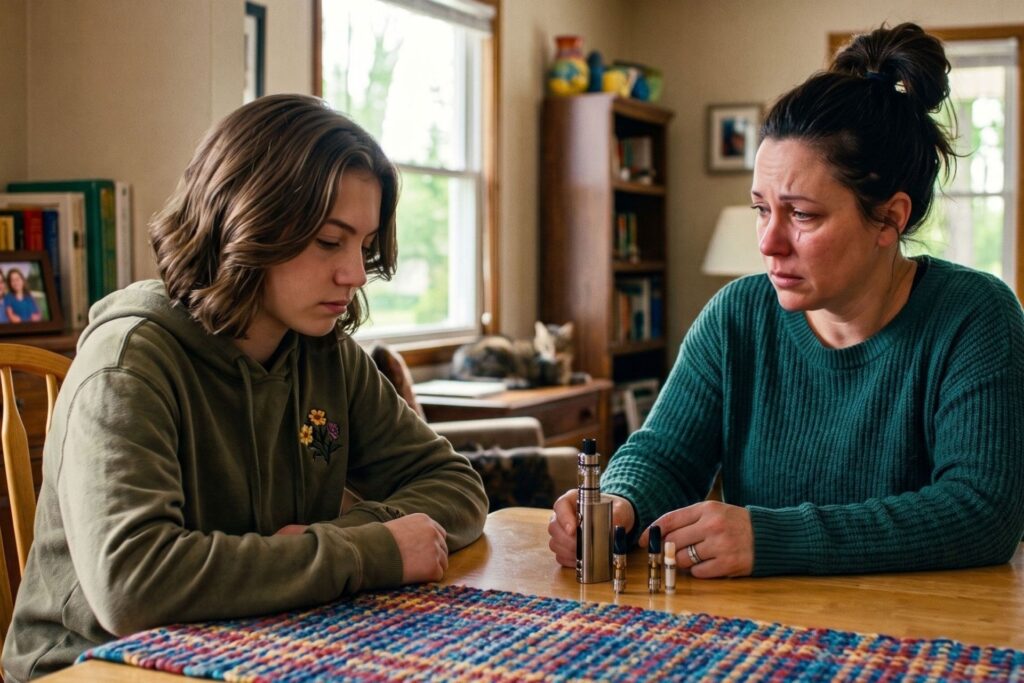
My son’s counselor told me that the goal of counseling isn’t to get rid of uncomfortable feelings. Rather, its purpose is to “build our tolerance of uncomfortable feelings and emotions.” Counseling is an important part of our lives now; it’s essential to our well-being.
Early on, my son would get angry and run to his room to hide when his grief hit. Two months into counseling he was capable of sitting with me, tears streaming down his cheeks, when grief hit. Four months to the day, on my husband’s birthday, my son and I hiked to the place where he passed. Under the bright sun, we found a rock to sit on. My son and I sat quietly side by side in the place his father ended his life for 20 minutes; neither of us said much. Then he put his arm around me. My heart ached for my son as he knowingly sat exactly where his father passed and comforted me instead of celebrating and eating a birthday treat with his dad on his birthday. This was the ultimate proof of tolerance for uncomfortable feelings.
Both my kids know that they have a counselor to keep their mind and brain healthy. They openly share with friends that they see a counselor. Recently at school pick-up one of my son’s friends asked if he could play after school and my son said “I can’t because I have counseling today.” His friend asked what counseling was. I hope more parents will talk with their kids about the benefits of counseling, and consider giving this gift to their children.
The new normal: Duality of emotions is healthy
The number of times I have simultaneously experienced sadness and joy since my husband’s passing is countless. It happens many times every day, and my kids experience it too.
It was confusing and felt wrong at first. I wondered what others would think if they saw me smiling, laughing, cheering for my son at his triathlon or proudly watching my daughter at her first ice-skating lesson. Every one of these moments was filled with conflicting emotions: deep sadness that my husband — my children’s father — would never experience these moments again, and pride that I showed up, that my kids had the strength to continue to follow their passions and that we found joy amidst our grief and sadness together.
A couple of months ago I learned that children experience the grief of losing a parent over and over again, and it really stuck with me. Not because I had experienced it yet, but because I knew I would need to remember it when things got hard for my kids so I wouldn’t be surprised by a sudden onset of strong emotions. Children experience and process grief differently each time they go through developmental milestones, achievements and life events.
Recently, my son joined a golf junior league. His father would be so proud — after all, he introduced him to golf. While my son is excited about this new opportunity, it also elicits strong feelings of sadness and grief that appear in different forms each day. I stay in close communication with my son’s counselor to help him through all of this. I’m grateful I was prepared for the fact my kids would experience grief over and over again, and in different ways. It allows me to have empathy and patience for unusually challenging behaviors, and to pause and take time to have conversations about our feelings together during these more emotionally challenging times.
Celebrate the dark wins
Living with someone whose mental health was deteriorating as the years went by made the illness hard to identify, because it was my reality and had been for so long. My nervous system was trained to be on alert for things that may trigger my husband.
I couldn’t see it clearly then, but I can look back now and see how unhealthy and hard many aspects of our relationship and family dynamics were. My husband had withdrawn from engaging with me and eventually from engaging with the kids. Weekend family outings became weekend outings for me and the kids. Our family bedtime reading routine became me reading to our kids as my husband scrolled on his phone. Anger, tension and loud voices became consistent in our home, sprinkled with moments of joy and laughter when my husband’s healthy side would occasionally appear.
Today there are many things that are easier and healthier, not because my husband is no longer here, but because his mental illness is no longer controlling us. There is no more walking on egg shells. No more anger. No more blame and guilt. No more shutting down.
My counselor has taught me to embrace and celebrate these things — what she calls the “dark wins.” I actively choose to view these moments as dark wins, rather than feeling guilty about what feels better or easier now. We get to choose our perspective and I will always choose the healthy lens.
Don’t ignore the small signs
Before my husband passed, I interpreted the signs of his mental health challenges as relationship issues. I thought if we went to counseling together things would get better. I can look back now and see so many clear red flags: resentment, blame, guilt, low self-esteem, trust issues and so much more.
My hope is that anyone reading this who sees even the slightest signs in a loved one will encourage and help them to seek professional help.
Suicide resources for families
If you or anyone in your family needs immediate support, please contact 988 Suicide and Crisis Lifeline by phone, text or chat.
- Suicide Prevention Resource Center
- American Foundation for Suicide Prevention
- The Dougy Center, National Grief Center for Children and Families
- Seattle Children’s “Prevent Suicide: Ask the Question”
- Annie’s Hope, Center for Grieving Kids