 Seattle Family Calendar
 Subscribe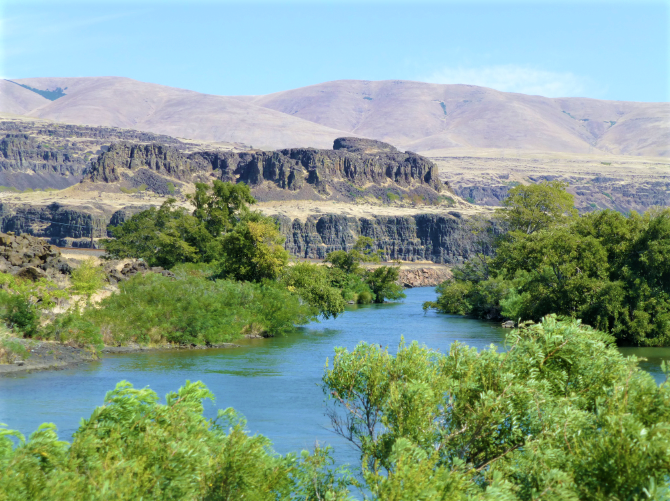

Sunny side camping adventures
Over the Cascade mountains from Seattle, camping season starts in spring and lingers late into fall for one big, blazing reason: sunshine. In this land that’s part desert, part open forest, the clear sapphire-blue sky stretches for miles overhead. Rivers twist their way through narrow basalt canyons as they race to shallow lakes that sparkle in the sun. Rolling hills dotted with sage and wildflowers are crisscrossed with gentle hiking trails. The Eastern Washington landscape is warm, dry and very different from its western counterpart.
Camping over the mountains is delightfully different as well. Imagine your family waking up from a tented slumber to watch morning sunlight polish the surrounding basalt cliffs, or noshing on s’mores around an evening campfire on a desert plateau beneath a massive sky full of stars.
We’ve uncovered eight of the best sunny camping adventures for families in Eastern Washington where you can have this experience.
Tips: If you go, pack extra sunblock and wide-brimmed hats to protect your kids’ skin and eyes from the sun’s rays. You’ll want to be aware of the increased possibility of encounters with ticks, rattlesnakes and poison oak over the mountains, too, all hazards that we seldom worry about in the Western Cascades and Olympics. Be prepared for the chance of windy evenings, too, by packing along things to weigh down your tablecloth and tent.
First sunny stop: Lake Chelan
Image credit: Tara Schmidt/Flickr CC
Lake Chelan State Park
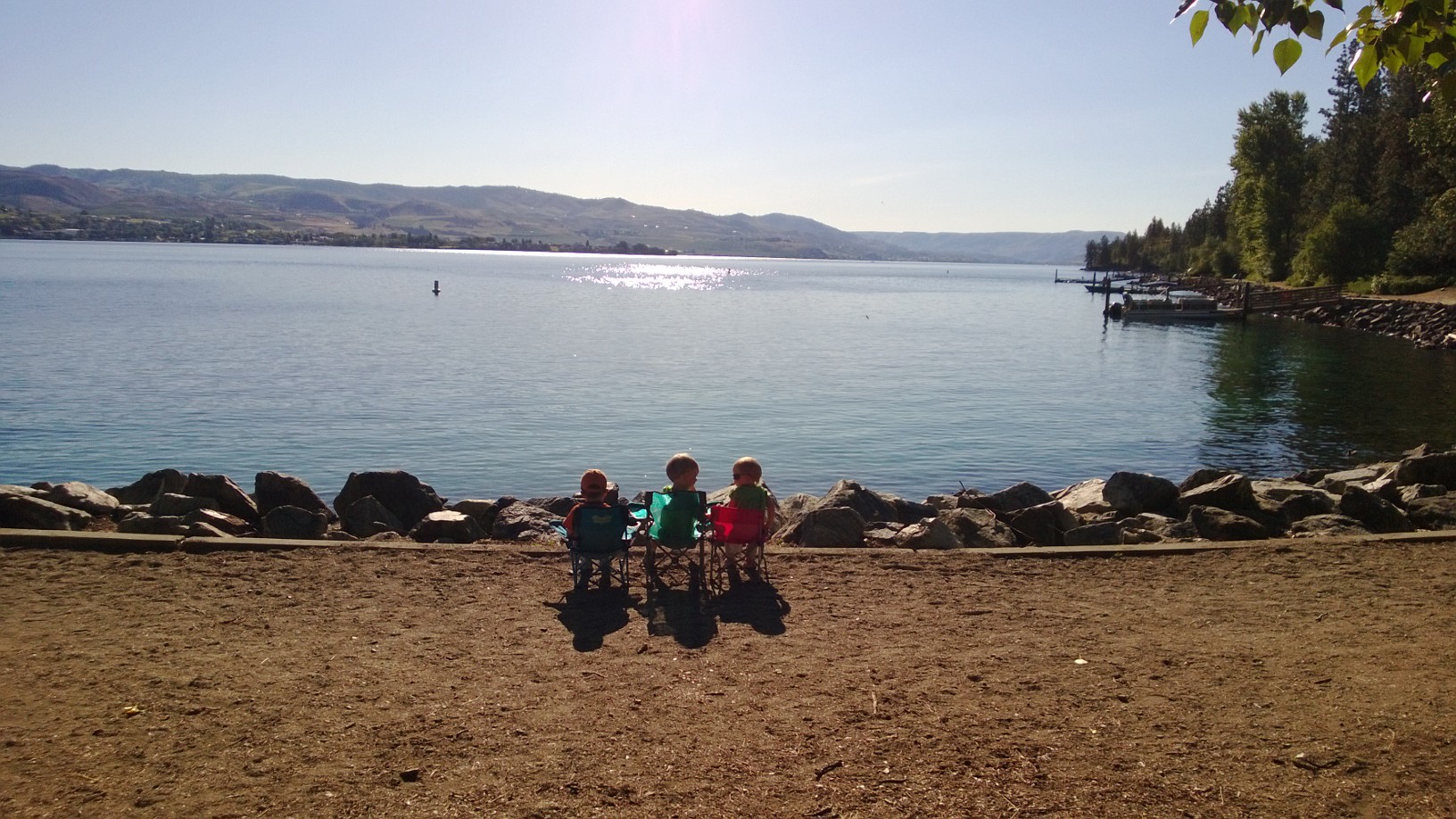
If your family is lucky enough to snag a campsite on the glacier-carved fjord at Lake Chelan State Park, you’ll have a front-row seat to a true wonder of nature. About 55 miles long and never more than 2 miles wide, the deep blue waters of Lake Chelan are flanked by mountain peaks reaching up to 9,000 feet in elevation.
This state park on the lake’s south shore offers families much more than a glacial geology lesson, though; it’s an epicenter of summer fun for kids of all ages. The 127-acre park is set in an open ponderosa pine forest with 6,000 feet of public shoreline. There are 103 tent sites plus 17 utility hookup sites, and plenty of restrooms and showers.
A big bonus is the lake views from many of the campsites, and some of the campsites even have their own docks. The walk-in tent sites are the most spacious and private.
Do: Go swimming, boating, fishing — you name it, you can do it here. The park has an expansive lawn for playing Frisbee in the sun, and a modern kids’ play structure. The park has a full-service concession stand that sells grocery items, snacks and candy.
Reservations: Book online.
Next stop: Wenatchee Confluence
Wenatchee Confluence State Park
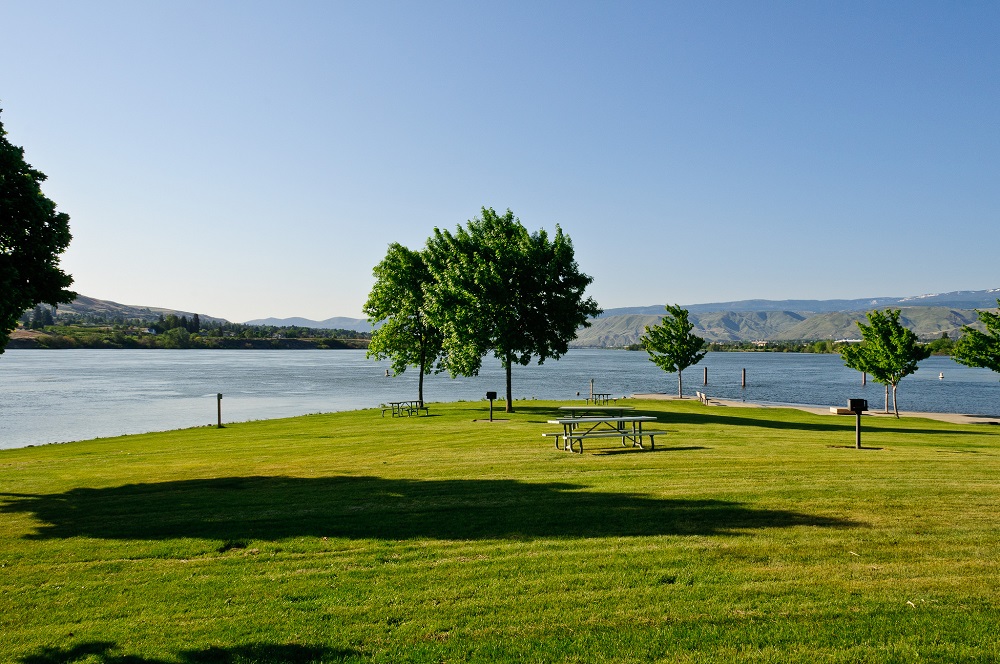
The sun truly shines on you at Wenatchee Confluence State Park, so much so that it would be prudent to pack a large beach umbrella or pop-up shelter for your campsite. Some don’t have much shade! Comprising 197 acres, this park, as the name suggests, is set on the confluence of the Wenatchee and Columbia rivers, and provides a little something for everyone. One half of the park is all about active recreation, with a swimming beach, tennis courts and sports playfields. The other half, Horan Natural Area, is a huge swath of natural wetlands which provide important habitat for migratory birds and waterfowl, so bring your binoculars. Both tent campers and RVs are welcome here, but with eight tent spots compared to 52 utility spaces, the Airstream sect has an edge.
Do: Bring your bikes. The Apple Capital Loop Trail runs right through the campground, a 14-mile-long paved recreation loop that follows along the Columbia River shoreline.
Reservations: Book online.
Next stop: Ginkgo Petrified Forest
Image credit: Henry Huey/Flickr CC
Ginkgo Petrified Forest/Wanapum Recreation Area, Vantage
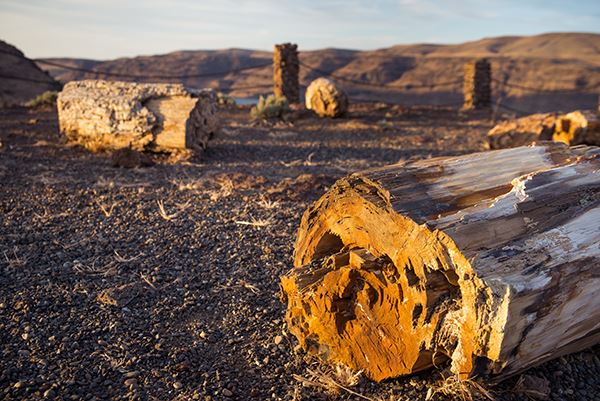
Ginkgo Petrified Forest sits atop a bluff on the west side of the Vantage Bridge over the Columbia River. While the location might seem unremarkable at first (save for the constant sunshine), look more closely and you’ll soon see why this area is perfect for exploring with curious kids. A rare petrified log from a ginkgo biloba tree was discovered here in 1932, followed by the realization that the site contained a whole petrified forest.
Although an effort to get national monument status for the site failed, it is a registered national natural landmark. Kids will love learning about petrified wood and holding various specimens inside the Ginkgo Petrified Forest Interpretive Center on-site (closed in winter; check for seasonal reopening). The adjacent campground at Wanapum Recreation Area has 50 campsites, all with full utility hookups, though tent campers are welcome to use the sites. Be prepared for high winds in the evening.
Reservations: Book online.
Next stop: Potholes
Potholes State Park, Moses Lake
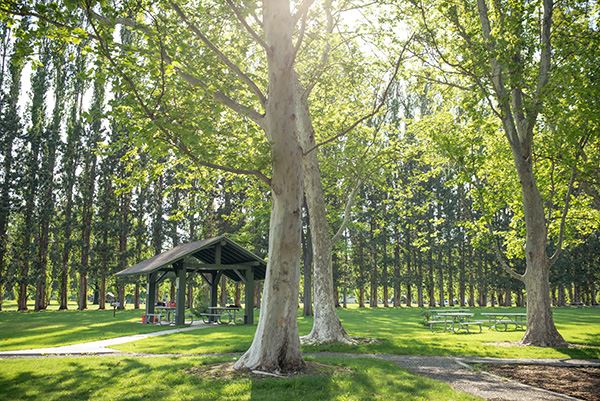
Potholes Reservoir and its various adjacent lakelets provide an oasis in the middle of Washington’s driest desert country. Bring binoculars for watching birds, a fly rod for catching fish, and a canoe or kayak to paddle around the freshwater marshes. You can also walk the 3 miles of hiking trails. Potholes State Park itself covers 640 acres, with 61 tent sites and 60 utility campsites as well as five furnished log cabins. Little kids will love the playground.
Do: This is a great spot to take kids on their first fishing trip; the reservoir is well-stocked with bass, walleye and rainbow trout. Make sure everyone age 14 and older with a rod has a fishing license (and everyone fishing may need a catch record card) and don’t forget to bring along some lemons if you wish to fry up your catch for dinner.
Reservations: Book online.
Next stop: Sun Lakes
Sun Lakes-Dry Falls State Park, Coulee City
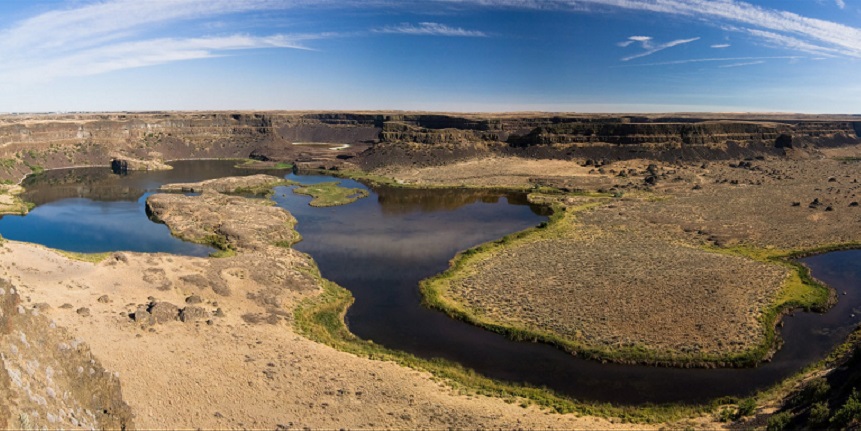
Dry Falls, the heart of this unique park, may look like an ordinary scalloped precipice (for us non-geologists, that’s a very tall, crescent-shaped cliff). But if you imagine what was happening here 13,000 years ago during the Missoula Floods, you get quite a different picture. When it was an actual waterfall, Dry Falls was 10 times the size of Niagara Falls. All that water carved the basalt valley below where Sun Lakes-Dry Falls State Park and campground sites bask in the sun amid the rolling hills of sagebrush. There’s plenty of room for camping here, with 96 standard sites plus 41 utility spaces. The park offers loads of family recreation, from horseshoe pits and miniature golf to swimming and fishing.
Do: The park’s interpretive center is loaded with learning opportunities about the Missoula floods and how they shaped much of the Pacific Northwest landscape. Dry Falls is an important stop along the Ice Age Floods National Geologic Trail, the first of its kind in the United States.
Reservations: Book online.
Next stop: Steamboat Rock
Image credit: UltraView Admin/Flickr CC
Steamboat Rock State Park, Electric City
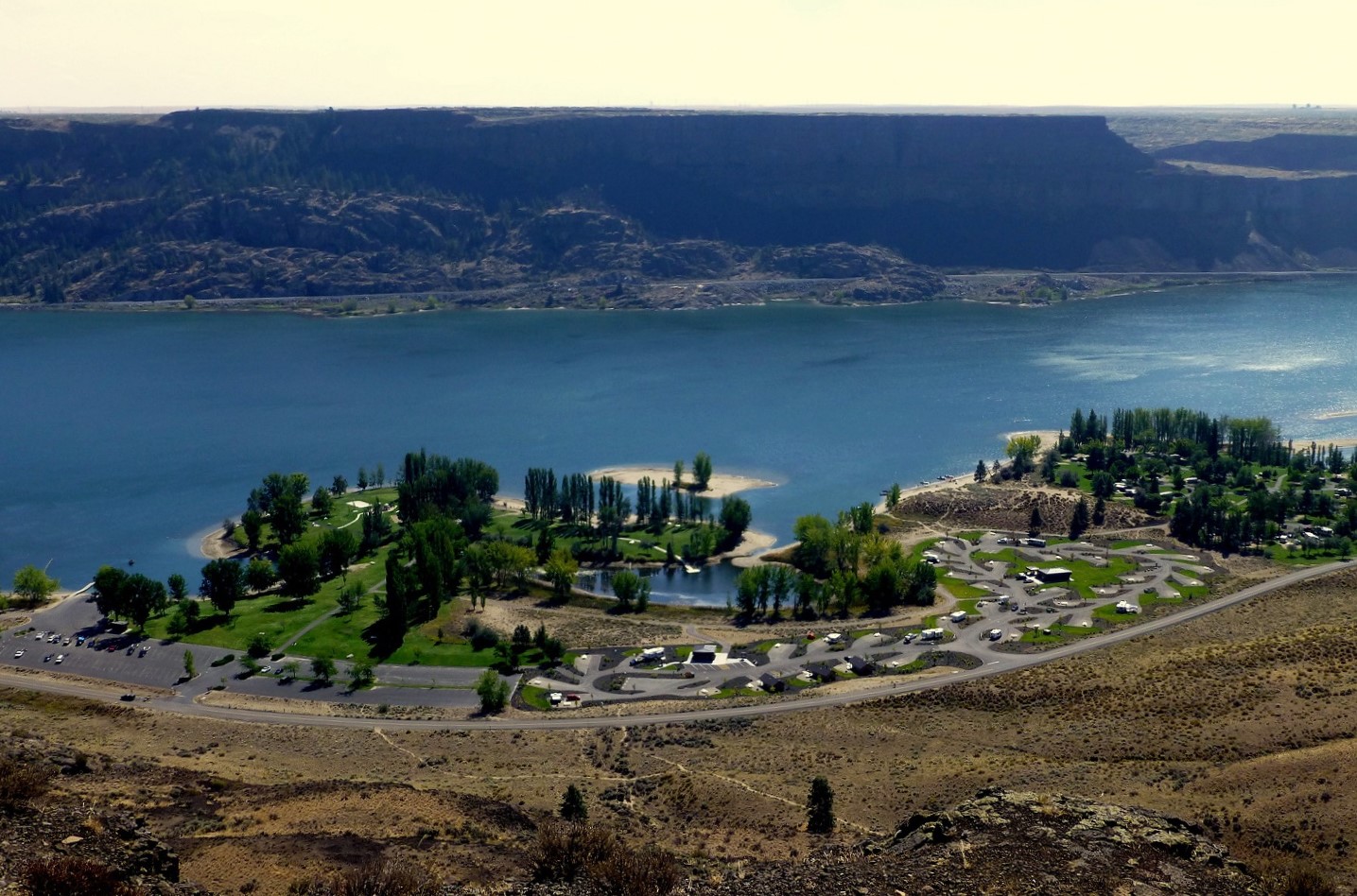
In the heart of Washington’s Grand Coulee desert sits the family recreation paradise that is Steamboat Rock State Park. This park is on an “island” surrounded by your outdoor playground, Banks Lake. It draws water lovers to its sandy swimming area and three boat launches, and with 50,000 feet of freshwater shoreline, there’s plenty of room for everyone. Some of the best freshwater fishing in Washington is to be had in Banks Lake, which is full of walleye, bass and perch. The campground has 26 tent spaces and 164 utility sites. More campsites, all of them primitive, are available about 9 miles north of the main park at Jones Bay, and also at Osborn Bay. The park has a concessions store that sells groceries, snacks and fishing supplies.
Do: Take a power hike through fragrant sagebrush whipping in the wind all of the way to the top of Steamboat Rock (4 miles round trip, 650 feet in elevation gain that involves a little scrambling).
Reservations: Book online.
Next stop: Curlew Lake
Image credit: benjamin scott/Flickr CC
Curlew Lake State Park, Republic
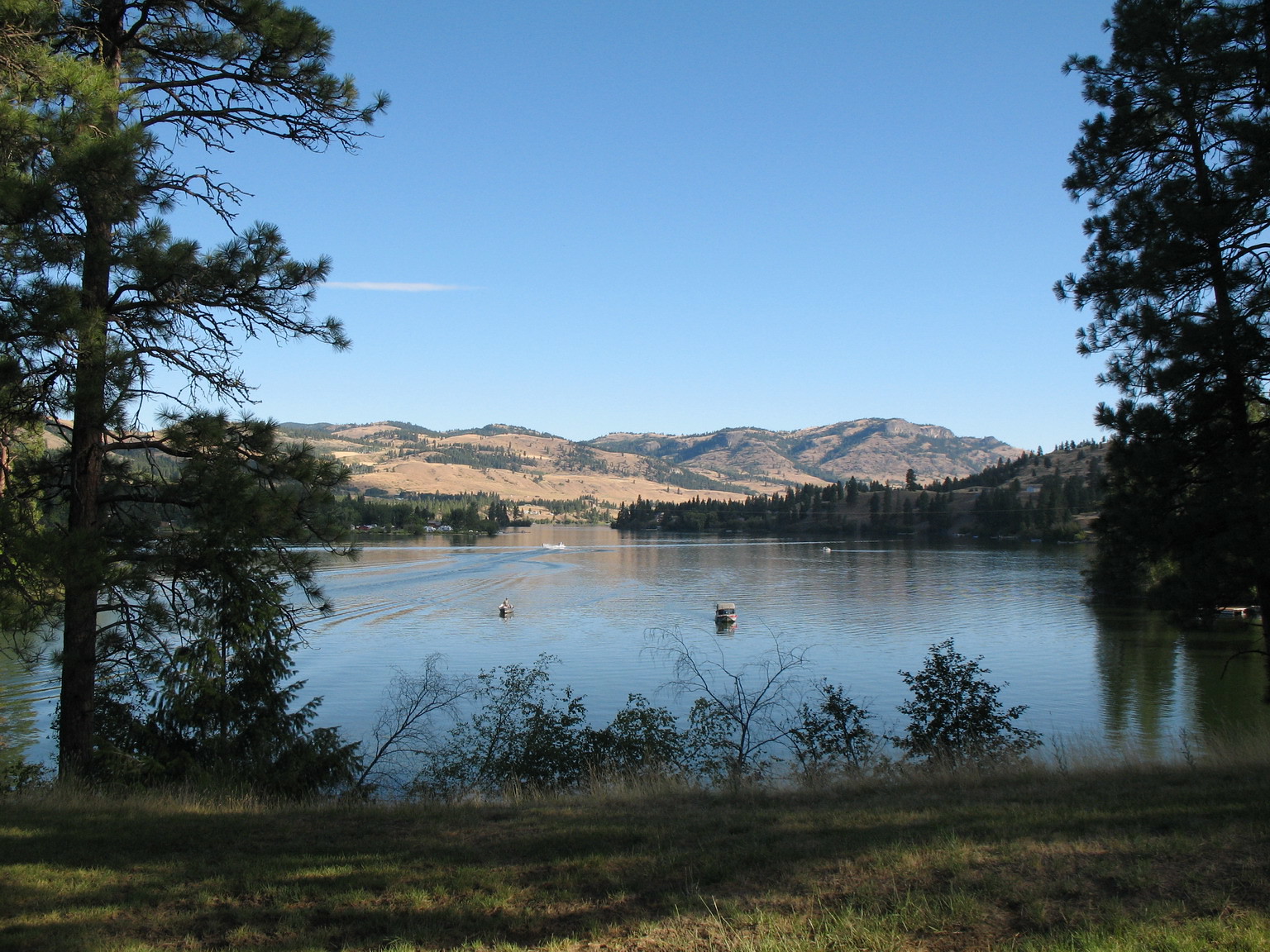
Camp among nesting great blue herons and bald eagles at 123-acre Curlew Lake State Park. Once a summer camp for Native American tribes in the region and later a hot spot for gold panning, it’s now a quiet and scenic family camping park with a swimming beach, boat launch, putting green, and trails alongside wetlands and through the lodgepole pine forest. Bring fishing poles for catching rainbow trout and a pan to fry them in. The campground has 57 tent spaces and 25 utility spaces, with the prime spots being walk-in tent sites right on the lakeshore.
Do: In nearby Republic is the Stonerose fossil site, which includes an interpretive center and real fossil beds for kids to dig around in.
Reservations: Book online.
Next stop: Columbia Hills
Image credit: Mary & Dan/Flickr CC
Columbia Hills Historical State Park, Dallesport
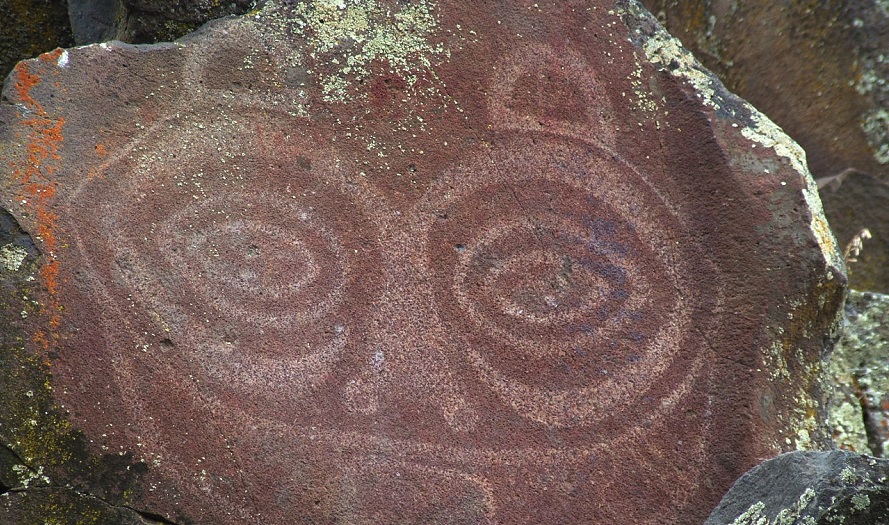
Don your buckskin hats — you’ve joined the Corps of Discovery! Columbia Hills Historical State Park sits in the sunny part of the Columbia River Gorge. It’s also a stop on the Lewis and Clark National Historic Trail at the site of a former Native American village whose people received the explorers with kindness during a dangerous stretch of their journey down the river.
Today, the park is one of the most stunning in the gorge for its fields of wildflowers, oak-bottomed canyons and basalt rock formations. A famous pictograph titled “She Who Watches” is located in the park, though visitors can view the pictograph only via guided tour.
Camping options include four standard sites and eight utility sites, plus two primitive tent sites. There is also a handful of platform-tent cabins to rent.
Do: Take a hike. The trail system on Dalles Mountain within the park takes hikers up to 12 miles through meadows of balsamroot to the summit of Stacker Butte.
Reservations: Book online.
More camping info for families:
Editor’s notes: Image credit this page: rooftop65/Flickr CC. This article was originally published several years ago and updated most recently for sunny camping in 2023.