 Seattle Family Calendar
 Subscribe
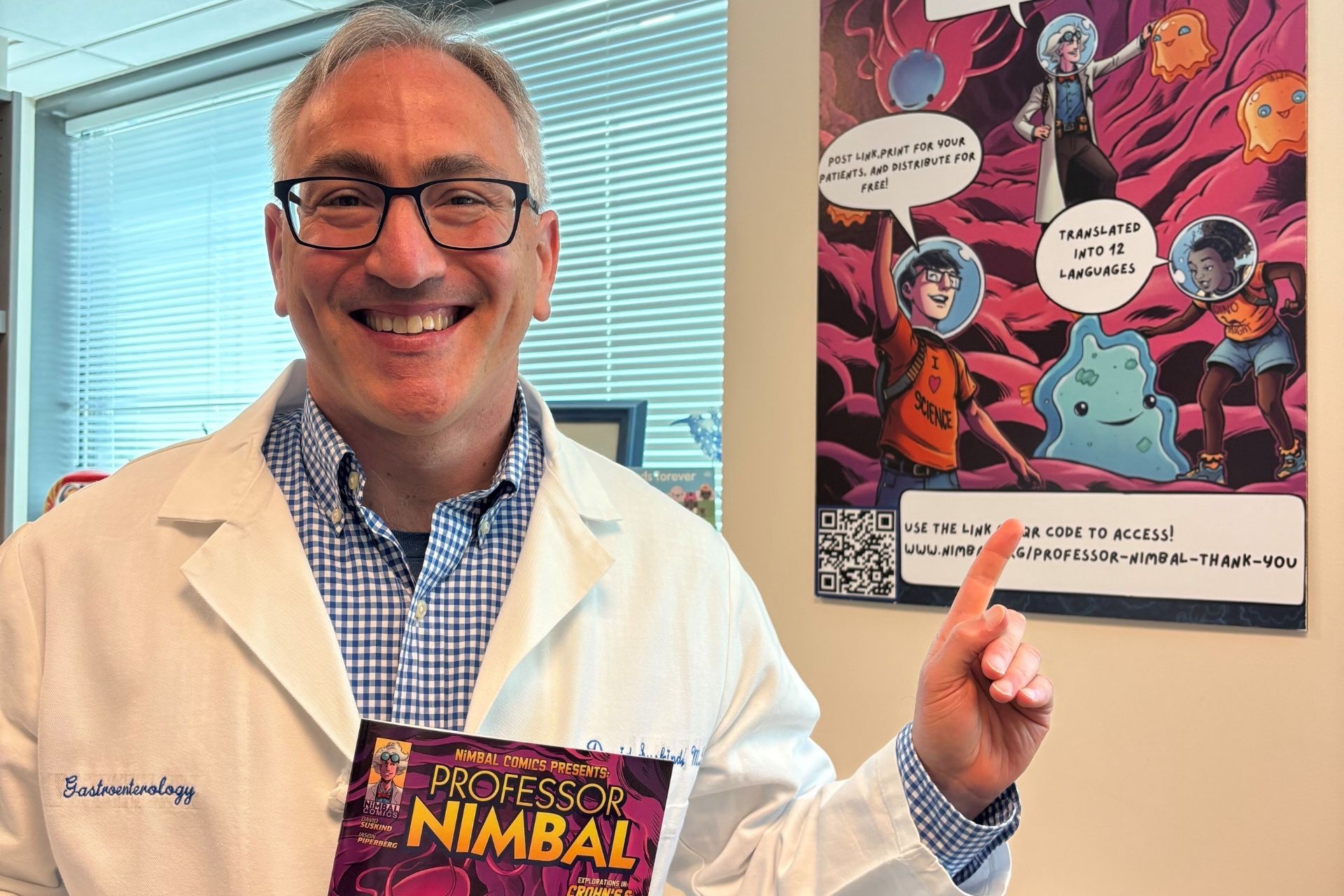

In 2018, Dr. David Suskind, a pediatric gastroenterologist at Seattle Children’s, realized his young patients often left the exam room without a clear understanding of their condition. Despite his best efforts, the medical talk was boring or overwhelming.
Suskind set out to change that. He channeled his love of comics, partnered with illustrator Jason Piperberg, and created a series of engaging stories focused on pediatric GI topics.
This summer, he’s putting the finishing touches on his tenth comic, which will feature constipation. Like the others in the Livewell Comic series, he uses kid-friendly storylines and humor to demystify topics that can otherwise feel complex and uncomfortable.
“Oddly enough, people don’t like talking about pooping,” he says with a laugh. “But, when you put it out there in a comic’s funny frame, it becomes less scary and less gross.”
Removing that stigma can also lead to better conversations with providers, and ultimately, improved communication and care. Plus, patients and their families can digest the science at their own pace.
“One of the Achilles’ heels of medicine is that we don’t have enough time to sit down and talk about the conditions people are facing,” he says. “This allows someone to get a better understanding in a hopefully approachable way.”
From exam room to comic strip
Through his work at Seattle Children’s, Suskind shared important information about Inflammatory Bowel Disease, which includes illnesses that swell the digestive tract and can damage the gut tissue. But he questioned how much information his young patients retained after leaving the appointment. While adults could search for additional information online or read the informational pamphlets, there wasn’t an appealing educational option for children.
“I realized there wasn’t a full understanding of what IBD was despite my telling them all the things that were important,” he says. “It’s hard to retain everything from a 30- to 45-minute office visit.”
He thought about his childhood love of comics and wondered if he could provide a better option for his patients. Suskind connected with illustrator Piperberg and set to work. The result was a kid-friendly comic packed with adventure, intrigue and humor. As readers join the narrative journey, they also absorb a tremendous amount of practical medical information.
“The comic is a homage to ‘The Magic School Bus,’ which definitely influenced me when I was a youngster,” he says.
In the first comic, a kid sporting an orange “I love science” T-shirt tells a friend about his new IBD diagnosis. When his friend asks for more details about his doctor’s visit, he responds: “I’m not really sure. He kept talking about poop and it was really gross.”
Together, they seek the input of Professor Nimbal (short for nutrition in medicine balance), a friendly neighborhood scientist with a lab coat, red bow tie and goggles pushed back like sunglasses over his blond mane.
“Ask away!” Nimbal tells the kids. “The more questions the better.”
When the questions get too confusing, they hop into his P.O.O.P. — People Operated Omniverse Projectile — to explore the large intestine for themselves.
Breaking boundaries and reducing stigma
The nine comics cover a wide range of mostly pediatric GI topics, such as functional abdominal pain, eosinophilic esophagitis, fatty liver disease and celiac disease. While most focus on GI concerns, a flu and vaccine comic grew out of a Seattle Children’s effort to encourage vaccination.
The hospital distributes printed versions to patients and digital copies are free and available for anyone at Livewellcomics.com. The original IBD comic has been translated into 15 languages, and providers throughout the world have reached out to share their own success stories, including physicians in Saudi Arabia and Jordan.
While some comics — like the original Professor Nimbal voyage — are a sizable 28 pages, others are much shorter. The complexity of the condition drives the content, Suskind explains.
Real-life experiences and fellow clinicians often inspire the characters. A Seattle Children’s expert on celiac disease appears in that comic while a neurogastroenterologist doctor leads the conversation on cyclic vomiting. While their real names are not directly referenced in the comics, their identity isn’t a secret. Patients often enjoy learning of their doctor’s alter-egos.
“It allows the patients to know their doctors as well, and to see them as real people,” he says.
Constipation comic aims to raise awareness
His latest comic, which will be out in several months, will consist of 32 pages exploring constipation. This time, he was inspired by a young child named Tatum who experienced chronic constipation, and ultimately died from related complications. While the story is tragic, the hope is that the work will raise awareness of the condition and encourage more open conversations about a topic that can be tainted with embarrassment.
Tatum’s family has been working with Seattle Children’s to spread the word about abnormal bowel functioning, explains the family’s web site. One of the doctors they’ve worked with, gastroenterologist Dr. Lusine Ambartsumyan, will appear in the comic.
With the support of the family, the comic will also include various “Easter eggs” that honor Tatum’s life.
Comics connect communities
Ultimately, the comics help convey an important message: You aren’t alone. IBD, for example, impacts roughly 3 million Americans, according to the Centers for Disease Control and Prevention. But, when someone is beginning their medical journey, they might not realize the extent of the broader community.
Suskind’s empathy comes from personal experience. As someone who got diagnosed with Type 1 diabetes in his youth, Suskind learned firsthand the value of connection.
He’s optimistic the comics are fostering that community, both at Seattle Children’s and beyond. Just the other day, Suskind encountered a new patient who had been hospitalized for IBD. When Suskind met the patient’s mom, she immediately gave him a hug, sharing that her family had read and appreciated his comic.
“She said it made a difficult situation much more understandable and a lot less scary,” he says.
Editor’s note: This article was sponsored by the Seattle Children’s Hospital.