
 Seattle Family Calendar
 Subscribe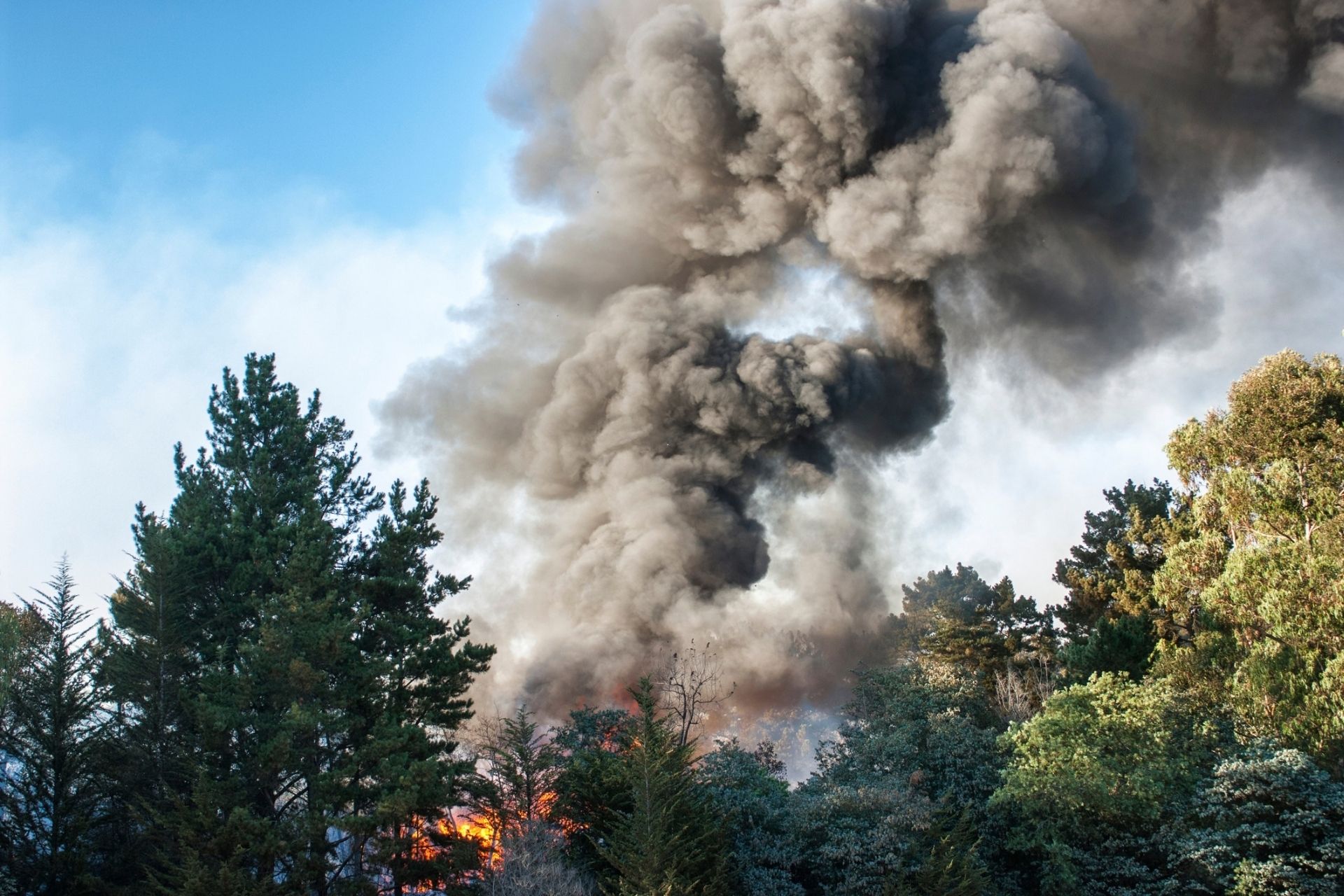

If the past few years have taught us anything, it’s that wildfire smoke has become a seasonal hazard for much of the United States. Even if you don’t live near places where wildfires are common, we know that smoke travels long distances and can reach across the entire country, turning otherwise normal days into hazy, unhealthy ones.
“In recent years, wildfires have increased in duration, size, and intensity,” says Sara Jones, Community Engagement Coordinator for Ashland Forest Resiliency, a project designed to reduce the wildfire risk for the city of Ashland, Oregon.
In 2026, for example, many parts of the western U.S. have seen below-average levels of snow. This can mean drier conditions and depleted water reservoirs heading into summer. Add in hot temperatures and strong winds in the forecast, and there’s a higher likelihood of wildfire activity. That doesn’t mean a severe wildfire season is inevitable, but it’s still a good idea to prepare so you’re not caught off guard.
Why kids need extra protection
What makes wildfire smoke so hazardous, particularly to children?
Among other potentially dangerous chemicals, wildfire smoke contains tiny particles called fine particulate matter. It’s also known as PM2.5, so named because each tiny particle is 2.5 microns or smaller in size. For perspective, a strand of human hair is 30 times wider than a single PM2.5 particle.
These tiny particles can travel deep into the lungs, even into the bloodstream, potentially harming many body systems. Children are more sensitive to PM2.5 because:
- Their lungs are still developing
- They breathe in a greater volume of air per body weight, compared to adults
- They have a faster breathing rate than adults
- They tend to be more active and spend more time outdoors
These factors mean they can take in more pollution relative to their size and are at higher risk than adults, particularly if they have asthma or a lung condition. “Children are not just small adults,” emphasizes Jones. This is why even small reductions in exposure matter.
As scary as wildfire smoke may be, the good news is that you don’t need to overhaul your entire life to protect your kids from unhealthy air. A handful of simple, science-backed strategies can make a meaningful difference in how much smoke you and your children breathe in.
Think of this as your go-to game plan for lung safety.
Check the air quality before you head out
Whether it’s wildfire season or not, one of the most important habits to adopt for overall lung safety is checking conditions before going outside. The number you are looking for isn’t just the temperature—it’s the Air Quality Index. You can look up the AQI on AirNow.gov from the U.S. Environmental Protection Agency, download the AirNow app, or find the AQI on most weather mobile apps.
The AQI is a health-based, color-coded chart that tells you how clean (or polluted) the air is and what that means for your health. It’s not only for wildfire smoke; it accounts for other types of pollution, such as ozone and carbon monoxide, as well.
Here’s what the AQI means for planning your kids’ day:
- 0–50 (Green): This signals good air quality and a great day to be outdoors.
- 51–100 (Yellow): It’s still ok to be outdoors, although the air is getting hazy. For children who have an underlying health condition like asthma, it’s important to take precautions such as keeping inhalers on hand, monitoring symptoms—and stopping play and moving inside if symptoms appear. If you do move inside, keep windows and doors closed. Note that the longer you stay outside—and the greater the intensity of outdoor play on days graded yellow and worse—the greater the risk of symptoms.
- 101–150 (orange): The air is hazy, and this could be a problem for children with lung conditions like asthma (not to mention pregnant people and people with underlying chronic health conditions). Take the precautions you would on a yellow day. Plus: If you are outside, consider keeping activity shorter, adding rest periods, or playing at a more leisurely pace. Heavy breathing from higher-intensity activity will increase the amount of pollution that gets into the lungs. Consider moving activities indoors, especially for children with lung conditions, and keep windows and doors closed.
- 151–200 (red): The air quality is approaching the unhealthy range for most people and is particularly risky for people with lung and heart conditions. Move activities indoors, behind closed windows and doors, for children with lung conditions. For kids who don’t have lung conditions, keep outdoor activities leisurely with plenty of rest periods.
- 201+ (purple and maroon): The air quality is considered unhealthy for all people and activities should be kept indoors.
Why this matters
Research consistently shows that the amount of air pollution that reaches your child’s lungs depends on two things: how dirty the air is and how hard they are breathing. Running, jumping, and playing sports increase how much air (and pollution) they inhale. So, dialing down their exertion or moving them to a place with cleaner air can help lower the amount of pollution they inhale.
Parent tip: Make checking AQI part of your morning routine — just like checking the weather.
Rethink outdoor play without cancelling the fun
Kids need to be physically active and don’t have to stay glued to the couch every time the air quality dips. But smoky days do call for a few adjustments.
On moderate (yellow) air quality days, shorten the length of time spent outside and rethink higher-intensity sports. That might mean swapping soccer or tag for chalk drawing or a short nature walk.
If you can, consider setting up a play area indoors before a smoke event occurs, says Jones. When it is necessary to go indoors, encourage active play instead of TV and video games—think obstacle courses, dance parties, or couch cushion forts. “If you have the space, set up one open indoor area for low-intensity exercise and games like duck, duck, goose,” she suggests.
When cabin fever strikes, seek out safe indoor spaces within a close drive where kids can run around and play. “It might be a children’s museum, library, community center, school auditorium, or even the mall,” Jones says.
Meghan Megowan is a mom of two in Corvallis, Oregon, and a faculty research assistant at the School of Civil and Construction Engineering at Oregon State University. When she ran out of indoor activities to entertain her children, then 1 and 3 years old, at home during the Oregon wildfires of 2020, she found refuge visiting friends and neighbors across town. She likewise opened a rec room above her garage to neighborhood kids in need of a change of scenery. “Having that community of friends with safe spaces was a lifesaver,” she recalls.
How to keep smoke out
Merely being inside does not guarantee that you will be completely free of polluted air. Ever notice the dirt that always seems to accumulate on your windowsill? That is largely composed of air pollution particles. But a few small habits can help you limit what comes in—and keep your indoor air cleaner.
Close and seal windows
Keep windows, doors, vents, and fireplace flues closed during smoky periods and use weather stripping to block up the gaps between the edges of doors and windows. Weather stripping comes in a variety of forms, including foam, felt, tape, silicone, vinyl, or metal, and can be purchased at most hardware stores. Depending on the material, it starts at about $5 for 10 feet and increases from there, with vinyl and metal products being more expensive. Many weather-stripping products have an adhesive backing that you can apply yourself.
If you don’t have weather stripping, you can also seal doors and windows with masking tape or towels, advises Jones.
Recirculate the air
When the AQI starts to increase, make sure your climate control system is recirculating indoor air, rather than pulling in air from the outdoors. This helps prevent outside pollutants from entering your home. (The same applies if you find yourself in your car during a smoke event.) Most window air conditioners naturally draw their air from indoors, but if you have central heating, ventilation, and air conditioning (HVAC) system, you may need to hit the “recirculate” setting.
Invest in a filter
Whether you have an HVAC, window units, or wall heating/cooling system, make sure your system is equipped with filters to help remove smoke particles and other pollutants. Choosing the right filter can make all the difference to indoor air quality.
If your system allows, use a MERV filter of the highest rating possible. Filters with a rating of MERV 13 or higher, for example, can reduce indoor particles by upwards of 85 percent or more. You can find this type of filter online and at most big-box hardware stores starting at around $25 per filter, depending on the size.
If you already have filters in your HVAC system, swap them for a MERV 13 filter, even if it is just for when the AQI is poor. You can then swap back to your regular filters. Just remember to replace your filters as recommended by the manufacturer, particularly if there has been smoke in your area. The effectiveness of a filter is reduced as it filters more polluted air.
Pro tip: To further reduce the amount of dust or ash that gets inside, always leave your shoes at the door, particularly on smoky days.
Create one ‘clean air’ room at home
Not everyone has central air conditioning or an HVAC system to manage the air throughout their home. But you can still improve indoor air quality by creating smaller clean-air zones. Here’s how:
Get portable
Portable air cleaners are a useful option. Look for one that uses a high-efficiency particulate air (HEPA) filter. These filters are designed to remove more than 99.97 percent of particles, including dust, mold, and smoke. Properly sized HEPA purifiers can cut indoor PM2.5 by upwards of 80 percent, even in places with high levels of outdoor pollution, according to some research.
Pick your clean-air zone
Focus on the space where your child spends the most time, like a bedroom or living room, ideally one with as few windows and doors as possible. Because most air cleaners are easy to pick up, you can move them with your kids. This was Megowan’s strategy during the 2020 wildfires: “During the day we ran it in the playroom, then moved it to their bedroom at night.”
Right-size your air purifier
Make sure your air purifier is properly sized for your room. The product’s clean air delivery rate (CADR) is a measure that can help you understand the fit. The higher the CADR, the more particles the air purifier can filter and the larger the area it can cover. Look on packages for the largest-size room it can handle and aim for a CADR that’s at least two-thirds of your room size. For example, if the room is 150 square feet, choose an air purifier that has a CADR of at least 100.
Shop for purifiers — or DIY your own setup
Portable air purifiers can range in cost from $100 to $300 at most retailers. Can’t afford or find a store-bought version? Make your own air purifier at home using basic supplies from your local hardware store. All you’ll need is a box fan, some tape, and one or more filters (ideally those rated MERV 13 or higher). This DIY setup, often called a Corsi-Rosenthal Box, has been shown to work surprisingly well. Follow these tips from the EPA to build your own air purifier.
Once you’ve set up your air purifier, maximize your home for cleaner air. That means keeping windows and doors closed when air quality is poor (yellow and above on the AQI scale for people with lung issues and red and above for members of the general public). Then, run your air purifier continuously.
It’s also important to avoid adding pollutants to your indoor air. Some sources of indoor air pollution include:
- Heavy cooking (over an open flame or at high heat, such as grilling or frying)
- Fireplaces and wood-burning stoves
- Burning candles
- Smoking
Make sure your kitchen, stove, and fireplaces are properly vented. To reduce particulate matter in the kitchen, cook at lower temperatures or in water (such as simmering or boiling) rather than grilling or frying. Avoid burning candles when possible, but if you must light a candle, opt for those made from natural ingredients like soy or beeswax rather than paraffin, a chemical typically derived from petroleum.
Smoking tobacco is a significant source of indoor air pollution. Avoid smoking indoors. When you are ready to try quitting, there are people and resources available to help you quit.
Clean up whatever smoke gets in
Even with doors and windows closed and sealed, tiny particles can still sneak inside. The key is to develop a cleaning strategy that captures and removes pollutants.
The first step is to do at least one extra-thorough cleaning in the early spring, ahead of wildfire season, advises Jones. (This is in addition to the cleaning you may already be doing on a regular basis.) “Move your furniture to get underneath and into the corners, dust all the surfaces, and clean rugs in your washer or with a carpet cleaner,” she says.
In case of a wildfire, avoid dry sweeping or dry dusting (using dry cloths or feather dusters) or vacuuming with a standard vacuum, which can kick hazardous particles into the air where you can breathe them. Instead, follow these tips:
To clean smooth surfaces like tabletops, hard floors and window blinds:
To more effectively trap particles, opt for electrostatic dust cloths, which use static electricity to grab and secure fine particles. For an old-fashioned (and cheaper) approach, try wet dusting. Simply wet a clean rag or mop and wipe it across dusty surfaces. Replace the rag when it becomes soiled.
When dusting, remember to start from the top and then work down. That means cleaning any ceiling fans or high shelves first so that any dust that gets disturbed on your first pass will be cleaned up by the time you mop the floor.
Clean hard floors (such as wood or linoleum) with a wet mop. These surfaces are generally easier to clean than rugs or carpets, so they are recommended for people with lung sensitivities.
For soft surfaces like carpets and sofas:
Area rugs, blankets, and removable pillow covers should be washed in hot water and then run through a dryer. The same goes for stuffed animals, pillows, sheets, and bedding. Clean any carpets with a vacuum equipped with a HEPA filter designed to catch the tiniest particles. You can do the same for the cushions of large sofas and couches.
Keep vulnerable people clear
If possible, do your cleaning when children are not present to avoid having them breathe any particles that are kicked up, says Jones. For this reason, Megowan does her deeper cleaning when her kids are at daycare or school. If need be, she’ll clean at night, when they are tucked into their bedroom (with the air purifier running).
If you are extra-sensitive to dust, consider wearing a well-fitting mask when you clean, such as an N95.
The bottom line for parents
If there’s smoke in the forecast, it’s natural to be stressed out. The key is to have a plan. Adopting the five strategies outlined above is a good start.
Know also that there are people and organizations in your area and nationwide who can help. If you need more support or help devising a clean-air strategy, consider reaching out to the Pediatric Environmental Health Specialty Unit (PEHSU) in your area. PEHSUs are government-sponsored networks that work with communities, physicians, nurses, scientists, and advocates to tackle major environmental issues.
Many PEHSUs, for example, work on protecting kids from wildfire smoke. Visit the PEHSU home page, use their interactive map to find the regional PEHSU near you, and tap into PEHSU resources on wildfires. The Washington State PEHSU, for example, has a wildfire action plan for children with asthma. Access more resources on wildfires and air quality from Washington State and the EPA.