 Seattle Family Calendar
 Subscribe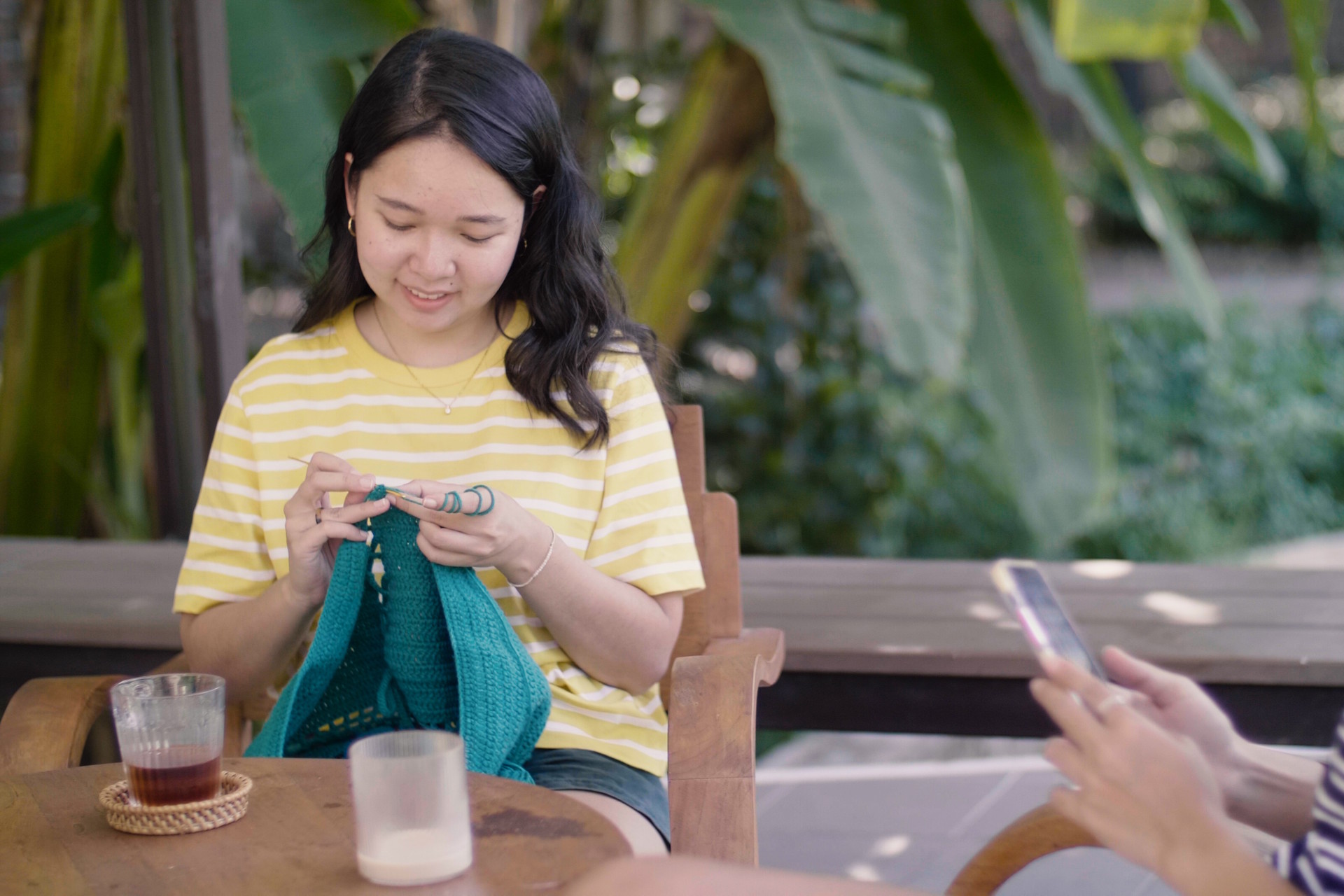

When my high school senior recently asked to borrow my watercolor painting supplies for a gathering on the beach with friends, I was stunned. Rather than texting or playing video games, he was opting for plein air painting — something he’s heard me talk about doing as a hobby.
His request reflects a current cultural shift. While teenage smartphone access has skyrocketed from 37 percent in 2012 to 95 percent in 2024, a counter movement is taking root among Gen Z. Driven by digital fatigue and a yearning for authenticity, today’s youth are “rehumaning” their lives by embracing the tactile, slow-paced analog hobbies of the ’90s.
Reaching the digital saturation tipping point
The statistics regarding digital use are staggering. Young adults consistently rank as the most active internet users, with the average U.S. teenager spending almost five hours a day on social media alone. For many, this constant connectivity has moved past fun and convenience into the realm of dependency. According to a 2023 Harris Poll, 80 percent of Gen Z adults worry their generation is too dependent on technology, and 75 percent are concerned about social media’s impact on mental health.
Stephanie Malia Krauss, an educator, social worker and author of “How We Thrive: Caring for Kids and Ourselves in a Changing World” and “Whole Child, Whole Life,” views this shift from screens toward analog hobbies as a necessary act of “rehumaning.” She defines rehumaning as an active prioritization of the human experiences that addictive tech and chronic busyness often strip away. “It’s important to understand that kids seek out screens when there’s an absence of available in-person developmental opportunities,” explains Krauss. As a result, when young people are given a varied amount of ways to explore curiosity and connect in real life, they often gravitate toward them with relief.
The psychology of nostalgia
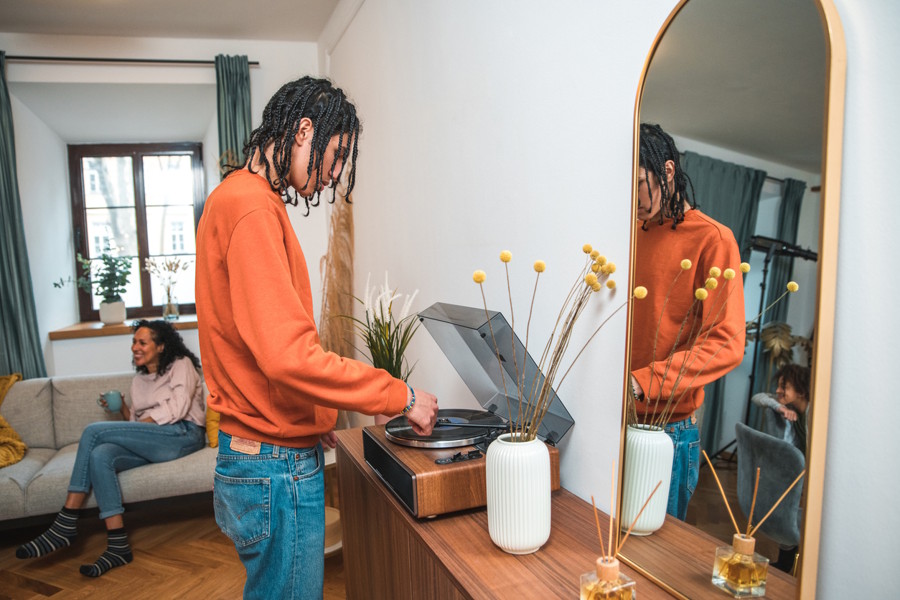
This trend isn’t just about putting down the phone; it’s about looking backward to move forward. Sixty percent of Gen Z adults express a wish to return to a time before everyone was plugged in. They are mining the past — specifically the predigital era of the ’90s when many of their parents grew up — to enrich their present lives. This nostalgia is evident in the resurgence of hands-on teen hobbies like crafting, board games, and physical media such as vinyl records, CDs and disposable cameras.
For many teens, these hobbies are a vital tool for managing the pressures of modern life.
Lisa Pohl, an art teacher and mother in Florida, emphasizes that this old school approach is fundamental to human development. “I’m a proponent of technology, but I also think that you need to expose your kids to the old school way of doing things as well because it really forces them to get out of their element in this day and age,” she explains. For Pohl, the physical act of creation is irreplaceable. “There’s a connection between the brain and the hand that will always be needed,” she observes. “Putting pen to paper is so crucial that we can never let go of that.”
Trending analog hobbies
Certain hobbies are popping up in online subcultures that, ironically, use social media to promote offline living. According to Michaels 2026 Creativity Trend Report, more people are “turning to hands-on creating to reclaim their time away from screens, reconnect in ‘real life,’ celebrate the everyday, and build a physical record of who they are and what they care about.” Michaels saw a 136 percent increase in searches for analog hobbies like these in just six months. Here are a few of the popular crafting hobbies highlighted in the report:
- Grandmacore and Nonna-maxxing: These trends celebrate the cozy, unapologetic embrace of activities like knitting, crocheting, baking from scratch and gardening. Krauss highlights Nonna-maxxing (i.e., living like an Italian grandma) as a powerful choice by young adults who realize they don’t have to live a hyper-connected life. “They are trading iPhones for flip phones and Spotify for records,” notes Krauss.
- Crafting Chemistry and Gilded Gifting: Young people are craving ways to be together that feel more real, less performative and less dependent on phones. Crafting Chemistry captures the rise of project-centered connection, and Gilded Gifting is when makers create hyper-personal artifacts of a relationship rather than buying mass-produced goods.
- The analog bag: As a viral symbol of intentional creative living, this is a tote filled with emotional support crafts to replace screen time, such as watercolor kits, embroidery hoops, sketchbooks, journals and other art supplies.
The tactile escape: Leila’s story
For many teens, these hobbies are a vital tool for managing the pressures of modern life. Lisa’s 14-year-old daughter Leila has embraced journaling and sewing, describing her analog interests as a necessary way to manage stress and anxiety. “I love journaling. It really allows me to disconnect from society and my phone and just put all my thoughts down somewhere,” she explains.
Leila finds that the physical nature of her hobbies makes her feel more connected to her own life. When scrapbooking with physical photos and handwritten notes, she feels a sense of accomplishment that digital tools like Canva can’t replicate. “I like to handwrite since it’s more human,” she says. “I feel like I can remember the moment more as well.”
For Leila, journaling is also an emotional anchor. “Whenever I feel anxious, I’ll journal, and it’ll make me feel better.” By recording her feelings, it helps her process everything and calms her down.
By picking up a paintbrush, needle or pen, today’s teenagers are reclaiming their attention spans and their mental well-being.
Her journey into the analog world began when she was forced to give up technology at a summer sleepaway camp, where she discovered embroidery. This led her to sewing classes, which she describes as an amazing outlet that forced her to use her brain for measurements and tactile problem-solving. “When it all added up, I made something beautiful that I could give to the people I love,” she says.

The path to rehumaning
For the analog shift to have a lasting impact, it needs to move beyond being a social media trend. Krauss argues that it is not enough to take screens away; parents must give back opportunities for discovery. “There has to be an active planning and prioritizing of the best parts of childhood and the best parts of being human,” says Krauss. She encourages parents to look for activities that encompass the real essentials for human thriving: body, mind, heart and spirit.
“I would love to see kids feel more liberated and able to engage in free, unstructured and recreational activities and that it’s more socially acceptable for families to slow down together to play games, plant a garden, go for walks at night or get really creative around time offline,” Krauss adds.
Authentic enthusiasm from adults is a major catalyst for keeping this analog teen hobbies trend alive. Krauss suggests that parents engage in these analog activities as well, explaining that research shows how teens still look to their parents for guidance. Pohl agrees, noting that she has always used journaling to capture ideas and process feelings. “I believe that, for myself personally, I can capture ideas and learn better from the pen and paper versus putting it on the computer,” she says.

Choosing a ’90s hobby
If you’re not sure where to begin, here’s a list of analog hobbies for your teen to explore:
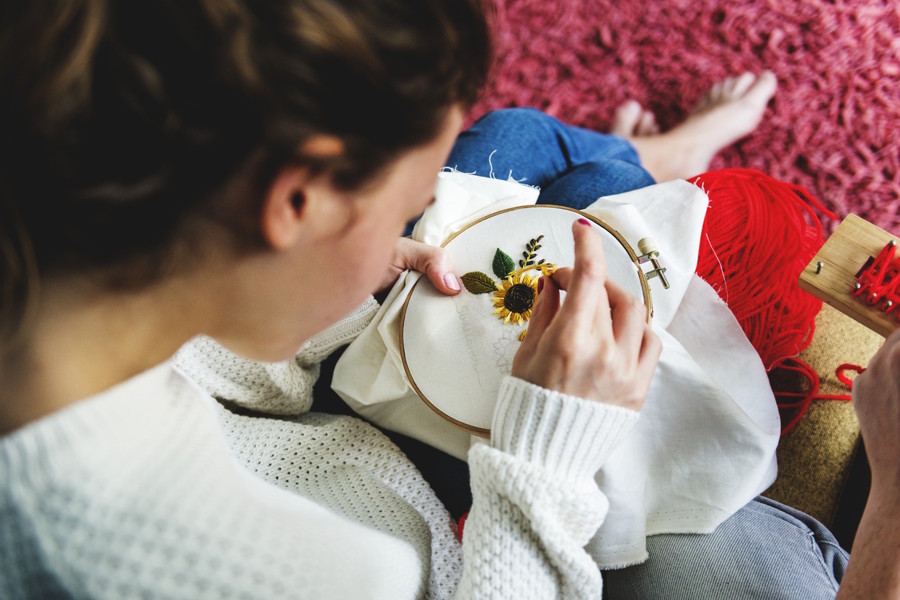
- Fiber arts: Knitting, crocheting, quilting, basket weaving and macramé are some examples. Needlepoint is the clear standout, however, with searches for beginner needlepoint items up 208 percent, according to Michaels. These repetitive motions are known to activate a meditative state.
- Physical media: Listening to an entire vinyl record is a valuable exercise in focus because you can’t easily skip tracks. Plus, kids love the look of a real record or CD.
- Baking: Trends like small-batch baking shared as gifts and accomplishment cakes turn everyday cooking into a creative ritual.
- Puzzles and games: Jigsaw puzzles and board games offer a mind-body connection that allows players to shut off the rest of the world.
- Crafts: From designing jewelry to drawing and painting to building models and woodworking, the hands-on art project options are endless.
As we look toward a future increasingly dominated by technology and AI, it’s refreshing to see some youth engaging in activities from the past that reflect a quieter, simpler time. By picking up a paintbrush, needle or pen, today’s teenagers are reclaiming their attention spans and their mental well-being. They are choosing slow living over passive scrolling. As Leila concludes, “You never realize how much it helps you until you start doing it, and then you notice a really big difference.”
Join The Launch Pad
For the parents navigating eye rolls, growing independence, social pressures and everything in between. Get expert advice and real-world support in ParentMap’s new monthly newsletter just for parents of tweens and teens.