
 Seattle Family Calendar
 Subscribe
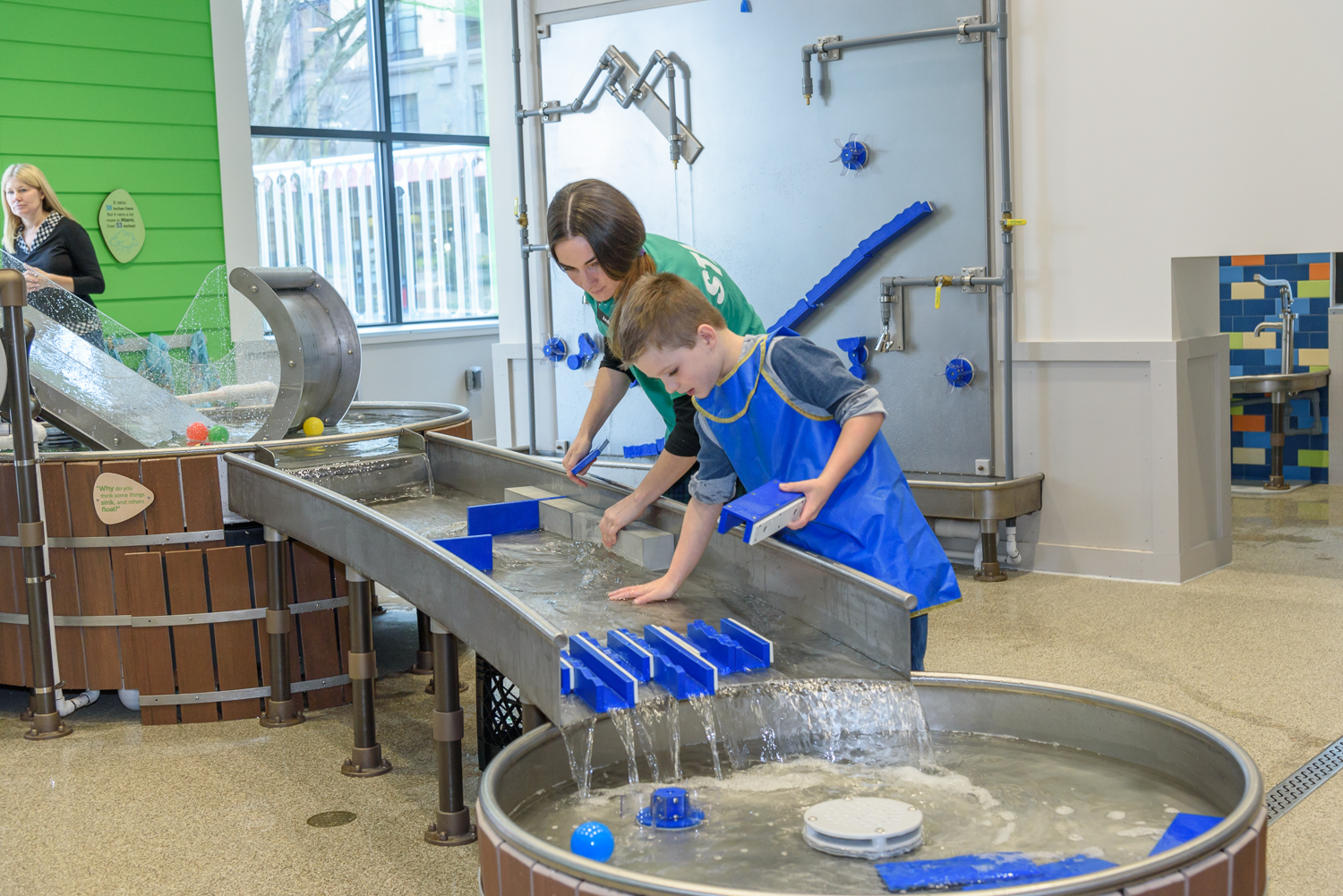

Parents hand kids a screen for plenty of good reasons: a few minutes of peace, an appealing edutainment app, a well-earned reward. But when it comes to helping kids grow and preparing them for adulthood in the digital workplace, the real training ground isn’t the screen. It’s play.
“We don’t know what the future looks like for children, especially with technology changing as fast as it is. There isn’t any curriculum that can keep up with that. So, we have to be thinking about what skills children need to thrive in the world that they will go into,” says Jamie Bonnett, director of education and exhibits at KidsQuest Children’s Museum in Bellevue.
Coding languages and user interfaces are sure to change dramatically by the time today’s preschoolers enter the work force. But the 21st century skills of critical thinking, creativity and collaboration will be critical for success when technical skills are constantly changing. Playing helps kids build these critical skills and develops the brain in ways that screens do not.
A different digital divide
“We’ve studied early learning for a really long time,” says Bonnett. The benefits of play for early learning, which goes through age eight, are well documented. But playing on electronic devices doesn’t provide the same value.
“One of the great things about play is that it engages multiple senses simultaneously, so children are learning and storing sensory memories that build the foundation for future learning. Every experience builds new pathways in the brain,” said Bonnett. These pathways are not as well developed in children with high levels of screen use, because even the best educational software can’t offer that multisensory experience. For example, a digital program like Paint lets a child play with color. In contrast, a child engaged in the open-ended exploration of paint through an in-person event like KidsQuests’ Play with Paint program will discover what paint smells like, experience the sound of painting splattering on paper, and feel the difference between spreading paint with a roller or with a paintbrush. Those experiences may seem trivial, but they are integral to child development.
“New studies have come out, especially about self-regulation when they’re wired for that type of fast feedback,” says Bonnett. The speed that makes digital tools so helpful at work becomes an impediment to a child dealing with the slower pace of conversations, waiting for a person to do something, or learning how to sit with their own thoughts.

Play skills for the 21st century
Avoiding screens before age eight is valuable for brain development, but eventually, our kids will need to use technology.
“We want to prepare them to use it wisely. Putting them in front of a screen too early is pulling them away from the experience the brain needs to build those neural pathways and develop those executive functions that help you plan, focus, remember instructions, and juggle all those things successfully and then engage in deep and critical thinking,” says Bonnett.
Critical thinking helps kids evaluate the quality of the information their tech generates and how best to use that information. Besides self-regulation and critical thinking, free play teaches other skills that will serve them in the workplace: collaboration and independence.
“Sometimes you’re collaborating, and sometimes you’re just playing all by yourself, building independence, figuring out how I can do this all by myself,” says Bonnett. There can be no true collaboration with a Chatbot, which does not require a child to learn how to play with others the way a real playmate with their own ideas does. At the same time, digital experiences are guided and limited by a programmer’s choices, denying the true independence that playing alone with blocks or dolls would provide, and setting boundaries on curious exploration.
“Curiosity is like a light switch. When a child feels curious, it opens up their limbic system in their brains, their emotional piece and then you become more connected,” says Bonnett. When children pursue their own curiosity, they also develop resilience and adaptability, becoming less prone to anxiety.
“I don’t have the thing that I need. How am I going to adapt?”
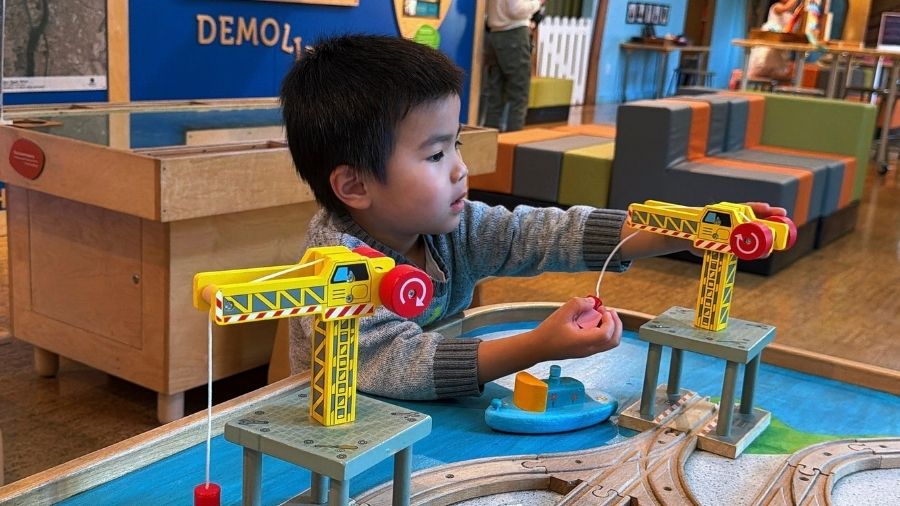
Instead of being directed to correct answers, when kids’ curiosity is set free — as at the museum’s Engineering Hour, their towers and bridges are limited only by gravity and the physical characteristics of their materials. Playing together or alone, kids engaged in 3D play practice dealing with frustration, finding solutions and then figuring out fresh solutions when their first idea doesn’t work.
“All of those skills are things that we really need our children to have so that they can adapt to change and succeed in the future, and play is the way in which they get there,” says Bonnett.
Managing screen time
Avoiding screen time does not require living off grid in primitive isolation. If anything, cutting out screen time pushes families to spend more time together exploring more effective forms of learning and entertainment, such as running around outdoors or visiting the children’s museum, where there is always something new to discover through hands-on play.
“It doesn’t mean that you’re not teaching them technology. The screen piece is very different than just technology. Technology encompasses different things, and they do different things for your brain,” says Bonnett. Using a camera is more mentally engaging than watching TV, and operating an overhead projector is more physical than playing educational games on a tablet.
But in a world where elementary schools require laptops, parents must find a balance between the requirements of developmental processes and the demands of modern life; screens will probably make an entrance sooner than you want. At any age, mindfully introducing children to screens means establishing strong parameters around time. The context of use matters, too.
“When we start introducing screens at the museum, for example, we start with things like stop motion animation. So, they’re building something. We’re talking about making a movie and they’re having to build with Legos or make scissors become animate objects. They’re using the screen as a tool versus using it as something to watch,” says Bonnett.
Technology shouldn’t be just a distraction, and ideally, screen time would be supervised and interactive.
“Something that happens a lot is parents will hand their child the tablet when they’re walking in the store versus encouraging them to look at what’s happening around them. So, stop to ask if they need it. In the car, they can look out the window,” says Bonnett. It might be a boring errand for you, but a narrated trip through the grocery store, or observing the world outside the car can be valuable learning experiences for small children.
Course correction
Bonnett acknowledges that there are days when you just need to get your errands done and keeping your child occupied with a tablet can feel like a lifesaver. But if you have fallen into the habit of letting your child use screens to avoid ever experiencing boredom, it is possible to reverse course and establish healthier, more productive screen habits.
“First of all, I wouldn’t say go cold turkey. I think that’s just really, really hard on everyone,” says Bonnett. “There’s going to be a sense of withdrawal. They have to learn what to do with themselves.” After all, even as adults who know the dangers of screen addiction, it takes effort to stop a doom scroll. A child who has become accustomed to unlimited screen access needs time to develop their independence through free play.
Start with whatever simple steps you can handle. For example, for a child who is used to watching videos in the car, you might start by withholding the screen for short trips, then gradually extend the length of screen-free drives until the tablet is reserved for road trips.
The goal isn’t less screen time. It’s more of everything else — fresh air, physical activity, human interaction and unstructured joy. Every minute your child spends playing is doing something good.
Editor’s note: This article was sponsored by the KidsQuest Children’s Museum.