 Seattle Family Calendar
 Subscribe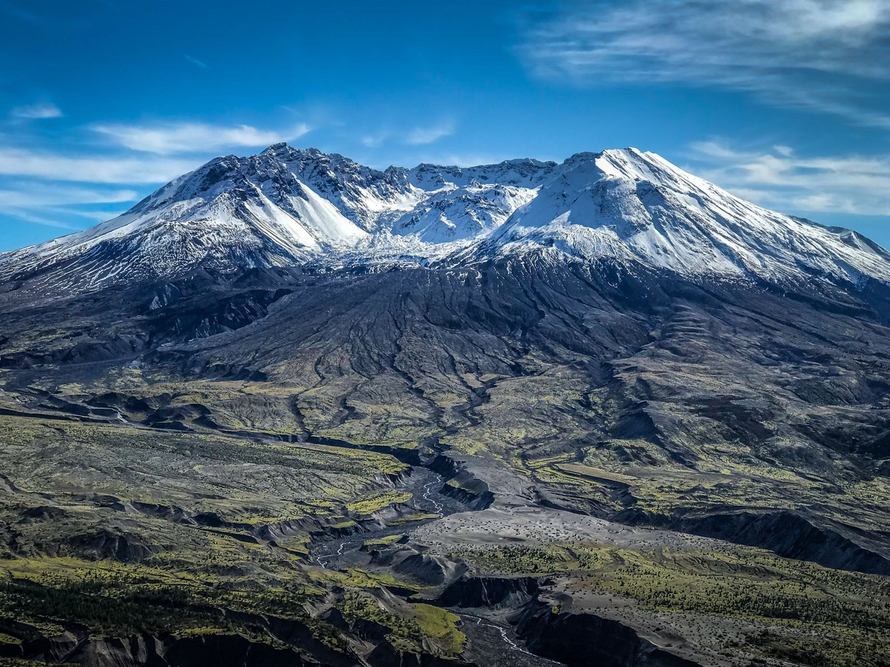

Awesome wonders right in our own backyard
Sure, incredible pictures of icy Nordic fjords, the limestone karst hills of Guilin, China, or Australia’s Great Barrier Reef may make you long for an epic international family vacation. But as it turns out, we’ve got some pretty amazing sights right here in our own state.
If you live in Washington, you probably don’t need reminding that the active volcano Mount Rainier is the fourth highest peak in the United States — and a beauty at that. And you already know that Snoqualmie Falls is both taller and more beautiful than Niagara — while also affording an accessible, family-friendly hike.
In fact, you’re probably familiar with many places on this list (it’s hard to keep a natural wonder secret), but there may just be a few surprises in the mix. Use the arrows above the image, or click the link below, to preview seven wonderful natural wonders to visit with kids — all right in our own backyard.
First up: Mount St. Helens
1. Mount St. Helens
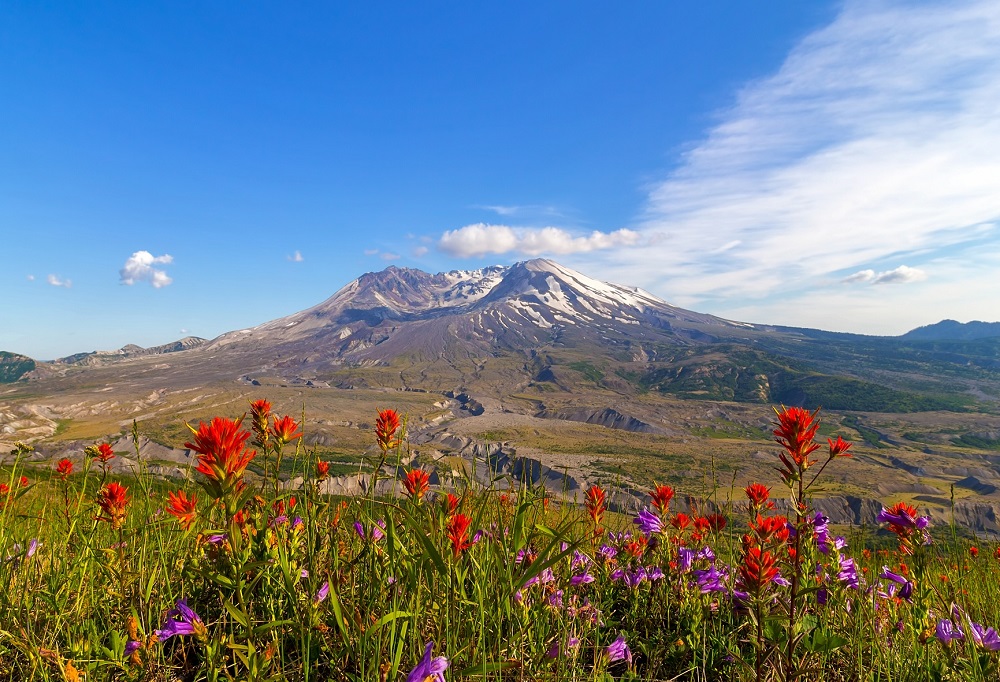
Unlike the lengthy eruptions of volcanoes Eyjafjallajökull in Iceland and Kilauea in Hawaii, the 1980 eruption of Mount St. Helens did most of its catastrophic damage in only a few minutes. Fifty-seven people were killed when the eruption triggered the largest landslide in recorded history, and the entire north face of the mountain collapsed, spewing ashes across a dozen states. More than 40 years later, the area inside the blast zone is still just beginning to show signs of new life.
For families, the Johnston Ridge Observatory at the end of State Highway 504 in the heart of the blast zone is the best way to see Mount St. Helens. Displays, films and ranger talks at the observatory tell the biological, geological and human story of the Mount St. Helens eruption. There are hiking opportunities, a food cart and a gift shop.
The observatory is typically open for the summer season and is scheduled to open in mid-May 2023. The plaza outside the observatory is open and accessible, and offers a full view of the blast zone. Keep in mind that it’s over an hour’s drive from Interstate 5 (exit at the town of Castle Rock) to reach the observatory. Leave pets at home. Editor’s note: As of June 12, 2023, the observatory is unreachable due to a landslide that has blocked both lanes of traffic on State Route 504. Check the website for updates and the current status.
Next up: The rain forest
2. Olympic National Park rain forest
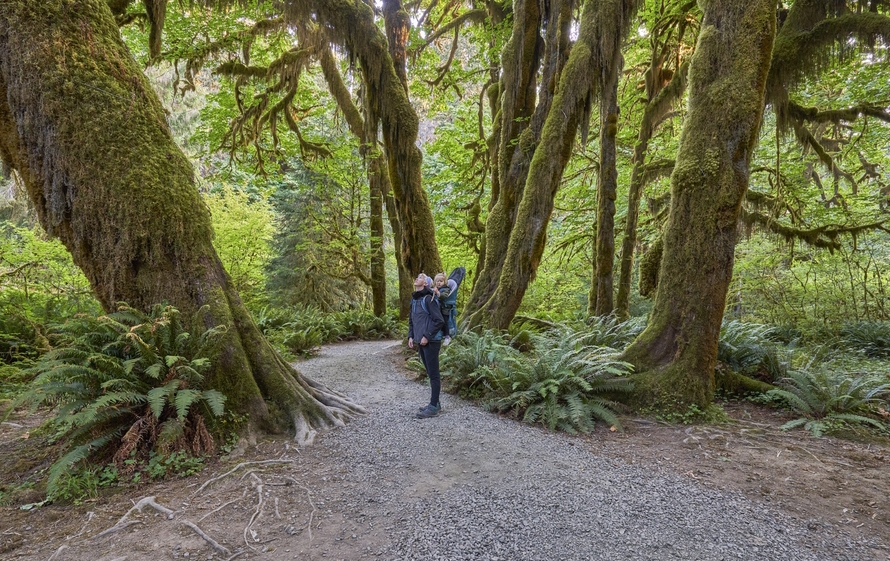
New Washington state residents might still be under the impression that all rain forests are tropical. Definitions vary in the amount of rainfall required to qualify as a rain forest, but three sections of our own Olympic National Park — Hoh, Queets and Quinault — meet them all with their 12–14 feet of measured rainfall each year.
Find the Hoh Rain Forest Visitor Center at the end of the Upper Hoh Road on the west side of the Olympic Peninsula. It is open daily during the summer, but hours vary by season so check the website for current information. This spot is many visitors’ first point of contact with the only rain forest in the continental United States. The visitor center is also the access point for two must-walk nature trails: the famous Hall of Mosses trail and the Spruce Nature Trail. Both are about a mile long and suitable for young children. For avid hikers, try the 17.3-mile Hoh River Trail to Glacier Meadows on the shoulder of Mount Olympus.
Visit more amazing sights around the vast and amazing Olympic National Park with our guides to a family trip centered around Lake Quinault and an itinerary exploring the North Olympic Peninsula with kids.
Next up: Columbia River Gorge
3. Columbia River Gorge
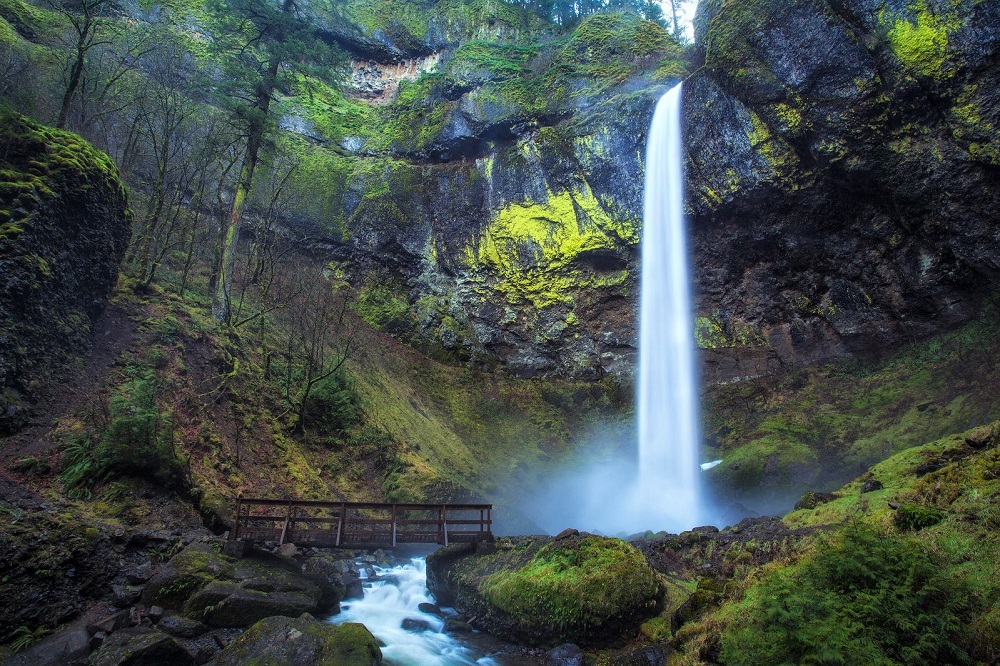
Even after devastating wildfires in 2017, the spectacular canyon where the Columbia River cuts through the Cascades is nearly unmatched in lush natural beauty. The Washington side of the Columbia River Gorge is somewhat drier than the Oregon side, where you’ll find more waterfalls, but there are more than enough awe-inspiring views on either side to warrant a family road trip.
Families like the town of Hood River on the Oregon side as a base for exploration. On the Washington side, Skamania Lodge offers amenities that kids will like. Horsetail Falls is a popular kid-friendly waterfall hike, though there are tons more. Beacon Rock State Park gives families the chance to hike (huffing and puffing) to the top of Beacon Rock — and then take in the expansive views. The Columbia Gorge Discovery Center & Museum presents raptor presentations, among other exhibits and info. Find the Discovery Center in The Dalles.
Next up: The Palouse
Image credit: Michael Matti/Flickr CC
4. The Palouse and Scablands of Washington
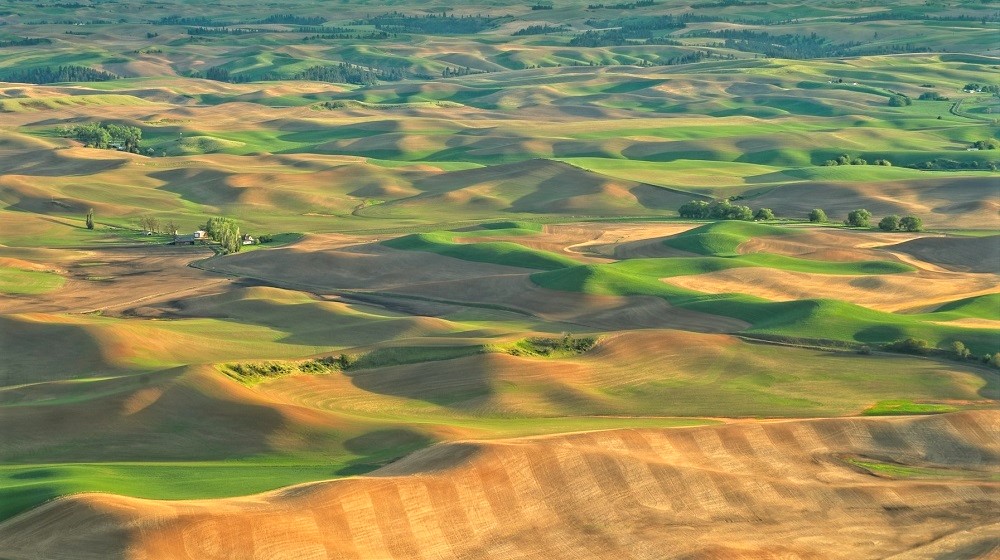
If you don’t know the geology, you might miss the wonder of the Palouse, a region of gently rolling wheat fields in southeastern Washington that contrasts with the nearby Scablands, barren areas too soil-poor to support agriculture. But both the pastoral scene and the bare rock were formed by the same natural force: flooding so strong it defies imagination.
Beginning 20,000 years ago, the Glacial Lake Missoula, in what is now western Montana, covered an area the size of Lake Erie and Lake Ontario combined. Glaciers formed an ice dam that caused the water level in the lake to rise. Every few centuries, pressure from the lake caused the ice dam to collapse, resulting in floods so big they caused earthquakes. Containing as much water as all of the rivers in the world today, the floods scoured the Scablands and deposited fertile loess soils from the lake bottom in the Palouse.
Today, a great spot from which to view the Palouse is Steptoe Butte. To get a sense of the Missoula floods, visit Palouse Falls, where the current water level is a dripping faucet compared to the floodwaters that carved the canyon it flows through today. Steptoe Butte is about an hour’s drive south of Spokane, or 35 minutes from Pullman, home of Washington State University.
Next up: Long Beach
Image credit: Jim Choate/Flickr CC
5. Long Beach
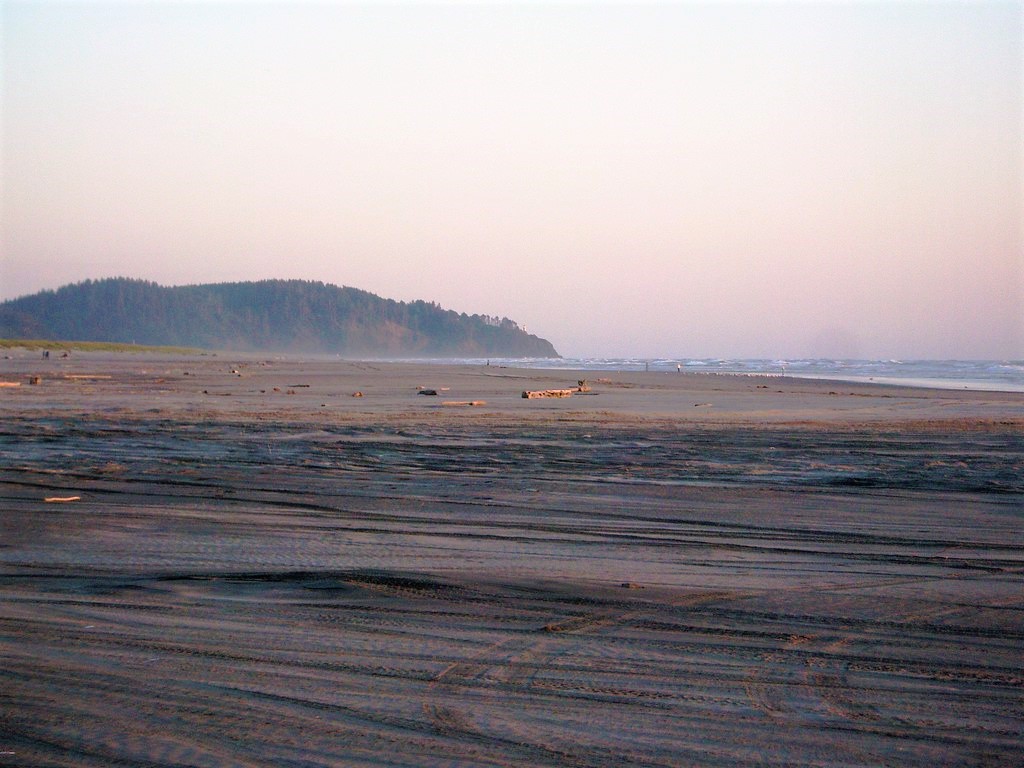
While it claims to be the longest beach in the world, Long Beach, Wash., isn’t actually the longest beach in the world — that honor goes to the 150-mile-long Praia do Cassino in Brazil. But Long Beach is pretty long! And it is the world’s longest continuous beach on a peninsula.
This 28-mile stretch of sand along Washington’s southwest coast reaches from Gray’s Harbor to almost the mouth of the Columbia River. Long Beach also marks the endpoint of Lewis and Clark’s Corps of Discovery Expedition. While it shares the postcard perfection of tropical beaches, Long Beach’s cold water and constant wind make it a better option for kites and clam digging — perfect for a family-friendly weekend getaway.
Check out the paved Discovery Trail, ideal for families on bikes or pushing strollers. Don’t miss nearby Cape Disappointment State Park. The Coastal Forest Loop Trail is a manageable distance for kids, just a half-mile or a one-and-a-half-mile loop through a forest. (Bring bug spray in summer.)
Next up: Kerry Park
Image credit: Heather Harvey/Flickr CC
6. Kerry Park, Seattle
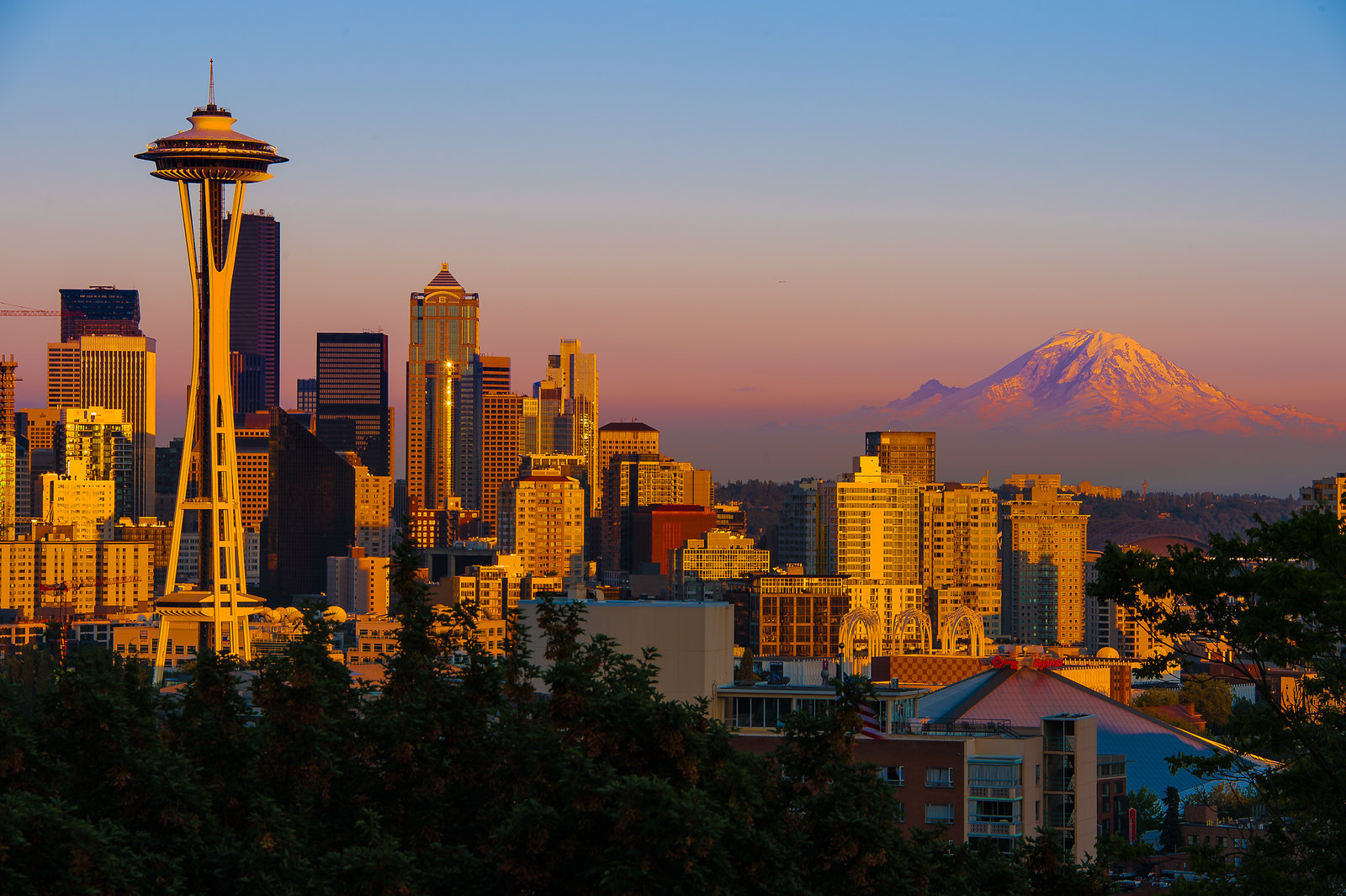
Don’t let proximity and familiarity lull you into forgetting about this natural wonder. Yes, it’s just a city park — and, at 1.26 acres in size, a teeny-tiny one — but Kerry Park offers a free public lookout with a jaw-dropping view.
You’ll find the park at the top of Queen Anne Hill, affording a direct lookout over downtown Seattle and Elliott Bay framed by a backdrop view of stunning Mount Rainier. It’s the view featured on reams of Seattle postcards. The view has also appeared on screen in the sitcom “Frasier” and in the cult classic film “10 Things I Hate About You.”
Walk a third of a mile west from Kerry Park to find lovely Parsons Gardens and another stunning view from Marshall Park. From here, explore Queen Anne’s Wilcox Wall. Zig-zag southeast from Kerry Park about a half-mile to find another tiny park, Ward Springs. This spot has city views and a playground.
Next up: The Ape Cave
Image credit: Howard Ignatius/Flickr CC
7. Ape Cave
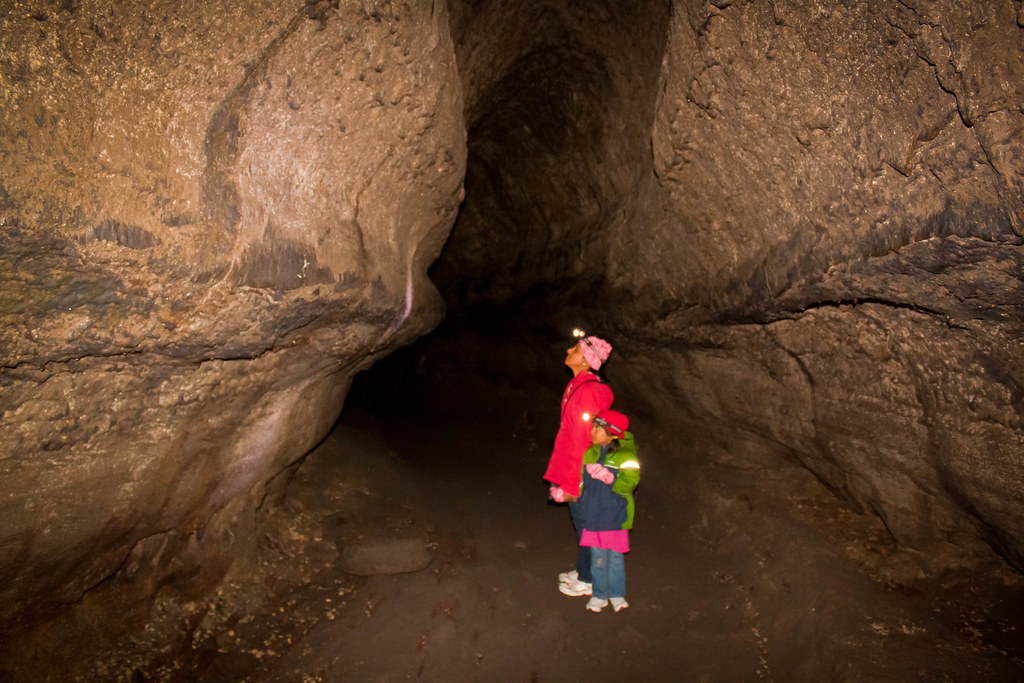
You’d expect to find lava tubes in Hawaii or Iceland, but Washington has one of its own, and it’s a good one.
At roughly 3 miles long, the Ape Cave is the third-longest lava tube cave in North America. The two-part Ape Cave formed nearly 2,000 years ago from lava streaming down the southern flank of Mount St. Helens. As the outer edges cooled into a hardened crust, the inner molten lava was able to drain away before it hardened, leaving behind a tube.
The shorter Lower Cave branch is an easy walk, with level floors and a geographic anomaly called the Meatball. The longer Upper Cave branch is a more challenging, but also more interesting, hike, with more variation in topography, a natural skylight and a lava-fall ascent.
The Ape Cave opened for the season on May 18, 2023. Book a two-hour time slot to visit the caves on the Ape Cave reservation site. There is a $2 parking fee per vehicle. Dress warmly, even on a hot summer day, for this underground adventure. Reservations are available beginning April 15, 2023.
Bonus: Blue Lake rhino cave
Image credit: Abhinaba Basu/Flickr CC
Bonus: Blue Lake Rhino Cave
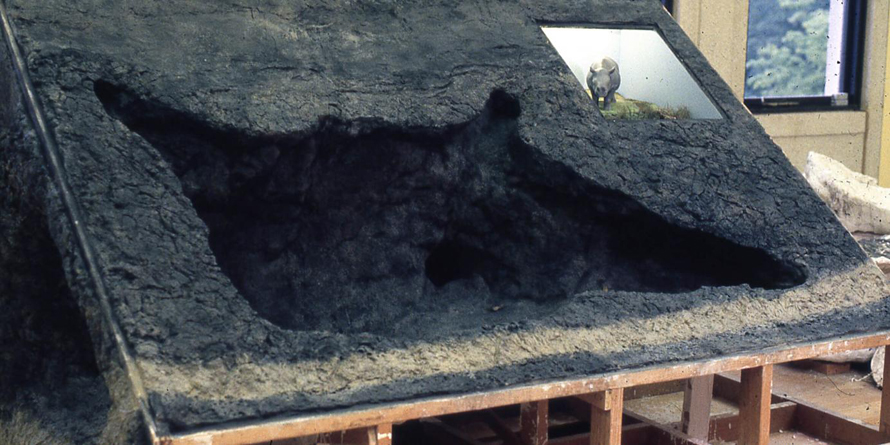
About 14 or 15 million years ago, a grazing rhino was overtaken by a basalt magma flow. The cooling magma formed rock around the rhino’s body, which eventually decayed. Like a plaster cast, the rock remained in the shape of the rhino. And guess where you’ll find this amazing fossil? In Eastern Washington, a few hundred feet above what is now called Blue Lake.
The cave mouth can be viewed from the lake’s surface (you can rent a rowboat at Sun Village Resort). Experienced rock climbers can even crawl through the cave. Rumor has it that you can still see the impression of the rhino’s belly button.
Popular nearby spots for families include Sun Lakes–Dry Falls State Park, Steamboat Rock State Park and Grand Coulee Dam. With its warm, dry Eastern Washington weather, this area is ideal for shoulder-season camping adventures.
More adventures for Seattle-area families:
- Discover new gems with our family day at the Park Place Market guide.
- Take in sky-high views on a hike that isn’t up a mountain.
- Try this no-campsite-reservation-needed easy camping hack.
- Take a day trip to explore local Native history and a new nature-themed playground.
- See what’s growing in one or all of these charming Seattle-area gardens.
Editor’s note: This article was originally published a few years ago and updated most recently for 2023.