 Seattle Family Calendar
 Subscribe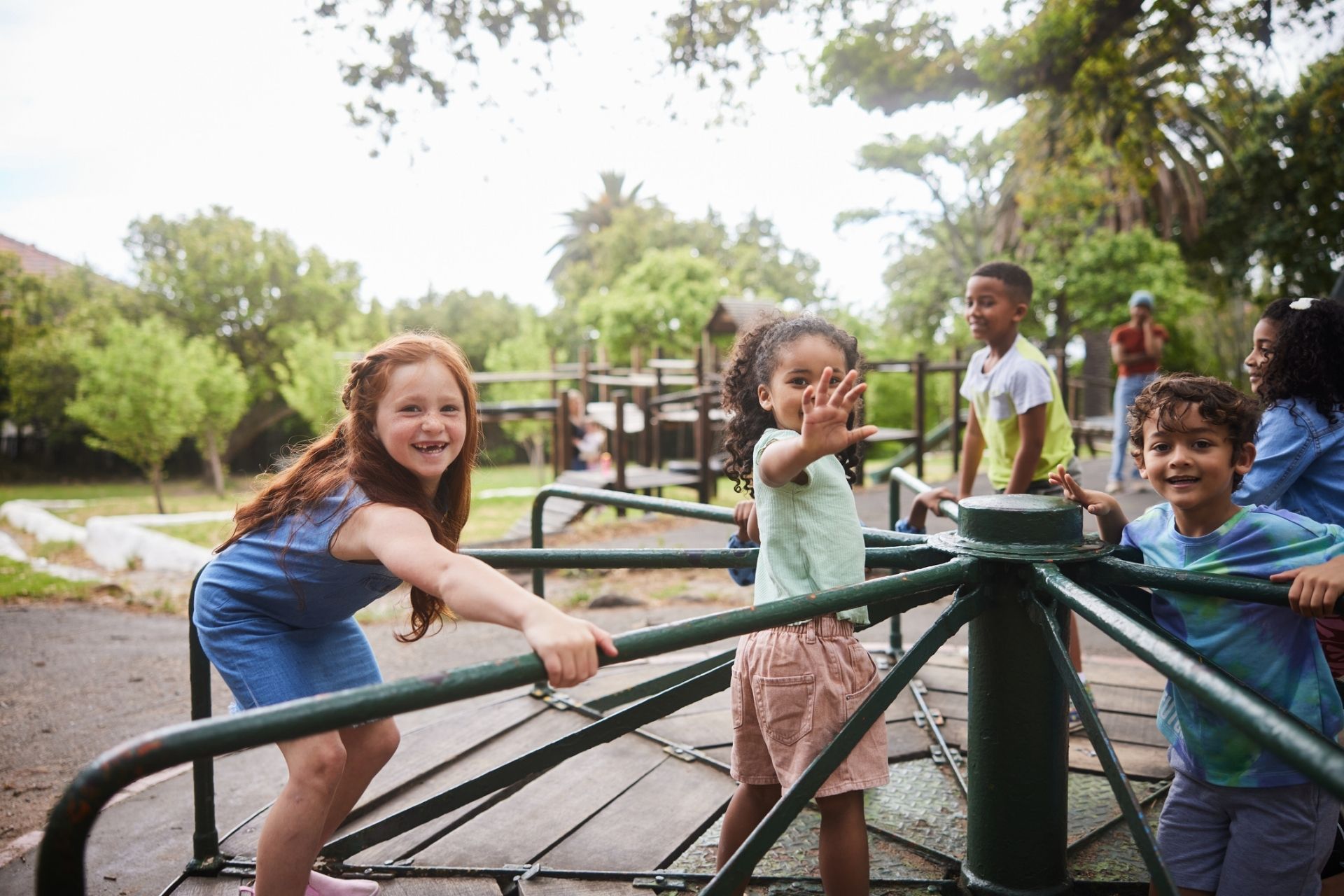

Play should be a universal childhood experience, but not every kid gets a turn at bat, a spot on the monkey bars or a place in the game. Old playgrounds designed without wheelchair access, with cultural biases against girls in sports, and shrinking recreation budgets in low-income neighborhoods are a few of the structural barriers that fall hardest on kids who already face the most obstacles. Now, a growing movement of advocates, planners and policymakers is working to increase access to play for all children.
In New Jersey, parks funding is withheld from any county without at least one inclusive playground. Georgia and Iowa require an inclusive playground at every new school that’s built.
“Inclusive playgrounds got started with people thinking it was this niche, specialized thing. But if we think about including everyone, it creates something pretty special,” says Jill Moore, an inclusive play specialist with Landscape Structures, the playground company behind Owen’s Playground on Bainbridge Island, Forest Park Playground in Everett, Liberty Park in Renton, Lowell Elementary School in Seattle and others.
The state of play in Washington
King County’s push toward play equity launched in 2019 with the State of Play, a report that found our kids were below average for physical activity: fewer than 22 percent of boys and 16 percent of girls were active for at least one hour each day. With demographic analysis, it became obvious that systemic inequities and barriers around family income, race, physical ability and ethnicity were restricting access to active play.
“One of the largest gaps that we found was between boys and girls. We also know one of the gaps is income and then on top of that language. There’s also a huge gap for youth with disabilities, both physical disabilities, and intellectual disabilities. So, when those identities intersect you’re just going to see less and less participation,” says Tracy Myers, executive director of the King County Play Equity Coalition.
Not just fun and games
The 20th century’s obsession with productivity has trickled into childhood, with increasing emphasis on test scores causing some schools to eliminate recess for more instructional time.
But playtime is not wasted time. In fact, it’s so important that the United Nations established a resolution declaring every child’s right to play in 2024. According to an American Academy of Pediatrics report, play supports creativity, imagination, dexterity, and physical, cognitive and emotional strength. Gaps in opportunities to play grow into gaps in academic achievement and health.
“A lot of people don’t recognize play, sports and recreation as a right and oftentimes see it as a privilege. We really truly want to make sure people understand this is a part of youth well-being. Play brings joy, a huge sense of belonging, identity development and health — physically, mentally and emotionally,” says Myers.
The benefits of inclusive play extend beyond the children who play there; inclusive playgrounds become destination spaces that strengthen the community and even the local economy. The world’s largest inclusive playground in South Carolina draws 12 percent of its users from more than 250 miles away.
Taking local action
Motivated by the State of Play report, stakeholders formed the King County Play Equity Coalition in 2020. They created a racial equity assessment toolkit for youth recreation providers, incorporating gender equity, the following year.
“I imagine we’re going to be adding more questions around youth with disabilities in the future, so it’ll just continue to be more intersectional,” says Myers. The goal is to add templates for action based on the assessment and publish it on the resources tab of their web page.
The coalition created soccer programs for Congolese immigrants, developed the Actokids app to help families find sports and activity opportunities, and when the pandemic hit, distributed play kits at school lunch pickup sites. Their advocacy helped Washington state pass one of the strongest recess laws in the country, requiring 30 minutes of recess for elementary students every day.
“We are now a network of about 140 cross-sector organizations that work together so that all youth in Washington state and King County have access to the transformative benefits of play. That can mean recreation, free play, physical education in schools, sports and movement,” says Myers.
The coalition forms action teams around particular issues that spend one to two years developing solutions. For example, the swim equity action team worked on drowning prevention within the Black community, created new opportunities for swim lessons and established a Black lifeguard certification program.
“In any action team we’re going to ask questions around the inclusion of youth of color, girls or youth with disabilities,” says Myers. “We have Partners like Special Olympics Washington that have great programming, and many of our organizations consider inclusive practices, ensuring youth with disabilities can fully participate.” More specialized organizations, such as the United Adaptive Soccer Association, work to make sure children with disabilities can participate in popular sports.
Barriers to play
The cost and availability of recreation spaces like playfields and gyms are among the biggest barriers to access.
“A family can spend over a thousand dollars for one kid participating in a sport,” says Myers. Rental fees that support facility maintenance and operation can make up 25 percent of an organization’s budget. That cost is usually passed on to the parents. Scheduling can be a barrier, too; a common policy called historical use gives priority to existing users. “That makes it hard for new, often free, sports programming to get on the schedule during times that really fit the needs of their community,” Myers says.
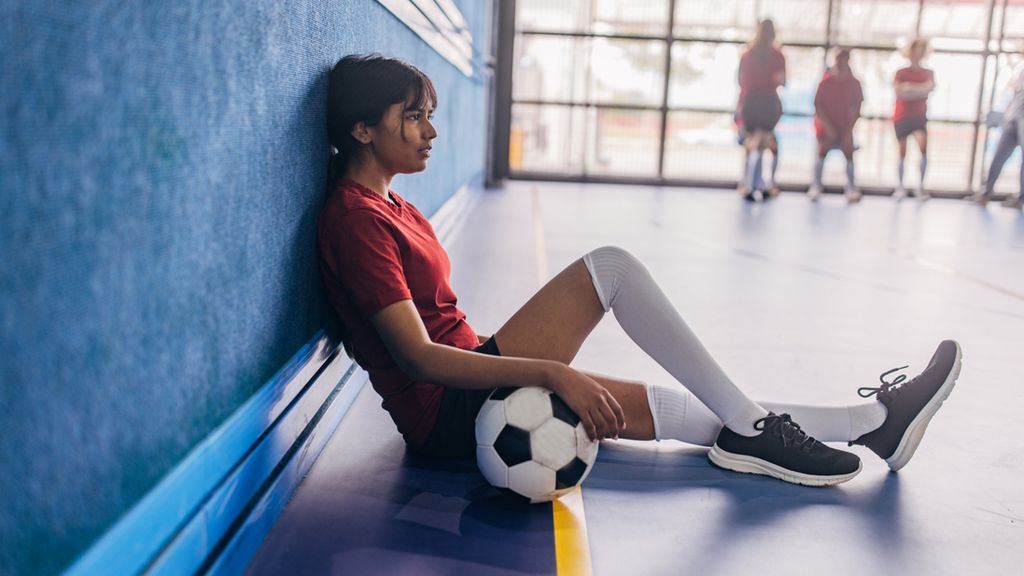
“The overemphasis on competition is a cultural barrier. We provide education and advocate around the benefits of sports-based youth development. There’s also this unfortunate narrative that sports are the only way a young person might have access to college scholarships. When teams start to make cuts in middle schools, we see a lot of kids drop out of sports. There’s no encouragement to just remain active and to be on a team as a form of recreation,” explains Myers. Coalition members support quality coaching that prioritizes kids’ safety and well-being ahead of competition. They also work to involve more women and people of color in coaching to help kids see themselves as lifelong athletes.
Inclusive play
Younger children usually spend more time on free play than organized sports. Proximity to playgrounds is critical to equitable access, but it’s not enough.
“There’s a big difference between ADA design and inclusive design. The guidelines to children’s play spaces became law in 2010, so ADA compliance is actually the worst you can do by law. Inclusion is going above and beyond physical access. It’s looking at creating a space for sensory diversity, what’s developmentally appropriate and including everybody’s unique needs and abilities,” says Moore.
For play spaces to be truly equitable, designers need to consider who will be using the space. U.S. Department of Education statistics show that wheelchair users are a small minority of students with disabilities, indicating that accessibility needs to extend far beyond ramps and clearance.
“We think a lot about common diagnoses; we see a lot of ADHD, autism, Down syndrome or motor coordination disabilities like cerebral palsy,” says Moore. “We think about that physical access piece, all those wonderful things that we do through play equipment, but we’re also thinking about ways to develop and mentally support a child, empowering users with independence and autonomy. In an inclusive space, we think about sensory diversity, access to risk and graduated challenge and thrill.”
Ways parents can get involved
In an ideal world, every community would follow the example of Anchorage, Alaska, where the Parks District created an ongoing initiative in 2006 to make their entire system inclusive. Using an intersectional rubric of barriers to access, every playground received an inclusivity score that helped prioritize upgrades to existing playgrounds and determine where additional playgrounds were needed.
If you want to advocate for more inclusive play here in Washington, Myers said the Play Equity Coalition will hold an open call on their website for a new disability access action team later this year. If you are already affiliated with a nonprofit sports organization, King County Parks and Recreation’s Youth and Amateur Sports grant program is open to new applicants. For those who want to be more hands-on, (especially moms and people of color) consider coaching.
Inclusive play in Greater Seattle
If you’re looking for play opportunities for your child, you can use Landscape Structures’ map to search for one of their playgrounds near you. Seattle, Bellevue and Tacoma have block party programs to close your street to traffic for a day of play. Seattle’s Play Streets and Bellevue’s Healthy Streets programs allow recurring street closures. Seattle’s Rec ‘N The Streets, Maple Valley’s Mobile Recreation Program, Tukwila’s Rec ‘N Roll, and others bring free games, sports, crafts and activities directly to local neighborhoods. In Seattle, use Seattle Parks’ interactive map to find Rec ‘N the Streets, as well as community centers, swimming pools and other recreational programming.
And of course, you can support your child’s participation in sports and encourage them to try new ones they hadn’t considered. There are many programs to help kids discover new sports, including Sports Sampling Camp, a free weeklong camp for ages 7–14 led by SeaWolves, Seahawks and Storm athletes that gives kids a chance to try a variety of different sports. Age Up is a group focused on Ultimate Frisbee for girls in South Seattle.
“If you don’t know about them, you’re missing out,” says Myers in reference to Age Up. Other groups specifically serve youth of color in traditionally white-dominated sports like golf, snowboarding and hockey, often providing transportation and equipment. You can find many of them in the coalition member directory or reach out at info@kcplayequity.org for help connecting with resources.
No matter what your child’s needs and interests are, you can find a place for them to play. “There are so many organizations out there that are doing amazing work for free,” says Myers.
Jump into our August issue!
This article is featured in the August 2026 issue of ParentMap magazine. Explore the full issue for the latest parenting stories, family inspiration and Greater Seattle adventures to make the most of the final days of summer before school starts.