Seattle Family Calendar
 Subscribe
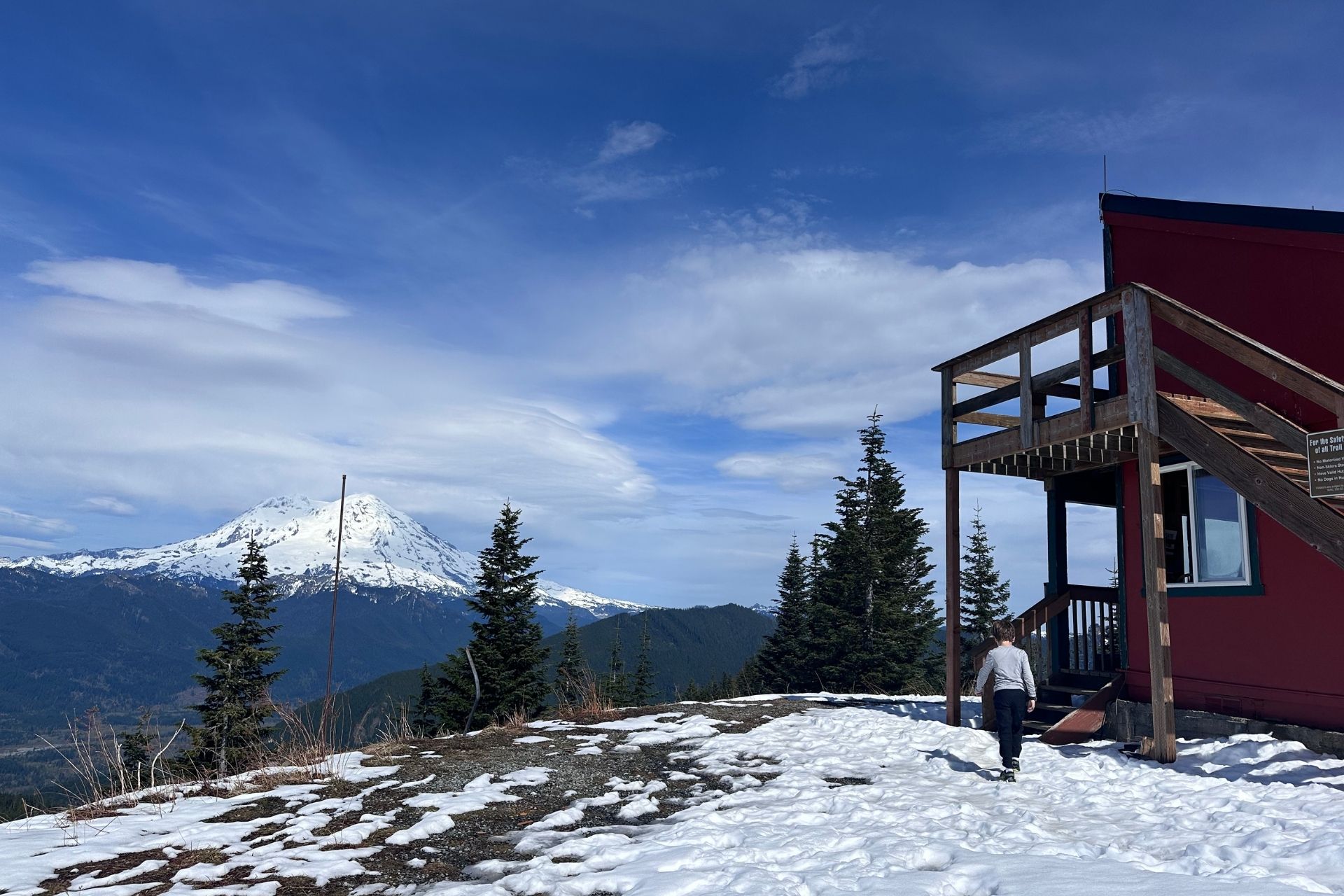

There’s a unique winter adventure just a few hours from Seattle that starts with everyone dressed in too many layers. It continues with someone asking “How much farther?” 147 times before momentarily being distracted by a snowball, may also include a wardrobe change, and ends with sipping hot chocolate by a woodstove, overlooking a towering, snowy volcano. If this sounds like fun, mark your calendars for early November to reserve your spot at one of the Mount Tahoma Trails Association’s winter huts.
From November to April, MTTA ski patrol volunteers maintain a network of huts and trails designed for winter travel by cross-country ski or snowshoe (and possibly muddy hiking). The huts are rustic, communal and surprisingly comfortable once you make the effort to reach them. They are reservable outside the winter season, but there is something quite special about trekking to a well-appointed cabin in the middle of the wilderness in the colder months. Last season, my family visited two of them — Copper Creek in January and High Hut in April — and we hope to repeat this adventure in 2027.
Choose your Mount Tahoma hut
The hut you choose will largely depend on your family’s appetite for uphill travel (and availability). All reservations cost $15 per person, per night and are booked online. Unless you book the full hut, know that you will likely be sharing the space with other groups.
Copper Creek
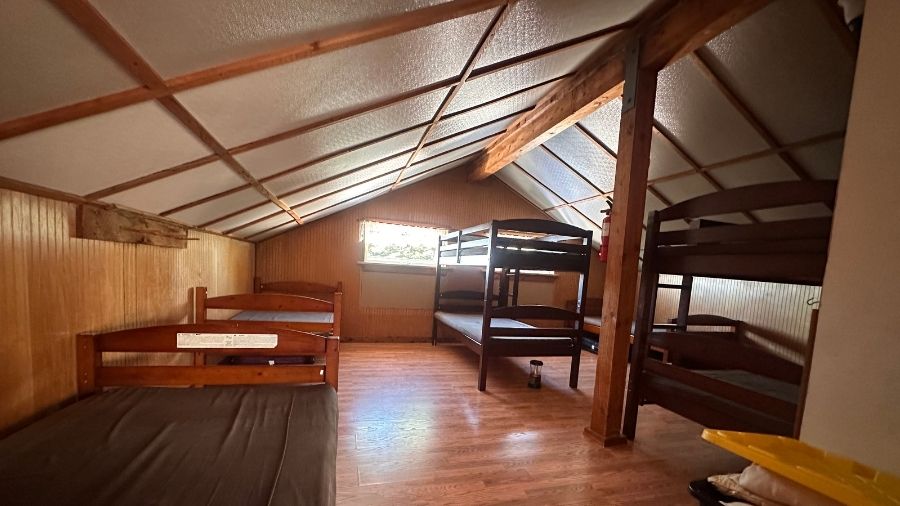
This is the “easiest” option. It’s about 3.2 miles and 800 feet of elevation gain from the upper Sno-Park, making it a good starting point for families new to overnight winter hut trips. Copper Creek sleeps up to 14 people in bunks on the upper level.
High Hut
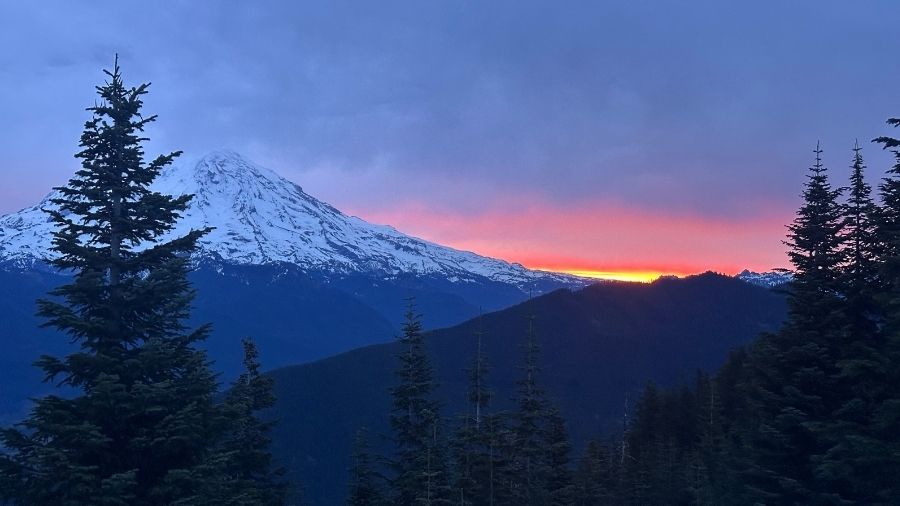
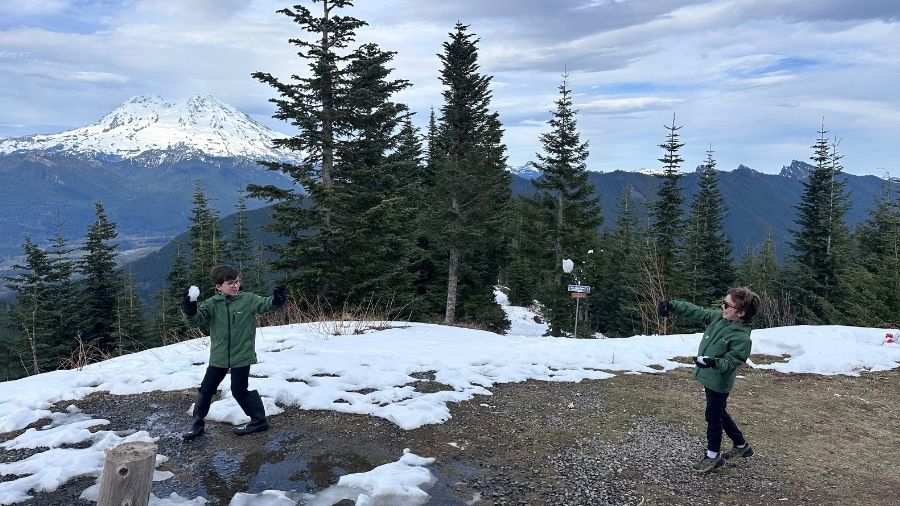
Short but steep. About 3 miles with 1,800 feet of gain from the upper Sno-Park, the reward is a ridgetop hut at 4,760 feet with incredible views of Mount Rainier, Mount Adams and Mount St. Helens. High Hut sleeps eight; there is a bunk and futon in the main room, and space for five mats on the floor of a loft.
Bruni’s Snow Bowl
Similar mileage and elevation gain to High Hut (3 miles, 1,800 feet of gain), but with room for 14 and another excellent ridgetop setting. This is a good choice for larger groups or families who like having more people and space around them.
The Yurt
The longest approach at 5.5 miles and 2,200 feet of gain from the upper Sno-Park. It sleeps only six, making it a good fit for a small family or group looking for a quieter, more secluded experience that doesn’t mind the longer, more intense walk in.
If an overnight stay isn’t appealing, the huts are open daily to the public from 7 a.m. to 7 p.m. For families looking for a multi-day adventure, it is possible to string together stays at High Hut, Bruni’s Snow Bowl and The Yurt.
Settle into your mountain home
The MTTA huts are rustic, but you aren’t exactly roughing it (that’s subjective, of course). All huts have electricity, heat, running water and a sink, a propane stove and oven, dishes, cookware, cleaning supplies, a dining table, games and books. Winter drinking water comes from melted snow and is run through the huts’ filtration systems. Guests help collect and melt the snow to keep the filter reservoir full — it’s a great task for the kids!
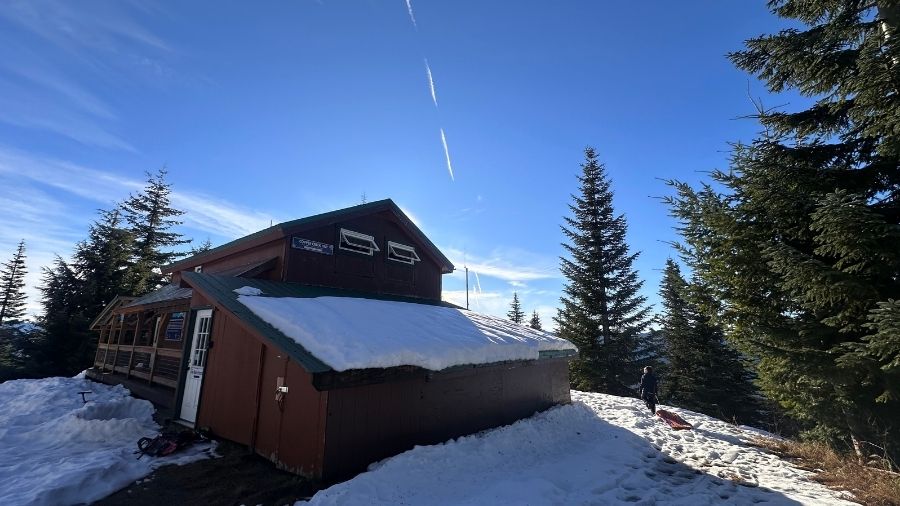
A clean, well-appointed outhouse sits outside each hut; I’d even vote them the best vault toilets in the Pacific Northwest, if there were such a competition. Beds have plastic-covered mattresses. Both huts we visited had a bin of pillows (BYO pillowcase). The entryways held a large selection of rubber slip-on shoes and boots in various sizes for indoor wear or a quick run out to the toilet.
You’ll also find plenty of places to hang wet gear. My kids spent a good bit of time studying the pulley system at High Hut to replicate a similar drying rack at home.
You do need to bring your personal gear: sleeping bags, clothing, food, toiletries, medication, flashlights/headlamps and your backcountry essentials. And then you get to settle in! With a book, a game or a conversation with another group. There is no Wi-Fi, though I did have some signal at Copper Creek but none at High Hut. Best to plan to enjoy the disconnection.
And please remember, the huts rely on volunteers and responsible visitors. Please leave your hut in better condition than you found it, and pack out everything you brought in.
Lessons I learned (so you don’t have to)
Is this a great family adventure? Absolutely — but with an asterisk. The huts are family-friendly, but the trails are not necessarily easy. I personally underestimated the cumulative effect of cold, uphill terrain and heavy gear when we set out for Copper Creek in January, so let my lessons be your gain. Our High Hut experience a few months later was far more pleasant with a few tweaks on my part.
This is not just a ‘hard’ 3-mile hike
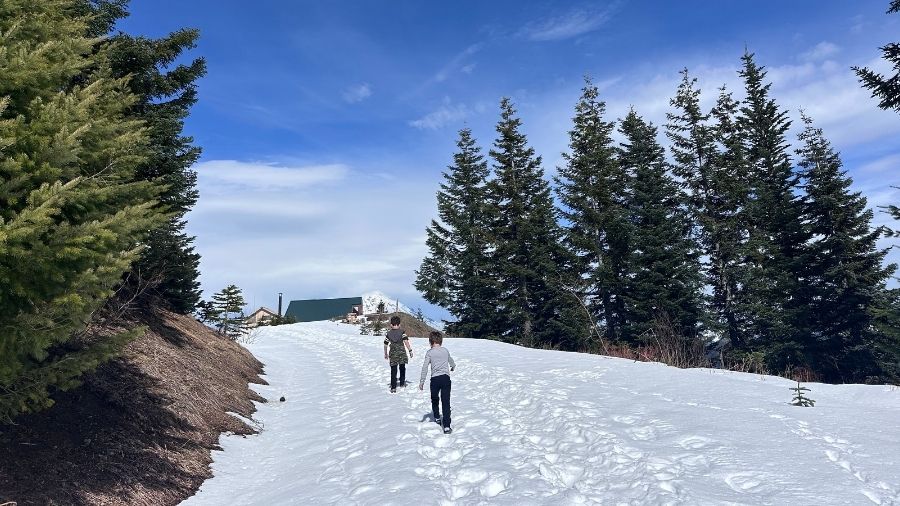
First, assume you’ll be colder, hungrier and wetter than you expect. All the strategies you use to motivate your kids to hike uphill without snow — amplify them. Hit the trail well-fueled, pack more snacks than usual, plan for more breaks and bring at least one extra pair of heavy gloves or mittens for everyone. Snow play on the way up is part of the fun, but it also leads to a lot of wet gear.
Second, lighten the kids’ load. Unless your family does a lot of uphill snowshoeing, the addition of these foot paddles requires a lot more energy exertion. For our Copper Creek hike, I had both of my kids carrying a backpack, which ultimately meant I ended up carrying my large pack and two backpacks by the end of the hike. For High Hut, I packed only one small backpack, and my two kids traded off carrying duty every half-mile. This gave them both a break and some motivation to keep moving forward (from personal experience, if you switch based on time, more dawdling happens). This worked far better.
Look forward to snow, but don’t be surprised by slush
In mid-January, the snowpack was very light; we only needed our snowshoes for the last 1.5 miles. Instead, we encountered a lot of slush. This meant mud and wet shoes. You know your family best, but give some thought to your shoe choices. Bulky waterproof boots will stay dry, but may not be comfortable for hours of uphill and downhill travel. Hiking boots are more comfortable, but may end up soaked. My preferred strategy is multiple pairs of wool socks and an extra pair of shoes for everyone to wear at the top. Once you get to the hut, the stoves are remarkably effective in helping to dry out gear so you can start your return trip with dry feet.
Bring sleds
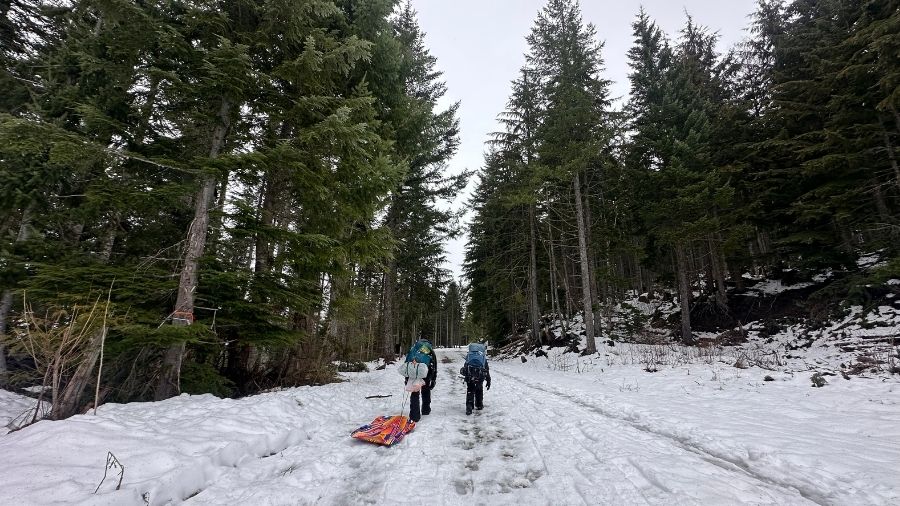
If there is a chance of snow, hauling sleds up the road might be worthwhile. The roads are mostly uphill, and there were spots at both Copper Creek and High Hut for sledding near the hut. Most of the snow was gone for our return from Copper Creek, but we still enjoyed several patches of sledding down the mountain back to our car. I also suggest being clear about if and when you’ll pull kids up on the sleds. Because they will ask. I am a particular fan of, “I’ll pull you for as long as you pull me first.”
Note: Inspect all sledding areas carefully and set expectations clearly. There are sheer drop-offs and areas along the road and at the top that are not safe for sledding.
Be a bit extra with your menu
Pack a package of ready-to-bake cookie dough. Throw in a bag of popcorn kernels. Bring the pancake mix and a favorite topping. With a full kitchen (and room in your pack that might normally be filled by a tent, a sleeping pad or dishes), you can add the proverbial cherry to your meal plan for a surprise the kids will remember.
What to know before you stay in an MTTA hut
Winter hut trips require more planning than a typical day hike.
- Reservations are required for overnight stays, and they can be competitive. Book well in advance and go midweek if you can.
- You will need a seasonal non-motorized Sno-Park Permit ($50) for overnight stays, November through April. You can order this online in advance and it will be mailed to you. You can also use this pass at more than 120 sites across the state for other winter adventures. A Discover Pass is required May through October.
- Check current trail and Sno-Park conditions before leaving home. Look at recent posts on AllTrails, Washington Trails Association and on the Mount Tahoma Trails Facebook page.
- Pack the 10 Essentials for hiking and be sure someone from home knows your plans.
- Need snowshoes? Before buying new, check your local used outdoor gear store, online resale groups or rent them from REI. My local parks and recreation department has a free borrowing library — yours might too.
Hot chocolate earned and memories made
The best thing about an MTTA hut trip is that it occupies a sweet spot between a day hike and a serious backcountry expedition. Snowshoe up. Take off your wet layers. Make dinner. Play a game. Look out the window. Listen to the snow. Wake up to incredible views. Sled down. This affordable, comfortable, family-friendly adventure is worth the work to get there and offers the potential for lifelong memories.