 Seattle Family Calendar
 Subscribe

Discovery Park
New York has Central Park, Boston has Boston Common, San Francisco has the Presidio. Seattle has Discovery Park.
This expansive Seattle park is the crown jewel of our city’s impressive park system and it’s a marvelous place to explore with kids any time of year. The park’s 534 acres include a variety of trails, wide-open meadows, a sandy bluff overlooking Puget Sound and a beach. There’s a fantastic updated playground, a handful of geocaches and important local history to learn about. And on top of all that, there are those views!
The most impressive thing about this park is its sheer size. You can visit over and over again and discover new pockets every time. Read on for 10 awesome areas to explore with kids at one of my very favorite places on earth, Discovery Park.
First stop: the playground
The playground
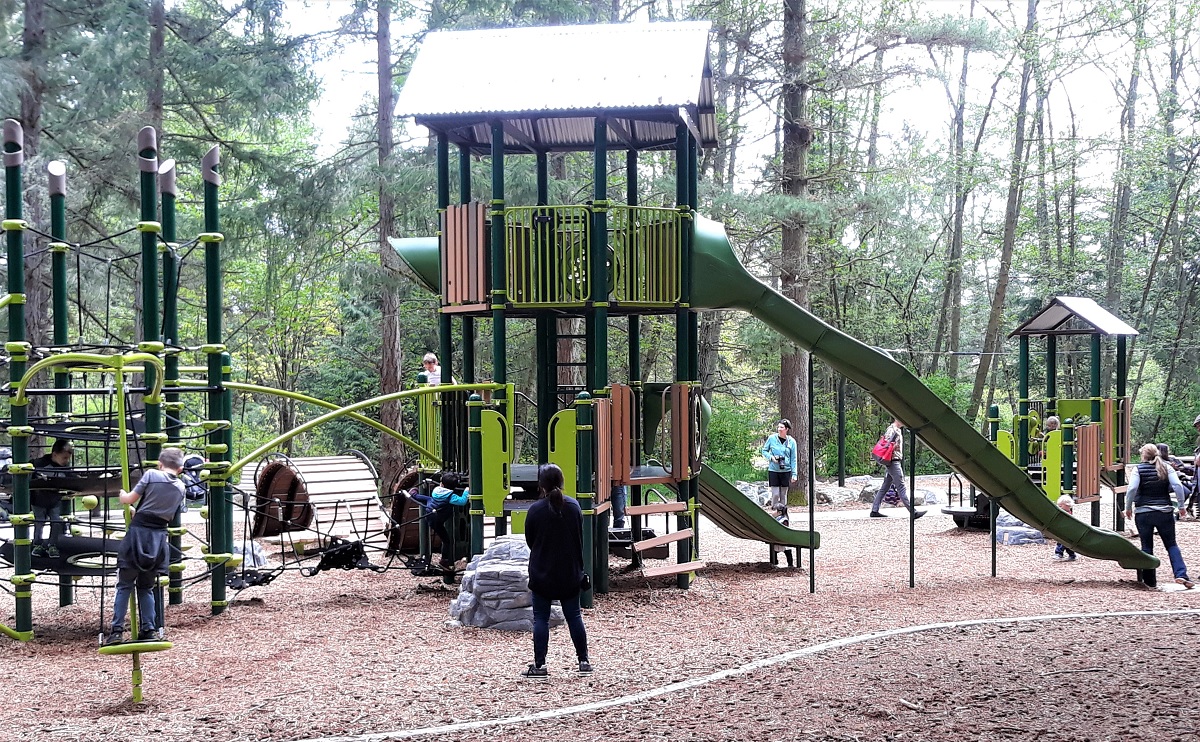
Discovery Park’s fantastic updated playground, which opened in 2017, sits among tall trees a few hundred meters south of the visitor center. You can’t see it from the building or parking lot, but you’ll find it if you face the front door of the visitor center and walk around to your left, past the tennis courts.
The playground features a multi-level climbing structure with adventurous elements designed for kids ages 5–12. A smaller structure caters to kids ages 2–5, with a small slide, climbing steps, drums and bells. A set of four swings includes two baby swings, one regular swing and one accessible swing.
The new zip line has a better launch pad than the old one — kids can now launch themselves rather than needing the help of an adult to get going (little kids will still need help), but reports indicate it’s not as fast.
The playground is nicely shaded on a hot day, but those are rare in Seattle so bring sweatshirts or jackets on cooler days.
Find it: The playground is about 300 meters south of the visitor center and east parking lot.
Next stop: visitor center
Discovery Park Environmental Learning and Visitor Center
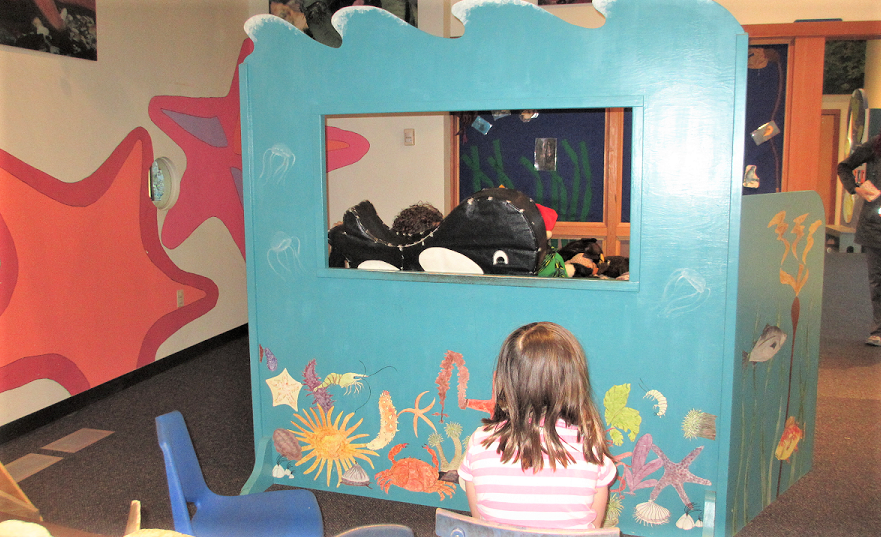
Discovery Park’s Environmental Learning and Visitor Center reopened in 2022, after a long pandemic closure, but then it closed again. Extensive ADA improvements are wrapping up during fall of 2023 and the visitor center has reopened!
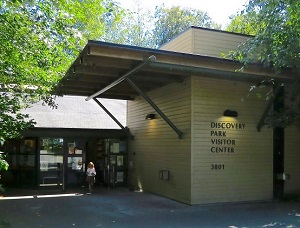
During open hours, Tuesday–Saturday, 8:30 a.m.–5 p.m., hit the visitor center to find clean restrooms, helpful staff, a drinking fountain, and great exhibits on the flora and fauna of the park. There’s also a family space that features a huge box of animal puppets and a puppet theater, providing super-fun entertainment for the kids.
Find it: The visitor center is located adjacent to the east parking lot. The tennis courts, playground and a few meadow areas are also found here on the east side of the park.
One note: Car prowlers are ruthless, in this and other parking lots of the park. Do not leave anything in your car, even in the trunk. (They’ll watch you from the bushes as you place items in your trunk and break your window to open the trunk, which, unfortunately, I know from personal experience. This scenario was confirmed as a regular occurrence by visitor center staff.)
Next stop: sandy bluff
The bluff and the sandy area
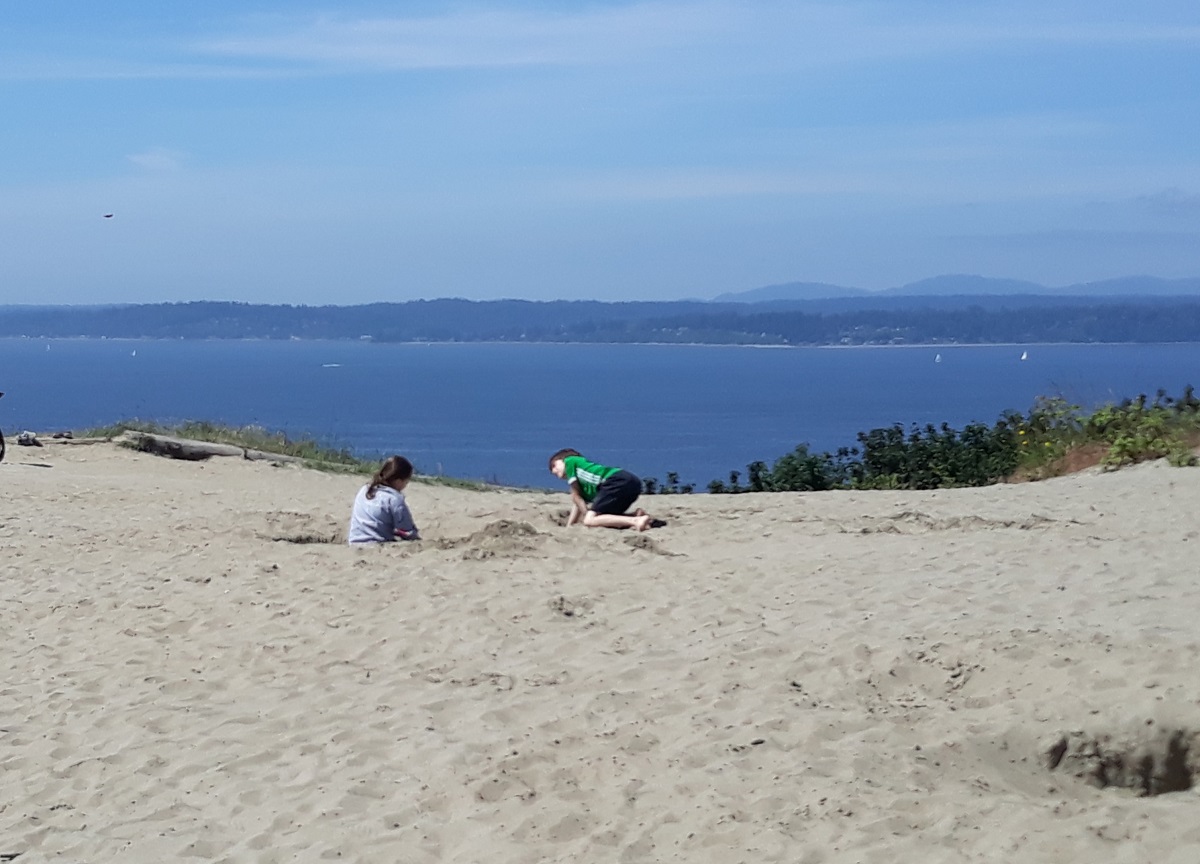
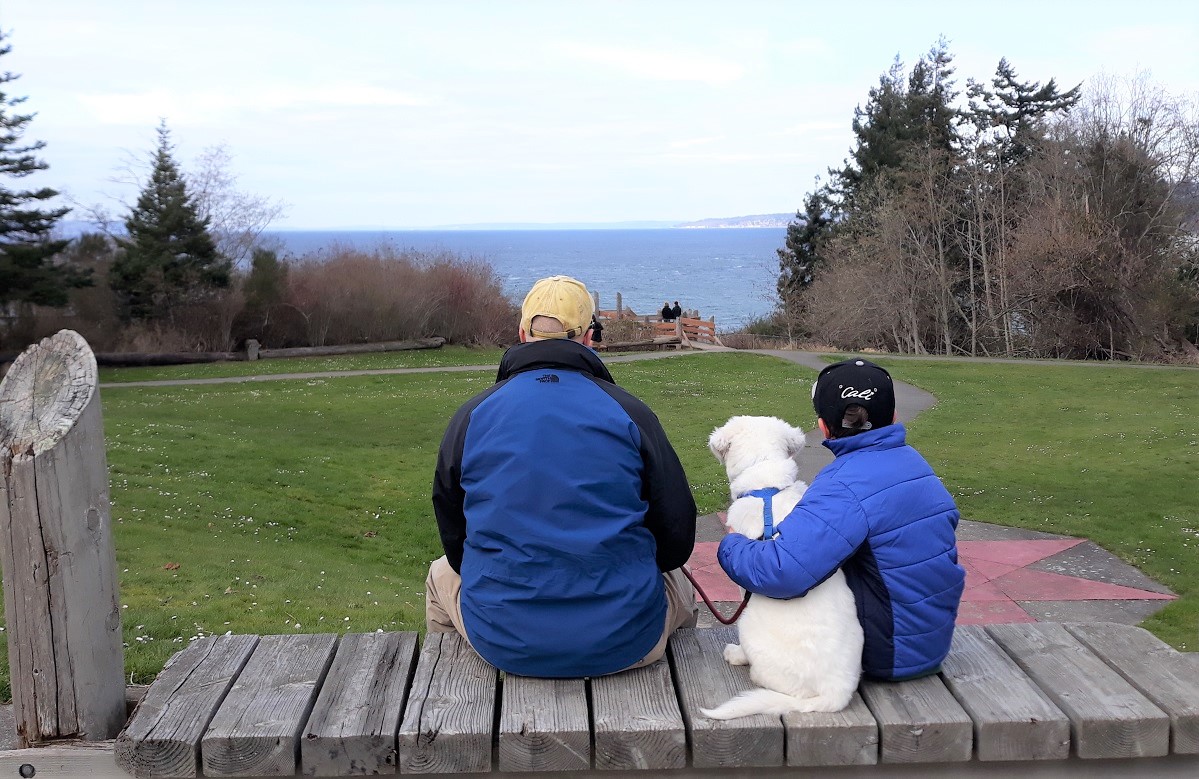
On a sunny day, or any day, your kids will love digging in the big sandy area along the bluff. Bring the shovels, buckets and toys for beach play, though there’s no water here — Puget Sound is quite a ways down the hill (more on the beach later). But you won’t need any water on the bluff: There’s great sand and amazing views. Watch ferries and other marine traffic, take in the view of the Olympic Mountains or scan the water for signs of orcas.
Find it: The sandy area is located on the park’s loop trail. For the shortest walking route, park in the south parking lot, although you can also reach this area by taking a slightly longer walk from the east parking lot (where the visitor center is).
Next stop: giant tree
The giant tree
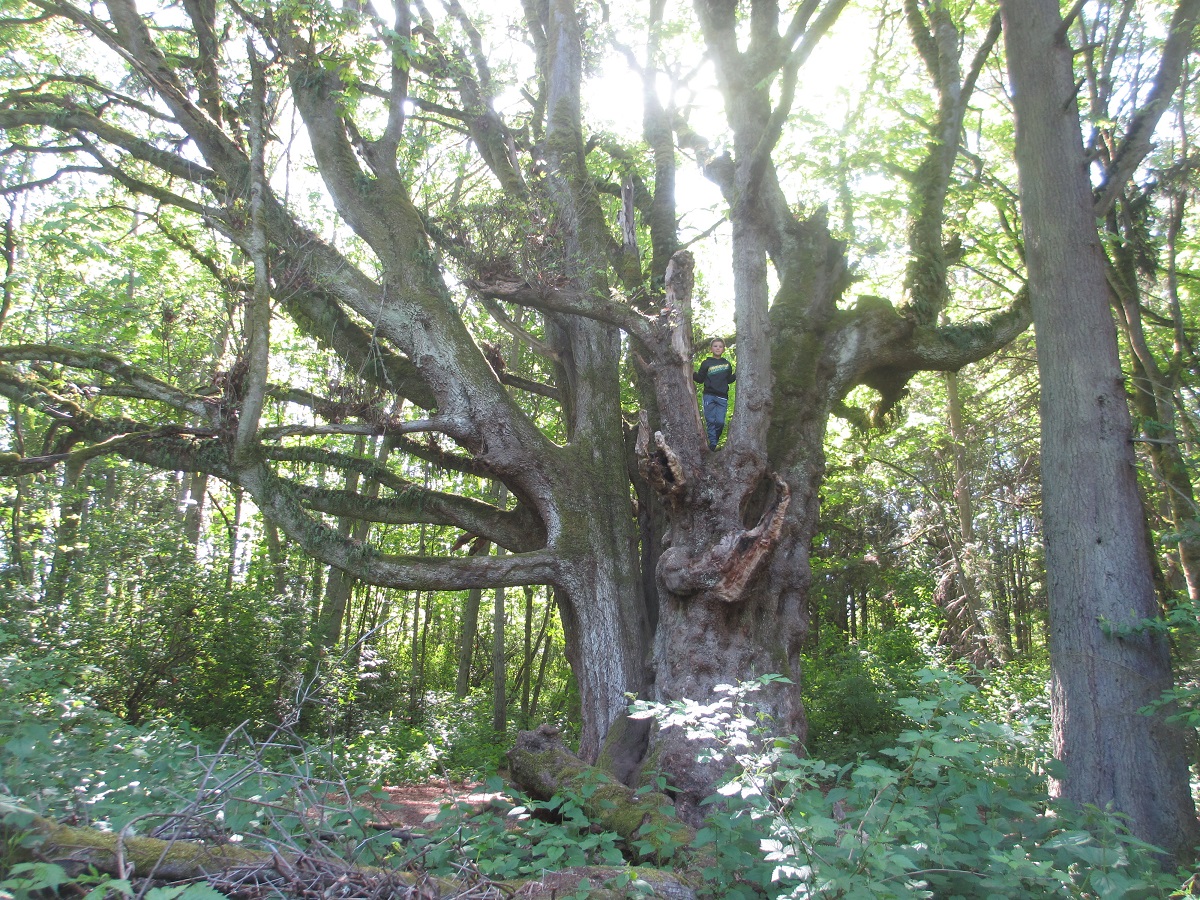
Talking about this amazing tree is how I first got my son to hike with me along Discovery Park’s loop trail. This arboreal giant is totally wow-worthy. But it might not be for the faint-of-heart parent watching from below as their kid scales its heights. If you trust your climber’s sure-footedness and judgment, they will love it. There’s also plenty of fun to be had at ground level, running around the tree’s trunk and admiring its immensity.
Find it: From the visitor center at the east parking lot, take the loop trail heading north. You’ll soon pass through a short tunnel. In roughly 15 minutes of walking along the loop trail, you’ll encounter the giant tree.
Next stop: historic buildings
Historic buildings
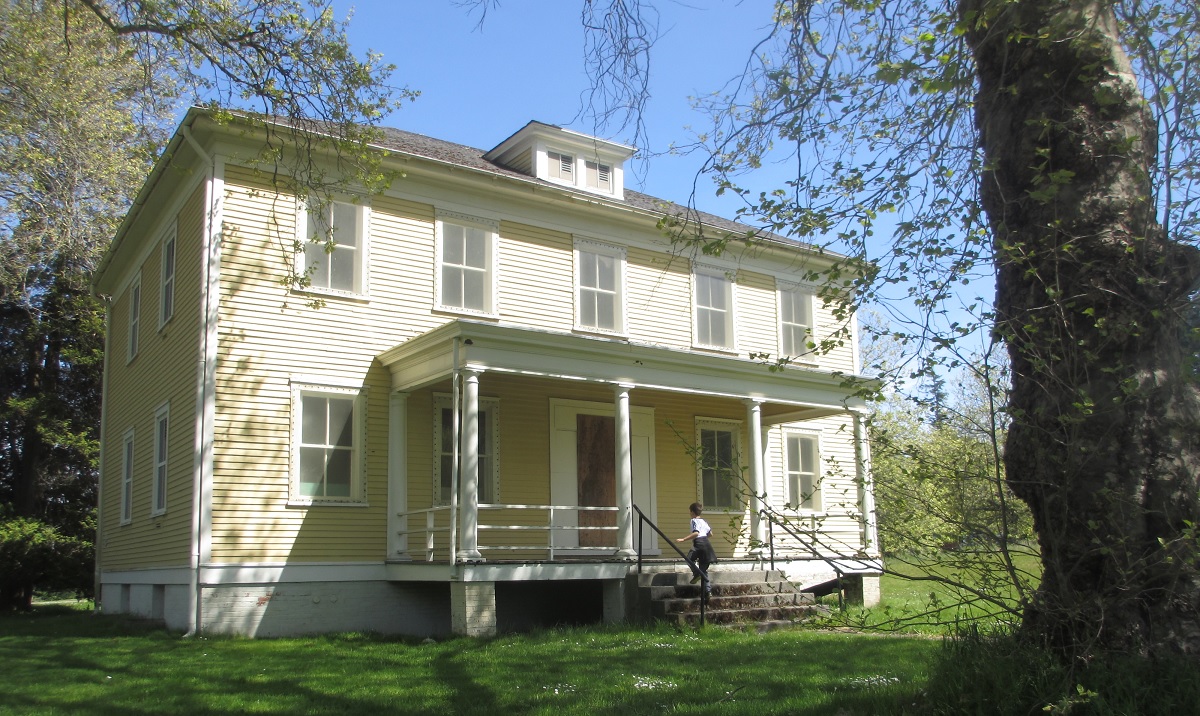
My family enjoys inspecting the stately old buildings in Discovery Park’s historic district. Find the old barracks, chapel, school, gym and other structures. They’re all boarded up, sadly, but you can try to peek through the windows and imagine the goings-on in the days of early Fort Lawton, which opened here as a military base in 1900.
Along California Avenue, you’ll spot historic homes that have been remodeled and are now privately owned (so no peeking in the windows here). These homes are on an island of private property within the park, and these lucky homeowners have some of the best views in the entire city.
Fun fact: You’ll also see a radar tower in this area that looks like it has an enormous volleyball sitting on top of it.
Find it: The closest parking lot to the historic buildings is the south parking lot. This area is also where you’ll find wide-open meadows suitable for all kinds of play.
Next stop: parade grounds
Meadows and parade oval
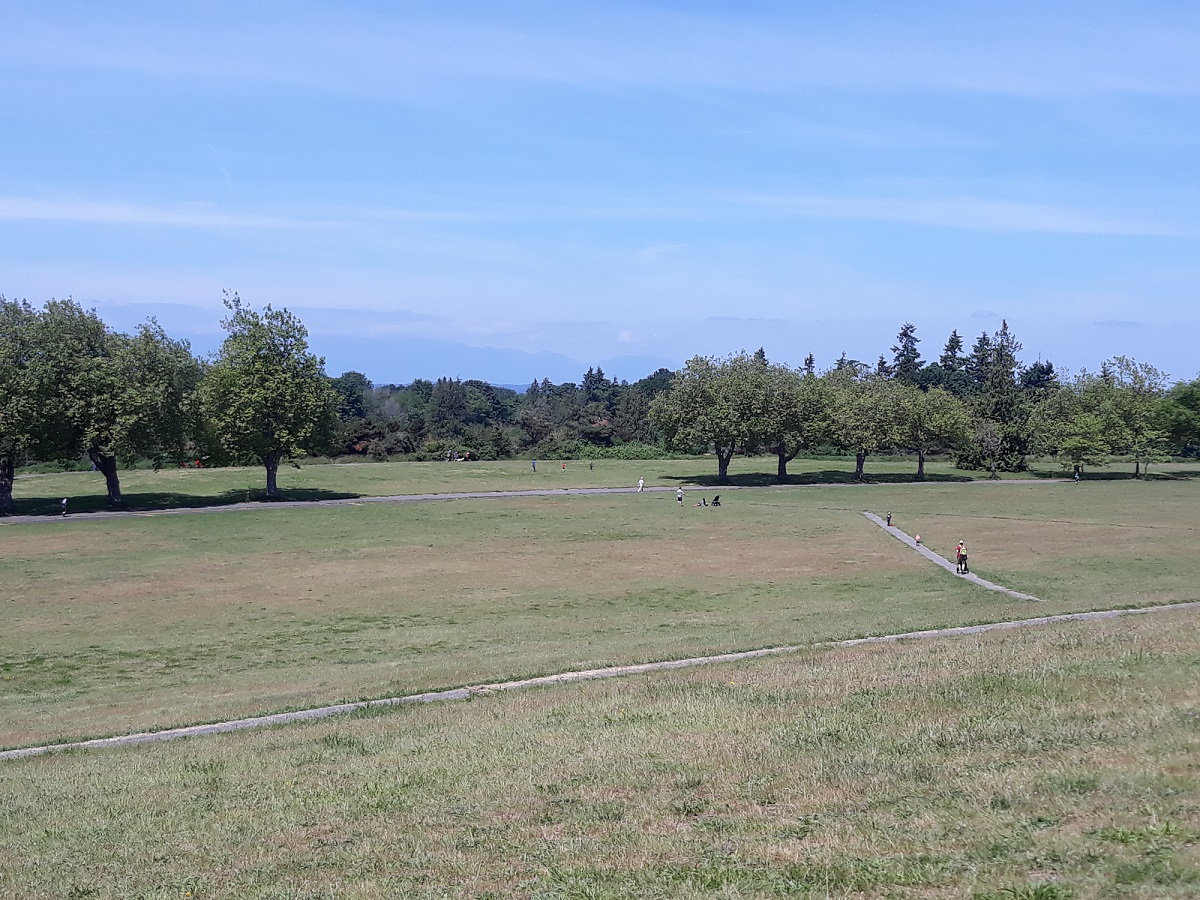
Discovery Park’s meadow area, formerly the Fort Lawton parade oval, provides the perfect spot for flying kites, kicking a soccer ball and throwing a Frisbee. Or pack a picnic, a blanket and a good book, and just spread out. The wide-open space and gorgeous views of the Olympic Mountains are good for the soul.
This area includes a long, paved pathway where kids can perfect their emerging bike riding skills, completely safe from vehicle traffic. Originally a road, the path is no longer used by cars, making it an ideal place for little ones to practice their pedaling. You can also find a geocache in the general vicinity, and there are a few more hidden away in other areas of the park.
Find it: The meadow area is most easily reached from the south parking lot. Head west on the loop trail and when you spot the chapel off to your right, you will also see the meadow spread out in front of you.
Next stop: the beach
The beach
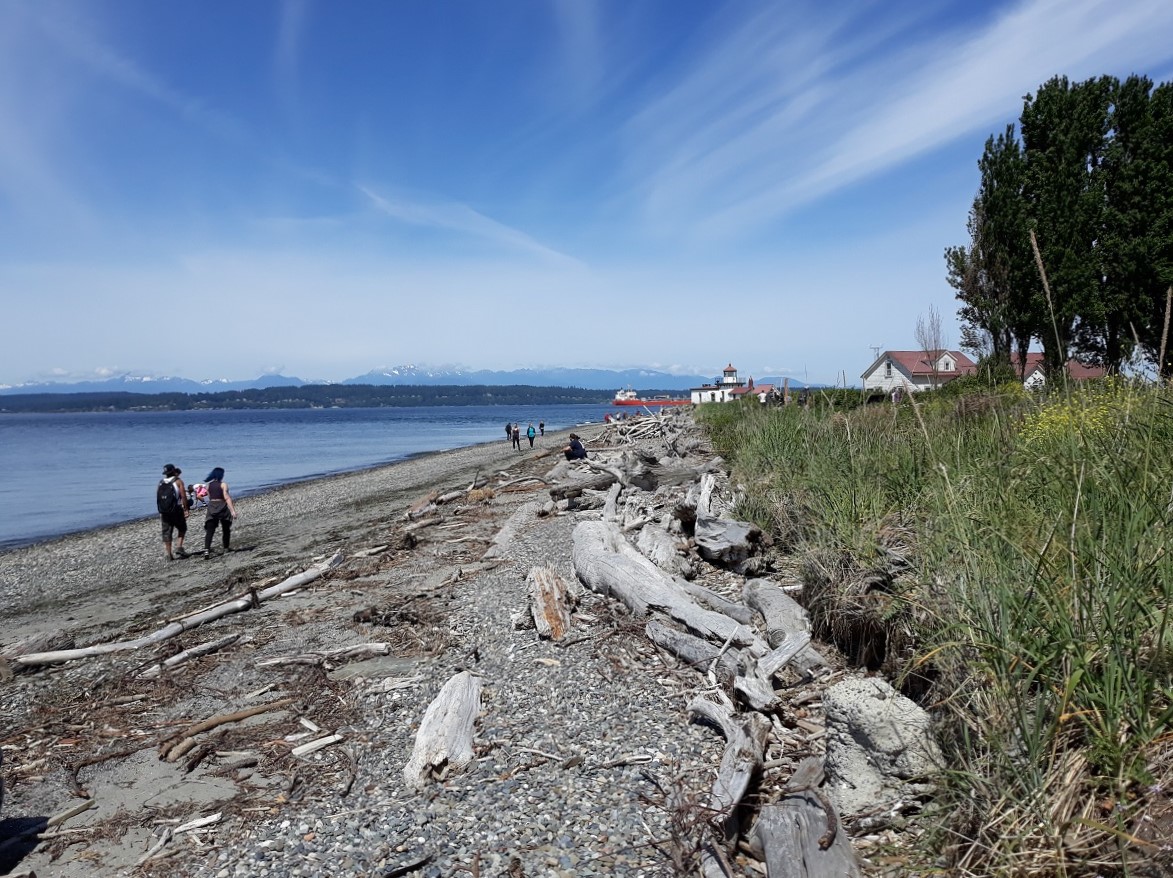
While the bluff provides the perfect overlook for views of Puget Sound and the Olympic Mountains, the beach, of course, offers the opportunity to dip your toes in the water. It takes some effort to get here, but it’s totally worth it — just know what you’re getting into. There is no regular public parking at the beach (see below).
From the visitor center/east parking lot, it’s a 4-mile trek to the beach and back, if you follow the loop trail, and it involves a lot of elevation change. Plan for a multi-hour excursion if you take this on — and possibly some whining on the long slog back up to the bluff. The trails to and from the beach have stairs and therefore are not stroller-friendly, no matter how rugged your stroller is.
Other ways to reach the beach
During summer months, there is often a free shuttle to take visitors to and from the beach. For families who think they might not be able to make the hike, this is the best way to visit the beach. Or, do a one-way family trek to walk to the beach, play, and then catch the shuttle back, which saves the arduous part of the walk.
The rest of the year, beach parking permits are available for select individuals and families. There are a few parking spots down at the beach, and families in three special categories can check out a parking permit from the visitor center, during open hours (Tuesday–Saturday, 8:30 a.m.–5 p.m.). The categories are: 1) families with kids ages 5 and younger, 2) people over 62 years old, and 3) others who are not physically able to walk to the beach due to disability or injury. You can check out the permit, if you meet one of these categories, during open hours at the visitor center and you must return the parking permit within three hours. Note that there are so few permits/parking spots available that even if you meet the criteria, you may well have to wait until a permit is returned.
You can also reach the beach by bicycle, if you have strong riders; there’s the same giant hill to face when returning from the beach. But note that bicycles are allowed only on paved roads and paved paths in Discovery Park; bikes are not permitted on any unpaved trails. Ask at the visitor center for the best bike route to the beach.
The beach also features a historic lighthouse, complete with a keeper’s quarters.
Find it: It’s a solid 2 miles each way to reach the beach walking the loop trail from the visitor center/east parking lot, over stairs and other steep terrain. From the south parking lot, it’s a bit shorter hike, but still close to a mile and a half each way. On either route, plan for a descent on the way to the beach, and a big climb — including stairs — on your way back up to the bluff. Bring snacks and lots of water.
Next stop: Wolf Tree Nature Trail
Wolf Tree Nature Trail
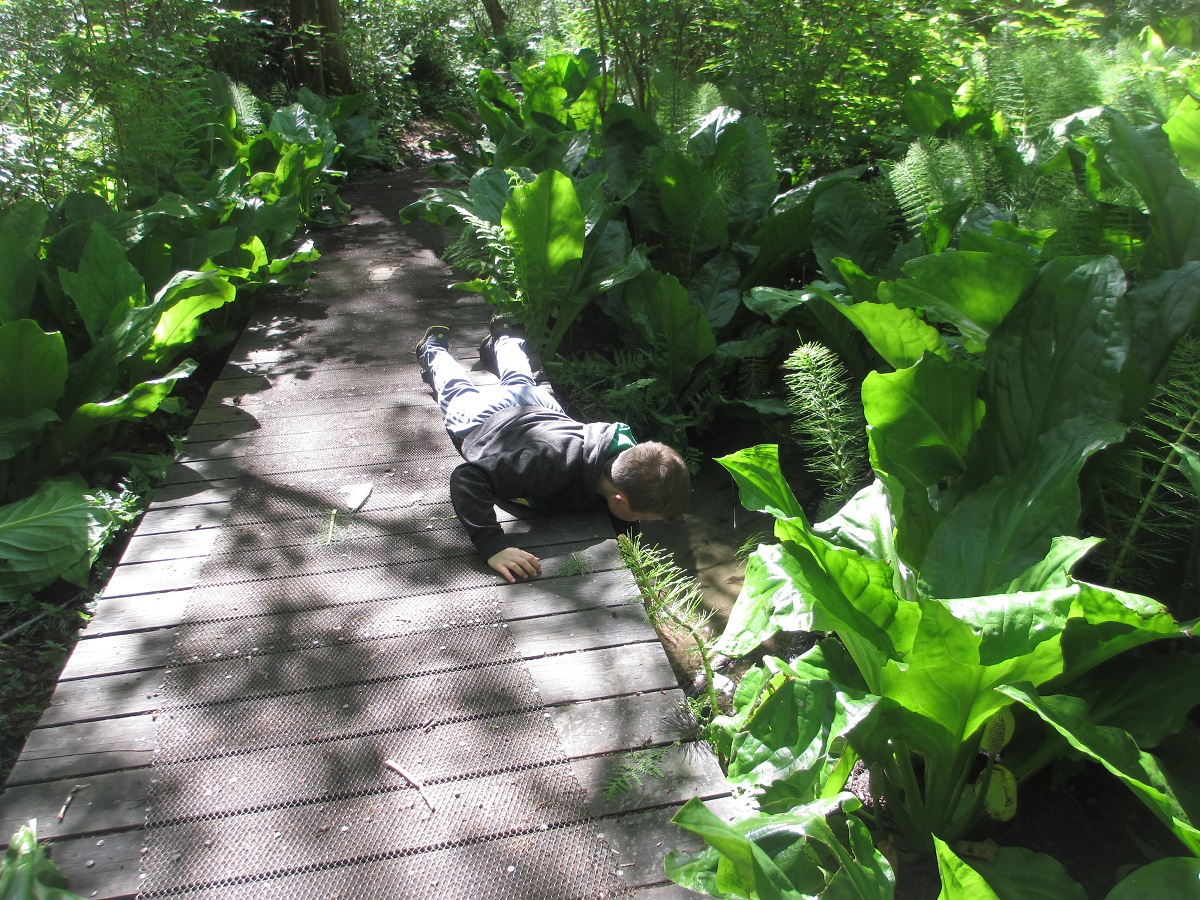
On the north side of the park, you’ll find the terrific Wolf Tree Nature Trail. Well-suited for little legs, this short loop trail showcases a lush green wetland ecosystem that’s quite different from what you’ll see in most other areas of the park. Note that this trail does not allow dogs, and you won’t want to bring a stroller; there are stairs and other tricky spots. Kids will love the boardwalk sections, plants with enormous leaves and the stream trickling through.
Find it: The Wolf Tree Nature Trail is close to the north parking lot.
Next stop: secret stairways
Hidden stairways
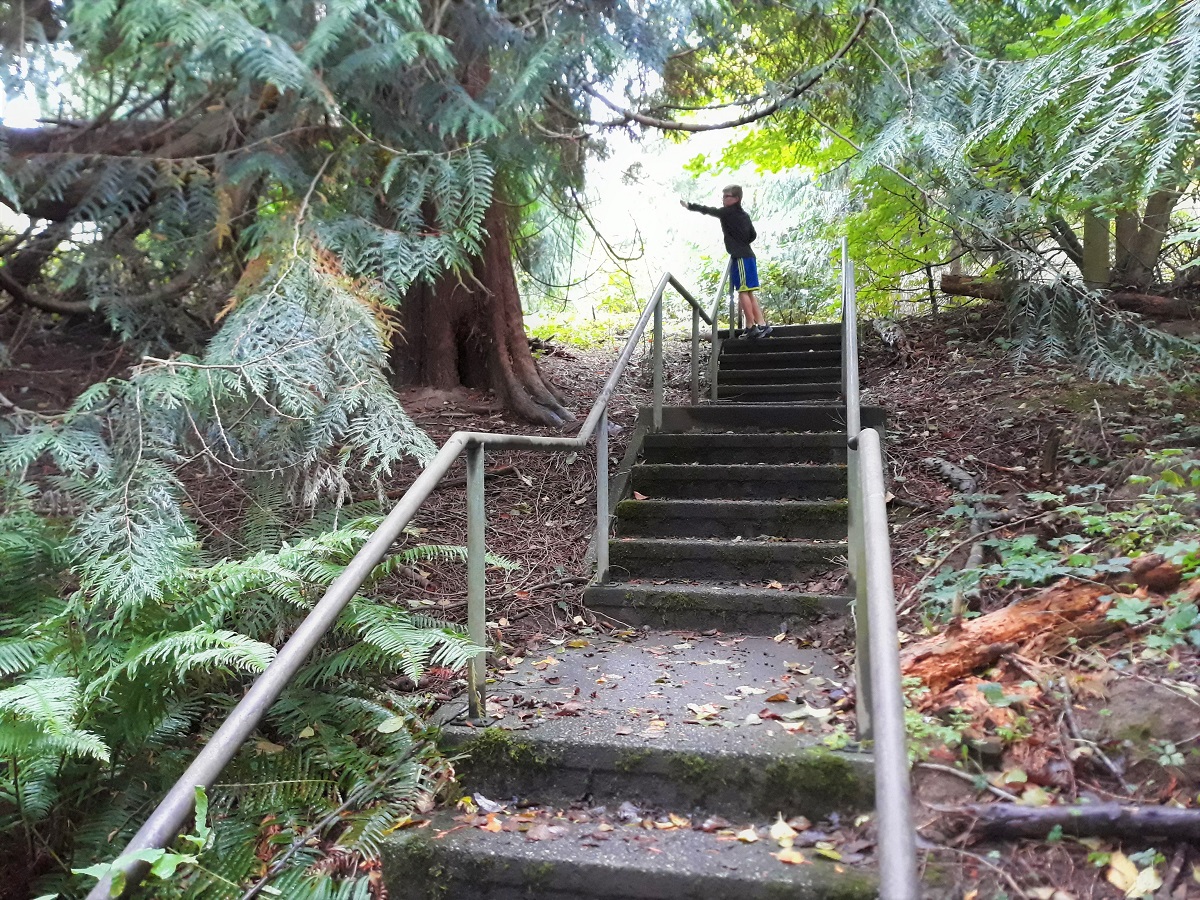
Save this activity for when you’re ready for Discovery Park, advanced edition. If you know your way around, have a decent sense of direction, or are comfortable exploring and potentially getting a little lost, there are hidden stairways all over this park. Some clearly connect one point to another, some appear to be random and some have been abandoned. Launch a nature mission to uncover as many stairways as you can.
Next stop: Daybreak Star Center
Daybreak Star Center and Discovery Park history
Daybreak Star Indian Cultural Center is an important community center for Seattle-area Native Americans. It also serves as the headquarters of the United Indians of All Tribes Foundation. The center, which houses a native art collection, is currently open daily, 10 a.m.–5 p.m.
The center came into existence in 1970 when a group of Native activists staged a peaceful occupation of some of the land that previously comprised Fort Lawton. The federal government had closed Fort Lawton and deemed the land to be surplus.
The center’s building, completed in 1977, showcases modern architecture of the time and includes Native American design elements.
Daybreak Star also hosts important community events. The Seafair Indian Days Powwow is a must-see event showcasing the dances and regalia of many area tribes. This year’s powwow takes place July 21–23. Entry to watch the powwow is pay-what-you-can and funds go to support the United Indians of All Tribes Foundation.
Don’t miss a visit to the duck pond nearby.
A little Discovery Park history
While this park is a gem in the Seattle Parks system, in part because it includes a community center for the descendants of the first people to live along this coast, Discovery Park also holds important lessons from its past. These lessons are worth exploring, especially for families with school-age kids.
Fort Lawton was home to a unit of African American soldiers known as the Buffalo Soldiers. In 1909, some 900 African American soldiers and their families lived at the fort and accounted for about one-third of Seattle’s Black population.
During World War II, Fort Lawton housed German and Italian prisoners of war. In 1944, an Italian prisoner of war was killed, and 28 African American soldiers were wrongly convicted of his murder. It took until 2007 for their convictions and dishonorable discharges to be overturned.
Editor’s note: This article was originally published in 2020 and updated most recently for 2023.