 Seattle Family Calendar
 Subscribe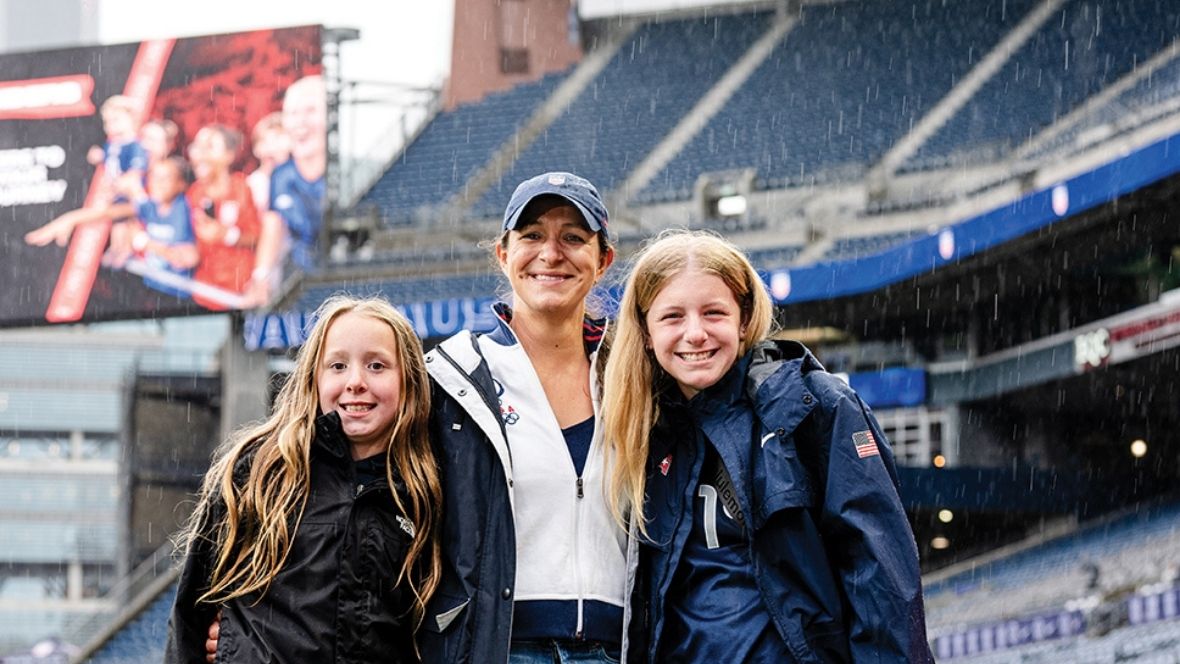

There’s a reason so many of us invoke sports metaphors when we talk about parenting. Newly minted parents are rookies. Couples play man-to-man defense when taking their kids out — well, pretty much anywhere in public — and they move to a zone defense when they’re outnumbered. And who among us hasn’t chided “get your head in the game” when facing down a rambunctious group of post-birthday cake toddlers at a bouncy house party? Certainly not me.
It’s not so much that parenting is a sport, but rather much of what goes on in sports also applies to parenting. Who better to excavate these connections and help us unearth valuable lessons she derived from years of playing professional soccer in Puget Sound than parent Stephanie Cox.
Cox grew up playing soccer in Elk Grove, California before her exceptional skills landed her a spot on the Youth National Teams and eventually earned her a scholarship to the University of Portland. She has represented the U.S. at the Women’s World Cup in 2007, won an Olympic gold medal in 2008, and has twice played for the Seattle Reign in 2013–15 and 2019–21. These days, she coaches the women’s soccer team at the University of Puget Sound in Tacoma, and, like so many of us, spends her weekends cheering on her two daughters, ages 10 and 13, on the field and on the court, alongside her husband, Brian.
I had the chance to sit down with Cox to talk sports, achievement and parenting. Here’s what she shared:
Q: What lessons from your time as an elite athlete apply to being a parent? And how has your history with sports shaped the way you parent your daughters? A:
Parenting is hard work and also very humbling, and there are a lot of lessons that translate from being an elite athlete into parenting. One of the things that I tell my players now as a college coach is to focus on the things that they can control, but be aware of the things that they can influence. They can’t control the referee or the opponent or the weather. While they cannot control their teammate, they can influence them by their communication and encouragement.
As parents we cannot control our kids but we can influence them. Our response to them should be level, like an athlete, not too high or not too low, so that they can gain stability from us while they are trying to manage their own emotions. We can influence them by how we give them structure and model discipline, as well as how we respond to our own adversity in our lives.
During a high intensity game, you have to be flexible and adaptable, ready to shift to take advantage of the moment. I think that this mentality has made me a better parent as I am able to adjust to varying demands and stay present so that I can support my kids and my family in the best way possible.
Q: Intense pressure to perform on the field is part of being a pro athlete. How has that experience influenced the way you approach navigating things like stress, competition or disappointment with your daughters? A:
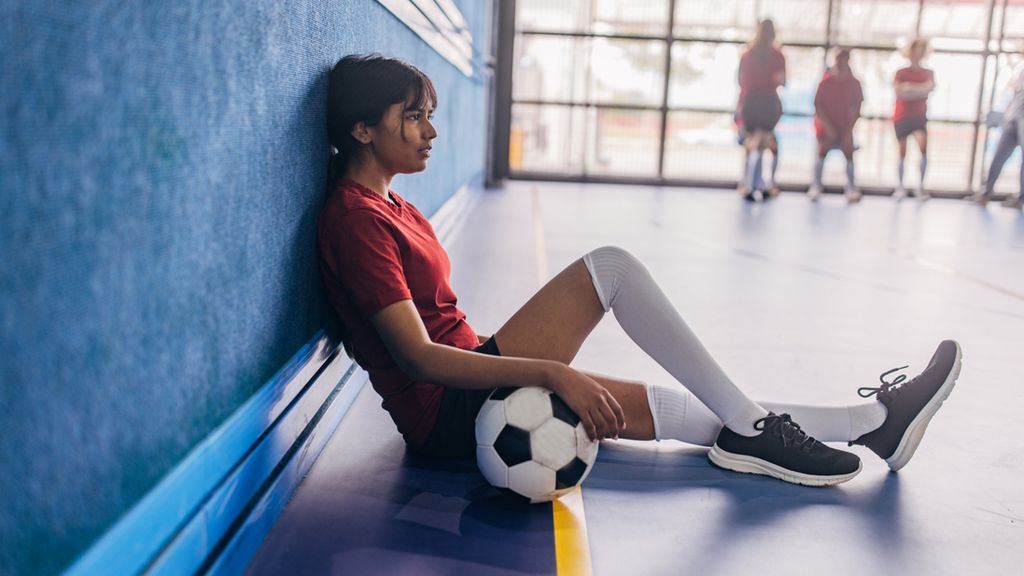
I have had loss at the highest level with my team, losing in penalty kicks to Japan in the 2011 Women’s World Cup. And while this loss was heartbreaking, I was able to come away from it and realize that there was so much to be proud of and put it in perspective because it is not life and death.
With these high-level moments, I am able to put my own daughters’ wins and losses in perspective as well. Their losses are moments for them to reflect and take pride in their effort while also motivating them to work harder or adjust things so that they can try for a different result the next time. I see sports as a safe space for them to experience failure and disappointment so they can develop resilience and grit in their character.
Q: How do you protect them from similar pressures and/or encourage balance in your kids’ lives? A:
I look back on my childhood and see that I made a lot of sacrifices in my pursuit of soccer. We didn’t have many extended family vacations and I didn’t have many hobbies outside of sports.
Now, as a mom, I have tried to provide an environment that supports other interests like baking and cooking together, or other physical activities like skiing and pickleball. We’re fortunate to spend a lot of time together, and we’re especially enjoying this new phase, where our trips revolve around my daughter’s soccer tournaments. We are also fortunate that we can take a lot of time together, but also are enjoying this new phase where our trips are centered around soccer and my daughter’s tournaments. I am always mindful of balance as I want to be conscious of burnout. But I also understand that in order to develop a specific skillset or sport, commitment, discipline and sacrificing other opportunities will probably be necessary.
Favorite Puget Sound family activity: Walking the harbor in our hometown.
Favorite place to grab a bite with your kids: We love going down to Netshed for brunch or Iscreamery for a cone!
Favorite Washington vacation destination: We are lucky to have a family cabin out on Mason Lake where we can soak up the summer sun!
What you love about raising kids in Puget Sound: I love this community where we know that other adults and families are cheering our kids along in their journey.
Q: Risk-taking is often required for achieving notable athletic success. How do you decide when to encourage your daughters to take risks versus when to pull back? A:
I think that parenting is very individual, and I have two very different daughters that my husband and I try to support in different ways. My youngest daughter needs to be encouraged a bit more to pursue risky things and environments that stretch her. I look for opportunities that let her play with friends and a familiar coach, helping create a sense of safety so the sport is the only thing pushing her out of her comfort zone. For example, she doesn’t always want to run cross country for her school, but this is something that her dad and I have realized is good for her to push through.
My older daughter is always looking to put herself out there, so sometimes I choose to temper her enthusiasm and paint a bigger picture. We just missed one of her soccer games for a family trip down to Palm Springs. We were all disappointed because we thought she was going to be able to do both, but then the game day changed and she couldn’t make it. It was hard for her to miss, but I knew that it was important for her to come with us, and that in the larger scheme one game was not catastrophic. I hope these intentional breaks will keep her passionate about pursuing growth as a young soccer player just as much as a pro needs a recovery day for their body and mind.
I did drive her to eastern Washington on Labor Day for one game since she missed the rest of the tournament while she was on the road with my college team in Texas. So it definitely is moment-by-moment and taking advantage of the time that we have together!
Q: What advice do you have for parents who are raising kids in today’s competitive sports environment? A:
Youth sports can be very intense and parents are a huge part of this environment. I think that it is important to be reflective and remind yourself what your goal and intention is with your child’s time on the field or court. Before our kids get out of the car for a practice or a game, we always tell them to work hard, be a good teammate and have fun. These values direct our conversations on the way home as well: Where were they encouraging, how was their work rate and effort, and did they enjoy themselves.
If your goal is character building and creating memories, then there are so many opportunities for that. If your goal as a parent is a college scholarship and pro dreams, that may be harder to control, and can put a lot of pressure on your child and on your experience together.
Q: Any final thoughts for parents? A:
Parenting is a hard thing and I am sure that my husband and I get it wrong sometimes, but we hope to approach each stage of parenting with humility and unity so that we can support our daughters in the best way possible!
More Puget Sound women leading the way:
- Joy Shigaki, President and CEO of Friends of Waterfront Seattle
- Xian Zhang, Music Director of the Seattle Symphony
- Maria Yang, Acting CEO and Chief Development Officer of the Seattle Symphony
- Elaina Morris, President and CEO of Ascend Hospitality Group
- Beth Knox, President and CEO of the Seattle Sports Commission
- Emily Cherkin, Bestselling author and speaker