 Seattle Family Calendar
 Subscribe
Get ready to be inspired!
ParentMap’s annual “Superheroes” issue shines a light on the dedicated work of leaders in our community who are working tirelessly every day to improve the lives of kids and families in Washington state. In 2023, as the publication celebrates its 20th birthday (and 346th issue!), we recognize anew some of these crusading honorees from past years — and introduce you to their Superheroes. Get ready to be inspired!
- The Law Changers, Democratic Sen. John Lovick, 44th Legislative District, Lori Markowitz, The Josh Fund
- The Social Justice Activists, Kimonti Carter, founder, T.E.A.C.H. (Taking Education and Creating History); David Heppard, executive director, Freedom Project; Yaffa Maritz, founder, Community of Mindful Parenting
- The Healers, Abena Knight, M.D., and Michelle Terry, M.D., Seattle Children’s and the University of Washington School of Medicine
- The Community Organizers, Angie Hinojos and Carlos Jiménez, cofounders of Centro Cultural Mexicano; Putter Bert, president and CEO, KidsQuest Children’s Museum
- The Veterans’ Advocates, Nino Gray Jr., community engagement manager, Seattle Seahawks; Carla Carrell, senior director, External and Government Affairs, Comcast; Mike Schindler, founder and CEO, Operation Military Family
- The Equalizers, Sherry Williams, executive director of operations, Technology Access Foundation; Trish Millines-Dziko, cofounder and executive director, Technology Access Foundation
- The Artisan, Ming-Ming Tung-Edelman, founder and executive director of the Refugee Artisan Initiative
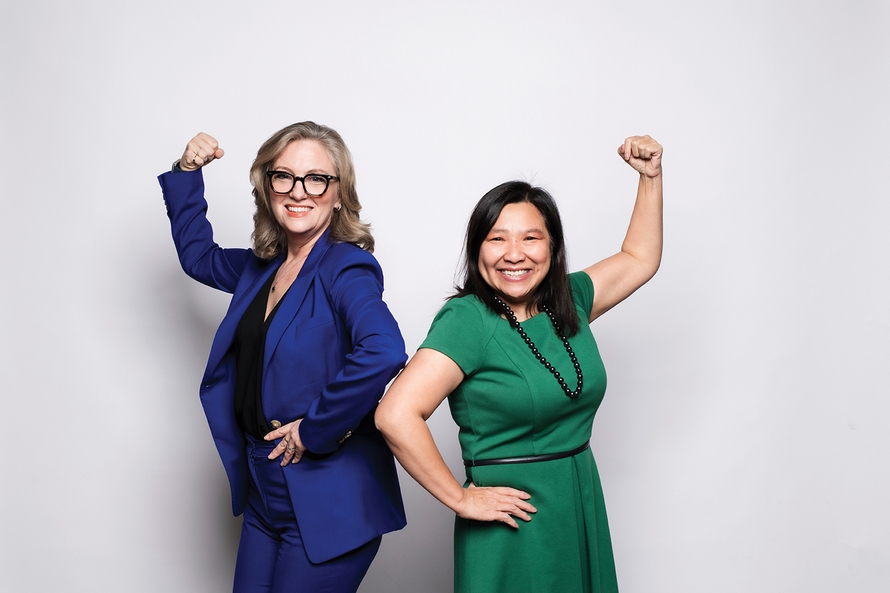
- The Political Firebrands, Washington Rep. My-Linh Thai, 41st Legislative District; Kristin Rowe-Finkbeiner, executive director, CEO and cofounder of MomsRising
The Law Changers
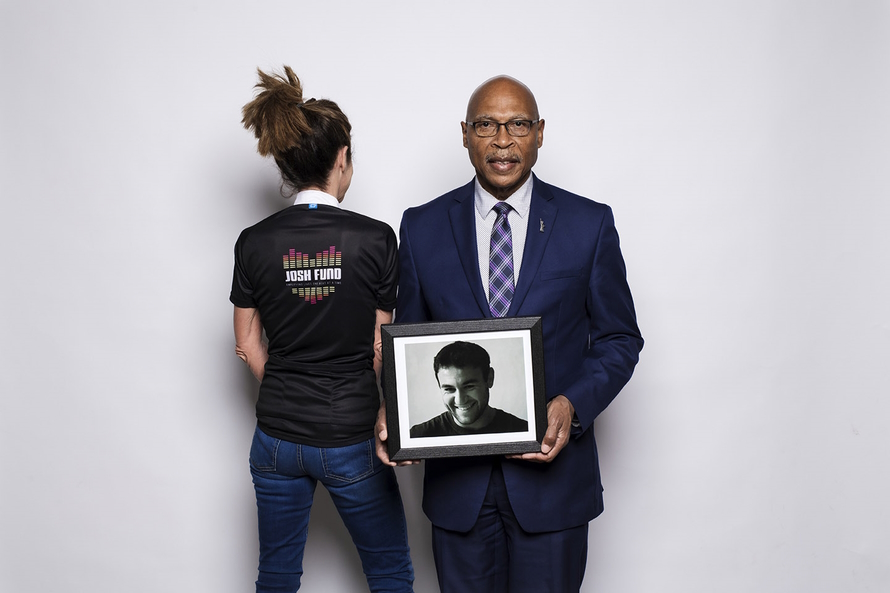
On February 6, 2021, Lori and Stephen Markowitz received the single most life-shattering message that any parent could possibly receive: Their precious 27-year-old son Josh (z”l) was the victim of a tragic hit-and-run incident. An impaired driver speeding at more than 100 mph in a 25 mph-per-hour zone struck him down in a crosswalk. Josh sustained a traumatic head injury and passed away a few days later.
The irrefutable fact is that such impaired-driving fatalities, which have become a national crisis, are preventable. The Markowitz family and Washington state Sen. John Lovick are on a mission to end such tragedies.
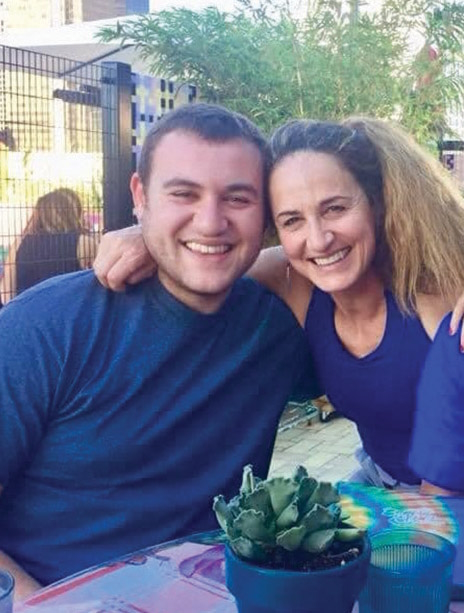
Lori Markowitz was honored as a ParentMap Superhero in 2015, in recognition of her years of work as the executive director of Youth Ambassadors, a program born during the five-day-long Seeds of Compassion conference held in Seattle in 2008. Emphasizing the teachings of the Dalai Lama, the civic education program was designed and evolved to intentionally foster critical thinking skills, compassionate service, and social and emotional learning for local students. This deeply rewarding focus of Markowitz’s life came to an abrupt halt when Josh died, and she has since turned her commitment toward fighting for laws and solutions that ensure that not one more precious life is needlessly taken away.
“I will personally do whatever I can so that I can still be an advocate, even though I live under a tidal wave of sorrow since my Josh was killed,” says Markowitz.
This mama on a mission discovered an empathetic, energetic and fierce champion in Sen. John Lovick for her cause to advocate for laws and measures to prevent traffic injuries and fatalities. As a former state trooper with more than 30 years on the job, Lovick was emotionally devastated by his duty of knocking on the doors of parents to deliver the news that their child had lost their life in a preventable motor vehicle accident.
“We have no time to waste. I don’t want Josh’s life to be in vain. We can save lives together, and we are not going to forget him,” says Lovick. “These drunk, impaired collisions are preventable. As a community, we stand for what we will tolerate. In 2022, 745 people died on our [Washington state] roads — 370 were DUI-related. Why don’t we have a portable blow [alcohol monitoring device] before your ignition turns on? Think about it: If an airplane went down and every day we lost two people, we’d do something about it. We need to stop tolerating this.”
Lovick reminds us that citizens have power. “Who is your legislator? Get on the phone right now and call them — and encourage your friends to call. Citizens need to tell them: ‘We’ve had it with the lack of action. When are you guys going to do something?’ I don’t care if people get drunk. Just don’t put others at risk because of your behavior. DUIs are literally killing us.”
“Secretary of Transportation Pete Buttigieg graciously sent me a condolence letter, and in it he wrote, ‘Our goal is this: zero. Zero deaths; a country where one day, nobody has to say goodbye to a loved one because of a traffic crash.’ He is absolutely correct. Vision zero, zero deaths. That’s the target, and I want everyone to understand that this is preventable,” says Markowitz.
Who is the person responsible for connecting you two?
Markowitz: King County Senior Deputy Prosecuting Attorney Amy Freedheim introduced me to Sen. Lovick. She told me that he is an extraordinary Washington state traffic safety champion, and I am forever grateful to her for this connection. When I reached out to him, he made it a priority to meet in person with me and my daughter. I will not forget how he looked us both in the eyes and told us he is going to do whatever he can to improve traffic safety. We knew we found someone who had the empathy, experience and skill to lead policy change. You could feel how deeply he cared about the families tragically impacted by traffic violence. Sen. Lovick is a leader with heart.
Have there been other partners along the way who have helped accelerate your efforts?
Lovick: Some of my best partners are other law enforcement organizations as well as orgs like Mothers Against Drunk Drivers. The way we advance traffic safety is by talking and listening to each other. We need to realize that everybody matters, every life matters.
Markowitz: There are many extraordinary people I’ve met who are dedicated to traffic safety issues. Shelly Baldwin, the amazing director of the Washington Traffic Safety Commission, gave me the confidence to join the executive board of the Washington Impaired Driving Advisory Council, which supports the Washington Traffic Safety Commission.
Who is your personal hero and why?
Markowitz: My hero is no doubt my beloved son, Josh. He was an exceptional person, beautiful inside and out. He lost his life at age 27, but did more for the world than most because he was authentic, deep, generous and kind beyond words. And my beautiful daughter, Jessica, who each and every day is doing what she can to honor her big brother.
Lovick: My grandmother Elsie Lee Lovick. She was the granddaughter of a Louisiana slave, and she paid a dear price for the privileges I have now.
What do you hope people will understand about this work?
Lovick: I want people to understand that public service is joy. I was a state trooper for 31 years. I loved going to work, but many days I hated being at work. I ran for office because I was tired of sitting back complaining. I knew if I served in office that I could do something about it, more than just talk.
Markowitz: I wish people would pay attention to the urgency of the current situation. It is a human right to travel safely if you are in a car, walking, cycling, taking a bus, train, plane, etc.
What is one action that our readers could take that will advance your work in traffic safety?
Lovick: The No. 1 thing I would tell new drivers is that we should get a pledge from them to always consider their safety and the safety of others, and that they will never, ever use an electronic device while driving.
Markowitz: Younger drivers are statistically impacted more than any others. It’s critical to ensure they understand the impact of driving under the influence of any substances. A car can be a dangerous weapon if not used properly, just like a gun. Parents need to set a good example with everything in life, but their driving habits are also a way to exemplify how to be a responsible driver.
What daily habit or small routine is most important to you?
Markowitz: I walk 8–12 miles, searching for Josh.
Lovick: I love to walk, and I love to listen to others.
If you could have a superpower, what would it be?
Lovick: To end hatred and racism.
Markowitz: My superpower would be to allow all young people to have a chance to live a full life.
How would you encourage ParentMap readers to take action?
Lovick: Tell your story. We need to hear stories. My favorite line is “Numbers tell, but stories sell.” We need to hear the stories of what’s happening in our communities.
Markowitz: Call your legislators and ask them to support traffic safety policies. Change starts with recognizing the problem. We have to get back to taking care of each other. There’s a high-stakes role and responsibility for us to play as drivers — and the price of our inaction is unbearable. This rising aggression on our roadways is robbing us of the people we love.
How has your family created a place in perpetuity for Josh’s spirit to live on?
Markowitz: We established The Josh Fund to keep his musical legacy alive by facilitating and supporting access and opportunity to the world of music for aspiring musicians. Josh was an extraordinary musician, composer, producer and entrepreneur. He believed that music is transformative, that it can empower the lives of youths, turn dreams into reality. The foundation is providing financial support in the form of scholarships to qualified students pursuing a bachelor’s degree and entering the final years of study at the University of the Witwatersrand in Johannesburg, South Africa.
What are you currently reading?
Lovick: After watching the murder of Tyre Nichols, I decided to read books on policing. So, the most recent books I’ve read are: “Policing the Black Man: Arrest, Prosecution, and Imprisonment” [edited by Angela J. Davis], “The New Jim Crow: Mass Incarceration in the Age of Colorblindness” [by Michelle Alexander], “Shielded: How the Police Became Untouchable” [by Joanna Schwartz], “The Trayvon Generation” [by Elizabeth Alexander], “Chokehold: Policing Black Men” [by Paul Butler], “Say Their Names: How Black Lives Came to Matter in America” [by Bunn, Cottman, Gaines, Charles and Harriston], “The End of Policing” [by Alex S. Vitale] and “Standoff: Race, Policing, and a Deadly Assault That Gripped a Nation” [by Jamie Thompson]. I’m currently reading “The Black and the Blue: A Cop Reveals the Crimes, Racism, and Injustice in America’s Law Enforcement,” written by a former alcohol, tobacco and firearms agent of my acquaintance, Matthew Horace.
Markowitz: I’m waiting for Colin Campbell’s book “Finding the Words: Working Through Profound Loss with Hope and Purpose,” which he wrote after his two teenagers were killed instantly when the car his family was driving in was T-boned.
— Alayne Sulkin
Up next: The Social Justice Activists
The Social Justice Activists
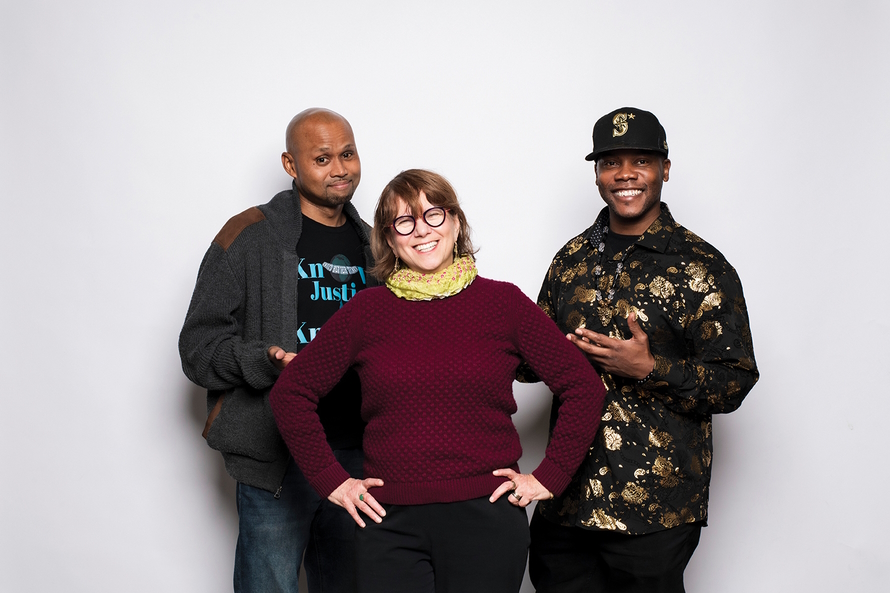
Kimonti Carter and David Heppard are two men with a shared past and a shared mission. The pair grew up in the same community in Tacoma and have known each other for more than 30 years. Both were sentenced to life in prison as teenagers and have now been released from prison with help from advocates at the Black Prisoners’ Caucus, an organization founded in 1972 and run by incarcerated and formerly incarcerated individuals in Washington state. Heppard was released in 2017, and Carter in 2022, with Heppard working with a team at BPC to help secure his friend’s release.
Carter is the founder of T.E.A.C.H. (Taking Education and Creating History), a prisoner-led higher education program designed by the BPC to transform incarcerated men into college-educated students. His story is the focus of the inspiring award-winning documentary “Since I Been Down,” by filmmaker Gilda Sheppard. Heppard is the executive director of Washington’s Freedom Project, an organization working to dismantle the poverty-to-prison pipeline. Both are leaders in the Black Prisoners’ Caucus.
During our interview, Heppard shared one of his favorite quotes, credited to Indigenous Australian activist, academic and artist Lilla Watson: “If you have come here to help me, you are wasting your time. But if you have come because your liberation is bound up with mine, then let us work together.”
The quote perfectly represents the importance of solidarity among people with vastly different life experiences and struggles. It’s fitting, given the two were nominated by fellow ParentMap Superhero Yaffa Maritz, who is the cofounder of Listening Mothers and clinical director of both Listening Mothers and Reflective Parenting. Both of these research-based parenting programs focus on mindfulness and community support, and are facilitated through the organization she founded, Community of Mindful Parenting.
At first glance, the three might not seem to have much in common. But Maritz, like Carter and Heppard, believes this work is rooted in community, and in supporting the most vulnerable families and children in our midst. Maritz met Carter when she agreed to help fund friend Gilda Sheppard’s documentary about Carter. Encouraged by Sheppard, Maritz visited Carter in prison, and eventually taught a version of her mindfulness course at the facility where he was incarcerated. She met Heppard when she attended a training he offered on anti-racism. He later took her mindfulness course, with the aim of incorporating aspects of it in his own training courses offered through the Freedom Project.
A 2008 ParentMap Superhero nominee, Yaffa Maritz says the experience of getting to know Carter and Heppard has changed her life.
“The power of community is what really drew me. I saw the communities that they built around them based on compassion, and how when they come out, they’re really held in community in such a beautiful way through these organizations they built for themselves,” says Maritz.
“When we talk about resources, it’s not about handouts: They want to be empowered to bring their brilliance and potential. They just need access. I nominated these two because they are amazing. David has been out for four years and has helped the Freedom Project grow from a staff of four people to 27 people. Kimonti just got out and is already doing brilliant things. So, it shows what can be accomplished when you just provide access.”
What do you wish people understood about your work?
Carter: That lives are valuable and there are a lot of people in prison who don’t deserve to be there. Prison is slavery, to be clear. And we justify it because of a person’s actions. But what that does to a person’s well-being, spirit and mental health? I think it’s dangerous. So, the work I do is to bring healing to those spaces where people are impacted by mass incarceration. I want them to be able to see and understand their worth. What other people would call “reentry.”
Heppard: Mass incarceration has decimated our community. I know it is framed from society’s perspective that people made mistakes and so they have to pay for their actions. But that framing doesn’t take into consideration poverty or racism. It’s built solely on the premise that you did wrong, regardless of the systems of oppression that put you in that place.
If you could destroy one myth, what would it be?
Carter: That punishment is a deterrent.
Heppard: The “violent offender” myth. When they say “violent offender,” what they really mean is somebody Black or Brown. First, for those who do something deemed violent, the recidivism rate is super low. It’s the opposite of what people think. There are lots of programs that won’t support someone who has done something violent. But folks who do come back into the system come back with a crime of poverty, and that’s because they have all of these barriers to getting support. Most programs won’t help them because the idea is that because you did something violent, you are violent. But it’s not true.
Second, the majority of folks who are locked up didn’t do what they’re in prison for. They’re there because of something called “accomplice liability.” What they do is they lock up five or six people for one murder. At the end of the day, even though one person actually did the assault or robbery — or whatever the case — everyone present is punished. Even if they were just a passenger in a car, to the world, they’re a violent offender.
What motivates you most in your life and work?
Carter: When we look around in prison amongst our demographic, we see a bunch of young boys. They’ve been thrown into the system and now the system is telling them they don’t have access to education. So, how are they supposed to be prepared to get back into community?
I am motivated by being able to see the impossible become possible. Being able to see the will of destruction not be able to be held up, and then ultimately be replaced with something that’s healthier and more productive. I’ve been able to see change. I’ve been able to see the tides turn, and I’ve been able to feel the evolution of my own spirit, my own heart — as well as those of others.
Heppard: When I was 16, I got thrown away. And I didn’t just get thrown away figuratively, but literally. I remember what the judge said to me. This 16-year-old child. He told me that I was what was wrong with society and that I don’t belong in society. I remember that — what it did to me emotionally. They had this framing of “he didn’t show any emotion.” What they didn’t realize is that I was traumatized. That was a trauma response. I was stunned. But if they could have watched me go back to my cell … I was crying. I was bawling. I was a child! I remember that feeling of being thrown away. I don’t think anybody should feel that way.
What is one small action ParentMap readers can take in their own lives to make positive change happen?
Carter: The way that you solve these problems is through relationships, not transactions. It’s easy to write a check. And, don’t get me wrong, any of these organizations will willingly accept your donations, but they need your time. Get close to the issue. In order for you to feel the warmth and the breath of these people who are impacted. I promise you, it will change your life.
Heppard: They can do their internal work. That’s going to have the biggest impact. I’m talking about anti-oppression, equity work. When you do your internal work, your healing work, I believe that allows you to show up authentically. Everything becomes better: the way you vote, the way you hire, the way you rent, the way you loan, the way you treat other folks in a space, the things you support. I know folks want me to say, “Go to this website, or do this or that,” but it’s not that simple. It’s deeper than that. Do your work.
Up next: The Healers
The Healers
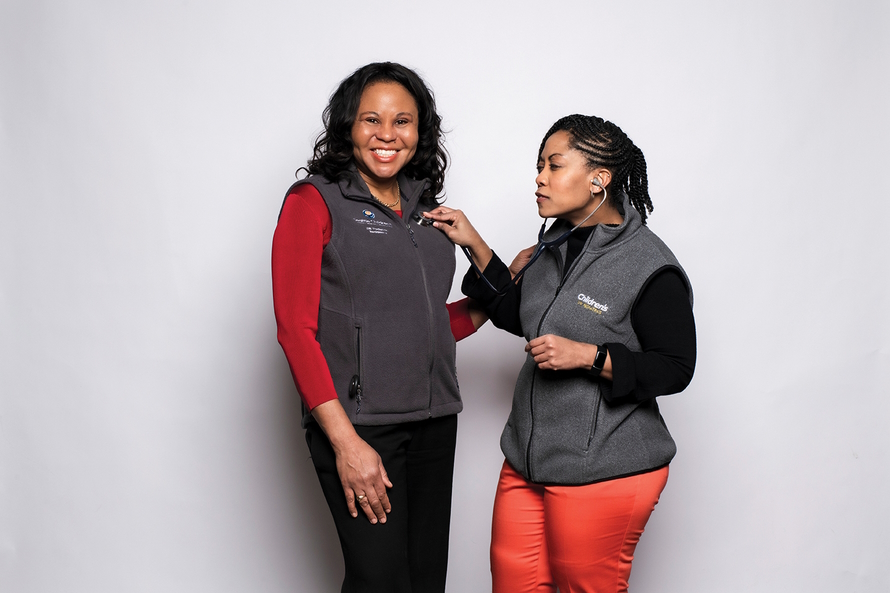
Pediatricians Abena Knight and Michelle Terry are colleagues who work alongside one another in Seattle Children’s Division of Hospital Medicine, taking care of kids who are hospitalized for a variety of illnesses. They both also work as clinical professors at the University of Washington School of Medicine, where Knight serves as the associate vice chair of education for the Department of Pediatrics, and Terry serves as the assistant dean for the Underrepresented in Medicine and Science Career Development program. They both have the best infectious laughs. So, you could say that these two already have a lot in common. But wait until you hear their professional “meet cute” story.
Terry recounts their conversation from when they first introduced themselves during Knight’s medical residency. “I said, ‘Abena, where are you joining us from?’ And she said, ‘I’m joining you from Baylor College of Medicine.’ And I said, ‘Oh, I went to Baylor College of Medicine. Where’d you go to college?’ And she said, ‘I went to Stanford University.’ And I said, ‘Oh, I went to Stanford University. What is your hometown?’ And she said, ‘My hometown is Houston, Texas.’ I said, ‘Oh, my hometown is Houston, Texas!’ And fast forward, she completed her residency in pediatrics and joined the Division of Hospital Medicine. And now we get to work together!”
Terry, who was honored as one of the inaugural ParentMap Superheroes back in 2008, says of colleague and friend Knight, “She’s amazing in multiple domains. She leads our educational program at the University of Washington Department of Pediatrics and she leads our clinical operations within the Division of Hospital Medicine. She’s an excellent physician. She provides outstanding clinical care to our patients. So, given that and all of the things that we have in common, I just really feel close to Abena and wanted her to share this honor.”
Dr. Knight, what motivated you to become a pediatrician?
Knight: I was diagnosed with lupus at the age of 10. I was quite ill and spent a lot of time at the children’s hospital in Houston. My doctors were wonderful, but my parents had great distrust, which was understandable given their backgrounds, and [that lack of connection with] our medical team really affected my care over a period of time, because we were that family that was super difficult and noncompliant. I watched my family navigate this relationship with the medical team, as we learned to trust and they learned to understand why we would not trust them immediately. I started to wonder about what things would’ve been like if there was a physician or provider who looked like my family or had a similar experience to my family — would that have made a difference?
This led me to think maybe that could be me, for the next set of families encountering our health-care system and feeling that sense of distrust. That was what really started my interest. It’s really kind of cool that I’m now in that hospital setting, which is a very stressful place to be for families, even if they’re there for something routine. For some families, it’s really the worst day of their life. So, being able to navigate relationships with families and to teach people how to navigate those relationships with families based on my experiences has been really humbling.
I occasionally have patients who come in presenting a constellation of symptoms, and they eventually get diagnosed with lupus. I had one particular minoritized-background family with a young daughter, and they were really struggling to make that connection with the team. While I didn’t presume that their experience was similar to mine, I could empathize in a way and was able to pick up on cues that maybe there were deeper questions. Their ultimate fear was not knowing if their child would have a future. So, I opted to disclose my history, and I think it was just so important for the family to have hope in that moment, because they were really not hopeful.
I was able to say, “I was super sick and I struggled, but I did what I was supposed to do and followed up on my doctors’ orders. I was one of the lucky ones who went into remission and I’ve been very healthy since. And now I’m a doctor. Know this is not a life sentence, this is a condition, this is one part of your child’s identity, and they have the opportunity to do so much more than be their disease.”
Dr. Terry, what motivates you in your day-to-day work?
Terry: My biggest motivation is knowing the potential in every child, knowing that kids get better and that parents do everything in their power to make sure that their kids get better.
What’s your worst habit?
Terry: I would say it’s challenging for me to be early, even on time, meaning I try to do one more thing, reply to just one more email, answer one more phone call, you know, put in that load of laundry. I just can’t stop and plan for the next thing.
Knight: Probably that I talk too much. I bother people when they want to just relax and be quiet. You could say that sometimes I don’t read the room well.
What is the one-word touchstone that guides you in your work?
Knight: Empathy. Everybody has their own experience, and it’s really important to not center everything on yourself.
Terry: Perspective. Almost every day I learn something new by looking at it through someone else’s point of view.
How have you seen pediatrics change over the past decade?
Terry: I’d say that pediatricians are managing a lot more behavioral health and mental health in primary care practices and in the hospital. I don’t ever recall seeing kids in psychiatric crisis when I was training all those years ago. And now it’s kind of an expectation that we manage social, emotional and behavioral diagnoses while the patients are in the hospital.
If you could wave a magic wand to fix something in the world, what would it be?
Knight: For me, inequitable access underlies a lot of what we see. It affects access. I think about money, I think about food, I think about health. I think about opportunities, and so, for me, it would be fixing the inequity of what people can actually have in order to realize their fullest potential.
Terry: Opportunity, having more of an open society where people can pursue their heart’s desire in terms of education, job prospects — without worrying that if they lose their job, they’re going to lose their health insurance, or if they choose to change their major, they’re going to be in a lot of debt. I don’t think we’ve adequately invested in education and health care like we did in previous generations.
What is one small piece of advice you would give to our readers to encourage their journey of raising kids?
Terry: Now that I’ve raised three children to young adulthood, I think the most important thing is to encourage them. You have to be supportive of almost everything that they say and do. You want to encourage their dreams. You want to encourage their studies, you want to encourage their friendships, you want to encourage their abilities. And if you do, they will develop that self-confidence to pursue what’s right for them.
Knight: I’m a bonus mom, so I came in as an additional parent. I think nurturing your child’s strengths is super important. They each have their own incredible strength. So, help them discover what that strength may be and support them in developing that particular talent with all you’ve got.
Up next: The Community Organizers
The Community Organizers
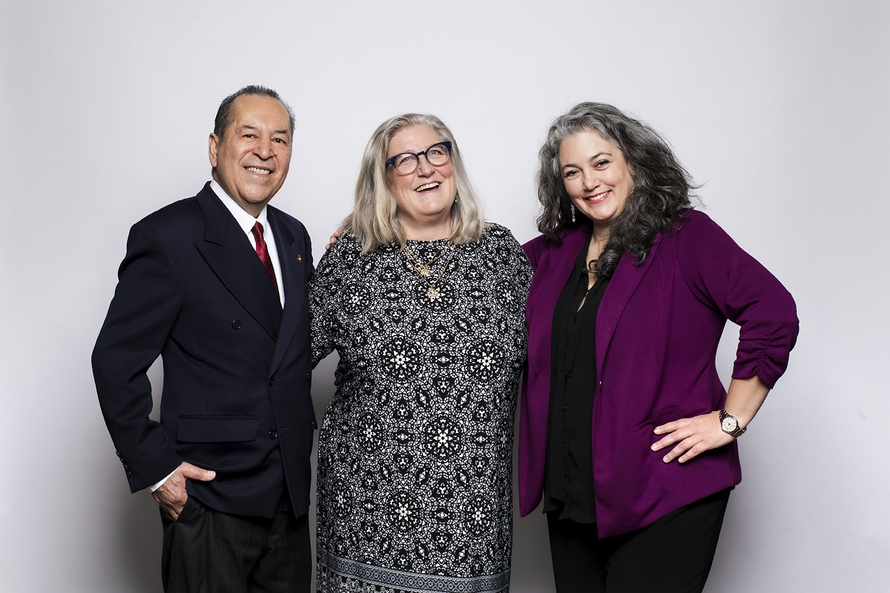
Putter Bert, president and CEO of Bellevue’s beloved KidsQuest Children’s Museum and a 2020 ParentMap Superhero, bestows the superhero title upon two people who are helping to create a quilt of community on the Eastside: Angie Hinojos and Carlos Jiménez, cofounders of Redmond-based Centro Cultural Mexicano.
“I nominated them because I think what they do for the community and where and how they show up is remarkable,” says Bert. “During the pandemic, it was clear to me that they opened their arms wider to help people in all communities. They hosted so many vaccine clinics and did everything they could for people, from getting rental assistance to people to hosting toy drives during the holidays.”
Although Bert, Hinojos and Jiménez collaborated as part of their participation in the Eastside Cultural Coalition prior to March 2020, they began to get to know and rely on each other through the coalition meetings held virtually during the pandemic. “At the meetings, we helped each other mentally, physically and professionally, but what we really wanted to figure out is how we can make a stronger Eastside. Every time I walk into a community room now, Angie and Carlos are right there. I haven’t known them very long, and I want to be in their space,” says Bert.
Hinojos and Jiménez created a physical space when they opened the Centro Cultural Mexicano in November 2018. In addition to being the cofounder and executive director of Centro Cultural Mexicano, Hinojos is a public artist and a trustee for Cascadia College. She also serves as chair of the Washington State Commission on Hispanic Affairs. “Our nonprofit organization serves our Latino communities with programs and services in Spanish and English. Our goal is empowerment of our communities. We look at that in a lot of different ways: through education supports, providing assistance for small businesses to help them gain financial stability, creating programs to help build intergenerational wealth and expanding leadership opportunities in our communities so we have representation at all levels of society,” says Hinojos.
Hinojos and Jiménez founded the organization in East King County because they saw a need for their community to have a safe and inclusive space where people could not only access services and programs, but also forge community connection through art and culture. The cofounders agree that art and culture programming is the best tool for connection because it allows people to open themselves up to conversation and discovery. “That’s where we can get to the heart and soul of who we are as a people, and then we can engage deeply with them,” says Jiménez, who has many years of experience in founding nonprofits, serving on boards and commissions, and previously serving as an elected official.
Centro Cultural Mexicano is a direct service organization: The programs and resources it develops stem directly from the needs of the community it serves. During the pandemic, Hinojos and Jiménez used a grant they received to pay the center’s rent as seed funding to begin a rental assistance program, giving out $25,000 in $500 increments. The organization has distributed more than $27 million in rental assistance since the pandemic began.
These days, a typical week at Centro Cultural Mexicano includes a variety of activities. During one week in March, for example, the center hosted a workshop for 40 small-business owners; worked with youths to develop leadership skills; met with community members who stopped in for free tax preparation help; there were two meetups for art groups; and the team fielded a variety of community needs, ranging from immigration topics to housing concerns.
“On Valentine’s Day, we had an art opening with live music and food. At events like this, we also introduce people to our services,” says Hinojos. “While we are dancing and eating, we are also sharing. We want people to get to know all about our different programs and services in a comfortable way that also uplifts our community and culture. We can offer assistance to people with respect and love.”
Jiménez adds that it is most important to them that they listen to their community with understanding and compassion: “Coming together to enjoy music, food and arts builds connection and trust within the community.”
Centro Cultural Mexicano also focuses on youth engagement. “We have 10 paid youth interns and a youth advisory board. We have a creative technology makerspace and a youth engagement center. We want our youth to help us create these spaces with us,” says Hinojos.
Who is your personal hero?
Hinojos: My parents, who always encouraged my brothers and me to question everything and come to our own conclusions. For our Latino community, there are so many inequities that exist in our systems and institutions. If we don’t question everything and come up with solutions, then we are not going to be able to change those inequities.
Jiménez: My grandmother. She raised me since I was 3 months old. She was a really strong woman, a single mother of six. She guided every one of my uncles to be a good individual. She taught me that no question is a bad question, don’t look down on anybody, help lift others up, and always have your head up and be proud of who you are. Also, never forget where you came from.
What do you wish people understood about your work?
Jiménez: I really don’t expect people to understand the work that we do. We carry the mission upon ourselves. We are the ones who need to understand every single person who walks through our doors, and we have a responsibility to create a safe place where people can interact and learn.
Hinojos: I want people to understand that our work takes trust, and this trust is sacred and a deep expression of human connection. We’re trying to build a bigger vision for our communities.
What daily habit or small routine is most important to you?
Hinojos: We always take a minute in the morning to talk about the bigger issues that are facing us. We meet over coffee early, before the doors are open. That’s when we really let our thinking expand. [This routine] gives context to the smaller tasks that we do every day.
Jiménez: We share the vision for the day. We always know the day is not long enough — 12 hours or 16 hours — but we always try to accomplish what we set out to do for that day.
How do you measure progress in your work?
Hinojos: The greatest measure is when we have community members or people who run small businesses come back and we see them thriving. They may stop coming because they got what they needed. And then a year later, they come back and they’re thriving. That’s a great feeling. It’s an ecosystem: We try to build community bonds that become our collective strength.
Jiménez: Some of them come by and give a sincere thank-you, and that gives you the strength to get through the day.
What’s your best advice for today’s parents?
Hinojos: Above all, love your kids, because that gives them confidence. When a child feels love from a parent, it becomes part of how that child views themselves.
Jiménez: Being a parent is one of the most beautiful things that can happen to a human. This generation is going through a lot of changes, hurdles and hard times. Just listen to your children and pay attention.
If you could dine with anyone, living or dead, whom would that be and why?
Hinojos: My dad. Life is long but it feels short sometimes, and we never have enough time with those we love.
Jiménez: My grandmother, so I could have the longest conversation with her.
What’s your favorite read of the last year?
Hinojos: My son is in college, and he just read “Knulp” by Hermann Hesse. I just love this book, and we had the most beautiful conversation about it. When I read this book for the first time, I had a similar conversation with my dad, and it reminded me that we pass onto others what we carry with us.
Jiménez: I have been thinking lately about a book I read by Sor Juana Inés de la Cruz. She is a Mexican hero who wrote about the equality of women and how strong women can be when they raise their voices.
An update from 2020 Superhero Putter Bert
ParentMap honored Putter Bert, president and CEO of KidsQuest Children’s Museum, as a Superhero right as the coronavirus pandemic made its conspicuous arrival in our backyard. We caught up with her to hear how the work of the museum has evolved as a result.
How has the museum pivoted to support the community these past few years?
Like everyone else, we started with online programming. We quickly realized people needed to touch stuff. So, we created activity boxes that we both sold and gave away. Then we packaged up a lot of our exhibits, like the fruits and vegetables from our market exhibit, to loan to families and child-care providers so people could play market.
What do you credit for the success of your efforts to deliver programs and connection during the pandemic?
My incredible team — they are the most caring people I know — did what we needed to do for the community.
What are you focusing on now in your work at the museum?
Now, we have a lot of money to raise to pay for all of the things we did during the pandemic. We are stronger, smarter — and smaller. I don’t know what is around the next corner, but I am working hard to prepare the museum for what comes next. Read more about Bert’s leadership at here.
Up next: The Veterans’ Advocates
The Veterans’ Advocates
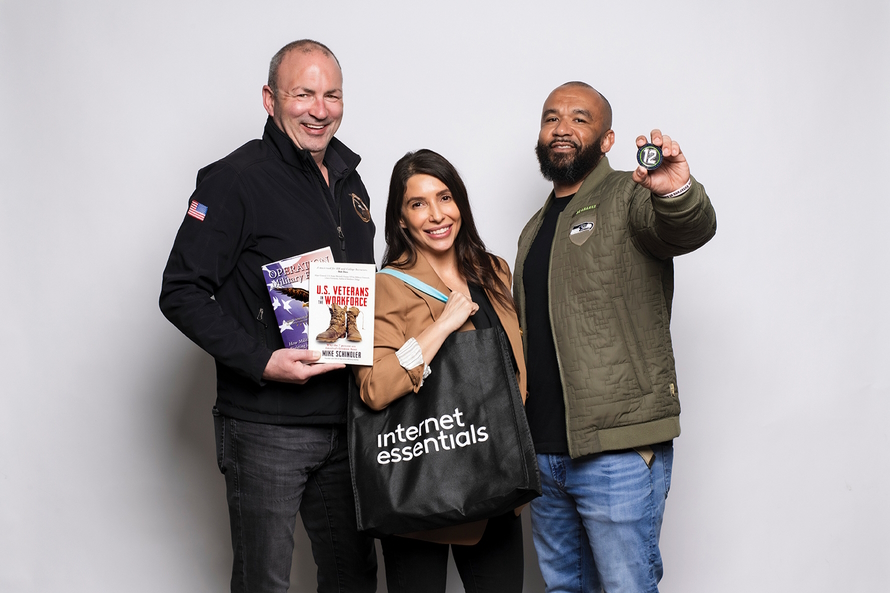
In 2011, ParentMap awarded Superhero stripes to United States Navy veteran Mike Schindler, founder and CEO of Operation Military Family, an Edmonds-based organization that operates with a mission to “provide proven pathways for veterans to discover and deploy their greatest gifts in family, work and life.” He is known throughout the country as an expert on leadership development, government relations and veteran transition issues. This year, Schindler bestows Superhero honors on Nino Gray Jr., community engagement manager for the Seattle Seahawks, and Carla Carrell, a senior director at Comcast, for stewarding their respective organizations’ efforts to support and connect with the military community of veterans and their families.
Nino, how did you and Mike become partners?
Nino Gray: The veteran world is big, but in some ways, it is small. I cover the military in my work with the Seahawks, so my goal was to create a group of organizations that help out veterans. Operation Military Family was one of them. I connected with Mike, and through what started off as just a joint venture to help veterans, we ended up being best friends and brothers. We really look out for each other.
What is your personal connection with this work?
Gray: I was 10 years in the Army infantry, did deployments to Iraq and Afghanistan. On Sept. 24, 2010, I was leading my squad out when we got hit by a 400-pound IED [improvised explosive device], which for me resulted in a brain injury. I also got two metal plates in my leg, with 18 pins. I woke up at Walter Reed about three weeks later. I was given a backpack from the Wounded Warrior Project. Just knowing I was getting out and what that backpack did for me, I wanted to be able to pass that same spirit on to other veterans who were in the same boat. So, here we are.
Describe your work with the local military community.
Gray: I cover all military first responders and our Make-A-Wish activations. Mike and I started Task Force 12, which is a partnership of the Seattle Seahawks and 12 local veteran nonprofit organizations that provides life-changing support to military families. Mike and I understand that not every veteran or military family is the same. No one person or organization could take care of all of those needs. Lining up 12 different grassroots military organizations with the same purpose makes our mission a lot easier to attain.
Mike Schindler: What I love about Task Force 12 is its common resolution. How we accomplish that purpose is different, but we all go into it fully equipped to depend on each other in the same mission to help support that veteran and their family.
Gray: We’ve all felt that pain of needing support in service. So, just to be able to tap into those emotions to help our community is what I think makes us so strong.
Carla, can you share a bit about Comcast’s initiatives in support of military families?
Carla Carrell: I am the lead of the Internet Essentials program, which provides affordable internet, and you get access to a subsidized laptop, you get access to digital skills and programs. So, you get connection, a device, and then you can learn how to use it. If you don’t have those three things, you’re not ever really fully participating in the digital economy.
Schindler: Veterans might have a smartphone, but one of the biggest issues they have when they’re trying to apply for benefits is that they don’t have a laptop, or maybe they have a laptop that’s dated or maybe they have a government-issued laptop that doesn’t let them connect to anything. When I met Carla, she said, “Well, we’ve got 20 laptops!” We started small, by identifying people who needed the help bridging that digital divide. Those laptops really become a vehicle for so much more.
Carrell: We launched the Internet Essentials program in 2011, so it’s been around for over a decade. But what really changed the trajectory of this work was the pandemic. What was evident was that folks didn’t know the program existed. And then when children went to remote learning at home, it was a crisis. I’m a parent, so I took it really personally. We all know that those most impacted were the children of families who couldn’t afford an internet connection. So, I worked with the Office of Superintendent of Public Instruction at the state level. We supported over a hundred school districts that have students who qualified for free and reduced lunch to give [those children] a free internet connection.
Comcast has had a long-term commitment to military engagement, through hiring vets and by creating experiences and services for military customers and communities. Here in the Pacific Northwest area, we have eight employee resource groups, and one of them is our VetNet group. It’s really about supporting our veteran peers and provides a way for folks who want to be an ally for our veteran teammates to engage.
When Mike and I met during the pandemic, I leaned in and said, “Mike, I know we can help to do more to expand digital capacity for the military community.” Sometimes [the best way] to make an impact is to go to the trusted expert in the community and then ask them to guide you. Ultimately, my goal was to give Mike whatever he needed. The pandemic underscored how critical partnerships are and that we are all in this together.
Schindler: Well, that’s what you need, you know, beans, Band-Aids and bullets, right? If you’ve got the troops out there, you got to find somebody who has got supply.
The Seahawks supply is not just an experience. What I think oftentimes people forget about professional athletes is that in many ways they’re like service members. There’s that common bond there. Veterans who maybe thought they could never afford to go to a professional football game get to go. Then they get connected to other resources, and they realize, “Wow, this big organization really cares.” I nominated Nino because he goes out there and he hustles. He makes things happen, with a servant leadership attitude.
And then you’ve got Comcast NBCUniversal coming in and giving veterans the tools they need to get connected. I nominated Carla because she jumped through hoops for me; she’s eliminated a lot of excuses, and that, for me, is really important in the veteran community. These two are exceptional people, and that’s why I say [these organizations] really bring the humanness back into humanity.
What motivates you to do the work that you do?
Gray: Twenty-two veterans commit suicide every day. We have more veterans dying here locally than we had casualties overseas. As veterans, I think we kind of hold that to our chest when we go out there and serve. I think that’s what keeps me going.
Carrell: I get to do a job that connects people to something as critical as the internet. I get to make sure that they know how to use it to be participative in the digital economy. That is very personally rewarding to me.
What advice do you have for ParentMap readers about raising kids today?
Gray: Give yourself grace. You are not going to have all the answers. Just learn as you go.
Carrell: You nailed it. Also know that it takes a village. We talked a lot about partnerships here, and I will tell you, leverage relationships, partnerships, family, friends, the community of help that you build as a parent.
Schindler: I’d say that, as a parent in this generation, my advice is if you say it, then do it. I think our kids need us to be that guiding light.
Up next: The Equalizers
The Equalizers
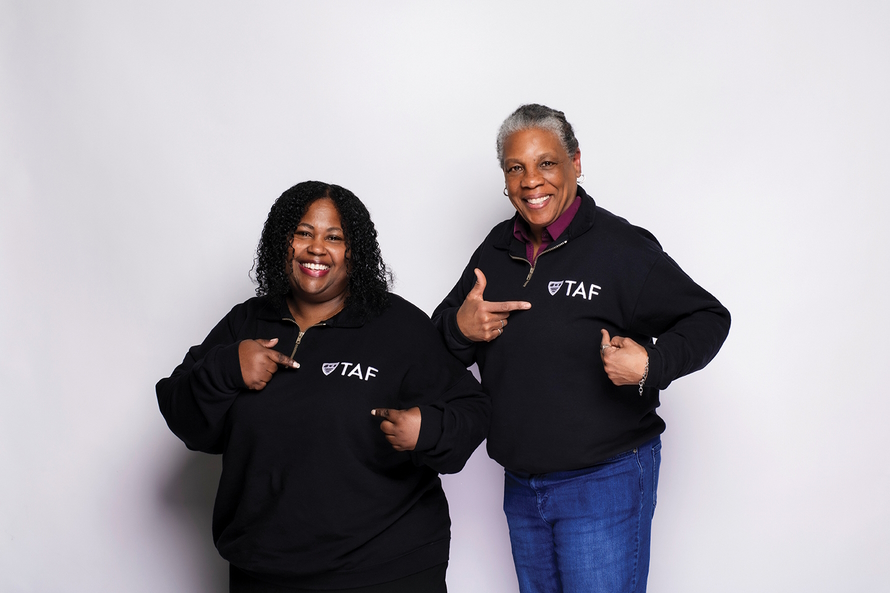
Trish Millines-Dziko cofounded the Technology Access Foundation (TAF) in 1996 with the vision of teaching children of color the information technology skills that would enable them to go on to college. TAF does this by building collaborative partnerships within public education to expand access to transformative learning pathways as well as broaden opportunities to eliminate race-based disparities for students and teachers of color. Millines-Dziko would tell you that our current education system is broken and TAF’s mission is to fix it, to create educational justice.
Millines-Dziko was first honored as a ParentMap Superhero for her work at TAF in 2008. Since then, the organization has evolved its STEMbyTAF model to fully transform public schools and improve teacher diversity and the retention of teachers of color in Washington state. Millines-Dziko nominates her longtime TAF colleague Sherry Williams, executive director of operations, as a ParentMap Superhero for 2023.
Why did you nominate Sherry as a superhero for Washington state families?
Trish Millines-Dziko: Sherry is really the other half of TAF. Everything that we are as a culture is Sherry. We’ve known each other almost 30 years. She’s been with TAF since it was 4 months old. She’s a great person, and people should know her.
How would you describe the TAF culture?
Sherry Williams: So, it’s people first: First it’s our kids, but in order to take care of the kids, we have to take care of each other. And so how do we do that? We treat each other as human beings, with love and care and thoughtfulness. And then we work hard together. When times get tough, we know that we care about each other and that we will make it through.
Millines-Dziko: A lot of times, we’ll get younger people coming to work at TAF, and I always say, “I’m not the person who is going to develop you. You need to go to Sherry.” If you have a plan, I can go over the plan with you. But if you’re starting from scratch or you’ve got some deeper things to work on, go to Sherry. She’s the one.
What do you envision for TAF in the next few years?
Williams: Serving more babies and teachers. Expanding TAF outside of Washington state is really what I want to see, because there’s a need, not just here, but all over the nation, for students of color and teachers of color. So, I want to spread the STEMbyTAF model.
What does the organization need in order to expand?
Williams: Money. And more talented people who get the passion of TAF and want to come work here and do the hard work. That’s what we really need.
Where do you find talented teammates?
Williams: A mix of places, but a lot of times it is through word of mouth, because we’re really looking for the right person. Not just anyone with the technical skills — they have to have passion.
Millines-Dziko: Working at TAF is about more than being an educator — it’s a movement. We’re in a movement right now, and you have to “know your why.” That’s what Sherry’s talking about when she says passion. Because when the gatekeepers come and all of the barriers go up — which they do on a regular basis — if you don’t know why you’re there, you’re going to leave. This work is not even close to easy, because we’re working with adult human beings to impact young people.
Who are your partners in this work?
Millines-Dziko: I would say our current district partners are the ones that really got us launched in this work. And we want more district partners. We have 13 university partners to help us with the teachers of color. We want more of them.
Of course, we have corporate partners who fund us. And there are some foundations that consider us to be partners, not just grantees. I would consider anybody who is willing to sit down and do the work with us and evolve with us as a partner.
We have a number of really good corporate partners that support our work: Costco, Comcast, Amazon, Alaska Airlines, Google, Microsoft….
Pre-COVID, we averaged about 250–300 volunteers a year, and a lot of them came from the ranks of our corporate partners. Then COVID came, and that number went down, but they still volunteered online, which was good. We got this whole new set of people to volunteer because of that. Now, we’re back in person, and it’s picking up.
How many people would you say have been served by TAF?
Millines-Dziko: For those first 10 years, we educated more than 500 teenagers, and then about probably another 400 or 500 K–8 kids through our program.
But we changed, because what was happening with our teenagers is, while they were getting technical internships and doing great, they were tracked in the wrong math and science tracks at high school. So, when they got into college, they couldn’t take their computer science or engineering classes right away. They had to take remedial math classes. And that’s when we said, “Okay, we’ve got to fix this.”
We created our own academic model with the support of educators and opened up TAF Academy in 2008 with Federal Way [Public Schools]. We’ve just been going since then.
Williams: We have eight school partners now and we’re trying to grow more. COVID kind of stopped us in our tracks. Our goal was three new schools per year. We opened two schools the year of COVID. So, we got to get back on track.
Millines-Dziko: Right now, if you look at the numbers, we’re impacting about 3,000 kids a year. Then, a tertiary impact is through our teachers of color. And that’s another 15,000 or more per year.
How is the TAF model designed to help kids and teachers?
Millines-Dziko: We don’t provide curriculum. What we do is help teachers deliver STEM curriculum better. And when it comes to assessing kids, we help them do it in a more authentic way. The problem with the state test is that it is timed, number one; it’s in one span of time and is based on the expectation that every teacher you ever had delivered all of the content for all of the standards — and that you retained all of it. And now, boom! It’s too much.
But the problem is, when parents see high test scores, they think it’s a good school. So, then you have all the people who have money and means who don’t want to pay for private school. They go to the school that has the best test scores. But guess what? Their kids aren’t getting any better of an education than the kids who have lower test scores. It’s just that they happen to pass these tests. And many of the parents pay to have their kids trained on how to take the test. There are trick questions on the test. Why do you need trick questions? We’re trying to help kids learn. We’re not trying to put them through a gauntlet!
We work with our teachers to do authentic assessments, but the teachers don’t work for us. They work for the district. And the district says what the state says, which is that the kids have to pass the test. So, our teachers are kind of torn. We want to propose a way to do authentic assessments that everybody can do, have it be consistent, have it be objective. We’re trying to build a system like that.
Up next: The Artisan
The Artisan
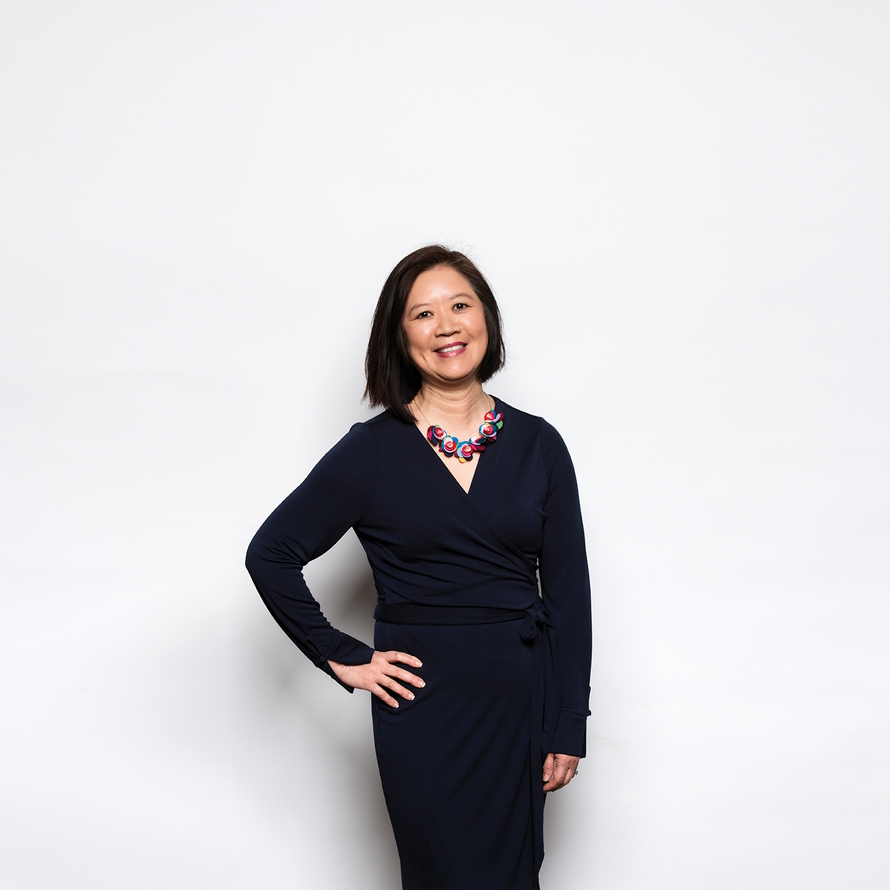
Ming-Ming Tung-Edelman was a teenager when she immigrated to the United States from her native Taiwan. In her single suitcase, she carried with her an exquisitely and lovingly tailored turquoise-colored chiffon dress that her grandmother had made for her.
More than 30 years after arriving in America — and after a successful 25-year career as a pharmacist — Tung-Edelman drew on her immigrant experience to found the Refugee Artisan Initiative (RAI), an organization dedicated to developing, employing and fostering the creative talents of refugee and immigrant women.
“I started RAI out of my own desire to connect with women from around the world, to learn about where they are coming from and what I can do to contribute to them getting their start in America,” she says.
Noting that refugee and immigrant women have the highest unemployment rate in the country, at 60 percent, Tung-Edelman was motivated to create a program that would focus on nurturing this population to ensure these women have a fair chance to succeed here in America. Her chief inspiration for this second career act, she says, is her grandmother, who worked as a home-based seamstress to support her family in Taiwan.
“I started Refugee Artisan Initiative based on a combination of my love of fashion and compassion. During my immigrant journey, I always found that something was missing. That piece was connecting with my homeland. My grandmother made all of my clothes for me when I was growing up, and she made me realize that women with tools and skills can become self-sufficient,” Tung-Edelman explains.
The search for this missing piece led Tung-Edelman to became a student at the University of Washington in its fashion certificate program, where she befriended one of her instructors, Camille Steen, who was also teaching refugee women how to sew.
“There it was, the ‘Aha!’ moment for me,” Tung-Edelman recalls. Knowing that refugee women experience significant barriers to employment, and then learning in her fashion program that more than 80 percent of textiles get disposed of in landfills, Tung-Edelman had an epiphany: “Why not combine the two and create jobs?”
Thus, RAI was founded in 2017, with an inspiring mission to partner with refugee and immigrant women to ensure their prosperous transition in the United States through skills training and assistance starting their own microbusinesses.
Tung-Edelman was nominated as a 2023 ParentMap Superhero by Citizen University CEO and cofounder Eric Liu, whose powerful civic evangelism stems from his own experience growing up in America as the son of immigrants.
“Being a second-generation American has defined my worldview. It has given me a lifelong sense that every opportunity comes with obligation — to be useful, to contribute, to make all the striving and sacrifice worth it. It has also made me want to push my country to live up to the promises of opportunity and justice that drew people like my parents here,” says Liu. “The first — and only — person who came to mind is Mimi Tung-Edelman, who has created the Refugee Artisan Initiative and made it possible for so many refugee families to be assets and contributors to the culture of our communities.”
What motivates you most in your life and work?
Tung-Edelman: Every day, I wake up and I feel a deep sense of purpose. These are women who are wanting to work, who want to use their skills, so I think, what can I do to continue that pathway for them to become self-sufficient? That is really what motivates me.
What are some of the successes RAI has had in securing employment for program participants?
We pretty much made lemonade from lemons during COVID. In the middle of March 2020, when everyone was worried about where to find masks, we already had a stash of Amazon returned bedsheets that were 100 percent cotton. As a pharmacist, I just realized that we needed to make as many masks as we could. My first-ever GoFundMe campaign was to get masks made for health-care workers and keep our women employed, working at home, being safe. We made over 80,000 masks.
How has the program grown?
In the beginning we had three, then six women. This year, we’ll have 25 women from six different countries in the program. The majority are from Afghanistan. They may not know how to speak English. They may have five, six children at home. They may not know how to drive. They need home-based work, just like my Grandma.
When the women first come in, they are so shy. Literally just weeks off the plane, and they are scared and they don’t know anybody. And when they come in and hear the sewing machine, they hear other women speak their same language. Sewing is their universal language. It is a safe place for them.
What is one thing you would like to change about our society?
I want our society to realize we are so focused on deficits. When I came here, I didn’t speak English very well, and my mother was having a hard time finding work. I just realized that there must be a way to focus on the strengths these women already come with. If sewing is what they have, and that is something they already know, why can’t we create a pathway for that?
It is really a forgotten population. When they come, they have 90 days to be self-sufficient. Their husband has to find work right away, the kids go to school. And there is a huge mental crisis in that population of isolated women who don’t know what to do. They feel they’re worthless. I don’t want them to feel they’re worthless. They’ve come so far. Many have escaped the Taliban! These women have a lot of resilience. I just want to create a place and purpose for them.
If we don’t give these women a home, and an opportunity to be useful and self-sufficient, it is just [exacerbating] a cycle of isolation and mental health. They want to be as useful as all of us — they just don’t know how.
It’s not just refugee women: We all have the same issues. When I became a mother, with two kids, trying to juggle career and family was always so challenging, but at least we may have some options. For a lot of these [immigrant and refugee] women, they don’t even know what the options would be, because no one ever presented options to them. To me, that is not acceptable. As is the cost for our society of having to deal with long-term mental health, physical health and even just the government’s burden of simply providing for them. We just need to give them a path.
Who are some of your partners in this work?
We have some wonderful partners, including Starbucks. We take all of their coffee bags after they roast the coffee, and our women turn them into burlap bags. Starbucks purchases the bags back for their employee store. To me, that is true service to our circular economy, when you can divert this material that would otherwise wind up in landfill and turn it into something, and in the process, create jobs and help the company divert waste.
What do you wish you would have learned sooner?
That it is okay to be bold and bring your ideas. It took me many years, but at least taking that first step I consider a success, rather than not taking the step at all.
What can readers do to support the work of your organization?
We have a waiting list of close to 70 women who want to join the program. So, we need to have more staff to be able to continue to provide the care and provide training. Donate to our organization to help our cause … to assist these women to overcome whatever barrier they face to start their business — either buying a sewing machine or being able to afford their business license.
Sewing allows them to earn their first paycheck and more. Some are able to buy their first car for their husband to start his own Uber business. We have two women who have been here almost five years and now feel safe enough to put down a down payment for their first home. Those are the American dreams. I am here as a messenger to continue the program and make sure that more women can be served, more microbusinesses can be created.
Up next: The Political Firebrands
The Political Firebrands
Washington made history in 2021 when the state Legislature passed and funded the Working Families Tax Credit, a first-of-its-kind policy for the state, designed to return millions of dollars to the pockets of tax-paying families.
Grassroots advocacy organization MomsRising was a key coalition partner in supporting this legislation. Kristin Rowe-Finkbeiner, executive director, CEO and cofounder of MomsRising, was honored as a ParentMap Superhero in 2008, and she has nominated Washington Rep. My-Linh Thai for her work and persistence in getting this important piece of legislation across the finish line.
“MomsRising thanks Rep. My-Linh Thai for her extraordinary work lifting moms, dads, kids, families in Washington state with the Working Families Tax Credit, which is nothing short of spectacular in terms of helping families do things like pay for child care, make ends meet and put food on the table. It also helps spark our businesses, because those funds are immediately invested back into our economy,” says Rowe-Finkbeiner.
Rep. Thai immigrated to Washington state with her family as a Vietnamese refugee when she was 15, and she has the distinction of being the first refugee to be elected to the Washington House of Representatives. She is a passionate education advocate who is committed to ensuring equity and access for all.
What will the Working Families Tax Credit do for families, and how many people have already qualified for it?
Rep. Thai: This piece of legislation has been sitting in Washington state for close to 15 years, and it couldn’t be moved. Our state is the first in the nation with no income tax to be able to push out this tax credit. It was implemented Feb. 1 of this year. More than 400,000 households will be eligible to receive up to $1,200 per year starting in February 2023, and we already have had more than 60,000 individuals apply for it.
How do you apply? Should everyone apply?
Rep. Thai: We make the process so easy for people. Visit the Washington State Department of Revenue website, where they have step-by-step directions for applying. Free assistance is available to help. If you speak Spanish and Mandarin, they have staff who will speak Spanish and Mandarin to help answer all of your questions.
Rowe-Finkbeiner: One thing we know from studies is that when we give families things like the Working Families Tax Credit, that money is immediately spent in the economy. And when the money is spent, it stimulates the economy: It helps local businesses; it helps families pay for things like child care; it keeps people in the labor force.
Kristin, what other initiatives and issues are priorities right now for MomsRising?
Rowe-Finkbeiner: I’m so excited in this moment to share that despite what is on the front pages of papers, we’re still gaining momentum for women, children, moms, dads and caregivers. We just came out of December, when we won, after fighting for decades, the Pregnant Workers Fairness Act; we also won the Pump for Working Mothers Act. We won a 30 percent increase in Child Care [and] Development Block Grant funding — that’s $8 billion, with a ”b.” We won one year of postpartum coverage for all birthing people in the country. We also won one year of continuous health-care coverage for all people 19 and younger. There are so many wins!
What happens when we have democracy? What happens when we’re engaged? Well, when we are all engaged, we all win. And so, looking forward, we’re still looking for that access to universal child care in pre-K. We can make that happen. We need paid family medical leave for every single person, no matter where they work or live in the country. Washington state has paid family medical leave, and that’s spectacular. But still, the majority of people in America don’t. So, we’re fighting for that. We’re fighting also for youth and family justice. We’re fighting for immigration policy reform. We’re fighting for maternal justice. Yes, we still need more maternal health care. We’re fighting for so many things.
We can fix these things, we can do better. And when we do better, we all do better. So, it’s an amazing time in history where we’ve seen a movement growing, expanding — not just with MomsRising, but multiple organizations across the country rising together. And we’re pushing, pushing, pushing these policies forward, gaining momentum. And we expect to see transformational policy change in the next three to four years. I’m going to bet on it.
Rep. Thai: When we come together and work together, nothing is impossible. I think it really speaks to the fundamental character of being a mom. We look not only at the short-term vision for how we build capacity and possibility for our children, for our family, for our community, but definitely at the long-term vision for our children, family and community. When we join hands and we work together …
Rowe-Finkbeiner: … the impossible becomes possible.
Rep. Thai: Exactly.
Rowe-Finkbeiner: I’ve seen it so many times. Plenty of people have a lot of cynicism about being engaged in politics. But let me tell you: It might not happen the next day. You know, it’s not like you make one call and you change the world, but it does over time change. Just like the Working Families Tax Credit. That took a long time to get through. And it is making such a big difference.
What is your most strongly held belief?
Rep. Thai: Kindness rules the day.
Rowe-Finkbeiner: We all do better when we all do better.
What is one small action readers can take to make a positive impact?
Rowe-Finkbeiner: Make sure you vote, make sure you research who you are voting for. Don’t just vote for the president, don’t just vote for Congress. Vote at the state legislative, the county and the city level. This is really important. If you don’t know who you are voting for, Google. You can find out all kinds of fabulous things about amazing leaders, and then vote! And if you’re feeling like that’s not enough to do, you can get five friends to vote. That’s not enough? Get 10, 20, 100? That’s good: You can bring 100 friends to vote with you.
Rep. Thai: Talk to your next-door neighbors. We are so busy with our daily lives, and we are inundated with our daily worries, but take that time and visit your neighbors. Because, without that relationship, when we need to talk about difficult topics, we don’t have any basis or foundation to truly engage and learn from each other.
If you could have any superpower, what would it be?
Rep. Thai: If I have to pick one, it’s probably the power to deeply listen to others. Politicians are expected and trained to talk, but I really want to be able to deeply listen.
Rowe-Finkbeiner: Here’s a superpower that I bet we both want, which is equity and equality for everyone. Everyone. “Hi, let’s get rid of discrimination.” Yes, please, I would like that superpower.
What is your best advice for today’s parents who want to raise and support their kids to achieve big ambitions?
Rep. Thai: Listen to them. They know.
Rowe-Finkbeiner: The other one is to think about what big ambition means. People’s definition of big ambition is changing right now, and so we need to listen to what is healthy, not just ambitious. We don’t need to be pushing people incredibly hard all the time, in an “ambitious” way. So, it’s the importance of listening and defining ambition with kids as opposed to for kids. That’s huge.