
 Seattle Family Calendar
 Subscribe

As children and teens have become more distracted by social media and electronics in recent years, educators are increasingly looking for creative ways to engage and motivate them in the classroom. One way that seems to be working is game-oriented learning, or gamification, which involves introducing game-like elements to an existing lesson or activity, such as giving out points or badges for correct answers.
According to the Entertainment Software Association, 80 percent of kids between the ages of 5 and 18 play video games at least once a day. Former principal and educational author and speaker Adam Welcome, who was Principal of the Year for his region in the San Francisco Bay Area and a 20 To Watch for the National School Board Association, believes “we should use students’ interest in gaming to our benefit in the classroom with the curriculum to get kids hooked on what we’re teaching them.”
As it turns out, a growing body of research shows that gamified learning can have positive effects on students’ cognitive, motivational and behavioral outcomes. Here you’ll learn more about what gamification is, how it is used in the classroom and the benefits and challenges to keep in mind.
What is gamification?
Coined by British inventor and computer programmer Nick Pelling in 2002, gamification is the process of applying game mechanics and strategies to a non-gaming activity to boost engagement, motivation, happiness and curiosity. By using elements of games like play, rules, scoring and challenges, gamification allows students to practice skills in engaging ways that extend beyond traditional learning. It is a way to establish goals; use points, badges, rewards and levels to track progress; and create healthy competition by posting students’ status on leaderboards. This helps encourage them to complete modules, do well on quizzes and tests and interact with the material so they learn more effectively. Overall, the competitive and storytelling nature of these tools helps make learning new skills more fun and interactive for different types of learners.
Using gamification in the classroom
Gamification has purpose, and supports the curriculum goals such that students are personally connected to learning and able to retain the information, while having a bit of fun. Successful gamification has the following elements: a clear objective, established point system, rewards for successes like no homework passes or extra recess, a set time limit to complete a task to encourage focus, storytelling elements and a way to provide feedback. Examples of popular educational gamification tools include Kahoot!, Quizizz, Quizlet Live, Gimkit and Blooket, which allow teachers to create multiple choice questions that players answer on their own devices.
Grace Carter, K–12 educator at Academized.com dedicated to making learning interactive and engaging through gamification in classrooms, uses a digital badge system when students complete assignments, demonstrate critical thinking and participate in classroom discussions. “Students in a writing course collect digital badges as they become proficient in various writing techniques, including argument structure and proper citation use,” she explains. “The classroom leaderboard expands as students collect badges to experience growth and achieve recognition. This system transforms learning into an exciting journey that inspires students to achieve the next milestone.”
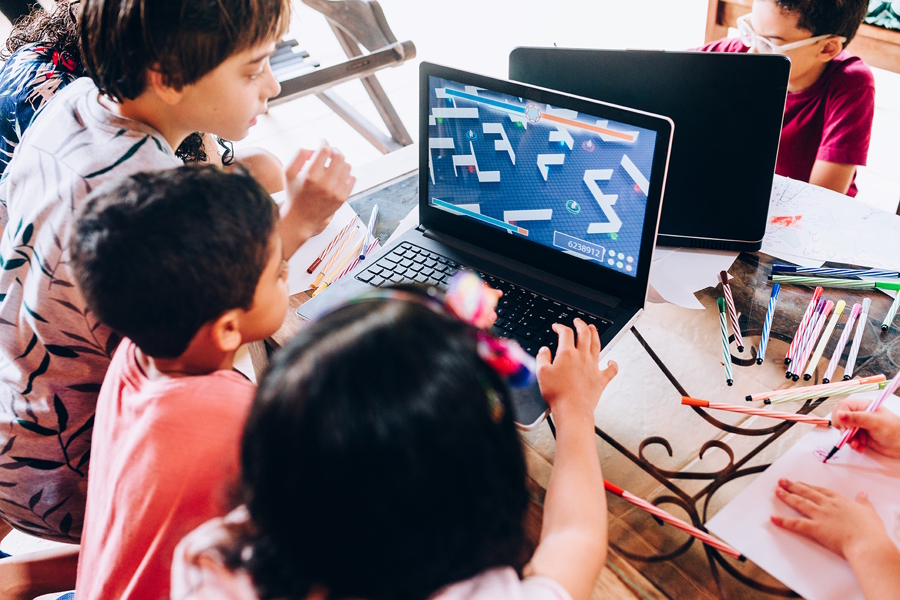
Benefits for students and teachers
Teachers enjoy incorporating gamification into their classroom for many reasons, such as saving time during lesson planning and implementation and seeing students more focused and engaged in the learning process. “Gamification helps me build a dynamic and interactive classroom learning experience,” says Carter. “Traditional teaching methods often face challenges in maintaining student attention, while game-like elements like points and leaderboards make learning interactive and engaging.” She believes that gamification enables students to develop motivation and participate actively while taking charge of their educational journey in a way that feels fun rather than obligatory.
Here are some additional benefits of gamification for students:
- Helps boost confidence. “Students report that gamification transforms their lessons into interactive and rewarding experiences instead of routine tasks, and that tracking their progress visibly is something students value because it enhances their self-confidence,” explains Carter. Also, earning points, badges or moving up on a leaderboard can give students a confidence boost.
- Offers customized learning paths. Many gamified platforms adapt to a student’s learning pace, providing a tailored experience whether they are struggling or need an extra challenge.
- Develop new skills. In addition to providing a lesson plan of the day, gamification can help students develop essential soft skills like problem-solving, critical thinking, teamwork, decision-making and creativity.
- Prepares students for a tech-based economy. “Gamifying curriculum connects technology to learning in a meaningful way, while getting kids ready for the world they’re growing up in,” says Welcome.
- Encourages healthy competition and collaboration. “Students develop teamwork skills and experience positive competition, which drives them to achieve personal growth,” notes Carter. Many gamified activities are designed for group participation to help promote teamwork as students collaborate to achieve common goals.
- Improves retention. “Educational gamification supports student information retention because learners grasp concepts more effectively when interacting with immersive educational activities,” says Carter.
- Aids with accessibility in the classroom. Gamification can be used as an effective teaching tool to educate students with varying needs.
- Provides instant feedback. As learners progress through a game, they often receive immediate feedback to help them adjust their approach and make corrections. This keeps them moving forward in their learning progress and motivates them to complete the game successfully.
Concerns to keep in mind
Despite its multiple benefits, gamification also presents several disadvantages. Some educators and parents don’t support giving out rewards in the classroom, saying it creates the wrong type of motivation in which students become more focused on the treats and prizes than on the learning itself. “The design must maintain careful balance because students may put winning ahead of learning if game mechanics become the primary focus,” says Carter. It could ultimately become more of a distraction if used incorrectly or too often.
Not all students thrive using tools based on competition. “Some students do not possess natural competitive instincts, and their morale may suffer when their performance falls short of their peers,” says Carter.
Gamification also can be expensive and time-consuming to develop, purchase and maintain. “Creating and sustaining a gamified system demands substantial time investment because it needs continuous updates to maintain its effectiveness and ensure inclusivity for every student,” explains Carter. Therefore, such tools can quickly become outdated and lose their value over time.
Finally, gamification may not be suitable for all types of students and topics. While many subjects can benefit from gamification, some might not lend themselves well to a game-like approach. And there can be equity issues with regard to accessing and using the technology.