 Seattle Family Calendar
 Subscribe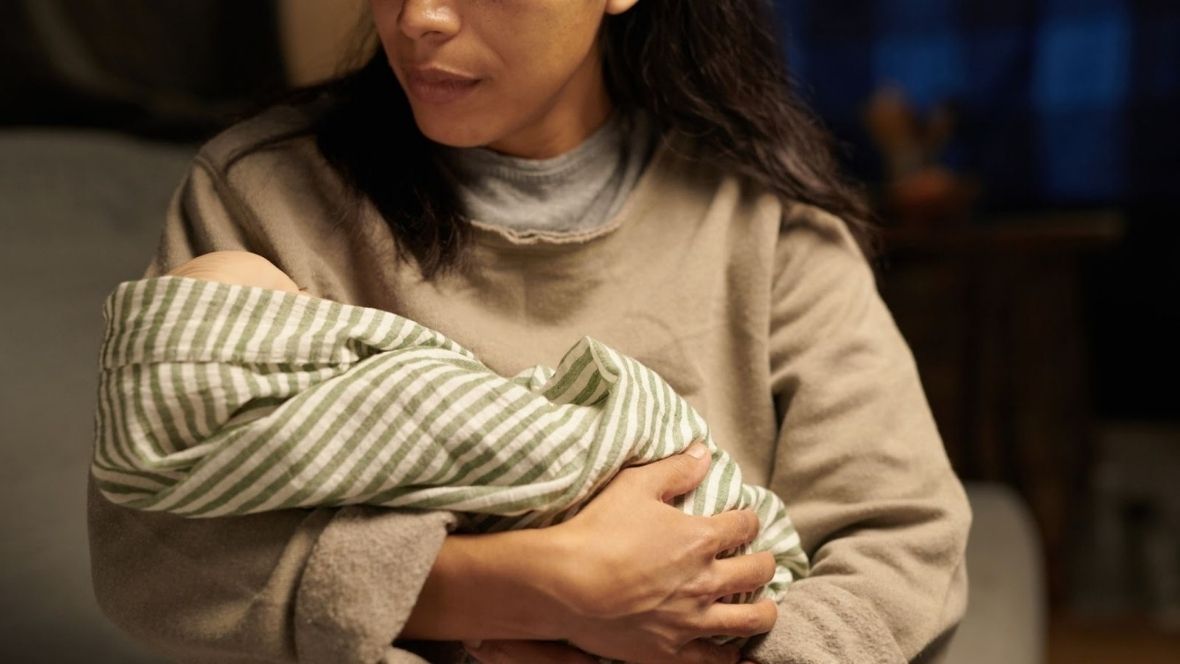

It was 2:17 in the morning and no one was in danger.
He was fed. He was warm. His diaper was clean. He was furious.
The cry was steady, low and relentless, the sound of a small person outraged by sleep. It filled the room and then my chest and then my throat. I sat on the edge of the bed counting the seconds between his breaths, as if the rhythm might tell me what to do.
I had promised myself I would be gentle.
Gentle meant responsive. Gentle meant attuned. Gentle meant never letting him feel alone inside something hard. That was the story I carried into motherhood. Love meant answering every cry before it could deepen.
It had been six months of broken sleep. In the first week, I remember thinking I could do this forever. The nights felt sacred then — heavy and tender and full of purpose. I wore my exhaustion like proof of love. I did not yet understand what true sleep deprivation does to a body.
He was crying. I was thinning. And I did not know whose nervous system to prioritize.
By month four, the fragments had started to stack. By month six, they were everywhere. We rotated nights. Sometimes I went. Sometimes my husband did. But my body still carried the milk and the ache. I was the one who could not fully power down. Even when he was on duty, I hovered in a thin half-sleep, listening.
My hands shook when I tried to fasten snaps. I would open the fridge and forget why I was standing there. One afternoon I stopped at a light and could not tell if it was red or green. I stared until someone honked. I began avoiding mirrors because the woman looking back felt unfamiliar, like someone I had misplaced.
At 2:17 in the morning I was no longer sure what gentleness meant.
He was crying. I was thinning. And I did not know whose nervous system to prioritize.
Part of me believed he needed me the second the sound left his mouth. Another part of me knew that if I kept responding before I could breathe, I would keep eroding. I had snapped at my husband earlier that week over something small. A burp cloth left on the couch. A tone that felt wrong. The snap was sharp and immediate. I saw the hurt in his face and hated myself for it. I could feel my capacity shrinking — the kind of shrinking that turns love brittle.
There were nights I felt anger at a person who did not yet know how to speak. Anger at the sound. Anger at the clock. Anger that no one was coming to relieve us. I did not like that version of myself. But she was real.
What scared me was not just his crying.
It was what depletion was doing to all of us.
Sometimes gentle means letting frustration move through a small body while you stand close enough to hear it and steady enough not to panic.
We were shorter with each other. Slower to laugh. Quicker to retreat into separate corners of the room. We loved him fiercely. But everything felt strained. Any family that pours everything into one point will eventually start to wobble.
There is a way of practicing gentle parenting that can unintentionally center the smallest body at all costs. I understand the instinct. I felt it in my bones. Protect him. Absorb it all. But a body can only absorb so much before it begins to fray.
That night I felt something I did not want to admit: relief when his crying paused. Relief even when it paused because he had worn himself out.
The relief scared me more than the crying.
We began asking a different question.
What does gentleness look like for a whole family?
Not just for the most vulnerable voice. Not just for the parent who is terrified of causing harm. But for the marriage. For the person who has to merge onto the freeway in the morning. For two adults trying to stay regulated enough to love well.
We did not shut the door and walk away. We did not leave him in terror. We started pausing. A few minutes. Sometimes less. Long enough to see if his frustration could crest and fall without us rushing in to extinguish it. Long enough for my own heart to slow. Long enough for my husband and me to look at each other and decide together.
The first nights felt raw. My chest tightened. My ears strained. I could feel the old story that good love means endless sacrifice. I could also feel my edges returning.
Slowly his cries changed. They did not disappear. They softened. They came and went instead of spiraling. In the morning he still reached for me. He still pressed his face into my neck. Trust had not shattered.
I am still metabolizing that season.
A family is not one nervous system. It is several bodies trying to stay steady together.
I do not believe babies should be left alone in terror. I also do not believe parents are meant to dissolve in the name of responsiveness. A family is not one nervous system. It is several bodies trying to stay steady together. When one body is chronically overwhelmed, everyone feels it.
Gentle does not always mean immediate.
Sometimes gentle means letting frustration move through a small body while you stand close enough to hear it and steady enough not to panic. Sometimes gentle means protecting your marriage at 2:17 in the morning. Sometimes gentle means admitting that you are tired enough to break and choosing a structure that helps everyone stay intact.
He is older now. He still cries. I still feel it in my chest. But I can tell the difference between distress and protest. Between danger and anger. Between harm and discomfort.
Discomfort is not the opposite of love.
Sometimes it is part of learning that the world can hold your feelings — and that the people who love you do not disappear when you are angry.
We are still learning. But our home feels steadier now. And that steadiness, too, is a form of gentleness.