 Seattle Family Calendar
 Subscribe
Key takeaways
- New SPS superintendent Ben Shuldiner started on Feb. 2, 2026. He enters during a time when the district faces declining enrollment, budget shortfalls and growing calls for transparency and equity.
- Shuldiner hopes to rebuild trust with parents by showing up and listening, explaining that community input can shape decisions, not just policy from the central office.
- Academic rigor in Seattle schools would expand under Shuldiner’s leadership through broader access to advanced and interest-based learning.
- Shuldiner will consider school closures and budget cuts, but classroom learning is the priority. Facing a $1.35 billion budget and ongoing financial pressure, the superintendent says school closures, consolidations and program changes are all on the table, but decisions will be guided by their impact on students and classrooms.
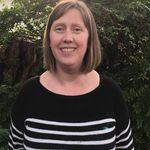
Monday, Feb. 2 marked Ben Shuldiner’s first day on the job as the superintendent of Seattle Public Schools. Shuldiner, who most recently served as the superintendent of the Lansing School District in Michigan, brings more than 25 years of experience to the position.
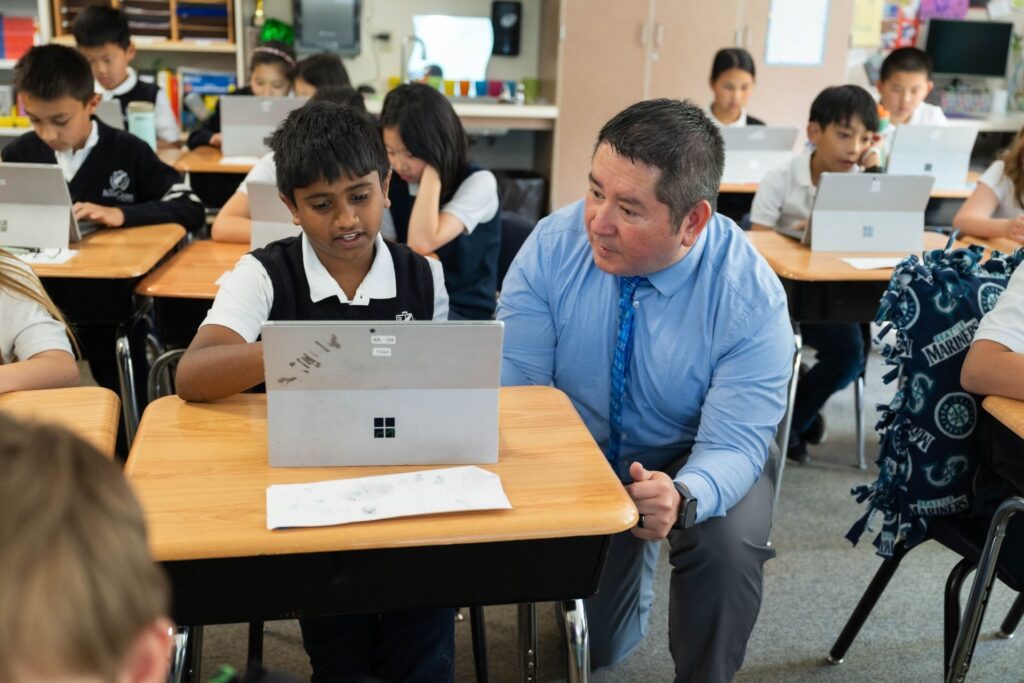
Monday’s Oath of Office ceremony took place at Mercer International Middle School and was administered by school board president Gina Topp. After being sworn in, Schuldiner visited Dearborn Park International, where he observed in the classroom before speaking to an audience at the John Stanford Center for Educational Excellence as part of the district’s Black History Month kickoff.
He begins his tenure amid declining enrollment, budget shortfalls, growing calls for transparency and equity, and on the heels of a fatal shooting on Jan. 30 of two Rainier Beach High School students.
Shortly before his first week, ParentMap had a chance to sit down with the new superintendent to discuss his plans to make SPS “the single best school district in America.”
Q: What will you do to build trust and improve relationships with the community, specifically parents and educators? A:
The first thing is that I want to be present and I want to show up. What I’ve already been trying to do is meet every single person who wants to meet with me. For example, after we’re done tonight, I’m meeting with parents at 7:30 p.m., then I’m meeting with more folks at 9 p.m., and then I’m meeting with more folks at 10:30 p.m. my time.
The job of a Superintendent is to be available: to be present, to be thoughtful and to really care about the community. I come from a long history of wanting to create partnerships between school districts and families, and between school districts and students. When I was superintendent in Lansing [Michigan], we started the Family Superintendent Roundtable and the Student Superintendent Roundtable. I believe in those meetings.
I appreciate that there may be some level of distrust between SPS and the community, and between SPS and families, and I want to do everything I can to help mitigate that. I think the first thing is to listen — to be invited in, to open those doors — and vice versa — to invite people in, listen to their concerns and try to address them.
Q: What is your plan to improve academic rigor in Seattle Public Schools? How do you envision the future of advanced learning across the district? A:
The thing about education is that it really is about helping our children access information and knowledge, and teaching them where they want to be. So I want to make sure all of our children get access to the classes they want, at the level of rigor they want, and that they are pushed.
It’s really important that a district, especially one the size of Seattle, has opportunities for everybody, and opportunities that are based not just on what people would think of as grade-level, but also on what students are interested in and the types of classes they want to take. There’s an education writer, Carol Ann Tomlinson, who talks about differentiated instruction. It’s not just differentiated based on grade level; it’s differentiated based on the topic students are interested in, the way they want to present their work, as well as grade level.
My job as superintendent is to ask how we get all of our children — all 50,000 of our kids — into classes, programs and curriculum that are meeting their needs and pushing them to even higher heights.
Seattle already does very well when you look at test scores, when you look at AP [scores], and when you look at graduation rates, but it can do so much better. It can do better by providing access not only to higher-level programs such as calculus, more college math, more college English, and so on, but also to more innovative programming.
Seattle already has multiple languages, arts and music, but are those offerings as robust as they need to be? Are they truly meeting the needs and interests of our children? Those are the things I want to make sure of: that our children have access to the types of classes they want, at their level and beyond.
I believe in Lev Vygotsky and in the zone of proximal development. The idea is that a child is here, the classroom is just a little bit out of reach, and they get there with the help of the teacher and the class. Then, once they get there, we expand it again. That’s how you support a child’s knowledge base, learning and engagement.
So that’s my job. How are we going to do it? By listening to families, listening to kids and listening to teachers. What do they want? What do they need? What are we providing? What are we not providing? And then working to get them there. We have to make sure we are meeting the individual needs of each of our 50,000 children.
Q: Beyond advocating for more state funding, what is your plan to improve operational efficiency and fiscal health for the district? A:
One of the things I’ve seen — and again, I haven’t started yet — is that when you look at the organization chart and when you talk to people, there seems to be a lot of silofication and a lot of redundancy. In one department, you might see a number of people with the same titles as people in a different department, or people working in one department who seem to be doing very similar work to those in another. There doesn’t seem to be as much rhyme and reason in the structure of the district.
I think there’s a way we can be more efficient and make sure we’re putting as much money as possible into the classroom, into schools and into the salaries of the folks who are addressing children on a daily basis. I think that’s going to be really effective. Do we have to save a lot of money? Absolutely. But I also think there’s enough overextension or bloat in the central office, as well as in ancillary programs that have popped up over time because of history.
I’ve used this analogy before. There’s a great “Simpsons” episode where Homer is asked to build a car. His long-lost brother runs a car company and says, “Homer, you’re an everyday man — build the car.” What does he do? He ends up building this grotesque, absurd car that has everything you could imagine: fins, a moonroof and all kinds of extras. Of course, it bankrupts the company because he tried to say yes to everything without a real method.
I think what Seattle needs to do is ask: What’s most important? Kids’ learning. How do we get there? We support the teacher in the classroom, the principal and the schools. Then we make sure that all of the money we have is well spent. Right now, we’re spending money we don’t have, and we’re not necessarily spending it on the things that move children toward success.
So this is going to be a deep dive into the entire budget — all $1.35 billion of it — to really figure out where the money is going and whether it’s the best use of those dollars.
Q: Do you support closing schools? Do you think school closures or consolidations should be considered in the next five years? A:
I think everything has to be on the table. It would be silly for a new superintendent to walk into an interview and say, “Oh no, I’m not going to consider this thing,” especially when almost every other school district has been considering it for the last 10 years. Philly, Boston, Memphis, Detroit, Denver — everybody is doing it. There has to be a reason.
There are unique situations in Seattle, absolutely. But everything has to be on the table. It’s not just school closures. Maybe it’s school openings. Maybe it’s reworking a program. I’m not going to sit in an interview and say, “Oh no, I’m not going to think about that.” Of course I’m going to think about it. And honestly, if I didn’t, you should probably fire me, because my job is to be open to all ideas, run the analysis and ask: Does this make sense?
Does it make more sense to eliminate a department in the district office? Or does it make more sense to open a school in a different neighborhood where more kids live, reduce transportation issues and actually save money that way? Everything has to be on the table. I’m never going to take the easy way out and say I would never consider something. Of course I’m going to consider it. That’s my responsibility. But that doesn’t mean it’s the right answer.
There are a lot of really good ways to be thoughtful and efficient with the money we have. What we have to be very clear about is that we can’t spend money we don’t have. That’s been happening. Families live on budgets, school districts live on budgets — you can’t just keep spending when the money isn’t there. Eventually, someone is going to ask for that money back, and if you don’t have it, that’s a serious problem.
Q: What policies or actions will you take to reduce racial and socioeconomic disparities among SPS students? A:
This is a really important question. I’d say the answer is threefold. First, we have to make sure that every classroom has great teachers, great equipment and strong learning environments. That really moves the needle. When you look at how the district handles certain classes in certain schools, it’s not surprising that the most experienced teachers often aren’t working in Title I schools, while the most inexperienced teachers are. Those are things we have to think about when we decide where we’re placing our resources.
It’s one thing to say we spend more money or have more programs, but we know the teacher in the classroom is the single greatest indicator of whether a child will be successful in school. We also know that tutoring and mentoring work. So the question is whether we’re being thoughtful and focused on outcomes for children, or — and I hate to say this — whether we’re just giving lip service. Are we saying we believe in equity and creating a department or a program, when the data over the last 10 years shows it hasn’t moved? Maybe we need to start by looking more closely at what’s happening in the classroom.
How are students being supported? Are they in front of the best teachers they can be? Are they in the best classrooms and schools available to them? Do those classrooms have the equipment and environments students need? That’s how we support children, and it matters.
I really believe that SPS could dramatically reduce the gaps related to poverty and race within five years by committing to this idea: Every classroom has to be a classroom of success, and every classroom has to be a classroom of excellence. That means supporting our teachers and making sure high-quality curriculum is in every classroom. We can’t dumb things down or hold kids back.
Research after research shows that when you focus on acceleration rather than remediation — no matter who the student is — kids do better. When you focus on remediation, you end up in a downward spiral: They can’t do it, so you don’t ask; then you ask for less, and eventually you’re asking for nothing.
What we have to do as SPS is hold rigorous, high standards for all of our children and make sure they’re supported to the best of our ability to reach their potential, because I know they can.
Q: How will you improve the delivery of special education services to SPS students? A:
Honestly, it’s the same answer. Special education kids and non–special education kids are our kids. They’re the children we care about, and we care about all of our children. If the curriculum isn’t effective for an individual child or an individual class — special education or not — that’s on us.
We have to make sure that our special education students, like all of our students, are performing to the extent that they can and at the level of their ability. That means taking a really hard look. How are our special education students doing? Are they doing well in one school but not another? In one classroom but not another? Are there programs where they’re thriving and others where they’re not?
SPS is large enough to do real analysis. We can find pockets of excellence and pockets of problems and address them, rather than making broad statements like, “Special education is a problem.” No. Where are our kids doing well, and where are they not? In which classrooms, with which teachers, and in which schools? Then we double down on what’s working and provide support where it’s not: supporting kids and holding people accountable, not in a punitive way but in a way that’s focused on doing the job for the children who aren’t being served. That’s what we have to do.
Sometimes school districts fall into this trap of saying, “Well, it’s special education, it’s just so hard.” Yes, it’s hard. It’s still our job. I guarantee there are people in Seattle who are doing an excellent job. Let’s find them. Let’s figure out what they’re doing and see if we can replicate it.
And if there are places where students aren’t being served well, we don’t shrug and say, “Oh well, it’s special education.” We say, our expectation is that all children learn. If that’s not happening, what do you need from us to get there? And if you don’t believe our kids can do it, then maybe this isn’t the right job for you.
Q: What systems, policies or trainings will you prioritize to address incidents of hate or bias in SPS schools, such as antisemitism, racism, ableism, etc., and to support the affected students and families? A:
As a superintendent, I have to do a critical analysis, almost an audit, of the training our entire staff receives. This isn’t just teachers, it’s all adults who spend time with our children. What kind of training do they have to be the best adults they can be and to provide the best support for kids?
We know there has been bias — racism, classism, sexism, antisemitism, homophobia, Islamophobia — all of these issues exist in modern society, and honestly, they’ve existed for years. We have to make sure we’re being supportive of staff, supportive of families and supportive of kids. Are there places doing great work around this? Let’s emulate them. Are there places where, frankly, I’m concerned? Where there are complaints and people are turning a blind eye?
That’s really the issue. In a district of 50,000 students, are there schools where complaints are raised and nothing happens? And are there other places where complaints don’t come in because things are actually going really well? If so, we should be learning from those places.
Training matters. We need to make sure our staff knows how to handle these issues and, more importantly, how to support children so they feel loved, nurtured and safe. But I think the most important thing a school district can do — especially one facing these challenges — is actually address problems when they arise. I can’t tell you how many times I’ve been on Zoom calls with families who say, “I’ve heard about this person at this school for 10 years.” And I ask: Why hasn’t someone dealt with it?
That’s how you move the culture needle. If someone is allowed to continue being racist, antisemitic, or engaging in harmful behavior and it’s not addressed, that becomes a systems problem, and that’s on us.
I’m a Rousseauian at heart. I believe people are good. But I also believe there are bad actors, and there are people who may not have received the support, training or guidance they need to do their jobs well. We have to provide that support.
At the same time, we have limited resources and limited bandwidth, so we need to be focused. We have to identify who needs support and where it’s most needed. That’s true across the board: where kids aren’t reading on grade level, where absenteeism is high, and where students are doing really well. We should focus on those areas and learn from what’s working.
I know there are great people in this community and great organizations that are already doing strong work. Let’s leverage that. One of the benefits of being new is that everyone wants to tell you something, and I’ve heard a lot — sometimes things that can’t all be true at once. But one thing has been clear: There is a need to make sure both children and adults are in safe spaces.
We create those safe spaces by identifying where they already exist, understanding how they’re being created and emulating that work. And where spaces don’t feel safe, we have to ask why. Is it one specific individual? Is it a lack of support? Is it a lack of training? That’s our job to figure out. And when we find a problem, we have to deal with it, not turn a blind eye.
More about Seattle Public Schools and education:
Editor’s note: These questions were developed in collaboration with All Together for Seattle Schools, a group of Seattle Public Schools parents from across the city and of different backgrounds. The group supports public education as foundational to democracy and to achieving racial equity within our society, believing every child deserves a safe, nurturing and enriching public school experience that allows each child to achieve their full potential.