 Seattle Family Calendar
 Subscribe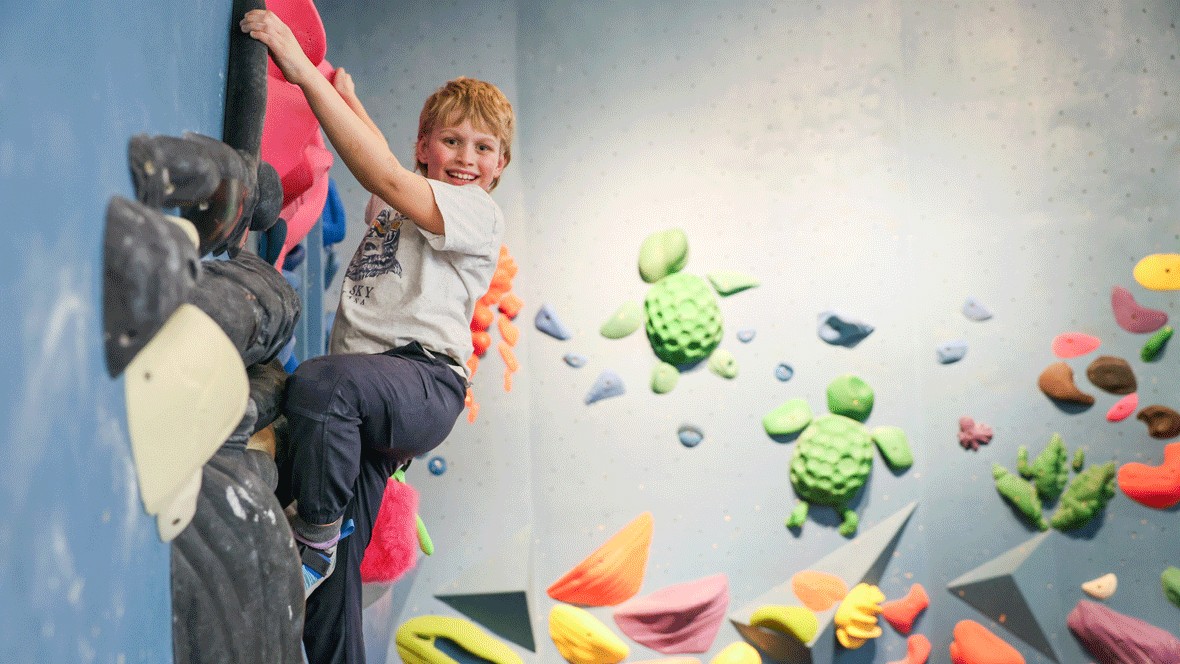

Did our family need to add another outdoor-adjacent pastime to our already busy schedules? Probably not. Were we excited to pick up rock climbing? Absolutely!
Rock climbing wasn’t something I grew up doing. My childhood extracurricular activities were more traditional: soccer, T-ball, ballet, gymnastics. It was a bit intimidating learning how to rock climb while simultaneously championing it for my kids, but I really want to expose them to a variety of sports, and rock climbing is rewarding both physically and mentally.
We already hike regularly as a family and adventuring through the mountainous landscapes of the Pacific Northwest is a cornerstone in our lives, so rock climbing felt like a logical next step. It’s something we can do together throughout our lives, and building a solid foundation now makes the possibility of climbing sheer rockfaces later in life a reality — and how awesome does that sound (albeit maybe a bit scary)?
Shoulder season was the perfect time to pick up rock climbing. The Big Dark had just descended on Seattle. It was wet and gray and gloomy. Heading to a climbing gym to let the kids literally climb and bounce off the walls seemed like the perfect escape.
Bouldering vs. top rope climbing: Learning the basics
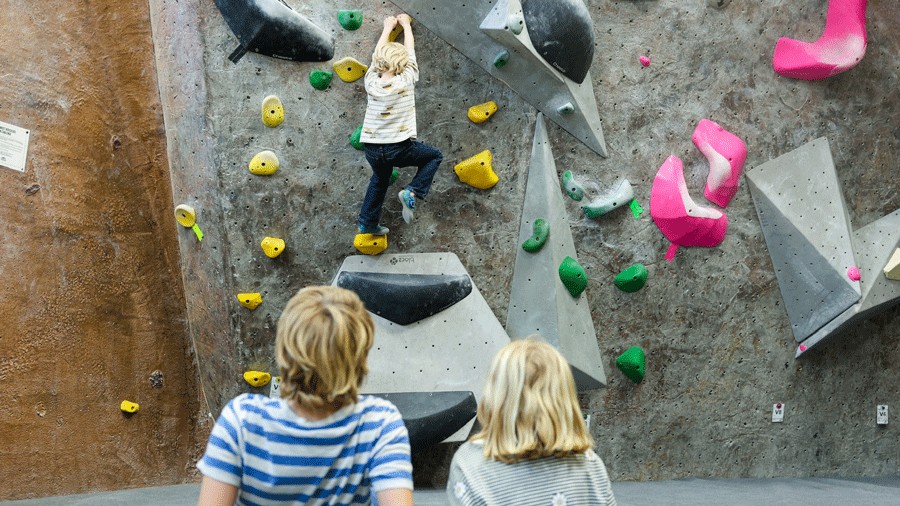
There are essentially two different types of climbing: ropes and bouldering. Bouldering is arguably a more accessible way of climbing because you don’t need any certifications or experience to start out. You can show up to a gym, watch the safety video, sign a waiver, and then you’re off to the walls. Bouldering is a type of rock climbing, but the walls are shorter and there are no ropes. Each route on a bouldering wall is called a boulder problem, aptly named because the climber needs to use their strength, balance and problem-solving skills to determine how best to get from one hold to the next to successfully scale the wall. Some gyms are specifically bouldering gyms, meaning you won’t find any ropes, and no harnesses are required. If you want to dip your toe into the world of rock climbing, bouldering is a great option.
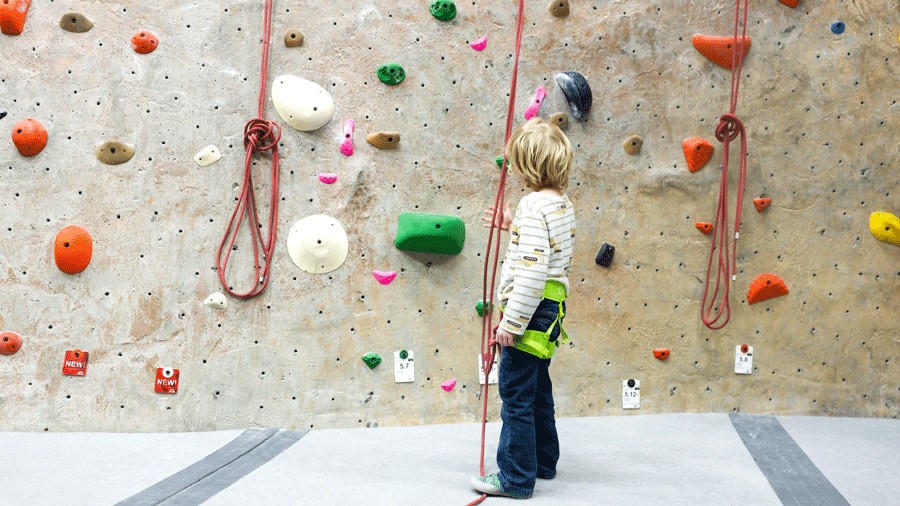
Our family really wanted to learn top rope climbing, so we searched for gyms that had both top rope routes and bouldering areas. Top rope climbing is where you are secured to a rope that runs through an anchor at the top of the wall, and a belayer controls the rope from below. In this system, you need a harness, a belay device and a rope. As opposed to bouldering, you can’t just walk into a gym and start top rope climbing. You first need to take a course that teaches you the basics. When we started out, we did an intro to rock climbing course. In the class, we learned how to put a harness on, how to tie an eight-figure knot, and all the safety checks required when climbing. During the course we also got hands-on experience belaying someone and catching them when they fall — a valuable skill you very much need.
Getting certified and overcoming fears
Honestly, picking up rock climbing was a bit overwhelming. Everyone looked like they knew exactly what they were doing, my kids in jeans did not sell us as expert climbers, and we didn’t have any gear. The unfamiliar sounds of carabiners clicking, the distinct smell of chalk in the air, and the climbing vernacular being yelled throughout the gym felt foreign.
Luckily, it’s not that bad once you get your foot in the door.
I’m going to be brutally honest. I have not always been the best at trying new things. I get overstimulated easily, am self-conscious and struggle with wanting to be good at things right away. Rock climbing was humbling. All those fears and insecurities hit me square in the gut, and getting over them did not come quickly. I felt self-conscious about my lack of experience, and the first few knots I tied were clumsy to say the least — but having other people to learn alongside helped me a lot.
Getting belay certified was our first big step. The course took about two hours to complete, and by the time I left, I felt much more confident. Once I was certified to top rope climb and belay, it was time to get my kids on the walls.
Our kids took to climbing like fish to water. For them, scaling a giant wall felt more like play than exercise, and watching their confidence bloom filled me with so much pride. They learned resilience, patience and the joy of getting back up after falling.
Climbing basics: Terminology and essential gear
Climbing has its own language, but families don’t need to worry about the technical jargon. Here are a few basics we learned:
- Route: The path up the wall, marked by colored holds. You simply follow the same color as the holds ascend the wall.
- Problem: A bouldering route that is usually shorter and more focused on technique.
- Beta: Advice or tips for completing a climb.
- Sending: Finishing a climb without falling. You could say something like, “Wow! You sent that!”
- Ratings: Difficulty grades that help you choose climbs suited for your skill level. For beginners, the rating usually starts at V0 for bouldering routes. Climbing routes for beginners start at 5. Some gyms have their own rating systems (colors, shapes, etc.).
- Crimps, slopers, jugs: These are types of holds.
- Crux: The hardest aspect of the climb.
Okay, so you decided to start rock climbing. You took the course. You learned the language. Now what? You’ll need some gear.
Essential gear for rock climbing includes climbing shoes (make sure they are snug but not painful), harnesses (for roped climbing), chalk bag and a belay device (there are many to choose from, and it really depends on your preference). Many gyms rent gear, so don’t worry about investing in shoes, harnesses and devices right off the bat. For kids who grow out of shoes every few months, it may be easier to rent them anyway. Most shoe rentals are $5–$6, but many youth programs include them in their prices.
Seattle-area gyms where families can climb
Seattle is home to several family-friendly climbing gyms. I would highly recommend doing research before heading to a climbing or bouldering gym. We learned the hard way that some gyms are not kid-friendly. Some gyms don’t even let kids in the door. Trust me when I say you’ll want to find a gym that helps make you feel comfortable. We shopped around, and let’s just say, some of our first attempts at bouldering did not go well. We made a few climbers pretty angry.
Best top rope climbing gyms for families
Vertical World
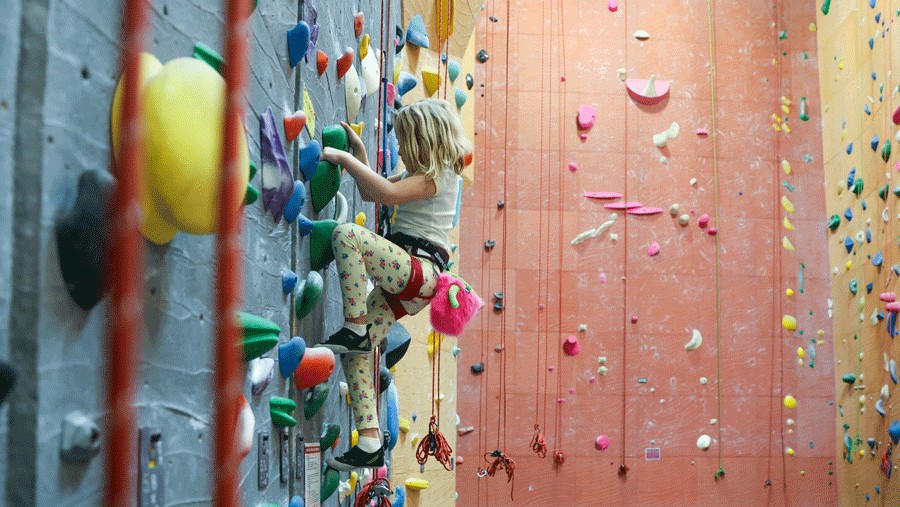
My favorite gym for top rope climbing is Vertical World. There are multiple locations throughout Puget Sound, with a great mix of bouldering routes, top rope and lead climbing routes, and auto-belays at each gym. Auto-belays are great because they don’t require someone to control the rope from below. Instead of an anchor at the top that feeds the rope back down to a belayer, the machine controls the rope. You simply clip in, do your safety checks and start climbing. Selfishly, I love gyms that have auto-belays because then I get to climb too, instead of being a designated belayer all the time. Vertical World Lynnwood takes the cake for climbing gyms. It is kid-friendly, with areas specifically set aside for youth, and it feels like a community rather than simply a gym.
I also love the gym’s origin story. You could say rock climbing gyms were born in Seattle thanks to Vertical World: It opened as the first climbing gym in the United States in 1987.
Today, Vertical World has two locations: Vertical World North in Lynnwood and Vertical World Seattle — and soon the Seattle location is expanding!
I highly recommend their youth programs, which offer programs for kids as young as 3 years old. You can register your child for a program, which gives a consistent schedule and structure for learning to climb, or try one of the flexible classes perfect for busy schedules, including a Parent and Me class, and Kids Night Out for youth ages 6–9. You can also choose from a myriad of camps that run year-round, including summer camps, outdoor climbing days or week-long camps.
“We understand it can feel intimidating to start. You can learn the basics here,” says Cierra Coppock, who works at Vertical World and is an avid climber herself. “We will literally show you the ropes,” she says, laughing.
You can also book birthday parties at Vertical World, which would be such a fun and unique way to celebrate.
Seattle location: 2330 W. Commodore Way, Seattle
Lynnwood location:12300 Beverly Park Rd., Lynnwood
Edgeworks Climbing
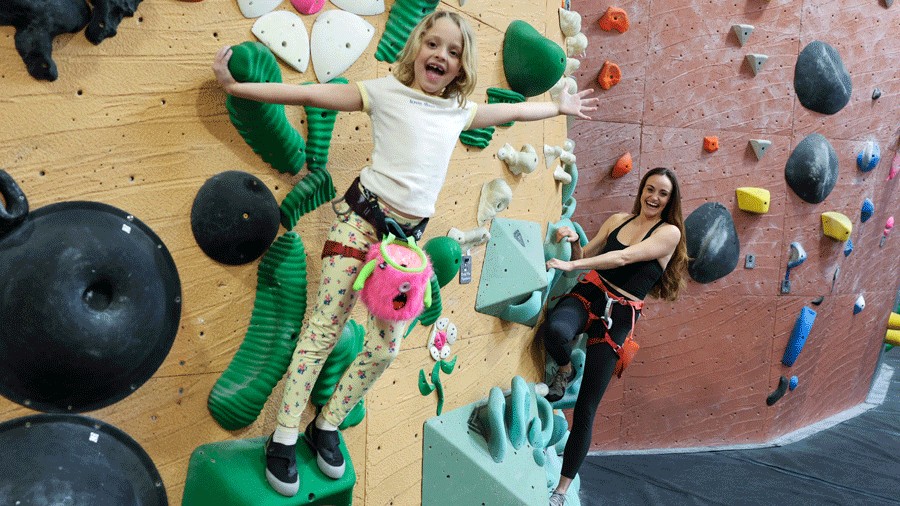
Edgeworks Climbing has multiple locations across Puget Sound, including Seattle, Bellevue and Tacoma, for top rope and lead climbing. There is also a dedicated bouldering gym in Bellevue. The gyms don’t have auto-belays, but they are expansive, with more than 91,000 square feet of climbing space in Seattle, Bellevue and Tacoma combined.
We usually climb at the Seattle location when we go, although it doesn’t feel as geared toward kids as the other gyms.
Seattle location: 2839 N.W. Market St., Seattle
Bellevue location: 15600 N.E. Eighth St., Suite C-1, Bellevue
Tacoma location: 6102 N. Ninth St., Suite 100, Tacoma
Cirque Climbing
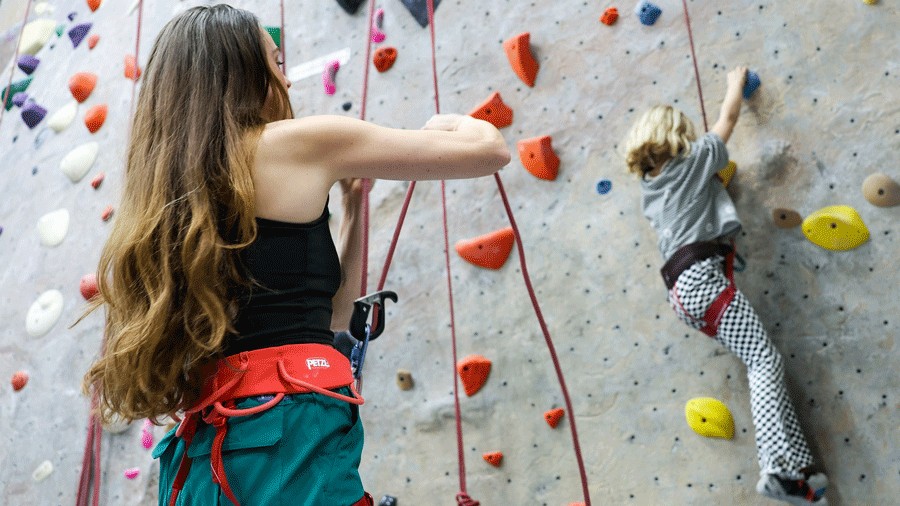
If you live in the South Sound, Cirque Climbing is a great option for top rope climbing. The gym offers a variety of routes, including auto-belays for beginners. Cirque Climbing is a large gym with 3,500 square feet of bouldering and 11,000 square feet of roped climbing, and the 45-foot walls are impressive.
For families with kids ages 17 and younger, Cirque Climbing gives families a great option if they want to get into rock climbing safely. Every Saturday morning, the gym has belayers available from 9:30–11:30 a.m. It’s a designated time just for kids to try out various routes and build their climbing confidence. This is a great resource for families who aren’t belay certified. Space is limited though, so you will need to book ahead, either online, in person or by phone.
Location: 8276 28th Ct. N.E., Lacey
Bouldering gyms that welcome kids
Seattle Bouldering Project
Seattle Bouldering Project has various gyms around Seattle, but our favorite and most kid-friendly (in my humble opinion) is the Poplar location. My kids love the whimsical, colorful bouldering routes and the designated areas for youth. It’s so nice to have a space where you don’t have to worry about weaving around or climbing next to adults — it always takes some of my anxiety away. When we boulder at places without kids zones, I always feel more on edge, like we are tiptoeing around other climbers.
The gym has two castles and tons of holds scattered around the walls surrounding the structures. The slide is also a big hit — because why climb down the castle walls when you can slide into the squishy mat below?
The youth programming offerings are robust. The gym offers camps focused on play and creativity, holiday school programs, lessons where kids can learn basic climbing skills and youth clubs.
Their weekly summer camps are for kids ages 6–15. If you’re looking for camps to keep your little climbers entertained in the summer, learning to boulder could be a great option.
Most gyms have youth-to-adult ratios. Please check ahead. The ratio at Seattle Bouldering Project is a 2-to-1 youth-to-adult ratio for climbers ages 13 and younger.
South Seattle location: 900 Poplar Pl. S., Seattle
Fremont location: 3535 Interlake Ave. N., Seattle
U District location: 4502 University Way N.E., Seattle
Half Moon Bouldering
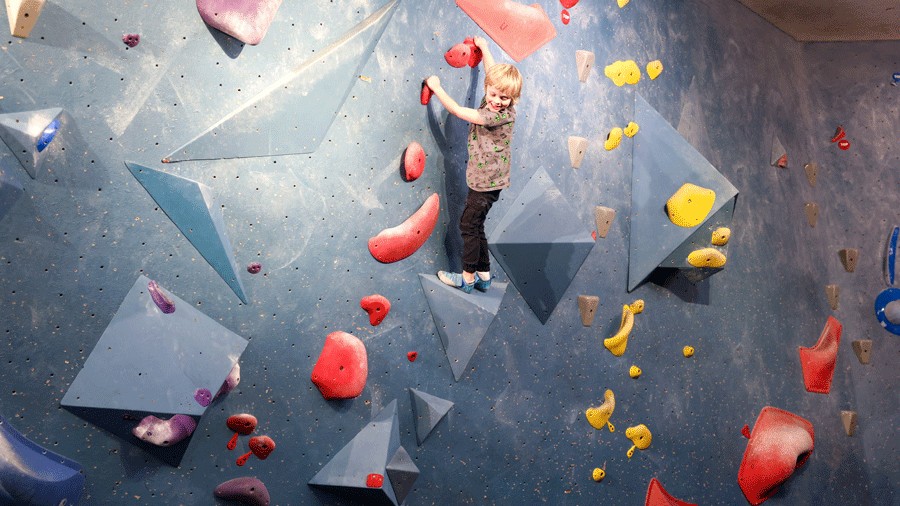
Half Moon Bouldering is a local family-owned bouldering gym in Seattle’s Greenwood neighborhood. The gym feels really welcoming as soon as you walk in the door. At the front desk, you might even meet the adorable, speckled dachshund that greets guests. There is a space where kids can climb away from the more advanced routes in the gym. You can’t miss it. The kids area is large and bright with a towering castle that kids can climb. Once at the top, kids can descend by sliding down a bright yellow slide.
All ages and skill levels are welcome, so you don’t have to worry about being an expert to climb here. The gym focuses on education, inclusivity and programs designed for kids and adults. There are also a plethora of camps for kids ages 6 and older.
A few great class options for families include:
- Family Bouldering: A 30-minute introduction to climbing where one adult and one child learn how to climb and solve problems.
- Climb After Class: This beginner class for ages 5 to 11 helps kids learn the basics of climbing.
Location: 124 N. 85th St., Seattle
Climb Nora
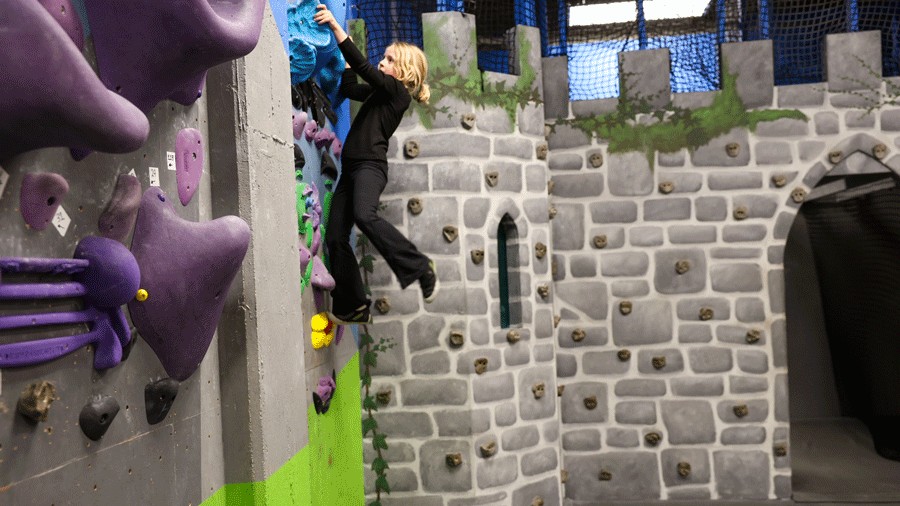
Climb Nora opened in 2025 in Federal Way, offering a shared bouldering space that’s “energetic, inclusive, and rooted in the Southside.” The gym doesn’t have designated kids zones, but that’s intentional. At Climb Nora, there’s a shared space where everyone can climb together. Kids younger than 5 are welcome to climb, but they have to be accompanied by a member. The gym has supervision ratios to help ensure safety. For children ages 5–9, the parent-to-child ratio is 1-to-1. Ages 10–12 require a 1-to-2 parent-to-child ratio, and those older than 13 do not require supervision. A day pass for children is $20.
Bonus: Meet Wiebe, the gym’s dog ambassador, who is often at the gym in the mornings.
Location: 30820 Pacific Hwy. S., Federal Way
Outdoor rock climbing for families
Once you feel confident in the gym solving problems, you can take what you’ve learned and apply your skills to outdoor rock climbing. I highly recommend taking an intro to outdoor rock climbing class before sending it outdoors. Many climbing gyms or organizations, such as the Mountaineers, offer introductory courses. The courses can help build confidence and teach safety techniques before heading outside.
When looking for rock climbing routes, try to find beginner-level climbs rated 5.0 to 5.9. Rating systems can indicate the difficulty of a route and its appropriateness for your skill level.
- Class 1–4: Scrambling and easy climbing, no rope needed
- Class 5: Technical rock climbing, requiring safety devices and belaying. Routes labeled between 5.0–5.9 are beginner to moderate routes.
Marymoor climbing wall
The wall is impressive, standing at around 30 feet tall. It has lots of bouldering routes to choose from, and it’s a great place to get some wiggles out since you can also play at the playground.
Location: Marymoor Park, 6046 West Lake Sammamish Pkwy. N.E., Redmond
Schurman Rock
Schurman Rock is part of Camp Long, a 68-acre park in West Seattle. The structure is open to the public and great for beginners. If you want to boulder, like most places, you will need to bring a crash pad. Unlike gyms, there isn’t soft padding to absorb a fall. If you want to top rope climb, you can bring your own ropes and anchor systems — the top of the rock is bolted and can be accessed from the ground. Climbing is done at your own risk. You can also schedule a rock climbing experience. The climbing programs include two belayers, harnesses, helmets and a variety of routes to explore. Camp Long is open Tuesday–Saturday, 10 a.m.–6 p.m. The rock-climbing programs are typically two hours in length. Pricing starts at $175 for up to 15 climbers. Camp Long also hosts climb nights every Wednesday evening throughout the summer.
Location: Camp Long, 5200 35th Ave. S.W. Dawson, Seattle
SPIRE Rock
SPIRE Rock is a man-made outdoor rock formation in Tacoma. The impressive structure was created using various types of rock. It’s great for families. (It’s next to the Sprinker Recreation Center, which has a thrilling playground and an indoor ice arena with ice bumper cars.)
Location: Sprinker Recreation Center, 521 Military Rd. S., Tacoma
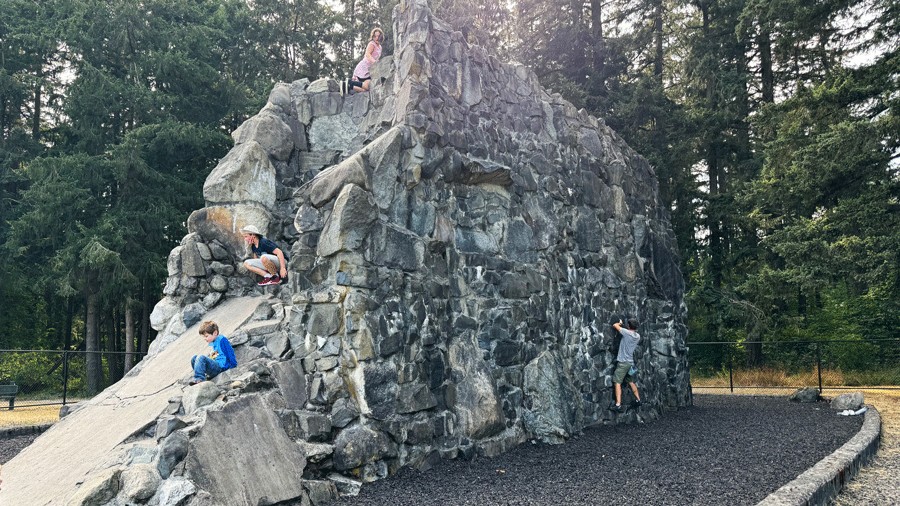
The Mountaineers climbing walls
The outdoor walls at The Mountaineers in Seattle are available for public use. Some of the rock climbing options are great for beginners, including a boulder/scree field, a large and artificial boulder and an outdoor wall that feels like climbing on rock. The climbing structures can be climbed year-round. I highly recommend taking a class before testing your skills on the outdoor walls.
The Mountaineers’ youth classes and camps are great for beginner rock climbers and little adventurers. Under the “Youth” tab on their website, you can filter by location, age and activity type to find the best program to meet your needs.
Tips for beginners
Climbing is inherently dangerous, but you can mitigate risk by taking courses, following safety measures and practicing skills. Our family likes the saying, “Do dangerous things safely,” which is another reason I think rock climbing fits in with our lifestyle.
- Safety first: Always review gym rules, supervise kids and practice proper belay techniques.
- Manage costs: Look for family memberships, multi-visit punch cards or introductory classes that include gear rental.
- Choose the right gym: Visit gyms to see which environment suits your family — not all gyms will feel like home, and that’s okay. Find a community and a gym that meets your family’s needs.
- Make it fun: Set simple goals, celebrate milestones and let kids explore different types of climbs.