 Seattle Family Calendar
 Subscribe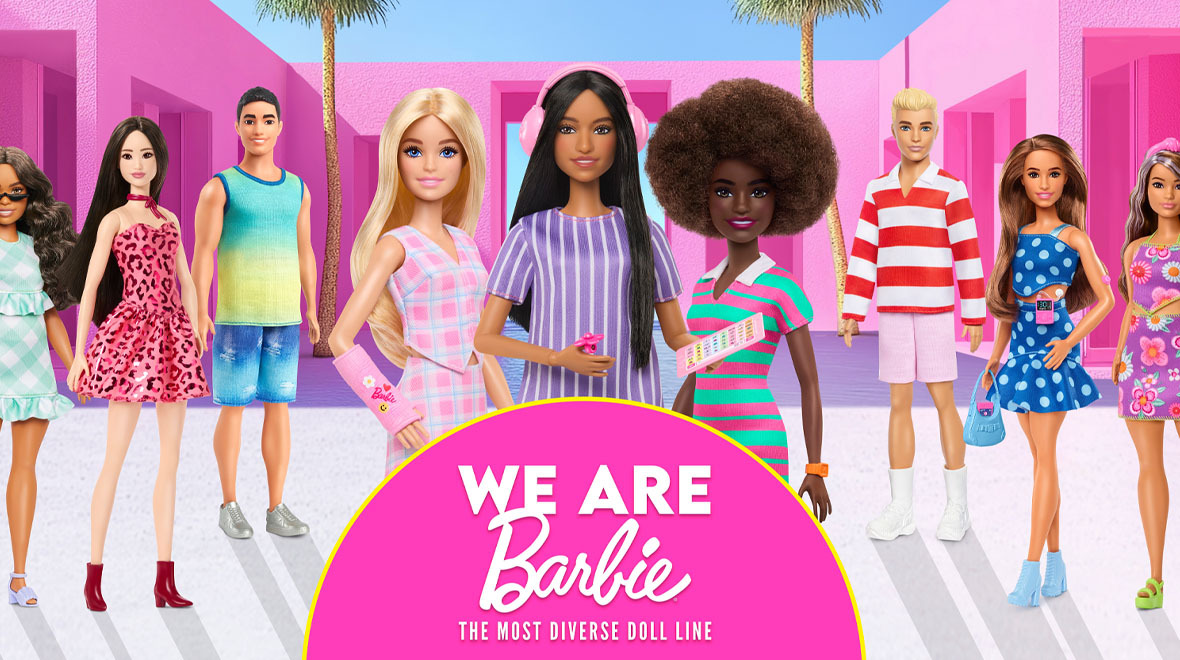

Last week, Mattel introduced the first-ever autistic Barbie doll, celebrated by some as an important step toward representation and inclusion, and questioned by others for what it can — and can’t — represent. As a mother of an autistic girl, the debate caused me to consider my own childhood dolls and the ones I later chose for my daughter, decisions made long before autism was part of our story, and it made me realize just how complicated representation can be.
The fascinating evolution leading up to autistic Barbie’s debut
The earliest Barbie dolls released in the late 1950s represented an idealized body type and initially featured limited variations in race and appearance. Today, the Barbie brand describes itself as the “most diverse and inclusive doll line on the market today.” In 1968 Mattel released Christie, one of the first Black dolls; and in the 1980s, the brand made even bigger strides representing racial diversity and also expanded into underrepresented careers for women. It was in 2015, though, that what many consider to be the most significant shift took place with the release of the Fashionistas line, featuring dolls with a broader range of body types, expanded skin tone and ethnicity choices. In 2019, the Fashionistas began to feature certain physical disabilities.
Autistic Barbie, a first of her kind released in January 2026, is part of this line and was created after an 18-month collaboration with the Autistic Self-Advocacy Network. The organization hopes that the doll “shows all kids that autistic people are a valuable part of our communities.” While ASAN acknowledges that one doll can’t represent a single way autistic people present, they hope kids can see “some of themselves” in these dolls, with features that may reflect some common autistic experiences like articulation in her wrists and elbows, averted eye gaze, autistic-related support tools (fidget spinner, noise-canceling headphones, tablet), and loose-fitting clothes. Now that Mattel has designed a Barbie doll with autism, autistic children have an opportunity to see themselves represented.
Doll representation and why it matters
Representation in dolls is the idea that dolls ideally reflect diverse real-world characteristics such as race, ability, gender identity, and more recently traits that go beyond physical attributes. By having many doll choices that represent the individual consumer, children may feel represented, seen and like they belong.
Having a diverse array of dolls may also help foster broader understanding, cultural awareness, diversity and acceptance. So how does the reception of autistic Barbie align with these ideals? I found that, while reactions to her are mostly positive, there are some concerns raised that are also important to consider. As I considered both, I looked to the dolls I played with as a child, and the dolls I chose for my daughter, and the stories they quietly told us about the world, as touchpoints.
Not a Barbie girl
Growing up as the child of counterculture parents, Barbie was not an icon of my childhood, she was a fascinating snapshot into a different slice of American life than I was exposed to. My only experience with her was in the homes of more mainstream friends, and my first and only stereotypical blonde buxom Barbie (a gift from a friend in middle school) promptly received Weird Barbie treatment as I worked through my angst about her.
While Barbie was not a part of my childhood, other dolls were, and my collection included everything from a bizarre Cabbage Patch doll to vintage family heirlooms, and a beautiful china doll that my grandmother brought back from Japan. She was too fancy to play with so she sat on my shelf while I imagined the place and family history connected to her. Each doll told a story that was different from my own, and provided a window to the world. So when it was time to buy dolls for my own daughter, I was less focused on a doll that was just like her and more focused on the doll’s nonphysical attributes or dolls that had interesting stories.
If autistic Barbie was a choice when my daughter was young, would we have chosen it for her? And if I had been offered better choices in dolls, would I have found Barbie more appealing as a girl?
The upside of representation
According to Mattel, autistic Barbie was designed to “represent common ways autistic people may experience, process, and communicate about the world around them,” and its creation invites more children to see themselves represented in Barbie. By broadening representation to girls on the autism spectrum, the doll may help them feel accepted, potentially contributing to healthy self-esteem and self-image.
While designers understood that there is no “one look” to autism, they intended to portray traits that many girls on the spectrum could relate to as well as normalize support tools. Since autistics of color are underrepresented in media and autism advocacy spaces, they also sought to include autistic individuals of color. In an ideal world, autistic Barbie may broaden awareness in the neurotypical community, sparking conversation, ultimately leading to deeper understanding.
Drawbacks to the new Barbie’s debut
Others argue that it’s problematic to create a single “look” for autism since it’s impossible to represent a spectrum in a doll. How can one be “seen” in a doll? There is no “right way” to be autistic and this doll may place that assumption on kids. Some voice concerns that certain design choices in the doll reinforce stereotypes that the community has fought to overcome. Still others argue that the mass-produced doll may have too much influence on people’s perception of autism. While still others voice concerns that the company is profiting from disability branding.
Autistic Barbie sparks necessary conversations
While arguments on both sides present a lot to think about, as a parent of an autistic daughter, I feel relatively positive toward the release of autistic Barbie. I’m still processing the nuances, true, but fundamentally, I’m grateful that this debate has sparked bigger conversations about representation and inclusion. The fact that doll manufacturers are continually evolving their lineup of dolls toward better representation is a positive step — especially if it helps to normalize neurodiversity.
An autistic teen shares her thoughts on autistic Barbie
Q: How did it make you feel when you learned about autistic Barbie?
A: I was intrigued, but I’m not sure why they made one. Are they donating some of the profits to an organization that helps autistic people? If they are, that would make it better.
Editor’s note: Mattel has plans to donate 1,000 autistic Barbies to “leading pediatric hospitals that provide specialized services for children on the autism spectrum” per the company.
Q: Do you relate to aspects of autistic Barbie as a neurodivergent female? Do you feel that she represents you?
A: Not really, but that is because I have low support needs. That doesn’t mean that it’s bad representation, but you can’t represent all the traits of autism because there are so many ways autism can present. Also, Barbies are for kids, and it may be a better representation for younger kids with autism. I think it looks a little stereotypical, but I don’t view the stereotypes as negative. I think if they gave her a normal outfit, like joggers and a hoodie, that would have been better. It looks like she’s wearing a hospital gown.
Q: How important do you think it is to have a doll that is “like you”?
A: I think it’s important to have representation of all people and not just the people that look like you. What I liked about the American Girl dolls was that they had a lot of diversity, and it was cool to have different dolls that represented the broader world and not just me. I had a doll with blonde hair like me and I felt like I could see myself in that doll, but I loved my other dolls too. I think that autistic Barbie shouldn’t just be for autistic people, but should be a choice for all girls in helping them relate to autistic kids.