 Seattle Family Calendar
 Subscribe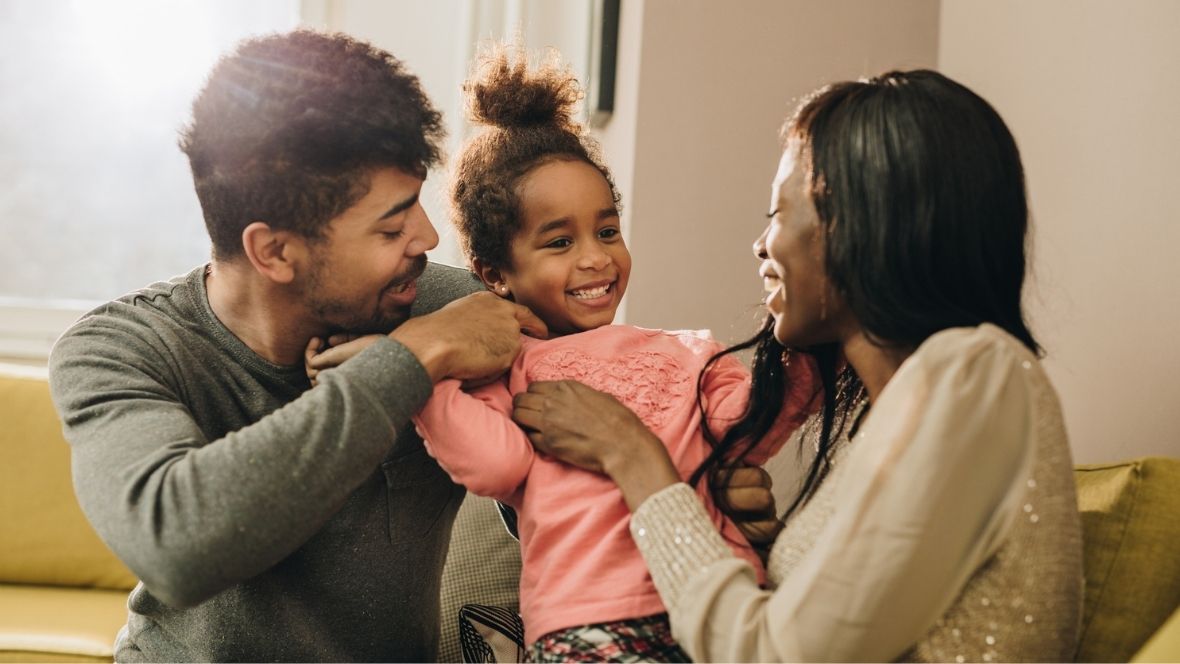

Key takeaways
- The quality of the relationship between parents shapes children as much as any parenting strategy, and often more. Children are deeply affected by the emotional climate of the home, even when conflict is subtle or unspoken.
- All couples have enduring differences. Couples in healthy relationships learn how to live with differences, not eliminate them.
- Stress from real-life pressures can strain even strong relationships and amplify existing patterns.
- Emotions such as warmth, affection and genuine engagement within a marriage can have a positive effect on children, research indicates.
Which would you rather be: A child raised by a single parent who is warm, consistent and supported by a strong network of adults? Or a child raised by two parents who argue regularly, take opposite sides on discipline and carry intense resentments they never address?
If you chose the single parent — congratulations! You made the right choice and challenged a deeply held cultural myth about families.
The parenting world loves to focus on strategies: what to say, how to say it, which app to use, whether to do time-outs or time-ins. I’m guilty of this myself. It’s tidy, actionable and reassuring.
But there’s a problem with this focus: Children don’t grow up in a set of techniques. They grow up in relationships — messy, emotional, deeply interconnected relationships. When we ignore the relationship dynamics between parenting partners, we overlook one of the most powerful forces shaping a child’s development. Decades of family research indicates the quality of the adult relationships in a home shape children at least as much as any parenting technique does, often more.
The root of marital friction
Partners have opinions about money, housework, conflict and child-rearing that may not align neatly with yours. They come with a family history, an emotional style and a particular way of doing family life. You come prepackaged with the same.
Essentially, the challenges in a relationship are rarely just about your partner. According to John Gottman’s “The Seven Principles for Making Marriage Work,” about 69 percent of what couples argue about reflects these ongoing differences in personality, values and needs.
The healthiest couples don’t eliminate these differences. They learn to live with them.
They argue, revisit and negotiate with humor, respect and a bit of curiosity. They make repair attempts — small moves that interrupt escalation. The goal shifts from winning to understanding, from changing your partner to living well alongside them.
That’s the challenge all couples face: appreciation of the positive elements you fell in love with, working with the inevitable friction areas and acceptance of the whole package.
Why acceptance is the most powerful tool
I start most couple therapy intakes with a bit of a slightly adapted serenity prayer warm-up that is the heart of couples therapy:
“Help me accept what is unlikely to change, give me the courage to change what is possible, and the wisdom to know the difference.”
Most couples come in wanting better communication, fewer arguments and more alignment. All reasonable goals, if it were only that simple.
But the most powerful shift usually comes from somewhere else: learning to accept what isn’t going to change. In fact, leading with a pure change-agenda often backfires.
Gottman’s work aligns closely with dialectical behavior therapy, which emphasizes that acceptance and change are not opposites — they work together. When people feel genuinely accepted, they become less defensive and more capable of change.
UCLA psychologist Andrew Christensen built Integrative Behavioral Couple Therapy around this idea: The goal is not to eliminate differences, but to stop being at war with them. His research shows that when couples make this shift, improvements last and extend into coparenting and children’s functioning. When the couple’s relationship stabilizes, the whole system benefits.
Philosopher Alain de Botton captured this bluntly in his New York Times opinion piece “Why You Will Marry the Wrong Person,” which went viral for a reason. All partners turn out to be “wrong” because they are imperfect, challenging and disappointing in some ways. The task is to learn how to live with differences in a way that keeps the relationship intact.
A vignette from my practice
I worked with a couple who had some disagreements about child rearing. But it soon became apparent that something more fundamental was driving the tension. He tried hard to please her in every way he could, but like all of us, he inevitably fell short. No one can meet another person’s needs perfectly. What frustrated her most was his defensiveness and a constant need for reassurance. It felt draining and, at times, demanding.
We did some work on reducing their emotional reactivity. But the central task wasn’t change. It was acceptance. That realization shifted the work. The goal wasn’t to sand down these traits, but to accept the whole person each had chosen. Because in long-term relationships, you don’t get to keep only the appealing half.
When patterns become entrenched
The couples who struggle most aren’t always the loudest. Often, they’re the ones who have stopped engaging. What starts as avoidance becomes a kind of emotional parallel life, with two people sharing a home, kids’ schedules and a calendar, but rarely truly connecting. Intimacy fades and often sex goes out the window as well.
Some marriages survive in this compromised state. But like a house with a weakened foundation, the façade can look fine until real stress hits. Add a storm such as a struggling child, an affair or a life crisis, and those cracks can result in a complete collapse.
Healthy relationships require steady engagement. Couples need to stay connected, learn how to repair and figure out how to navigate hot-button issues without everything going off the rails.
How emotional regulation sets the stage
At the center of all of this is emotional regulation, the ability to dial things down before an interaction moves into the red zone.
We all have emotional hot buttons. A tone, a look, a phrase, and suddenly the reaction is far bigger than the moment. Commonly called “triggers,” these moments happen when an old wound is activated and a partner reacts with disproportionate intensity.
A full-blown fight isn’t really about bedtime or dishes. It’s about how partners are interacting, escalating and triggering each other.
If you grew up in a high-conflict home or with a parent who was critical, shaming, unpredictable or emotionally distant, you may find yourself reacting strongly to even a hint of those patterns in your partner.
Researchers call this the spillover effect — the way tension in the couple relationship carries over into parenting and family life. A 2024 study found that destructive conflict between parents predicted higher parenting stress, which in turn predicted less supportive parenting and ultimately greater emotional insecurity in children.
Even when parents try to shield their kids, the emotional residue shows up. Hostility, withdrawal and stress in the adult relationship shape how present, patient and attuned parents are able to be.
Over time children don’t just experience this, they internalize it. A sweeping meta-analysis found that when children feel caught between parents, even subtly, they are more likely to develop anxiety, depression and behavior problems.
In other words, the relationship strongly influences the emotional climate the child grows up in, and children absorb the emotional climate of the home. They don’t need to witness conflict directly to be affected by it. Kids feel it, live in it and know it — even when you think they don’t.
The effect of stress on relationships
Even solid relationships can fray under the weight of real-world stress such as financial strain, job instability, health crises and caregiving demands. These dynamics don’t play out in a vacuum. Economic pressure, job struggles and limited support can strain even the most committed couples.
The Family Stress Model helps explain this pattern. Simply put: external pressures increase adult stress, which erodes the couple relationship, which then disrupts parenting. Children absorb the effects at every step along that chain.
Most families got a vivid lesson in this during the pandemic. Suddenly, ordinary life turned into a series of high-stakes negotiations. Who gets the quiet space and reliable internet for work or school? How much risk is acceptable when it comes to going out, traveling, or seeing friends and family? Couples often found themselves making decisions under pressure with different thresholds for stress, safety and control.
For relationships that were already strained, that level of sustained stress didn’t just reveal cracks — it widened them.
When systems are under sustained pressure, patience shortens, interpretations harden and small differences start to feel bigger and more threatening. The issue isn’t just the problem itself — it’s the stress surrounding it.
This isn’t a failure of character. It’s what stress does to relationships.
Polarization and the parenting tug-of-war
“I feel like I have to organize the family, structure all the routines and make sure all the kids’ worlds are taken care of. They glide in as the fun one, acting like I’m the drill sergeant. When I ask for help, I’m accused of being a negative nag.”
If that sounds familiar, you’re not alone. This is polarization, small differences in parenting style — structure versus flexibility, authority versus warmth, planning versus spontaneity. It’s one of the most common patterns I see in families, and it gets amplified over time. Where each parent lands on the polarization spectrum has to do with personality, family-of-origin experiences, and what feels familiar or safe based on their past.
The more one partner pushes their position as “right,” the more the other partner pushes their own. Both can become righteous in their argument about what is in the interest of the child. Sometimes one partner tightens control while the other just retreats. Other times, clashes increase and polarization becomes more entrenched.
Over time, the disagreement becomes less about parenting and more about the relationship itself. Research pooling 93 studies and over 41,000 families found that how parents function as a team — whether they undermine each other, compete for the kids’ loyalty or work cooperatively — predicts children’s emotional and behavioral health as reliably as any variable studied.
In everyday terms, it’s not just how parents behave individually that matters. It’s how they function as a team.
It’s not just parenting, it’s the system
When a child struggles, the focus narrows quickly to the child. Assessment, diagnosis, treatment plans. What’s wrong? What do we do about it?
But a child may spend one hour a week with a therapist, and well over a hundred waking hours in their family environment.
That imbalance matters.
I see it all the time. A child learns coping skills in a thoughtful, well-run session, then goes home to a family system that is tense, misaligned or emotionally strained. The problem isn’t that the therapy is ineffective. It’s that the surrounding environment has far more influence.
When families become more collaborative, aligned and validating in how they respond to their child, change often happens faster and holds more firmly. Not because parents are doing something fancy, but because the child is living inside the intervention.
Children develop inside systems. Family, school, community and culture all interact to shape development. Urie Bronfenbrenner described this as a set of nested contexts — layers of influence that surround a child and interact with one another continuously.
In practice, this means we can’t fully understand a child’s anxiety, defiance or withdrawal without understanding the relational world they are moving through every day.
The emotional climate of a home — how adults speak to each other, how they handle stress, how they repair after conflict — becomes the backdrop against which a child grows. It is the water they are swimming in, whether anyone names it or not.
The good news: Positive emotional climates carry over too
The research doesn’t just point to risk. It also shows what helps. Emerging work on positive spillover shows that when parents are warm, affectionate and genuinely engaged with each other, that tone carries over to children. Children notice connection and feel the positive ambience just as much as tension.
The invitation
Bottom line: Your child is experiencing far more than your parenting strategies. They are watching how you and your partner handle disagreement, how you come back together after conflict, and whether there is a sense of connection between you that feels steady enough to rely on.
I’ve seen many loving, devoted parents who embrace any parenting tip that is known to enhance their child’s life. What’s harder to do, and often more important, is face the challenges in their marriage, which influence the emotional climate those children live in every day.
Some of the best parenting advice, it turns out, is this: Take care of your marriage.
What healthy couples actually do
Healthy couples aren’t conflict-free, they’re skilled at how they handle what doesn’t go away. They:
- Manage perpetual problems without gridlock. The same arguments come back — but they can revisit them without blowing up or shutting down.
- Repair early and often. Small gestures — a touch, humor, a quick “we’re okay” — interrupt escalation before it takes over.
- Keep curiosity alive. Even in disagreement, they’re trying to understand, not just persuade.
- Don’t fight for the audience of their children. They support each other publicly and save disagreements for private conversation.
- Notice their own patterns. They can step back just enough to say, “Ah, here we go again,” instead of diving deeper into the same loop.
- Present a workable united front. Not perfect agreement — but enough alignment that kids don’t learn to play one parent against the other.
- Get help sooner rather than later. Couples therapy works best before resentment becomes the main language of the relationship.
What healthy family systems feel like from the inside
Not perfect. Not always calm. But coherent, connected and resilient.
- There’s support beyond the immediate family. Isolated families are fragile families. Community matters.
- Boundaries are clear but flexible. Kids have growing autonomy, but parents still lead.
- Parents are in charge and on the same team. Not identical, but coordinated enough that the system is consistent.
- There’s room for real emotion. Sadness, frustration — even conflict — are allowed without overwhelming the system.
- Conflict is handled, not avoided or weaponized. Problems are addressed, repaired and moved through.
- The system can adapt. The family bends under stress without breaking.
- There’s awareness of “what’s ours” versus “what’s old.” Family-of-origin patterns are recognized instead of unconsciously repeated.
- There’s connection to something larger. Extended family, culture, community, shared values — something that gives the family a wider frame.