



Photo:
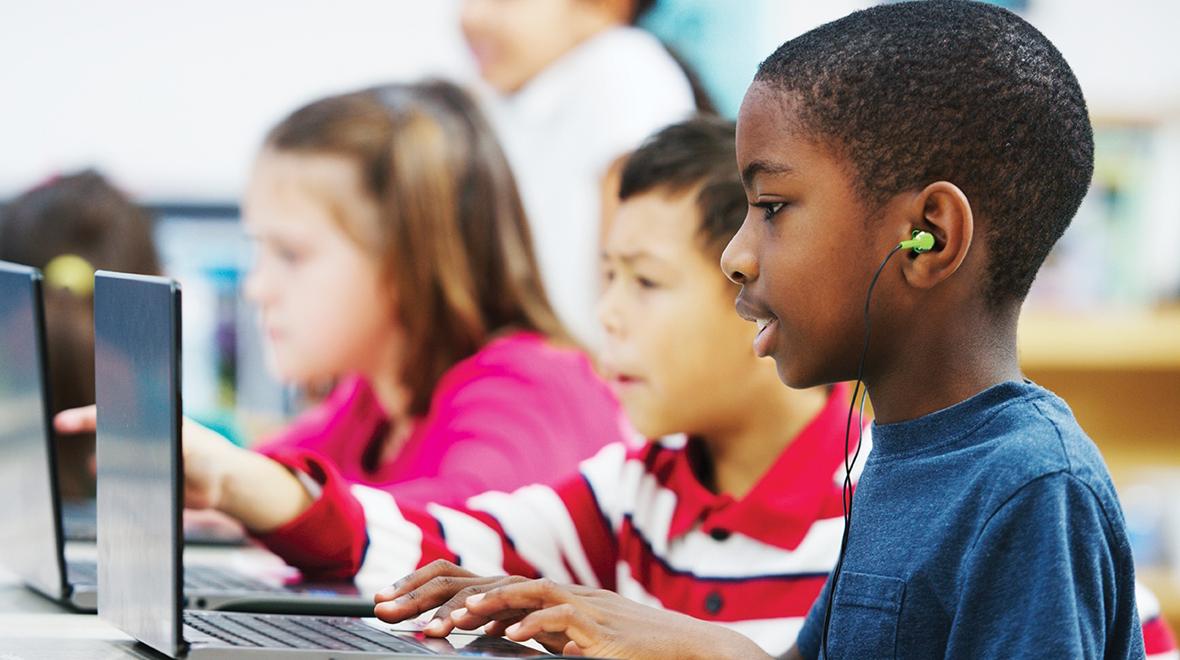
EdTech companies have long claimed their products build knowledge and personalize learning. Photo: iStock
For the past two decades, teachers were promised that technology was the new frontier in education. Even as parents were urged by the American Academy of Pediatrics to limit screen time, educators across Puget Sound were encouraged to implement new technology, ultimately increasing total screen time. Kids like technology, the argument goes, so lessons delivered on a screen will be a boon to learning. Once every student had a device, it was assumed that classroom engagement would skyrocket, learning would flourish and kids would have the 21st-century skills needed to succeed.
It was all a mirage.
Now, students may battle device addiction every time they are given an online assignment. Decades of research have shown that technology is negatively related to nearly every measure of student learning. Despite this, many teachers are now encouraged to embrace AI.
Many are reluctant. They’ve been led down this road before.
The promise
Educational technology (often referred to as EdTech) companies (businesses that build apps, websites and online courses for schools, teachers and parents) have long claimed their products build knowledge and make learning personalized and fun.
In addition to the fun and games, EdTech claims to help teachers. Students would get extra and faster help through auto-graded assignments, lessons assigned with a mere click, chatbots to answer student questions and special features on websites.
All these technological promises sound very cool. It seems like a great idea to have online textbooks with translation and reading assistance features. Instructional videos and hyperlinks could help struggling students. Student groups having the ability to seamlessly collaborate on shared documents should make group work easier. Posting assignments online is fabulous for keeping families in the loop.
The reality
But as it turns out, many students don’t use the special textbook features. They don’t watch supplemental instructional videos. Online group projects still often feature one student doing all the work. Knowing every resource and assignment is online gives students the ability to procrastinate and tune out during class. “I’ll do it at home” is the rally-cry of students in tech-infused classrooms.
Increased technology is responsible for attentional problems, low-quality sleep, worsening eye conditions and a slew of mental health problems.
Many independent studies have shown that students who frequently use computers at school did not show improved performance, even after accounting for social background and student demographics. In fact, math, reading and science scores continue to decline in the United States.
In social psychologist and author of “The Anxious Generation” Jonathan Haidt’s After Babel Substack, neuroscientist and educator Jared Cooney Hovrath wrote “when using a computer for homework, students typically last fewer than 6 minutes before accessing social media, messaging friends and engaging with other digital distractions. This is why, when using a laptop during class, students typically spend 38 minutes of every hour off-task.” Increased technology is responsible for attentional problems, low-quality sleep, worsening eye conditions and a slew of mental health problems.
“We actually expected to find a little more data supporting tech in schools,” says Amy Tyson, MSW, LISW-S, and cofounder of Everyschool, which was created to share EdTech research and spread awareness about digital wellness. “We haven’t found it yet. There is no data-driven reason why you need to use technology in your classroom. I’ve paid such close attention to this work in the last seven years, and I just keep hearing the same false promises.”
Shouldn’t schools be preparing students for real-world technology?
Despite all this research, teachers are still encouraged or required to use gamified apps, online textbooks, learning management platforms and AI. Often, the rationale is that technological know-how is a required life skill. Not wanting to seem like out-of-touch Luddites, teachers schlep from one tech training to another, bringing app after app into their classrooms.
After two decades in education, fifth-grade teacher Adrian Neibauer reflected on his task to bring students into the 21st century. “I often wonder if I had resisted adopting 1:1 devices, gamified apps, learning management systems and all things Google, how would my students fare today?” He wishes he’d resisted. “I inadvertently used technology to depersonalize learning. I encouraged skimming and clicking and created flashy academic transactions to prepare my students for the ‘real world.’ I plugged in my students and let the continuous dopamine drip wash over their brains.” This year, his classroom will move away from devices.
The reality is, nobody knows what technology will be useful to students in the future. Five years ago, teaching kids about coding and computer programming was all the rage. Now, it’s a career likely to be obliterated by AI. As Neibauer says, “Sitting for hours in front of screens while bright colors and bouncing characters hold students’ attention does not prepare students for the real world; it prepares students to be on their screens in the real world.”
Just because a teacher isn’t embracing an aspect of technology doesn’t mean it’s being ignored. A teacher may refuse to accept AI-assisted essays on the rise of fascism in the 1930s, but might engage students in discussion about taking selfies at Auschwitz-Birkenau Memorial or the prevalence of AI-generated images of Holocaust survivors. Incorporating new technologies will look different in every classroom.

Fighting technology addiction
While colorful apps may entertain young students, technology functions as a distraction in middle and high school. A student might be typing a document when a teacher walks by, but you can bet that short-form videos are playing in the background. The moment the coast is clear, videos pop up on the screen.
It’s not that students are disrespectful or lazy. Schoolwork requires deep thinking and struggling with the unknown. When brains work on tough tasks, they are often searching for something easier to do.
We adults also reach for our phones when we should be doing something else.
When parents are roped into an endless game of pretend, or sophomores are balancing chemical equations, or preteens are reading complex articles, all their brains are wired to look for something more fun to do. Anything online will suffice. Students required to do deep thinking in front of a computer have to constantly fight against their brain.
Students themselves know this. “When I need to get to work,” says Sydney [not her real name], a 10th-grade student in Everett, “I get out my writing utensil and ask for an actual piece of paper.” She’s not alone. When an assignment is due at the end of the period, many students prefer physical books and printed-out instruction sheets. They know how they work best.
Misuse by schools and teachers
Teachers can let technology get away from them as well. For example, having students watch a video and complete an online quiz makes for an easier day in the classroom.
But it’s only easier in the short term. Overused, technology erodes student-teacher relationships. If only mindless online work is assigned, students will recognize that effort is not required in class. Motivation, respect for the teacher and trust in the educational process will be lost. Chaos and animosity will reign supreme, while learning does a nosedive. No teacher wants that.
As with anything in education, different things work for different students. The trick is to allow that one student to access technology without allowing it to become the downfall of the rest of the class.
Perhaps the most egregious example of technological misuse in schools is online credit recovery courses. If a student fails a class, they can often make up that credit by taking an online course (Edgenuity, Plato and Apex are common platforms). Students spend a few days clicking through multiple-choice questions and copying AI-generated answers into boxes, and are then awarded class credit. Some students will purposefully fail an in-person class, knowing the online course will be much easier. In most cases, credit recovery courses are nothing short of educational malpractice.
Of course, there are some upsides to incorporating technology into the classroom. Kids with learning disabilities might watch instructional videos at home and have concepts click into place upon review. For a student frequently absent with a chronic illness, online assignments can be the only way to keep up in class. Translation apps are essential for English learners. As with anything in education, different things work for different students. The trick is to allow that one student to access technology without allowing it to become the downfall of the rest of the class.
What is the answer?
Many schools and districts are moving toward cell phone-free classrooms. Some schools, teachers and the entire country of Sweden are going tech-free for the youngest learners.
High school students do need technology. Most will graduate into jobs that require them to know their way around a laptop. Carefully-considered curriculum is essential. While the majority of learning (especially deep thinking tasks) should happen offline, schools must invest in digital citizenship courses and thoughtful integrations of technology.
Tyson compares this to driving. Just as the dangers of driving led to driver’s training courses and license requirements, students need preparation before interacting with technology. “Children need a solid three years of digital citizenship before they are handed an internet-connected device,” she says. “Children have to be developmentally ready to understand the consequences of this very weighty tool. It cannot be in third grade. They’re just not ready. It’s not developmentally appropriate for them to understand those risks and consequences.”
So many studies about how technology harms students and hinders learning were published pre-2020. Before AI. If there was cause for worry five or 10 years ago, that worry should be escalating to near-panic levels today. Researchers, teachers and parents are sounding the alarm, and schools must react before more damage is done.
More about technology and education: |