 Seattle Family Calendar
 Subscribe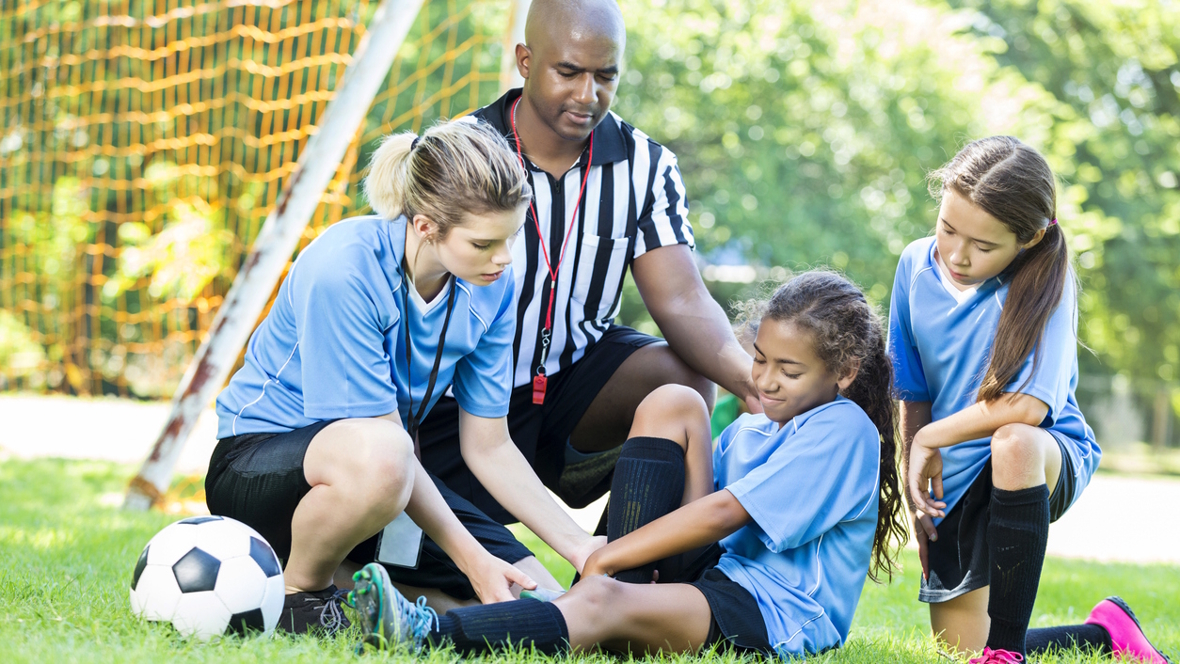

Editor’s note: This article was sponsored by the Western Washington Medical Group.
When a baby is born, new parents instinctively examine their baby’s toes. But as our kids grow older, we tend to pay a lot less attention to their feet. From playground games to competitive sports, young athletes put a lot of pressure on their feet — and too often, those feet are overlooked until an injury or chronic pain sidelines them. Fortunately, most of the time, preventing and treating foot and ankle sports injuries is very straightforward.
Foot and ankle injuries tend to fall into two categories: chronic injuries from overuse, and acute injuries caused by accidents. When injuries occur, medical care including patient education, orthotics, braces and supportive shoes can get young athletes back on their feet. In extreme cases, surgery may be required.
Overuse injuries
In older children and teens, overuse injuries resemble those in adults.
“Overuse injuries are mainly just that they’re doing too much of a particular activity, and they tend to get tendonitis or joint inflammation,” says Dr. Jeffrey Boggs, a podiatrist at Western Washington Medical Group, as well as a youth sports coach and dad to three daughters who all played Select soccer. “In an adult or an older teenager, you may think of the basic plantar fasciitis. In the younger population, and by younger, I mean usually under 11 or 12, growth plate injuries are very common, with kids complaining of heel pain or medial arch pain.”
Whether they complain of pain or not, younger children who start to limp at the beginning of practice or right after practicing could be experiencing growth plate inflammation.
Accident injuries
“I don’t think any one sport is more dangerous than the other. They all have their risks,” says Dr. Boggs. Whether a child plays basketball, soccer, football or just about any other sport, those risks often involve the foot and ankle.
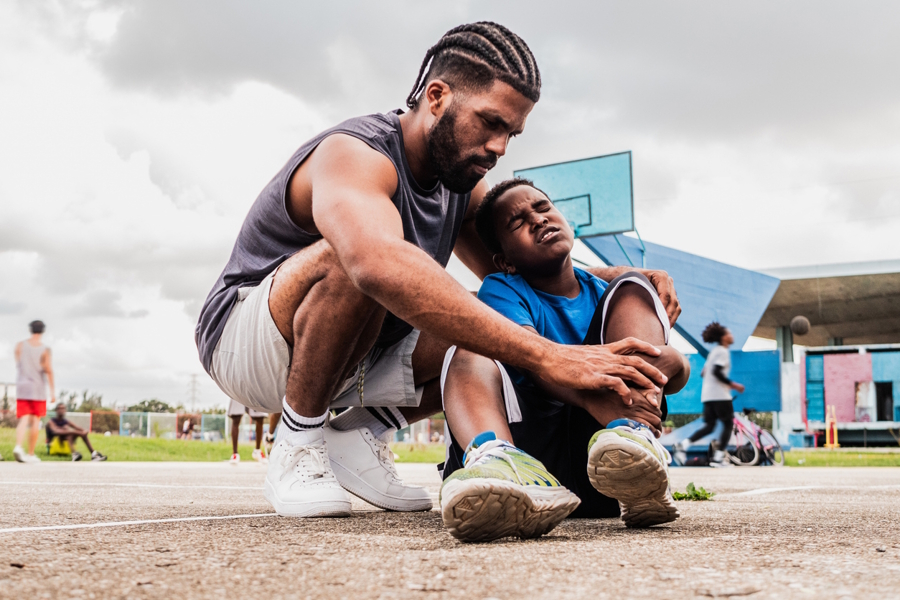
“Anytime you have kids competing in a close space, and their concentration is on the ball, you’re going to get twisted feet, twisted ankles, twisted knees. That’s kind of how it kind of how it goes. Injuries can happen at all age groups but are more common in the older kids because they’re more aggressive. The specific injuries are usually sprains and fractures. Most of those are inversion or rolling the foot or ankle inward.”
When such injuries occur, even if they seem mild, they should be evaluated by a doctor for signs of fracture or dislocation.
Injury prevention
In some ways, youth sports have gotten safer. Dr. Boggs says turf surfaces today are much better than the ones kids played on 15 years ago, and it’s rare now for kids to play on concrete. Whatever surface they play on, parents can help reduce the risk of sports injury before their child steps onto the field or court.
“Injury prevention always starts with proper shoe gear,” he says. Make sure that your children have the proper shoe for their sport; that the shoe fits correctly; and that their shoes are in good condition. That doesn’t mean that every child needs brand new shoes every season. As the father of three soccer players, Dr. Boggs understands that “the tendency is to try and reuse equipment. But you have to be really careful doing that,” he says.
Most of the time, quality shoes are sufficient without any additional arch support. But if your child complains of tired or achy feet, “It’s always a good idea to have a professional look at them and evaluate it. But an inexpensive, over-the-counter arch support is also an option,” he says.
An often-overlooked consideration is socks.
“Make sure that they’re wearing an athletic sock,” recommends Dr. Boggs. Athletic socks made from multiblend fabric like cotton or wool with polyester will wick moisture away from the skin to help reduce blistering. Athletic socks also provide extra cushioning in high-impact areas like the heel and the forefoot. But he cautions that compression socks are not athletic socks.
“My opinion is anyone under 12 really doesn’t need compression socks and shouldn’t be wearing them.” Although a low compression of 10 mm HG or less is unlikely to be harmful, it’s hard to regulate pressure on small limbs, and too much pressure can reduce blood flow and even cause nerve compression. “I just don’t advocate compression socks for children. And I kind of doubt that they are helping older teenagers’ performance either,” he says.
But if compression socks are a questionable fad, stretching is every bit as important as it’s made out to be. Dr. Boggs says there are a lot of different approaches to stretching, and many coaches have strongly held opinions about, for example, the merits of passive versus dynamic stretching. From an injury prevention standpoint, though, parents don’t need to worry too much about the details. The key take away is, “It’s very important to have a structured warm-up activity to get the muscles warm and stretch out the tendons and ligaments.”
Treatment
Despite our best efforts, accidents and overuse injuries are common, and it’s important to take them seriously.
“If a kid’s saying, ‘My heel really hurts,’ and if there’s limping, they probably should be seen by a professional to evaluate it,” says Dr. Boggs. An X-ray will show whether there is a growth plate injury, which will determine the course of treatment. The most common growth plate injuries involve the heel, followed by the medial arch.
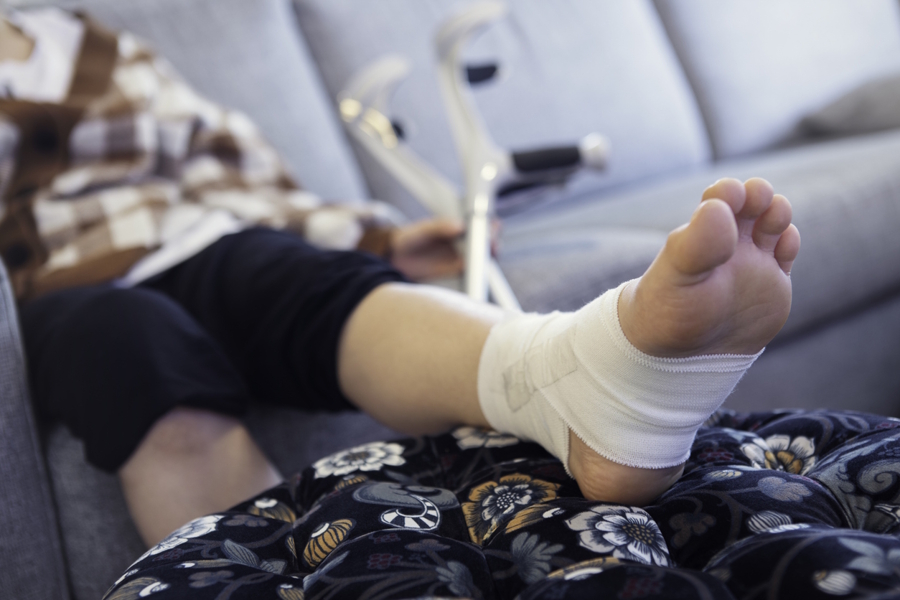
“Both of those are very treatable with just a little bit of rest and ice. Then getting the kids on a stretching program; stretching of the posterior muscle groups is very important and if you do that, kids have less pain and limp less. I usually am going to do a small arch support with a heel lift. That allows the kids to get back into their activity pretty much right away,” he says.
When an accident occurs, adults shouldn’t let a young athlete play through.
“I think any time there is a specific injury event, they should probably go to a walk-in clinic as soon as possible to get X-rays and make sure something is not broken. Treatment would really depend on the severity of the injury,” says Dr. Boggs, but fractures, dislocations and chronic pain all merit a consultation with a specialist.
Recovery
“Trying to get kids back into competition too soon is not going to do them any favors in the long run. They really need to heal properly before they go back. Once you’ve been injured, you’re more prone to re-injury because of the disruption of the connective tissues. And if you are constantly re-injuring a foot or ankle, it’s going to get exponentially worse over time. If kids are having pain with their activities, they need to give it time to rest. You can’t just push through it.”
If a child needs painkillers to be able to play, it’s probably a sign that they should remain on the bench.
“I know it happens but I’m not a big advocate of children taking painkillers so they can just keep playing. I think icing is fine, but if they are going to take some type of anti-inflammatory I would rather it be monitored by a pediatrician or specialist.”
Fractures require eight to 12 weeks away from the game for healing. Recovery times vary for different types of ligamentous tears and sprains but Dr. Boggs cautions, “The most important thing is not reinjuring the area.”
That’s why he usually requires patients to wear an ankle brace to protect the joint when they return to play. And parents should watch their recovering athlete closely.
“They should always be having fun. So, if a kid is in pain, take them out and let them rest. Don’t push them, just let the kids have fun.”