
 Seattle Family Calendar
 Subscribe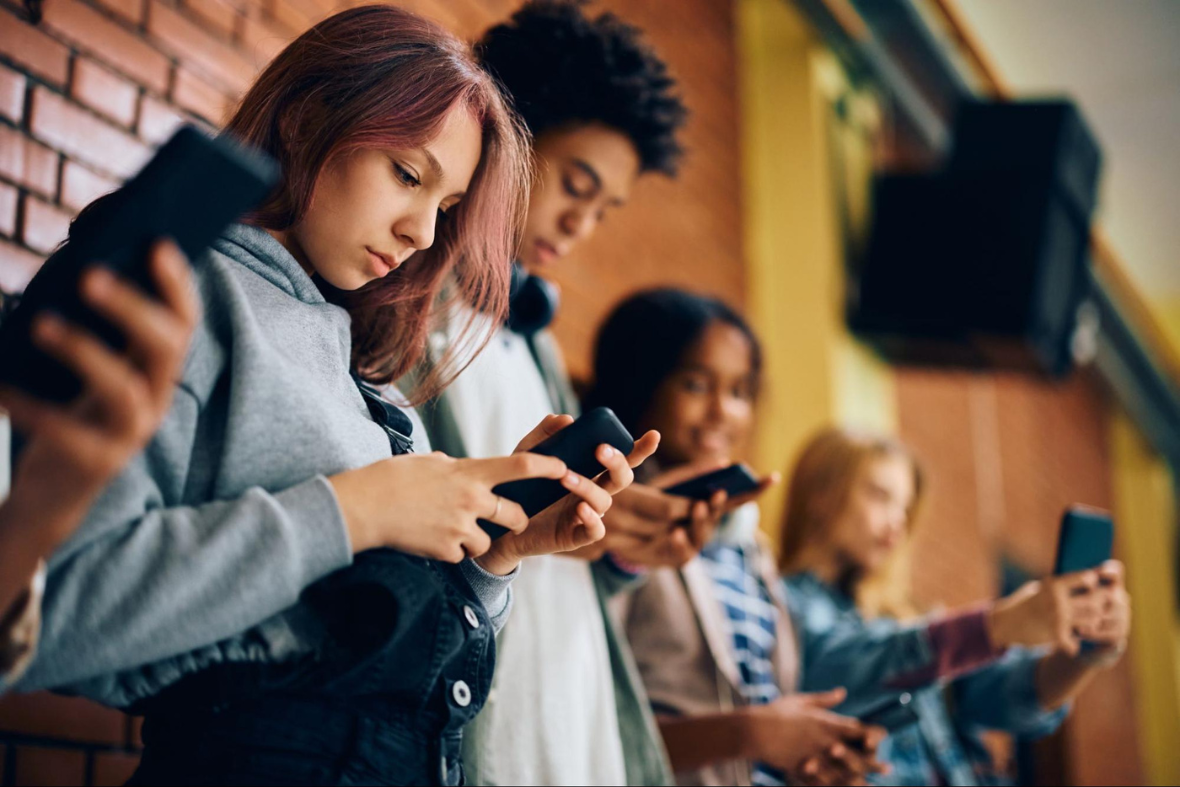

After two years of no progress on passing a statewide phone-free schools law in Washington, more than 400 parents, educators, health care professionals and concerned people across the state say enough is enough: Lawmakers need to pass a bell-to-bell phone-free and social-media-free schools law in the 2026 session.
Time is short and the more than 1 million K–12 students in Washington deserve this relief now. Each year we wait for a statewide law is another year that many students will fall behind academically and lose out on building closer in-person friendships.
People from across the state, including Camas, Longview, Ellensburg, Spokane, Medical Lake, the Methow Valley and the Puget Sound region, have sent a letter of support to lawmakers (you can sign on at the link) urging them to address the youth mental health crisis and prioritize academic learning and students’ social development by keeping phones and other digital distractions away for the day, from first bell to last bell, with exceptions for medical needs and IEP plans. They also urge the state to prohibit school districts from using social media platforms, which are known to be harmful and addictive, to communicate with kids.
Each year we wait for a statewide law is another year that many students will fall behind academically and lose out on building closer in-person friendships.
“Researchers are now describing a phenomenon called `brain drain’ in students. The manipulative design of smartphones and social media triggers automatic systems in our brain, which creates a persistent sense of urgency,” says Dr. Miranda Eiseman, DO, FACOG, board-certified OB/GYN, parent of three kids in Bellevue, and colead of the grassroots group Distraction-Free Schools Washington. “This drains away our precious cognitive resources, and it’s no wonder our students are distracted, have lower test scores and are suffering. Policies that only limit phone use during class time fall short and deprive students of crucial development in social-emotional learning and executive functioning. All-day policies restore these essential opportunities and promote the success of the whole child.”
Academic outcomes and mental health
Nearly half of Washington’s budget goes to K–12 education: $33.7 billion for the 2025–27 biennium. Passing a statewide bell-to-bell phone-free schools law is a way to improve academic outcomes, delivering a greater return on investment for state education dollars without costing the state extra money. A recent National Bureau of Economic Research study of Florida’s first-in-the-nation statewide cellphone policy found that test scores “improved significantly” in the second year after the policy was adopted.
“Our kids are falling behind in reading and math, and the evidence is clear. Smartphones are hurting focus, learning and mental health,” says Danica Noble, a parent of three children in Seattle Public Schools. “Washington needs a statewide solution so students can concentrate on school, not their screens.”
Adopting such a law is also crucial for protecting students’ mental health, providing them with six hours a day of relief from addictive platforms that deliberately sacrifice kids’ safety to fuel the bottom line. In his 2023 advisory, former U.S. Surgeon General Vivek Murthy said social media poses “a profound risk of harm to the mental health and well-being of children and adolescents.” He cited one study that among more than 10,000 14-year-olds, “greater social media use predicted poor sleep, online harassment, poor body image, low self-esteem and higher depressive symptom scores.”
The need in Washington is urgent. According to the most recent Healthy Youth Survey, about one-third of 12th graders in our state felt so sad or hopeless for two weeks or more in 2023 that they stopped doing their usual activities. Twenty-seven percent reported that they “sometimes” or “often” feel increased social anxiety due to internet use.
“This is digital opioids,” says Rao Talasila, who has worked in the tech and AI industry for more than 20 years and is the parent of a high schooler in Seattle. “These platforms are made to be addictive.”
Smartphones simply have no place in the hands of kids at school whatsoever.
The longer Washington waits, the more the state falls behind the rest of the country. Fifteen states, red and blue, have passed bell-to-bell phone-free schools legislation or instituted such policies, including Oregon, New Hampshire, New York, Vermont, Virginia and Arkansas. That means students turn in their phones and other personal electronics at the beginning of the school day and collect them at the end of the school day.
The science is increasingly clear that phones and other devices are robbing kids of their opportunity to learn. Research published earlier this year in JAMA Pediatrics by Dimitri Christakis, MD, MPH, of the Seattle Children’s Research Institute’s Center for Child Health, Behavior and Development and his colleagues found that “adolescents spent an average of 1.5 hours on smartphones during their 6.5 hours of school.”
“School district IT departments go to great lengths and expense to block websites with inappropriate, violent and obscene content on school laptops. And yet kids can bring their filterless smartphones to school and engage with this content during class, breaks and lunch,” says Meghan Kaul, parent of an elementary and middle schooler and Seattle lead for Mothers Against Media Addiction. “Additionally, kids spend hours a day during school on social media, which has become a substitute for, rather than a supplement of, live, face-to-face interaction. Letting kids hang out on social media has been proven to be profoundly dangerous. Smartphones simply have no place in the hands of kids at school whatsoever.”
State Superintendent Chris Reykdal challenged districts to restrict cell phones and smart devices by the start of the 2025–26 school year. But in the absence of a state law, districts have adopted a patchwork of policies restricting phones and some have no policy at all. This is inequitable and threatens to leave some kids in Washington without the opportunity to learn and socialize without the constant interference of digital distractions.
A real-world test case: McMurray Middle School
What kids are experiencing at McMurray Middle School on Vashon Island is what all students in Washington deserve. Math teacher Jenny Granum says she’s seen a clear link between fewer distractions and stronger learning overall since the school adopted a bell-to-bell phone-free schools policy. Students are more focused, patient and engaged — no longer pulled away by buzzing phones in backpacks.
She’s also noticed less social stress. “I used to have students come in upset because someone had taken their picture and posted it,” Granum says. “Now kids talk, support each other and help one another in ways I haven’t seen in years.”
Recently, the American Federation of Teachers, the National Education Association and more than 40 other organizations signed an open letter calling on all schools to enact bell-to-bell phone-free schools policies. Additionally, the National Association of School Resource Officers issued a statement in favor of bell-to-bell phone-free schools policies, saying that student phone use during an emergency makes them less safe because, among other reasons, it distracts them from following safety instructions and floods communications channels, confusing emergency responders.
It’s time for state lawmakers to do what’s right for Washington kids and pass a bell-to-bell phone-free and social-media-free schools law.
Distraction-Free Schools is an initiative led by Becca Schmill Foundation and Smartphone Free Childhood U.S.