
 Seattle Family Calendar
 Subscribe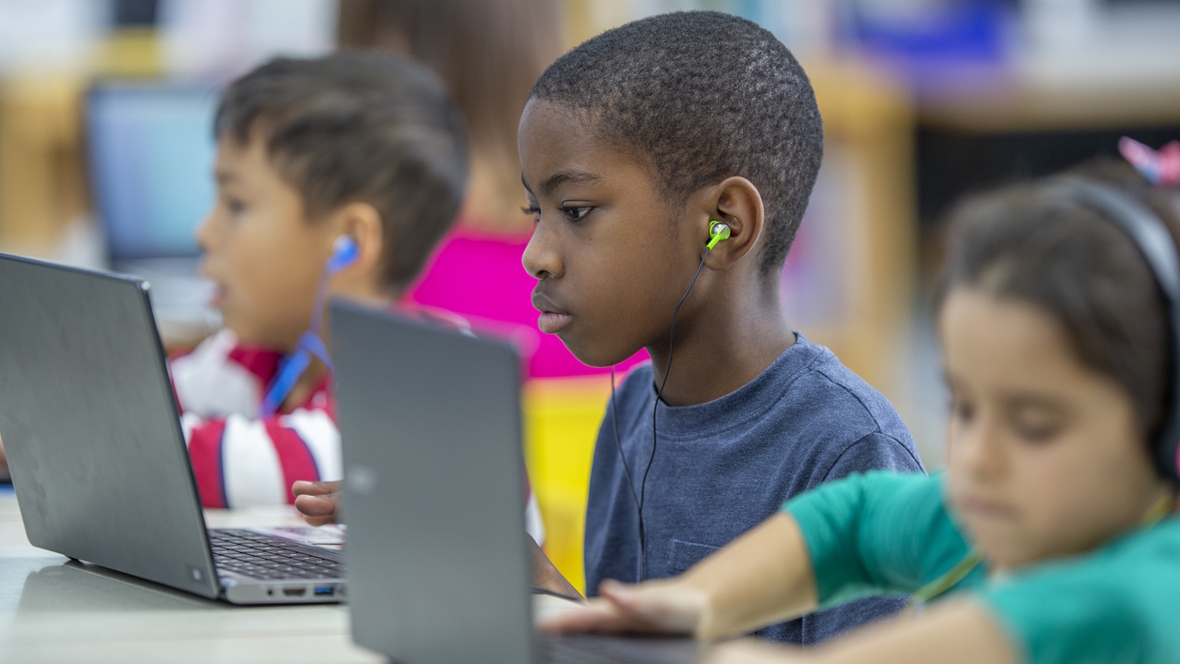

This is the first generation of children in history that are less cognitively capable than their parents. And despite near-universal access to internet-connected school devices, many are less digitally literate, too.
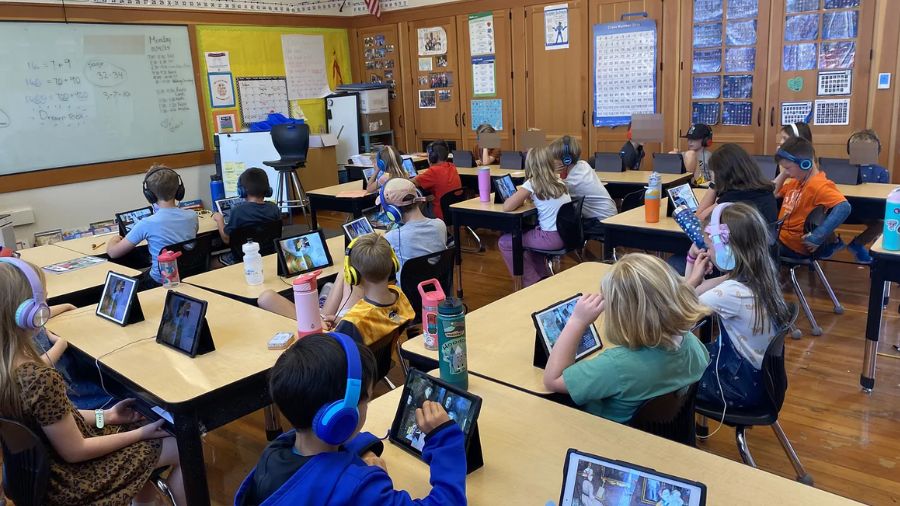
Elementary school children are falling out of their chairs in classrooms because they lack the core strength to sit for long periods of time. Four-year-olds are identifying the number 11 as the “pause” button. And this is what a typical second-grade classroom looks like: a room full of 7-year-olds with headphones and iPads:
These troubling classroom realities are increasingly prompting action. At least 35 states are considering or have already enacted phone-free school policies. Some states are passing laws protecting childhood independence and encouraging play. Social media companies are facing judges and juries in the courts. And parents are increasingly questioning the need for 1-to-1 internet-connected school-issued devices.
The energy and momentum feels tangibly different now than just a few short years ago.
In 2019, when I first testified before the Seattle School Board in opposition to their plan to adopt the all-digital K–8 Amplify Science curriculum, I felt very alone in expressing this opinion publicly. But today, most people acknowledge that giving children access to internet-connected products is harmful and unsafe.
I write a lot about education, childhood and screen use, and I’ve found myself in the middle of an effort to effect change. It’s a mantle I wear proudly, though I didn’t set out to do this; I just saw something and spoke up. As it turns out, speaking up on a topic can reveal how not alone you actually are — and how change really begins.
This dynamic is beautifully illustrated by the scientific study that looked at how schools of fish knew when to change direction. How is it possible that a group of several hundred fish can communicate with one another to turn left or right or swim up or down? It turns out that it requires one bold fish to initiate this change, but actually a second, third and even fourth fish to follow before the entire school shifts direction. One little fish venturing out alone won’t do it, but a few little fish following that first fish will change the momentum of the school. (Yes, a school.)
That’s where we stand today: The first fish tested the waters, and now others are following — and the school is beginning to turn.
While we’ve known anecdotally for many years that excessive screen time and internet connectivity present risks to children’s health and safety, high-quality research takes time to gather and publish. Research and data matter in helping prove what is harmful or beneficial, but we are now seeing the fruits of several years of effort confirm what concerned parents, educators and advocates have been witnessing and expressing for a long time: The internet isn’t a safe place for children, we are overprotecting them in the real world and woefully underprotecting them in the virtual one, and EdTech doesn’t improve learning outcomes.
Combined with this growing body of research, these voices can no longer be ignored. This is no longer about trying to prove that EdTech products are harmful; today, the burden rests on these companies to prove that they are not.
That is progress. That is a tide turned. That is a tipping point.
This moment didn’t happen overnight, but things feel fundamentally different to me today, in March 2026, than they have in the near decade I’ve been writing, speaking and testifying about children and screen use, and the momentum is only accelerating.
Here’s how I know we’re at a tipping point. In the past few days alone, several reporters and journalists have contacted me to ask about pencils and paper use in school, screen-based curricula adoptions and AI pilots in public schools. A recent NBC news story about parents opting out of EdTech included a link to my Unplug EdTech Toolkit, and I have seen nearly 2,000 new downloads. A few of my social media posts and Substack essays have been shared at much higher rates with more engagement than any previous posts or essays. Parents I’ve been coaching about opting their children out of the 1-to-1 devices are reporting that more parents are joining their efforts (second and third fish!). At one of the recent Seattle Schools listening sessions with the new superintendent, a parent stood up and said, “The EdTech business model is to extract profit from children’s attention, not to help them learn. It’s time to end the 1-to-1 device program” and the large audience in attendance burst into applause. At work, my husband was approached by a colleague who said, “I follow your wife’s work and I’m going to my child’s school tomorrow to tell them to get rid of the 1-to-1 devices.”
And that is just in the past few days.
When Australia passed its social media ban, it signaled to other countries (and politicians) that the concerns we are hearing about — the changes in our children’s experience of school and friendship, the degradation of skills due to computer-based “learning” in schools — are not just the fringe ideas of Luddites, but very real, very relevant social issues that warrant concerted, and I would argue immediate, attention, policy change and regulation.
All the WhatsApp text threads and Instagram reels, the whispered conversations at school pickup or PTA meetings, the increased sharing of articles about social media harms, the concerns about children accessing YouTube at school have been simmering for a while. Little first fish all over the world have been testing the waters to see: Is it safe? Should I swim? Will others follow?
Today, the answer is: Yes.
More resources on technology’s effect on kids and families:
Editor’s note: ParentMap publishes articles, op-eds and essays by people of all experiences and from all walks of life. The opinions expressed in their articles are their own and are not endorsed by ParentMap.