
 Seattle Family Calendar
 Subscribe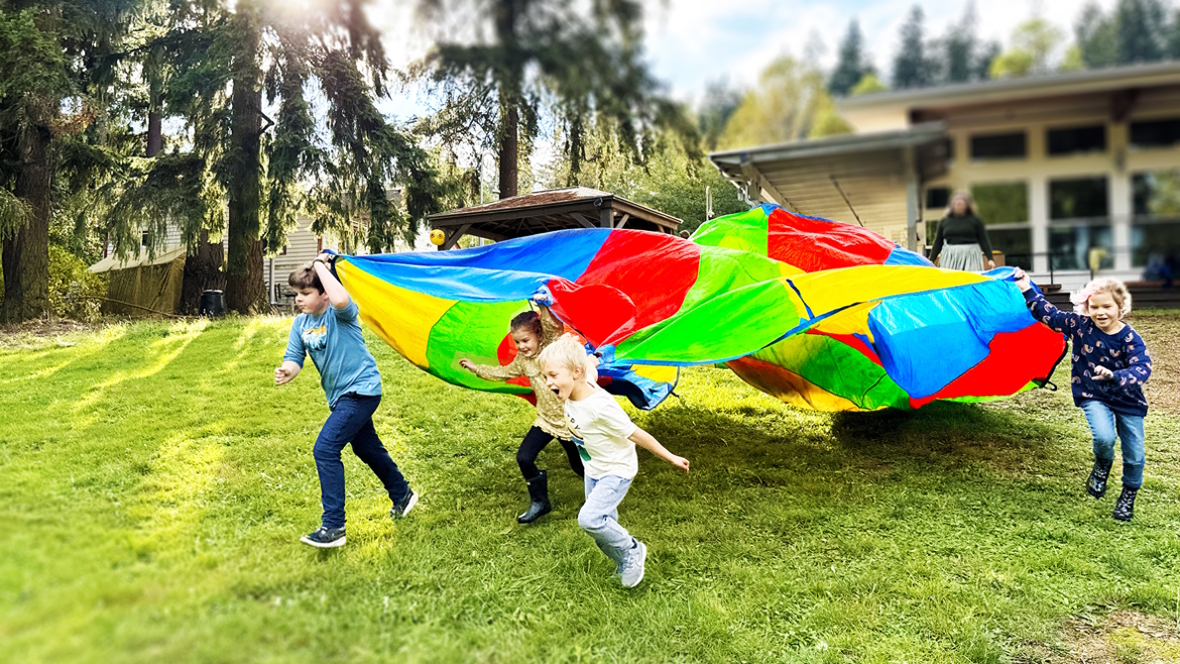

Editor’s note: This article was sponsored by The Attic Learning Community.
Recess is vital for little kids, but it turns out playtime isn’t something you outgrow. Unstructured breaks are just as important for teenagers whose schedules are often so crammed they barely have time to eat. At The Attic Learning Community in Woodinville, recess isn’t an afterthought. It’s central to how students of all ages learn, connect and grow together. The playground is a space where they learn to create an environment of respect, empathy and community.
The Attic Learning Community is a nonprofit, independent, K–12 school. Founded in 1999 as a support program for homeschooling families, The Attic’s learning philosophy centers on authentic experiences driven by natural curiosity. This year The Attic is offering full-time enrollment on its 5-acre campus for the first time. But the daily schedule, which reflects the importance of recess for all ages, is one thing they’re not changing as they expand.
Every day at The Attic, students have two 15-minute outdoor breaks and a full hour for lunch. All grade levels share the same break times and the same physical space: a big open field and small patio for basketball.
“The really magical part, especially of that hour-long block is that there’s time for kids to not just burn off energy, which is obviously important, but time for social interactions and problem-solving, for playing with ideas and all of those things that are so important for kids’ development. You know, we really believe that play is an essential component to learning,” says Sandi Wollum, executive director of The Attic.
All-ages recess is valuable
Even incidental interactions, like third graders racing through a chatting clump of teenagers during a game of tag, are valuable.
“Both of those communities have that kind of shared moment of, ‘We need to be considerate for other people, watch out for the little kids.’ And that I think creates this social learning of, ‘Me and people like me aren’t the center of the universe. There are other people who we have to care about and take care of,’” says Nick Satnik, an Attic alum who now teaches high school there.
That culture of care means that a first grader may not hesitate to ask to join the older kids’ basketball game and high school students play along in a game of pretend. Incidental or intentional, all these playtime interactions are valuable.
Shared recess might be a recipe for trouble at a larger school, but Satnik says, “I legitimately can’t think of a single case of bullying. One reason for that is that it’s very small, so everyone knows that anything you do, everyone else is going to learn about it.” Besides creating accountability, the small size means no one on the playground is an anonymous stranger. “It really is incredibly self-regulating simply by the fact that everyone cares about each other.”
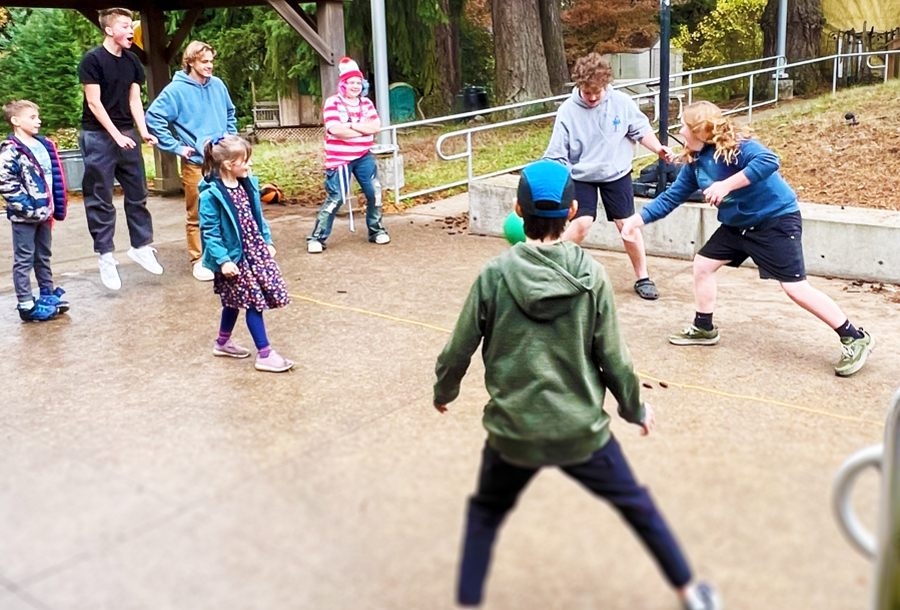
The school intentionally reinforces friendships across age groups in its programs and activities. Instead of adults planning separate holiday parties for each grade, student committees take the lead based on interest rather than age. “Last year I was the adult working with a group planning the party for Valentine’s Day. My planning committee was three 5-year-olds and an eighth grader, and we made it work,” says Wollum.
Students practice the social awareness developed in projects like these onto the playground.
“When it’s just the high school kids out there playing basketball, they’re playing like high school kids, and then you might see an eight- or nine-year-old walk in and join. There is no timeout, the kids naturally calibrate their play, dialing it back because of the size differences and the skill differences, but the rhythm of the game never stops,” says Wollum.
Responsibility and freedom
While older kids learn to be responsible towards younger ones, they also gain a type of freedom from their younger peers, who encourage unselfconscious playfulness in a world where teens often feel compelled to act “cool.”
“Keeping a sense of joy and wonder, being able to be young and enjoy yourself gives you a sense of self-worth. You aren’t just your grades or your paycheck,” says Satnik. “When you take people of high school age and crush the play out of them, they start to think that all their worth is producing things. Obviously, that’s not the best frame of mind to create a great member of society,” says Satnik.
Age appropriate
Wollum says it’s important to recognize that teens have needs that are separate from their relationship with younger students. So, they don’t always expect teens to adjust to younger students. They don’t have to play with the younger children at recess when they don’t want to, and everyone gets to pick their own uncensored interest project each year.
“In one group this year, we literally had a five-year-old doing a presentation on washing machines and a 12th grader doing a presentation on nihilism,” says Wollum. “There’s got to be a time and place to be teenagers. I think that a lot of schools, when they do multi-age things, think only in terms of the big kids being there for the sake of the little kids.”

Conflict resolution
Regardless of the ages involved, conflict is inevitable in human interactions. When that happens during recess, teachers step in to mediate.
“We’re not punishing people, and the point isn’t to stop people from getting into conflict. They are reminded that they’re still part of the same community and they still matter to each other,” says Satnik. “The world really needs people who are able to have disagreements and then come back together later and be okay. There’s so much intolerance in society today, I think it can be easy to forget that everyone is human, and everyone has things of value about them.”
Bringing recess home
For those of us whose kids spend their school days surrounded only by same-age classmates, it’s worth seeking out opportunities to develop authentic relationships across ages. Parents can try to spend more time with extended family and work to develop whole-family friendships, creating an all-ages group dynamic. Teens might need to adjust to the idea that being thrown together with younger kids is not unpaid babysitting. But Satnik says, “It is really astounding how good and wonderful people of all ages become, especially the high school age, when you trust them. They usually will take it up in a very responsible way.”
And if your teen only gets half an hour for lunch and no breaks during the school day, resist the urge to overschedule their afternoons and weekends. Sports and organized activities are valuable, but only to a point. Unstructured time is just as important to your teen’s development.
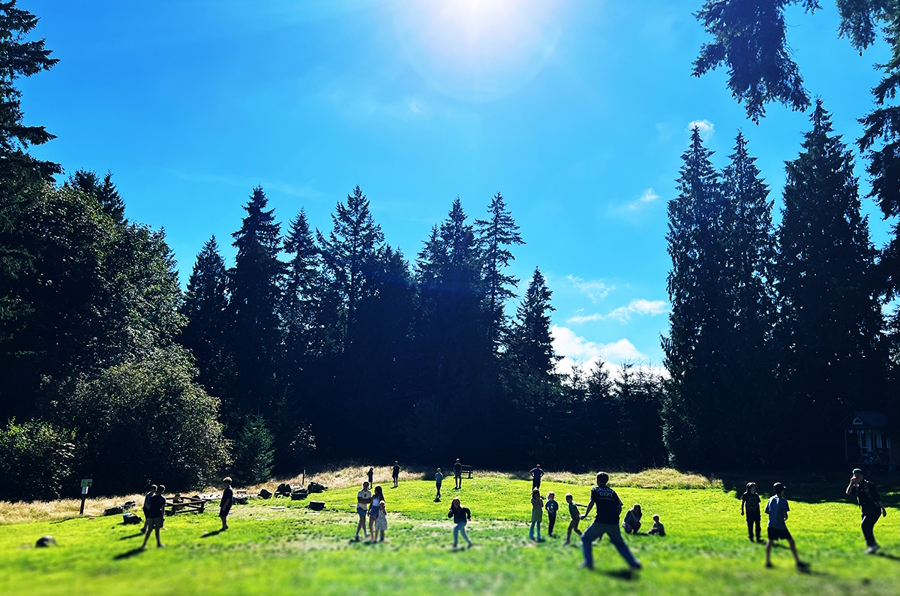
“I’m not talking about endless hours on a device. I’m talking about opportunities to get out in the world, go places or do things that give them the kind of time and space to be playful, to experiment, laugh, have fun. I think sometimes in our culture we get this idea that everything has to be managed, everything has to be structured, and have a purpose or predictable learning objective,” says Wollum.
Parents can create space for exploration by blocking out “free time” in the family calendar and facilitating opportunities for teens to simply hang out with their friends. Although Satnik admits you might face resistance from your teen at first, he says, “Probably the number one way to bring play into your kid’s life is to take family outings.” Go someplace new, try a new activity, or simply leave the phones at home and spend an afternoon together at the park. You might discover that parents benefit as much from recess as teens do.
Sponsored by: