 Seattle Family Calendar
 Subscribe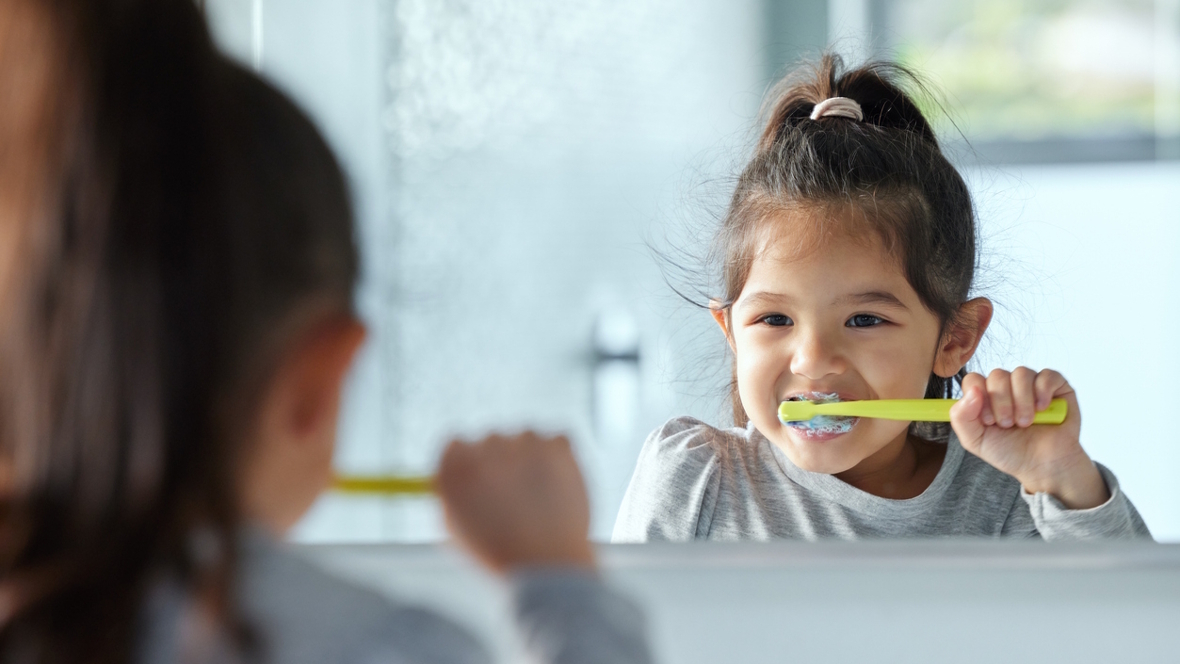

Recently, my son swapped his braces for retainers. While he was thrilled, I foresaw a long stretch of nagging: constant reminders to put them in before bed, to wear them after meals, to keep track of the tiny plastic case, to clean them properly, to not leave them on a napkin at a restaurant.
A few days after he got them, I knocked on his bedroom door, a lecture ready on my lips. I paused. Solving this problem for him would steal his agency. Instead, we talked.
He wanted three days to build a system. He was well-versed in the habit ladder we use as a family and I use with my clients, so he proposed a plan: start with a micro-goal — like wearing them just at night; pair it with a rock-solid cue — placing the case on his pillow; set his own pace for adding more hours; and use quick feedback and reflection — checking in each morning to determine how it went. I agreed with his plan.
Truthfully, I was thrilled. If he figured it out, it would be a huge win.
With back-to-school season looming, it’s the perfect moment to reflect and ask a bigger question: How can parents foster the same personal ownership with kids of every age?
Routines aren’t just about making life easier for parents. They’re a training ground for kids, too. Each time children take responsibility, whether it’s unpacking a backpack or brushing teeth without a reminder, they’re strengthening skills that will serve them long past childhood. Parents, in turn, get a reprieve from constant reminders, shifting the household dynamic from nagging to shared responsibility.
But every year, parents spring into action — making lists, charts, chore systems — only to see our efforts fizzle. Just a few weeks into the school year, backpacks remain unpacked, teeth go unbrushed and everyone’s frustrated.
Why do new habits so often fail?
There are several reasons:
- The goals are often too big. While brushing teeth might feel like a small goal, an even smaller goal for kids is meeting parents in the bathroom at 7 p.m. every night without reminders.
- We don’t make the new goal fun. Sometimes there is nothing fun about brushing teeth. But racing to the bathroom by 7 p.m. and having a clear winner who collects points toward a prize is fun.
- The habit floats in space. For kids, a habit without an anchor is easy to forget or skip because they don’t naturally track time. Tether a new habit to a rock-solid cue, such as an alarm going off, turning a TV off or putting pajamas on. That’s tricky if your evenings are already chaotic, or if fatigue wipes out cues.
Our family’s retainer problem is the perfect example of a hard-to-build habit. It felt like one of those hard-to-make habits because my son had to pop his retainers in and out all day. How could he ever remember? I thought he never would, but he came up with his own playbook.
To start, he associated the new habit with his existing routine, in which he obsessively checks for his wallet, earbuds and phone before leaving any space. Now he keeps the case in the same pocket as those items, adding it to his routine check. If the case rattles, he realizes his retainers are not in. If the case is not there, he knows to check his surroundings.
Next, he set a tiny goal. His only job during the first week was to remember to wear them 50 percent of the day (an average of 5 out of 10 times). That was an easy day-one win and, more importantly, gave him proof he could succeed. If he reached a five at the end of his workday, he treated himself to a hard candy, something he could not have with braces.
Each day, he kept score informally. After one week, he checked his progress. Then he chose between two options: stay steady for another week or increase the target by one point. He chose the increase — aiming for a 6-in-10 average — because the goal felt close and the reward (candy) felt real. After two solid weeks succeeding at that level he nudged himself to nine out of 10. Because this was a self-imposed goal, he wanted to succeed. He didn’t want to waste the 18 months he had spent in braces.
Now we hardly mention the retainer: The pocket-check provided the cue, the scorecard delivered instant feedback and the incremental ramp-up kept motivation flowing without a power struggle.
Key steps to building a successful habit:
- Start with a micro-goal that feels achievable.
- Link the new habit to an existing routine or cue.
- Let your child participate in setting the pace and tracking progress.
- Use immediate feedback and small, meaningful rewards.
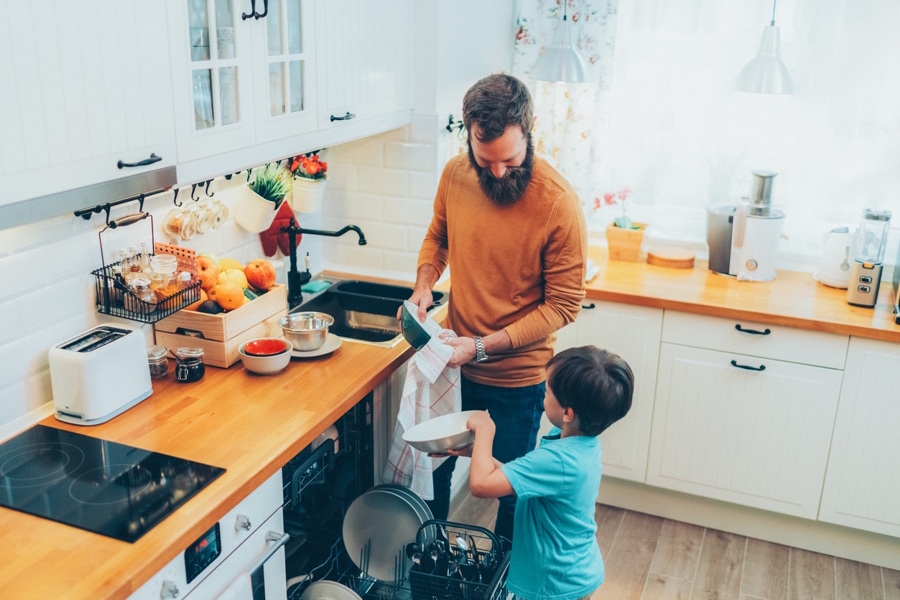
Habit-building strategies by age group
Ages 3–5: The Plate Parade
A playful family I know streamed a marching song on their smart speaker every night right after dinner. Their preschooler loved it so much they turned cleanup into a daily “plate parade,” realizing they could use this cue to lock in the habit they had been trying to build. Two weeks later, she was asking for the song, and the habit had taken hold.
- Choose the cue. Use music or mini-drawing right at eye level on the chair back.
- Set the mini-goal. Shoot for seven parade laps out of 10 meals this week.
- Let them level up. Did they hit the target? If so, your child decides: stay at seven for more practice or aim for eight next week.
- Sweeten the deal. Two victorious weeks unlock a prize they pick: an extra scoop of fruit, the power to pick the dinner music, whatever feels special.
Ages 6–10: Dinner Diva Duty
Make a chore into playtime or theatrics for a child who still enjoys make-believe but won’t admit it. When the kitchen timer belts out its ding! the Dinner Diva steps onto the stage. A placemat becomes the stage, forks and cups line up like backup dancers and your smart speaker or child can provide the set list.
- Choose the cue. Timer ding — that’s the diva’s curtain call.
- Just for fun, rate the performance. Using a scale of 1–10 (where 10 is a flawless set and 1 is missed the show), give your child some fun feedback.
- Set the goal. Average four nights of setting the table without an extra reminder. When the goal is met, decide to rehearse one more week or aim for five nights next week.
- Round of applause. Two star-quality weeks earn a perk of the diva’s choice: maybe headlining Friday’s take-out pick or choosing the dinner playlist.
Ages 9–12: DIY Deli Boss
A friend’s son built his lunch routine step-by-step. First he prepped the sandwich nightly. Then he gradually added more items, until he was packing a full lunch without reminders. This is an ideal age for habit-building because children’s executive functions, such as planning, sequencing and working memory, are strengthening, making it possible to take on multi-step routines with less parental prompting.
- Week 1: The night before school, lay out the lunchbox and ingredients; your child adds just one item (i.e., the sandwich) each evening until a five-night streak is solid.
- Week 2: Keep a simple checklist on the counter and have your child pack the sandwich plus one extra item (fruit or snack) while you give a quick reminder; after five smooth nights, let them choose to repeat or move up.
- Week 3: Drop the verbal reminder but keep the checklist; your child now packs the full lunch — sandwich, fruit, snack and water — nightly. After two clean weeks they earn Friday “chef’s choice” (they pick a special treat to add).
- Week 4 and beyond: Retire the checklist so the cue becomes placing the lunchbox on the counter after dinner. Once ten nights run flawlessly without prompts, making lunch is officially on autopilot.
Ages 13–18: Sleep-Mode Maestro
One teen I work with negotiated a deal with her parents to reduce bedtime screentime nagging: after docking her phone before bedtime for ten nights, she earned a weekend sleep-in pass. By month’s end, device shutdown was automatic and her grades improved with better sleep. Here’s how she did it.
- Week 1: Set a phone alarm for 10 minutes before lights out and add a verbal “screens off” reminder. Dock the device every night until you hit a five-night streak.
- Week 2: Keep the 10-minute alarm but drop the verbal cue. When five more nights go smoothly, let your child decide whether to repeat the week or level up to more time off the screen before bed. Be careful as you add time; be sure to troubleshoot by having other activities cued up to occupy your screen-o-phile before bed.
- Week 3 and beyond: Keep adding five minutes to the alarm to get your teen off the screen at the time you wish before bed.
Practice, play, repeat: How habits take root in the brain
Whatever goal you pick, keep it fun and realistic. Biologically speaking, habits grow when the brain rewires itself through repetition — strengthening synapses and adding a fresh coat of myelin to the neural route so signals travel with less friction. Both intrinsic joy and small incentives can play a role in helping to build those new brain patterns. When a habit is new, the “spark” often comes from a small, tangible incentive: a sticker on a chart, 10 minutes of game time, a goofy family badge for being the Laundry Legend. That external boost buys enough repetitions for the brain to start wiring in its own payoff: the pride of independence, the relief of a smoother morning, the thrill of competence. Think of the sticker as training wheels; once the ride feels fun, kids pedal for the wind in their face, not the sticker. Even adults need roughly 30–60 focused reps to make a habit routine, so the more painless (and playful) we make those reps, the likelier they are to stick.
Keep it easy and fun for yourself, too. Promise only incentives you’re happy to deliver and use trackers you can update in 30 seconds — otherwise your new habit of gradually releasing responsibility to your child will fizzle before your child gains independence.
When the habit isn’t sticking, run this 3-step scan
- Shrink the task. If “pack the backpack” flops, start with gathering it all on the table or by the door. Celebrate that micro-win for a week, then add the next piece, unzipping the bag and stuffing it all in.
- Check timing and state of being. Tired or hungry brains balk. Shift the routine to a fresher slot (post-snack, not pre-bed) and pair it with a calming cue such as music, or stowing the snack plate in the sink.
- Find the snag. Ask, “What’s the hardest part?” Fix only that. If putting the shoes in the entryway feels too hard, move the shoe rack next to the couch for one week. By removing a single point of friction (distance), the routine could click without overhauling anything else.
Red-flag signals: When simple scaffolds aren’t enough
Most kids balk at chores now and then. But consider a deeper look if your child:
- Consistently forgets multi-step tasks even after weeks of practice and visual aids.
- Melts down or shuts down whenever a routine changes or a timer beeps.
- Avoids basic self-care far beyond age norms (e.g., a ten-year-old who can’t dress or pack without hands-on help).
These patterns can point to executive-function delays or learning differences. The first step is to document what you see. Jot specific examples — how often, which tasks, what triggers overwhelm. Then, talk to your child’s teacher, counselor or pediatrician to get another perspective. School faculty can share classroom observations and suggest school supports. Pediatricians can help you decide if an executive-function evaluation makes sense. Lastly, frame any outside help as teamwork. Tell your child, “We’re going to find tools that fit you, just like new shoes fit your feet.”
Final thoughts
Routines don’t happen overnight. Start with a single micro-goal and anchor it to an existing cue. Add a bit of fun. This way, your child feels empowered to steer the ramp-up and own their success. When the system wobbles, you can scale back, shift the timing or debug the toughest step first. And if after those fixes it still doesn’t stick, trust your instincts and seek extra support because early insight beats endless frustration. Coach patiently and remember you’re not just growing habits, you’re growing a young brain that can build its own habits long after you’re out of sight. That’s the real payoff, and it’s worth every sticker, timer beep and high-five along the way.