
 Seattle Family Calendar
 Subscribe

Announcements this week by the Trump administration that it would only partially fund food assistance benefits this month has many local families families struggling to afford groceries. You can help.
Nearly 1 million Washington residents rely on SNAP, and local food banks are experiencing surging demand as more families turn to them for help meeting their basic needs. There are real ways your family can make a difference by giving money, food or time. Every dollar, every can and every hour of your help directly supports families in your community, and shows your kids what it means to care for others.
Donate money
Food banks make it clear: The best way to help is to give money. Cash donations allow them to buy exactly what’s needed often at wholesale prices, and respond quickly as needs change. You can make a one-time or recurring gift for any amount directly through their websites.
Donate food
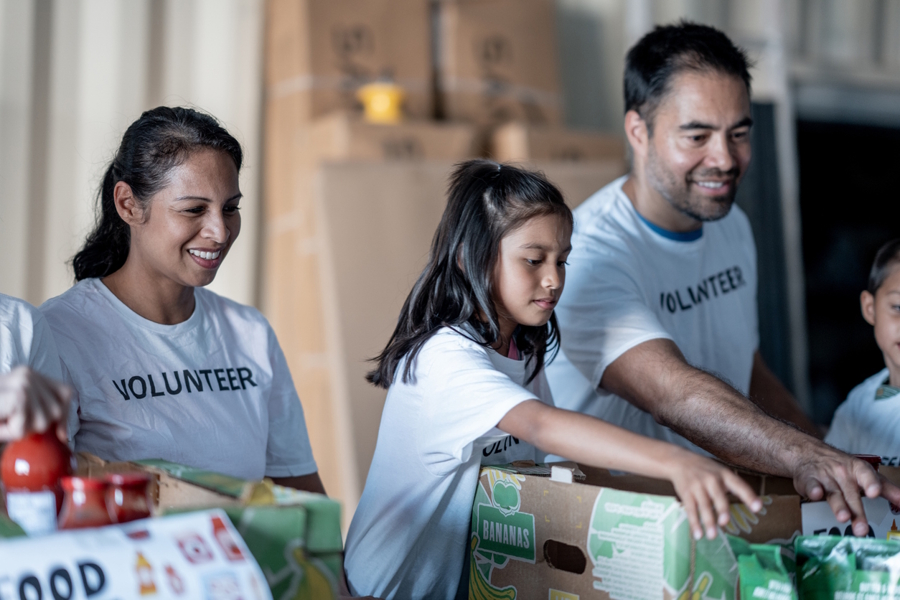
If you’d like to get your kids or community involved, consider organizing a food drive with your school, sports team or neighborhood group. Many food banks offer materials and guidance for running a successful drive.
- What to donate: Unopened, non-perishable food in good condition, plus hygiene items, diapers and pet supplies.
- What not to donate: Home-prepared foods; opened packages; expired, unlabeled or rusted cans; meat that has been stored in a home refrigerator or freezer; or backyard eggs.
- Most-needed items:
- Peanut butter
- Canned chicken or tuna
- Chili, soups, stews
- Box meals such as Hamburger Helper, Pasta Roni or Rice-A-Roni
- Cereal and oatmeal
- Pasta and pasta sauce
- White rice
- Gluten-free items of all kinds
- Ensure and protein bars
- Canned fruits and vegetables
- Individual snacks
- Pancake mix (regular and gluten free)
- Cooking oil (16–20 ounce bottles)
- Ground coffee
- Diapers, baby wipes and menstrual pads
- Toilet paper and hygiene items
- Dog and cat food
Donate time
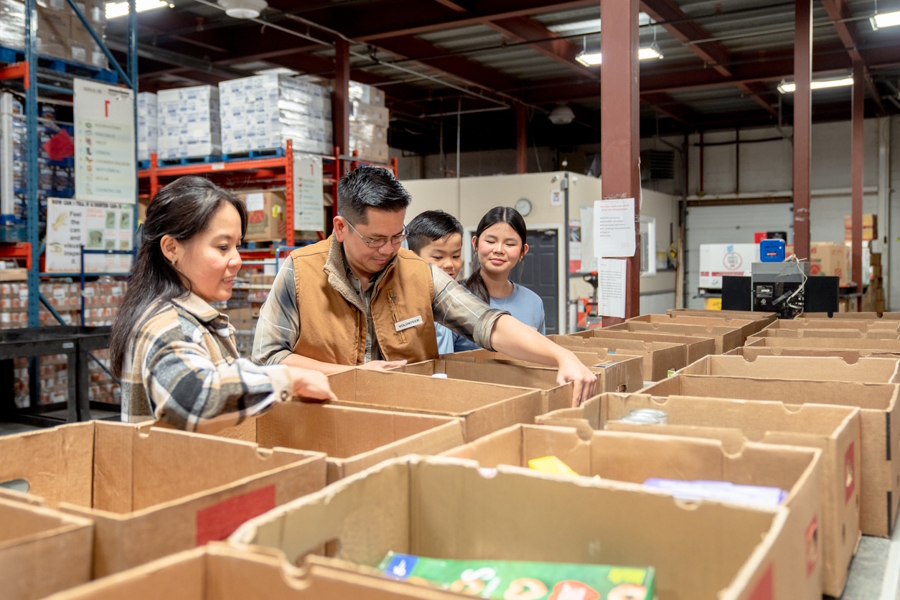
Many food banks need volunteers to sort and package donated food for easy distribution. Shifts usually last a few hours and can be done solo, with family or as a group; information is on each food bank’s website.
Note that many locations have age minimums (often 14 and older), but Food Lifeline welcomes volunteers as young as 10 years old with a parent. Expect to be on your feet and moving, sometimes in refrigerated areas, so wear comfortable shoes and a sweater.
Where to donate food
Here’s a partial list of where and how to donate food to help local families in need:
Auburn Food Bank
Donation location: 2804 Auburn Way N., Auburn
Donation times: Monday–Friday, 8 a.m.–3 p.m. Weekend donations can be arranged; call 253-833-8925
Fall City Community Food Pantry
Donation locations and times:
- Farmhouse Market, 33521 S.E. Redmond Fall City Rd., Fall City. Donate 7 a.m.–8 p.m., daily
- Hauglie Insurance Professional Building, 33410 S.E. Redmond-Fall City Rd., Fall City. Donate Monday–Friday, 8:30 a.m.–5:30 p.m.
Food Lifeline
Volunteer location: 815 S. 96th St., Seattle
Volunteers (ages 10 and older) help sort and repackage food donations. They also welcome shelf-stable food donations, diapers and baby formula.
Hopelink
Donation location: Any Hopelink location: Kirkland, Carnation, Shoreline, Redmond and Bellevue
Donation times: Contact Hopelink for up-to-date donation drop-off hours: drives@hopelink.org or 425-869-2440
Other resources: Hopelink has a guide for organizing a food drive and a list of most-needed items.
Issaquah Food and Clothing Bank
Donation location: Drop at their off-site warehouse, 930 7th Ave. N.W., Issaquah
Donation times: Nov. 6, 10, 20 and 24, 1–3:30 p.m.
Maple Valley Food Bank
Donation location: 21415 Renton Maple Valley Rd. S.E., Maple Valley
Donation times: Tuesdays, 10:30 a.m.–6 p.m.; Wednesdays, 10:30 a.m.–1 p.m., or by appointment
Rainier Valley Food Bank
Donation location: 9021 Rainier Ave. S., Seattle
Donation times: Tuesday–Friday, 10 a.m.–2 p.m.
Other resources: The “Food, Fund and Item Drive Kit” provides guidelines for individuals or groups interested in organizing a drive to collect food, funds or other essential items for the food bank.
Tukwila Pantry
Donation location: Behind Riverton Park United Methodist Church, 3118 S. 140th St., Tukwila
Donation times: Monday, Wednesday and Friday, 8 a.m.–2 p.m.
West Seattle Food Bank
Donation location: 3419 S.W. Morgan St., Seattle
Donation times: Monday–Friday, 9 a.m.–3 p.m.; Wednesdays, 9 a.m.–7 p.m.
Every bit helps
Whether you give $5, a few cans of food or an afternoon of time, your contribution can help keep families stay fed through the months ahead.