 Seattle Family Calendar
 Subscribe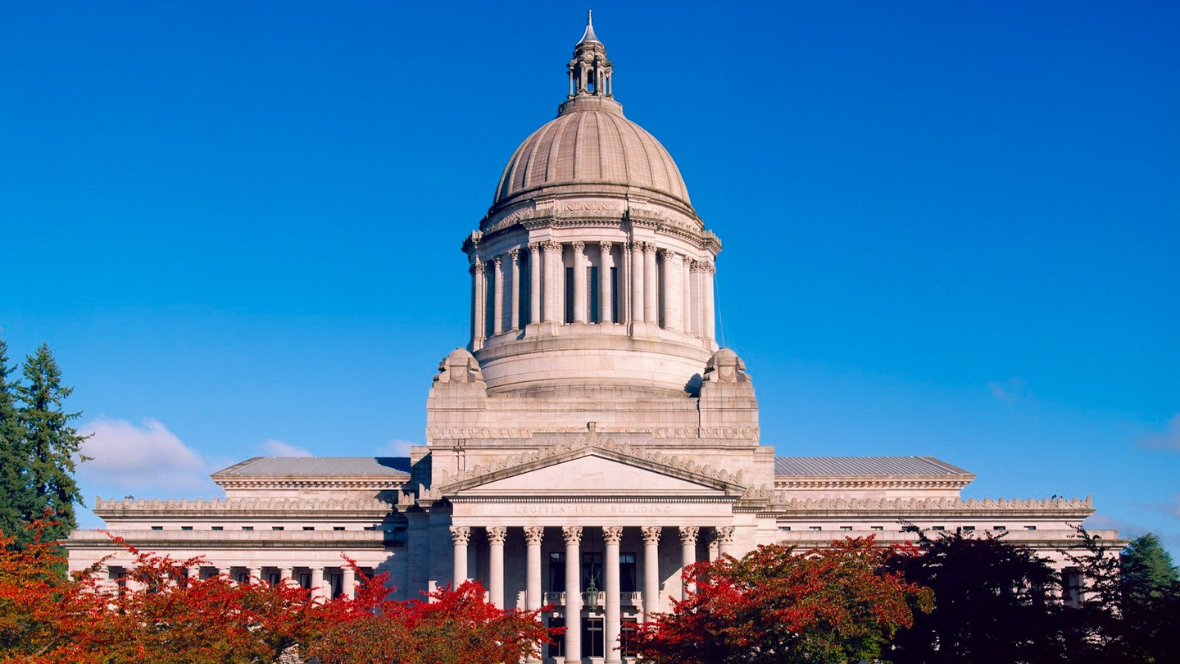

The next Washington state legislative session includes bills that could shape life for families across the state. As lawmakers convene in Olympia, they’ll tackle issues ranging from online safety to worker protections and funding for things like early education and child care. Our preview of the session — how it works, and important bills to watch — can help parents track and understand how new legislation could impact their family. In 2026, the legislative session will open on Jan. 12 and conclude on March 12.
What is the legislative session?
The legislative session in Washington state serves several key purposes:
- Introduction and consideration of bills: Legislators introduce and consider new bills, amendments and resolutions. Legislators propose new laws and revise existing ones, covering a broad range of issues from education to health care, the environment and public safety.
- Budget adjustments: In odd-numbered years, Washington’s legislature passes a biennial (two-year) budget during a 105-day session. In even-numbered years, the legislature holds a shorter, 60-day session, often focused on supplemental budgets to address unforeseen needs or adjusting allocations based on economic forecasts and revenue changes.
- Review and oversight: Legislators use the session to review the implementation of existing laws, evaluate state agency performance and address ongoing issues that require legislative oversight.
- Public hearings and stakeholder engagement: Committees hold public hearings on proposed legislation where citizens, organizations and lobbyists can testify. This period allows legislators to gather input from diverse perspectives, which can influence the outcome of bills.
- Setting priorities for the state: Legislators address pressing issues facing the state, such as housing, transportation, climate change and public health. The session often sets the agenda for the year and highlights priority areas.
2026 bills that impact kids and families
HB 1834 – 2025-26 (SB 5708)
Protecting Washington children online.
This bill, which died in committee in 2025, is expected to be introduced again during the upcoming session. As written last year, the bill would have required any online business to apply privacy and data protection measures to all users identified as minors, or if minors are not identified, to all users.
HB 2105 – 2025-26 (SB 5852)
Concerning immigrant worker protections.
In Washington state, 29 percent of children younger than 6 years old have immigrant parents. Based on findings that form I-9 audits (aka ICE raids at worksites) are disruptive to families, reduce community safety and are ineffective at deterring illegal conduct by employers or raising standards for workers, this bill would require employers to provide advance notice of inspections to workers, and to post information on how to access immigrant and refugee rights support.
HB 2112 – 2025-26
Establishing an age minimum to access certain adult content online.
This bill would require any business that publishes sexually explicit material on a website or social media platform to implement age verification methods and access restrictions requiring that viewers be older than 18 years old. If passed, the bill would be enforced through civil legal action from the state attorney general with fines up to $10,000 per day.
A public hearing on this bill has been scheduled. The Consumer Protection & Business Committee will hear testimony in House Hearing Room B of the John L. O’Brien Building on Friday, Jan. 16, at 8 a.m.
HB 2119 – 2025-26
Moving Washington state to permanent standard time.
Anyone who has tried to get kids to school an hour earlier in the spring and tried moving bedtime an hour earlier in the fall knows why this bill matters to families. In 2019, Washington passed a law to stay on Daylight Saving Time (DST) permanently. However, that change cannot be implemented without federal Congressional action. This bill would eliminate DST completely in favor of year-round Standard Time, which is already allowed by Congress (as seen in Arizona and Hawaii) and therefore enabling Washington to “Ditch the Switch” immediately.
HB 2138 – 2025-26
Improving student performance and success.
Although many surveys rank Washington’s education system highly, test scores have not returned to prepandemic levels and the state has a history of criminally underfunding schools. This bill aims to improve the state’s education system by: requiring students to meet literacy standards before progressing to fourth grade, hiring reading coaches, adopting “a structured literacy program,” updating teacher endorsement standards for literacy, and reviewing the state’s math standards in comparison to the Singapore math curriculum standards.
HB 2159 – 2025-26 (SB 5872)
Establishing the pre-K promise account.
The Preschool Promise Program is a publicly funded preschool program that serves 3- and 4-year-old children from families living at or below 200 percent of the Federal Poverty Level, children in foster care and children from other historically underserved populations. This bill would establish a dedicated account managed by the state treasurer for the Preschool Promise Program. The program’s account will be added to the list of education programs receiving trust fund investment earnings and any money remaining in the account at the end of each biennium would be preserved for the program instead of returning to the general fund.
HB 2187 – 2025-26
Supporting employers providing child care assistance to employees by establishing a business and occupation and public utility tax credit.
A recent report that found Washington state has some of the highest child care costs in the nation comes as no surprise to local parents. This bill would establish a 5-year pilot program to incentivize employer-supported child care. The program is limited to employers with fewer than 100 full-time employees and employers who participate in a child-care consortium. Employers will receive a tax credit for 50 percent of the amount they pay to a registered child-care provider for the care of dependents of their employees.
HB 2197 – 2025-26
Designating English as the official language of the state.
One in five Washington residents speaks a language other than English at home. Washington state agencies such as DSHS, Dept. of Revenue and Healthplanfinder currently provide translated documents and services in Spanish, Chinese, Russian, Vietnamese, Korean and other languages to provide vital information to these residents. In designating English as the official language of the state, this bill would not explicitly forbid these publications and services, but it would require that all public meetings and public records would be in English, even where the target population is not English-speaking.
Proposed initiative that impacts kids and families
Initiative 638
Relating to defending equity in interscholastic sports.
To protect “the integrity and fairness of women’s interscholastic sports” this initiative would ban transfeminine children from participating in girls’ sports.
However, a report in the Journal of the Endocrine Society indicates that transgender girls have no athletic advantage prior to puberty or while receiving hormone treatment, and there is no conclusive evidence that the perceived advantage under other circumstances is real. Rather than defending equity, by discouraging trans children from participation in organized sports, this initiative may be in violation of Title IX, which prohibits sex-based discrimination in sports.
Editor’s note: Kristin Leong contributed to this article.