 Seattle Family Calendar
 Subscribe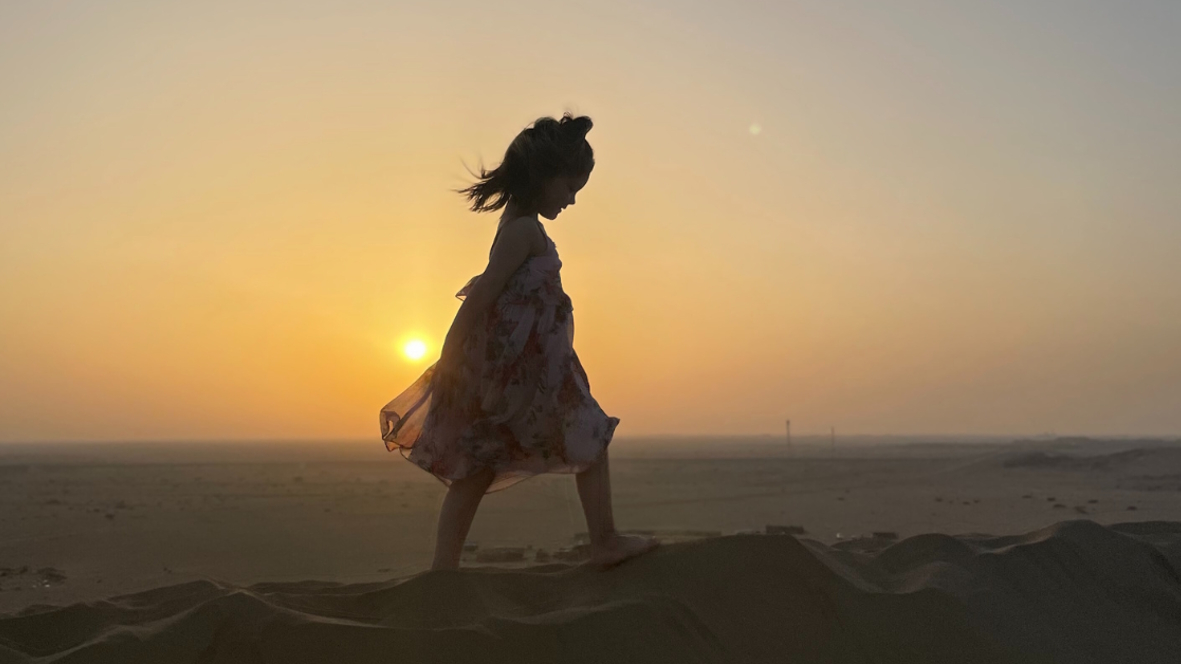

“A House for Hermit Crab” by Eric Carle might already be sitting on a shelf in your house, and if not, it’s almost certainly at your local library. In it, a hermit crab outgrows his shell and sets off across the ocean to find a new one. Once he does, he begins to decorate it, meeting other sea creatures who add beauty, protection and light along the way. Over time, the shell becomes more than a shelter; it becomes a record of where he’s been and who helped him along his journey. Eventually, he outgrows that shell too, leaving it behind for another crab, and moves on, carrying what he’s learned into the next season of his life.
I couldn’t think of a more fitting metaphor for my own life. I grew up a homebody, more comfortable tucked away than adventuring and exploring. But once my shell started to feel too small, I began a life shaped by movement. I’ve lived on three continents — in high-rise apartments, old craftsman homes and now, a gated compound on the Red Sea. Each place has asked something different of me and left something behind in return. Of all the shells I’ve lived in, this one — our life in Saudi Arabia — has surprised me the most.
Living and parenting here has changed how I choose community, how I model curiosity and humility and how I hold both attachment and letting go at the same time.
Warm breezes in January. Cloudless deep blue skies and palm-lined streets. Neighbors waving from golf carts. The melodic call to prayer drifting through the air at dawn. These are the sights and sounds I struggle most to describe to my family back in the Pacific Northwest — and even harder to explain how differently I now understand the word home.
Home is community
It has been three and a half years since my husband and I moved here with our daughter. We weren’t new to life abroad, and returning to it felt like the natural thing to do for our family. After nearly a decade of building our lives and raising children within systems different from the ones we grew up in, living internationally no longer feels bold or daring. Instead, it feels like an ongoing act of questioning and choosing what, exactly, home means for a family like ours.
Here in Saudi Arabia, home is a house on a compound. Our gated community is home to thousands of residents from more than a hundred countries. Children bike freely to school and to each other’s homes. House phones (remember those?) connect kids to parents and friends. There is a sense of collective care that allows children independence and gives parents an unfamiliar but welcome sense of ease. It is a bubble, yes — but a remarkably safe one. And it is one I’m deeply grateful my children get to grow up inside.
As long as we continue to center connection and care for our family, we feel at home.
Community is what sustains us here. Within the compound, friendships formed quickly and deeply — coworkers turned travel companions, weekly gatherings that became rituals, shared child care hangouts that quietly knit families together. Through playgroups, story times and everyday routines, we found connection not just with other parents, but with the nannies and caregivers who are such an integral part of family life here. Rugby practice each week is another anchor — a place where familiarity grows through repetition. These relationships are the extra coral and anemones on our shell, making this place feel comfortable and alive.
Home is traditions (old and new)
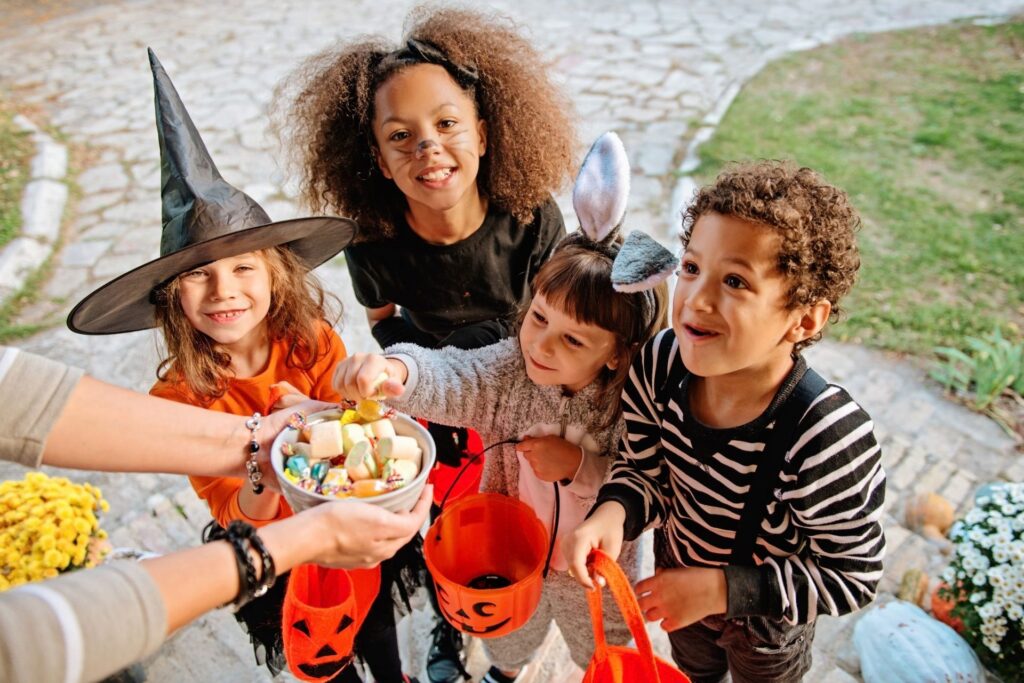
Because our community is so diverse, our family’s non-Muslim identity has never been a barrier to belonging. If anything, living here has profoundly expanded our cultural intelligence and ability to navigate in new waters. We’ve learned how to support friends and colleagues during Ramadan, attended iftars (the meal eaten after sunset during Ramadan) in the desert and shared traditions across cultures. We’ve trick-or-treated with hundreds of families, celebrated Thanksgiving three different times over one weekend, built our own Easter egg hunts and enjoyed Christmas brunches although far from extended relatives. The traditions we choose to honor again and again become part of our family culture. For us, location matters less than intention. As long as we continue to center connection and care for our family, we feel at home.
These relationships are the extra coral and anemones on our shell, making this place feel comfortable and alive.
Home is learning and growth
Beyond the compound gates, parenting becomes an act of cultural translation, which our children, now 5 and 1, witness from the front row. In the city, norms shift. Expectations around modesty, privacy, affection and public behavior differ from those inside our compound community. We teach our children to observe before acting, to notice how people move through spaces before jumping in themselves. We talk openly about religion and respect, about patience and waiting, about the rhythms of a place where shops pause for prayer and plans sometimes move more slowly. Learning to accept rather than resist has been as formative as learning any specific cultural rule. Our children are Third Culture Kids (kids raised in a different culture than their parents for a large part of their childhood), a reality that carries both possibility and quiet grief, growth and complexity for all of us.
Your definition of home becomes the only one that matters, and it’s okay if it is more than one physical place, more than one group of people, more than one idea.
Home will always contain challenges
There are moments, of course, when this life hurts. My son was born in early 2025, and four months later, my mother died. Distance was no longer geographically measured with miles, but with something much more personal: heartache. In the haze of postpartum life, I flew back to the United States to say goodbye. It was a journey that permanently reshaped my understanding of home. Never had the separation between the place I grew up and the life I had chosen felt so vibrant and sharp. The choices I made during that time — who I could be with, where I could stay, when I had to leave — are ones I will carry forever. Living abroad doesn’t spare you from pain or loss. You take yourself with you wherever you go, along with your history, your habits and your heartache. Home becomes less about a single place and more about the meaning you make within the limits you’re given. Your definition of home becomes the only one that matters, and it’s okay if it is more than one physical place, more than one group of people, more than one idea.
Home is what we carry with us
Watching our children grow here has taught me that home isn’t a place we return to — it’s something we practice through people, routines and connection. They understand home the way a hermit crab does: not as a fixed location, but as the shell that fits for this season, made meaningful by what we carry inside it. For us, Saudi Arabia has never felt like an either/or — neither temporary nor permanent, but formative.
Living abroad doesn’t spare you from pain or loss. You take yourself with you wherever you go, along with your history, your habits and your heartache.
Living and parenting here has changed how I choose community, how I model curiosity and humility and how I hold both attachment and letting go at the same time. Wherever we go next, we won’t be starting over. We’ll step into a new shell together, bringing with us what made this one worth living in.