 Seattle Family Calendar
 Subscribe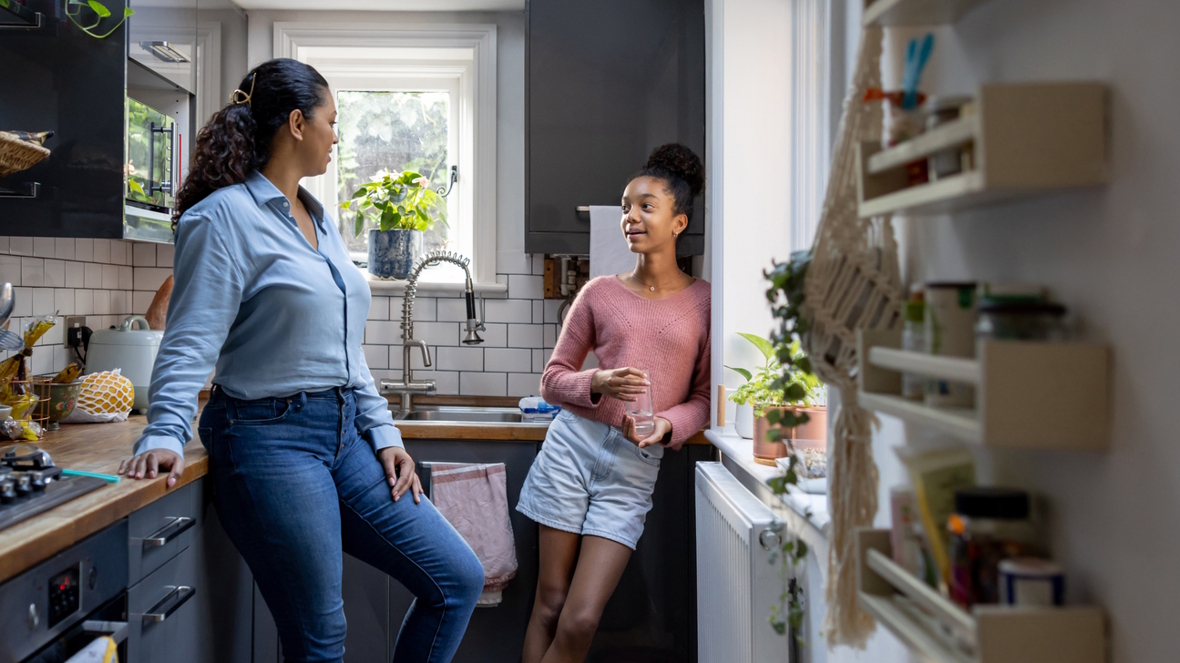

Key Takeaways
- Reframe how you see your teen. Pediatric psychologist and author Dr. Ann-Louise Lockhart says parents can strengthen relationships by shifting from control to connection.
- Get curious, not critical. When your teen pushes back or shuts down, ask what’s really driving their behavior instead of reacting in frustration. Curiosity builds trust.
- See the humanity behind the attitude. What looks like defiance is often stress, fear or growing pains. Seeing your teen as a full person, not a problem to solve, builds empathy.
- Create emotional safety. Teens open up when they trust you won’t “come in hot.” Stay calm, listen and respond with compassion so they feel safe sharing the hard stuff.
- Parent the teen you have. Connection grows when parents let go of the idealized version of their child and meet them where they are: messy, moody and still in need of love.
They get a seriously bad rap: Teenagers are moody, angry, smelly and love nothing more than an evening alone in their room with the door shut. Right?
Not exactly. Pediatric psychologist Dr. Ann-Louise Lockhart, known as a parent coach on Instagram to her nearly 96,000 followers, says we’ve actually got teens all wrong. Lockhart, the author of “Love the Teen You Have,” says teenagers are some of the coolest, most fascinating creatures on the planet, once you look beyond the disdainful eye rolling and noncommittal shrugging.
Lockhart should know. Not only has she worked with hundreds of them throughout her career, but she has two of her own: a daughter, 15, and a son, 13. Lockhart is on a mission to help parents better understand and better support their teens. She found her calling during an earlier role as a college admissions counselor, when she found that she was working with some deeply struggling kids. Realizing the impact that early intervention could have on their lives, she changed careers, becoming a pediatric psychologist in hopes of doing something about it.
“The biggest myth for parents of teens is that they’re difficult,” says Lockhart. “Hormonal and difficult. Although that may be true, teens are fun.
“It’s one of the first stages of development where your child … is now able to have a conversation with you, has critical thinking skills and can think abstractly … they think in ways that are so out-of-the-box.” She points out that when teens are difficult, the reason often has to do with the way their brains are changing at the same time they’re trying to find their place in the world.
But in the face of teenage stonewalling, stubbornness and sass, how are you supposed to think of your teen as fun? Lockhart has research-based techniques that can help you better understand your teen and build a better connection.
Lockhart says taking a more curious, empathetic approach allows parents to ‘see the humanity behind what’s going on in their teenager.’
Start by getting curious
When your teen disobeys or skips out on responsibilities, it’s easy to make a comment that blows up into yet another fight. For example, imagine a teen who refuses to get off their phone and get their homework done. “It would be very easy to just take away their phone, punish them, ground them and say they can’t have a life,” Lockhart says.
Instead, she recommends a gentler approach, taking a stance of curiosity rather than judgment. “Get curious about what is actually driving the behavior, rather than punishing or nagging or speaking at the behavior you see,” she says. Try saying something like, “Hey, I noticed that you get home from school and you have homework to do, and you just choose not to do it. Am I getting that right? What’s really going on?”
Finding out the reason behind homework refusal might reveal more than you think. According to Lockhart, often a need is not being met. Perhaps the homework load feels insurmountable and the teen needs help. Or perhaps other pressures or stress are in the picture. Lockhart says taking a more curious, empathetic approach allows parents to “see the humanity behind what’s going on in their teenager.” That’s a great place to start to create a better connection.
See the humanity behind your teen
Curiosity, Lockhart says, helps parents slow down enough to see their teenager for who they really are: a developing person still finding their footing.
Instead of viewing every act of defiance as disrespect, parents can reframe it as a clue to what their child is processing emotionally or mentally. Lockhart’s reminder to “see the humanity behind what’s going on in their teenager” captures this shift: empathy over frustration, connection over control.
That small mindset change helps parents interpret behavior through the lens of growth rather than conflict.
Once that safe environment is established, teens might feel less like they have to ‘lie or be sneaky,’ and instead can come to you with the tough stuff.
Create emotional safety at home
Lockhart says that creating an “emotionally safe” environment is one of the toughest but most essential parts of parenting a teen. “If a teen is struggling with anxiety or challenges, you don’t want to come in hot and make them think you’ll freak out and shut them down or explain it away,” she says.
Once that safe environment is established, teens might feel less like they have to “lie or be sneaky,” and instead can come to you with the tough stuff.
Lockhart adds that sometimes, parenting your teen can even require reparenting yourself — learning to offer yourself safety, softness and support if you weren’t given that as a kid, a process she discusses extensively on Instagram.
Parent the teen you have
Lockhart wants parents to know that they can learn to love and parent the teen they have, not the one they think they should have, through some proven strategies for better connection, even when the most interaction you get with your teen is a one-word mutter or text. They’re still in there, she says; they still love you, and they need you.
Join The Launch Pad
For the parents navigating eye rolls, growing independence, social pressures and everything in between. Get expert advice and real-world support in ParentMap’s new monthly newsletter just for parents of tweens and teens.