 Seattle Family Calendar
 Subscribe

Getting rid of lice is time-consuming, expensive and stressful. But the one thing it shouldn’t be is embarrassing. Lice are right up there with cockroaches for invincibility, and if you are a parent, the odds that you will have to deal with lice are probably greater than your chances of encountering a cockroach. Parents need to learn the truth and dispel the myths about lice so that we can support each other through one of the more unfortunate childhood rites of passage.
They’re baa-ack!
When I was a kid, my mom always made me pull my hair over my shoulder at movie theaters to prevent lice that might be hiding in the upholstered seats. In those days, I had never actually heard of anyone who caught lice that way or any other way. Lice seemed as imaginary as cooties. I was both more right and more wrong than I knew. Right because they are the same thing — cooties is slang for lice, but wrong because they are not at all imaginary. I was shocked the first time my own kids came home from school with lice.
It’s hard to get accurate information about the current prevalence of lice, and even harder to find anything about how common lice outbreaks were in the 20th century. Even data synthesized by the National Institutes of Health (NIH) showed a significant prevalence range in the Americas: between 4–60 percent. But from talking to other parents, I don’t seem to be alone in feeling that lice somehow skipped a generation. Bedbugs recently made a comeback after almost disappearing for 60 years, and the list of antibiotic-resistant bacteria is growing. Lice populations may be following the same pattern — a dramatic drop after the invention of pesticides, and a gradual rise as chemical resistance develops. Some people blame social media and the head-to-head contact of group selfies for at least part of the increase.
Lice basics
Head lice are different creatures from body lice, although both are tiny insects that feed on human blood. Head lice have lived on human scalps, eyebrows and eyelashes since before we evolved to modern humans. They spread by close contact, crawling directly from one head to another. They cannot jump or fly, and they do not live long without a human host. Pets cannot spread lice.
Lice myths
Clean people don’t get lice. Getting lice says absolutely nothing about your hygiene. Whether you wash your hair daily or never, whether your home is tidy or a health hazard, anyone can get lice.
Black people don’t get lice. See above, anyone can get lice. It is true that African Americans are much less likely to get lice — the theory is that hair texture affects the bugs’ ability to hang on — people of any race can and do get lice.
Itchy scalp is a sure sign/the only sign of lice. Lice are not the most common cause of itchy scalp. If you see someone scratching their head a lot, it may be caused by dandruff, allergies, eczema, hair product buildup and many other things.
On the other hand, itching is the most common symptom of lice, and even thinking about lice is enough to make most people’s scalp itch. But you can have lice without itching. Not everyone can feel lice crawling on their scalp, especially when their numbers are low. Most itching from lice is not the crawling sensation, but an allergic reaction to their bites. Some people are not allergic to the bites, and in others it can take weeks for the allergic reaction to develop.
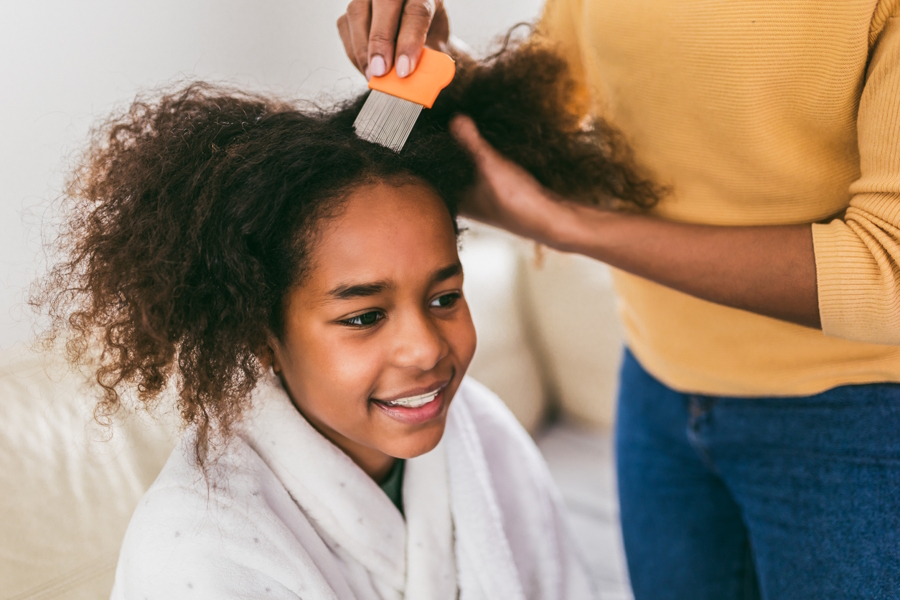
Adults don’t get lice. Children are the primary vectors of lice because they play like puppies, while head-to-head contact among adults is relatively rare. But adults have absolutely no immunity to lice. If your child has lice, you’d better get yourself checked, too.
You have to fumigate your house if anyone in your family gets lice. Technically, sharing brushes, hair ornaments and hats, or using a pillow or sitting on an upholstered seat use by someone with lice can spread lice. But the usual method is direct head-to-head contact; lice avoid crawling from heads onto objects because they can only live a couple days on any surface besides the human head. Their eggs, called nits, are only viable for 10 days and will not hatch below 68 degrees Fahrenheit. Washing bedding and clothing in hot water is generally enough to remove them.
What does work?
Head-to-head contact is far and away the primary method by which lice spread, so you should focus your energies on thoroughly removing lice from infected heads. If anyone in the household has lice, everyone in the household who is not completely bald should be checked for lice and nits.
Physical treatment
Even if your first response is chemical warfare, physical removal will be part of the treatment process, because no chemical treatment is 100 percent effective. If you are strongly opposed to using chemicals, you can theoretically eliminate a lice infestation through physical removal alone. But it is not easy. As anyone who has ever had to do it knows, “nitpicking” is anything but trivial.
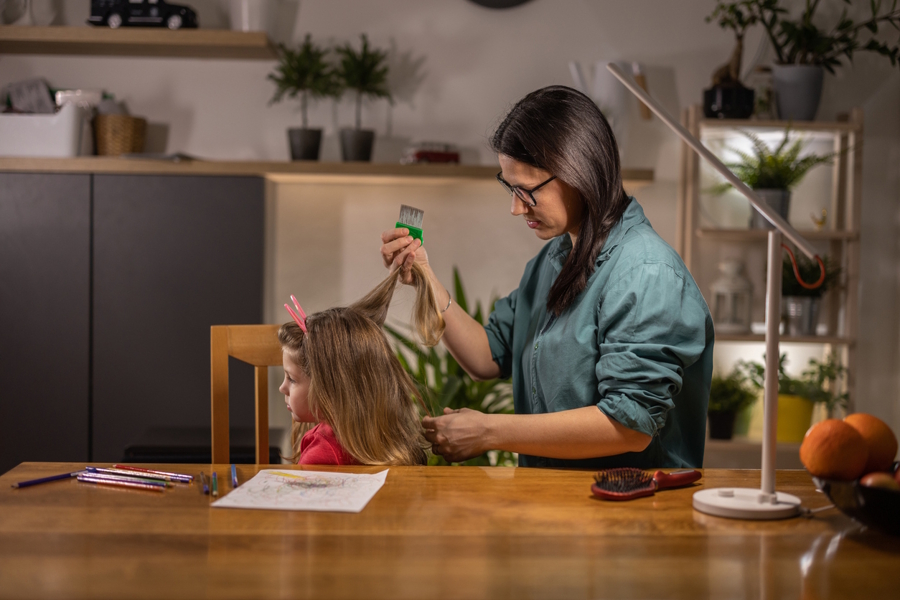
Start with using a fine-tooth comb (pet flea combs are effective and special lice combs are widely available) to comb through small sections of wet hair, wiping the comb after each stroke. Conditioner or other oily substances can make combing more effective, but if you are also using chemicals, will deactivate the treatment. You have to be systematic and thorough to remove all of the adults and the even tinier nits. The adults can crawl surprisingly quickly, making them hard to catch. Nits can be almost invisible on blonde hair, and even special combs can glide past nits on very fine hair. A magnifying glass may be helpful in spotting them. Hand removal must be repeated every couple of days for at least two weeks after the last louse was seen.
Over-the-counter treatments
Most people run straight to the drugstore for a box of Nix at the first sign of lice. But that may not be the most effective solution. Lice have become increasingly resistant to the pesticides in Nix and other over-the-counter treatments. For most treatment products, you will need a box for each person treated, and children with long hair may require two boxes to ensure thorough treatment. Some products will kill both lice and nits; others only kill adult lice and a second treatment is required to kill any nits that hatch later. Over-the-counter lice treatments are not safe for children younger than 2 months, or for some brands, 2 years. Even older children may be sensitive to chemicals in these treatments and experience itching or a burning sensation on the scalp.
Even when resistance is not an issue, these treatments only work if you read and follow the instructions (which vary among products) to the letter. If you put conditioner on your child’s hair, don’t let the solution sit long enough, or wash hair too soon after treatment, you won’t get rid of all the lice. Don’t blow-dry hair after treatment either — some over-the-counter products are flammable. You must continue lice checks and hand removal for two to three weeks after treatment. If you continue finding live lice more than 24 hours after treatment, the treatment didn’t work. At $25–$50 per treatment, trying different brands or repeating failed treatments can quickly become expensive — not to mention exhausting.
Professional treatment
There are several lice treatment centers around Puget Sound. Their services are not cheap — expect to spend $150 or more — but they guarantee their services, and your health insurance may reimburse the cost. Some clinics charge a flat fee, others have an hourly rate. Some will even come to your home. They usually do not use pesticides. Instead, lice clinic technicians use a combination of hair oils and methodical combing techniques to physically remove the lice and their nits. Technically, it’s no different from what you could do at home (even proprietary hair oils are usually available for purchase) but they are professionals and can do the job faster and more effectively than most parents.
Prescription treatments
If an infant younger than 2 months gets lice, you should call your pediatrician — over-the-counter medicines and even many home remedies are not safe for very young infants. Call the doctor if your child’s scalp appears infected. Over-the-counter treatments may not be appropriate when there are open sores, soft scabs or pus, and these things could also indicate an unrelated health condition.
You should also call your doctor if your initial efforts have failed, and you know that you followed the directions correctly. You could be dealing with pesticide-resistant super lice. In that case, you will need a prescription for one of the three chemical treatments that still work against them. The cost will depend on your insurance, but falls in the range of $50–$150.
Most parenting challenges have a silver lining — overcoming them helps us grow as people or become closer to our children. Lice don’t really have an upside. The best we can do is learn the facts to get through an infestation with minimal fuss, and hopefully, fewer failed attempts.