 Seattle Family Calendar
 Subscribe

I don’t know about you, but when my youngest was little, I could walk into a parent–teacher conference with a mental checklist that read more like a play-by-play. First I’d hear about my kid’s strengths and weaknesses. Then, the teacher and I would nod knowingly over test scores and examples of his school work. At some point, we’d both check the clock for time. And during the last few minutes, we’d chitchat before ending with a simultaneous “Thanks so much. So good to see you again,” as I walked past the next set of parents on my way out the door. It was predictable. A chance to check-in and connect.
But what if fall conferences don’t go the way you expect them to? What if the teacher disrupts the tidy script you’re used to following with concerns you weren’t unaware of?
As a former teacher, I can attest that even seasoned parents can be taken off guard by disappointing news during a conference. But that doesn’t mean there’s cause for concern. Kids can often get off to a rocky start at the beginning of the school year as they adjust to a new classroom, new routines, new academic concepts and a new teacher. Hopefully things will smooth out soon. But if the teacher thinks this is more than typical BTS growing pains, consider falling back on these helpful next steps as you work to support your child and bridge the gap.
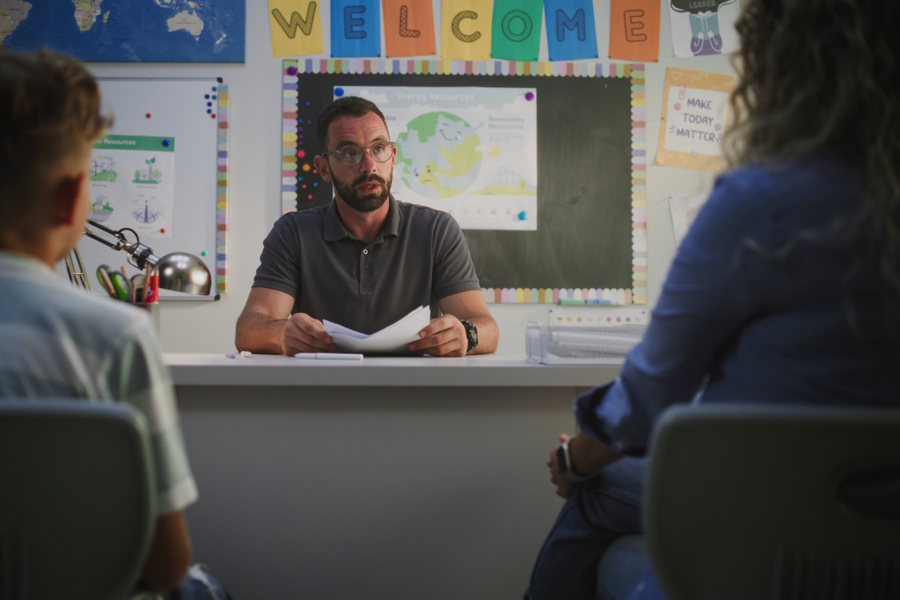
- Step back and consider the new information. Take time to consider what concerns the teacher is actually sharing. Are they growth and/or milestone concerns? Are they social and/or emotional concerns? Consider whether you’ve noticed similar behaviors or issues at home, and work to pinpoint the source if you’re able to. Sharing any relevant information with the teacher can help them to support your child in their classroom.
- Clarify concerns and get on the same page. Remember to ask clarifying questions so you can fully understand both your child’s strengths in the classroom and the new challenges they’re facing. Specific examples can help to clarify and make sure you and the teacher have the same understanding of the situation. Ask the teacher for their perspective and ideas. They often have a wealth of problem-solving experience and proven strategies to share.
- Make a plan. If you don’t have time to make a plan with the teacher during the conference, schedule time to create one in the future — even if it’s through a simple email exchange. Plans can range from super simple to more complex, where school or outside resources are included to support your child.
- Follow-up with your child. When you get home, discuss how the conference went with your kid. Give them a chance to weigh in or add context to the teacher’s overall assessment. Not surprisingly, kids often have a lot of insight into classroom dynamics, expectations and workload. They also usually know when they need help, but many are afraid to ask for it. A post-conference debrief may open the door on a much-needed discussion.
- Circle back with the teacher. Depending on the situation, you may want to check in with the teacher a few weeks later to see if the situation is improving. Regular check-ins may be part of the support plan that’s mapped out. Either way, the goal is to get your kid on track to a successful school year.