 Seattle Family Calendar
 Subscribe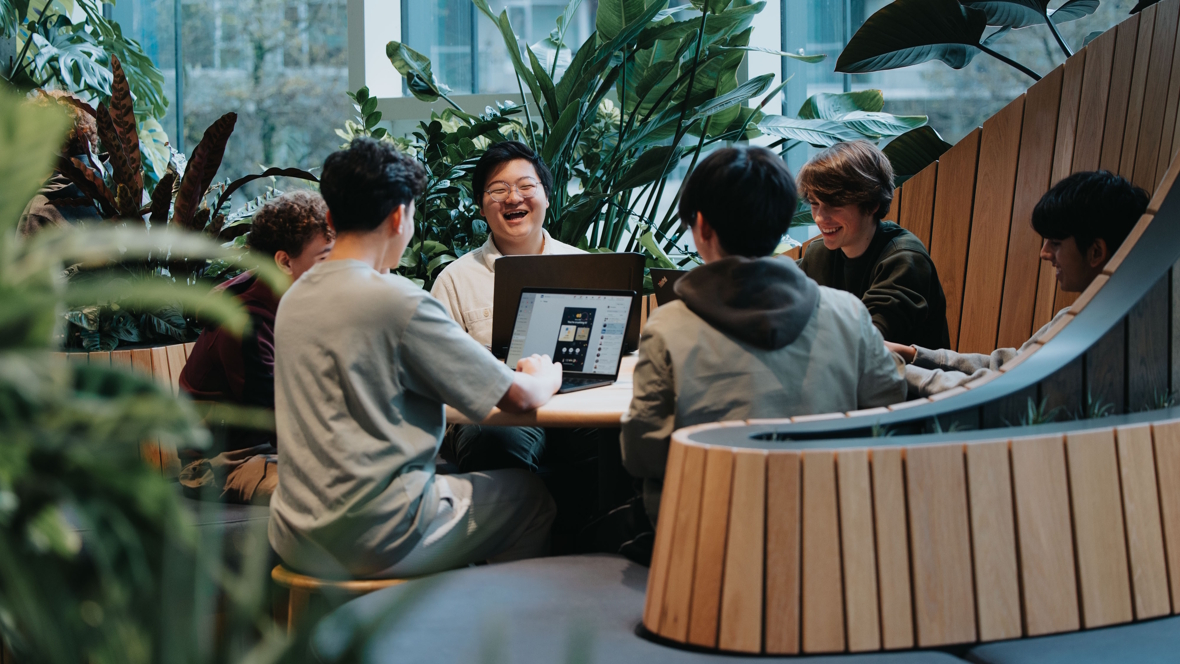

Editor’s note: This article was sponsored by The Knowledge Society
Did you ever notice how often major breakthroughs are made by young people instead of experts? But even though we know the energy and potential for innovation that young people have, conventional wisdom tells teens to study for the test and deal with life after they finish schooling. In 2016, the Nathoo brothers got fed up with the way high school prepares students for a world that no longer exists and set out to create the training program they wished they had growing up. They called it The Knowledge Society (TKS).
“We noticed that all the biggest, the hardest problems in the world were not being solved. A primary mission of TKS is to create impact in students; to basically build them up with confidence, with agency, with a knowledge of emerging technologies and sciences so that they can actually go out into the world and build something beautiful,” says Esther Kim, director at The Knowledge Society. “We teach students how to fish and then they go and fish, which is super powerful.”
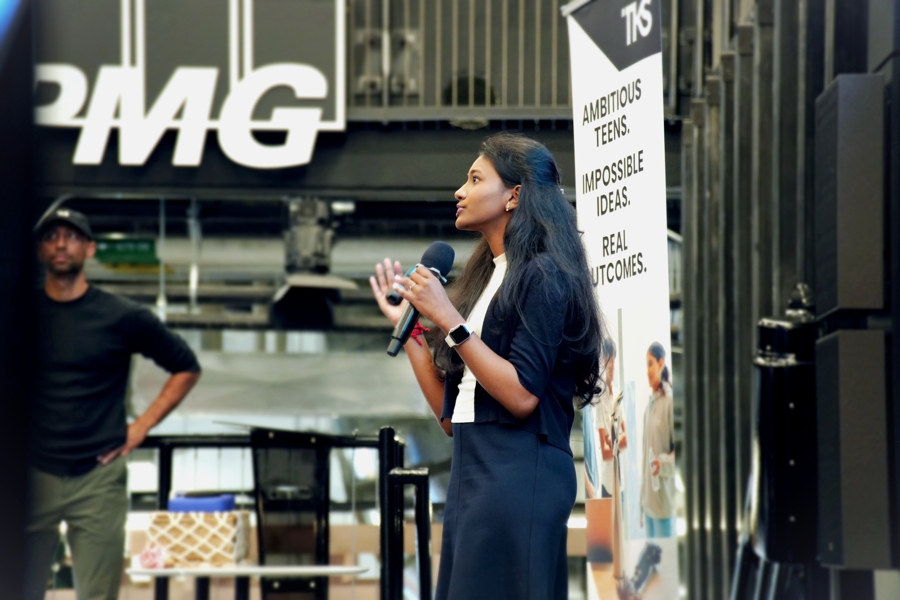
TKS offers a remote, project-based learning program for teens aged 13–17 that spans a full school year. Admission to the program is competitive, but it’s not simply a matter of good grades.
“I encourage every student to apply no matter what,” says Kim. “If you don’t think you’re a coding wizard or you’re not a robotics physicist scientist, that’s okay. What I’m looking for is: Are you curious enough to explore things and are you ambitious enough to put those curiosities into action?”
At $5,890 for a year, the program is not cheap. But Kim says, “We give generous amounts of financial aid and scholarships. And in some cases, we do give full ride scholarships to very ambitious students we find promising.”
Tuition funds an intensive program of academics and leadership skills training that helps teens stand out from their peers.
“We have a very robust pedagogy where students are learning very, very rapidly, as well as doing a lot of prototyping and building projects. By the end of the program, the expectation is to have a portfolio of work as they look towards the future, possibly getting a summer internship with a company or getting into their top university of choice. Schools are so competitive now, where GPA, a great SAT score and maybe president of your Physics Club will not cut it anymore. A lot of universities are looking for that niche project that you’ve created yourself,” says Kim.
The program has three components: academic study, partner challenges and individual projects.
The autonomy and agency students build in the process of developing that specialized project are supported by coaching in 21st century skills.
“We teach a lot of leadership and soft skills in our program as well. So, how do I create a strategy slide deck? How do I reach out to somebody on LinkedIn, or how do I conduct an interview?” says Kim.
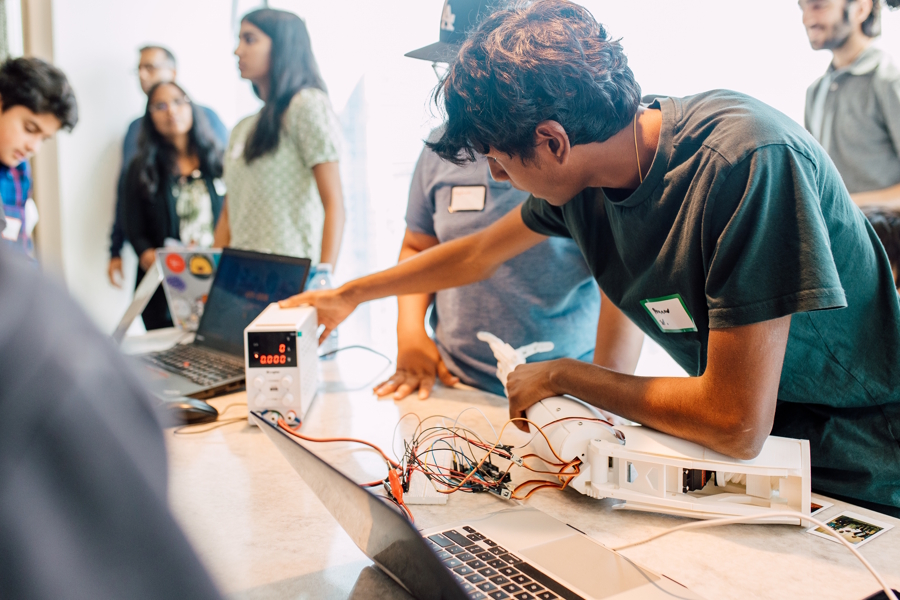
The program has three components: academic study, partner challenges and individual projects. Every weekend for 10 months, students participate in a three-hour session run by their director. For the first five months they explore technology topics such as synthetic biology, machine learning and robotics. During the next five months students learn about global problems such as hunger, cancer and climate change.
Along the way, students work together in groups for hackathons and do partner challenges.
“We partner with Fortune 500 companies to solve real problems. Student groups develop a strategy deck they present to executives who give us unsugar coated feedback. Last fall we worked with IKEA. They asked our students, ‘How do we appeal to the younger generation?’ One of my students – Megan, she’s 14 years old – won the IKEA Challenge and now IKEA will actually be implementing her solution inside of their apps.”
The central element of the program is the individual project. Coaches work with each student over the course of the program to explore their interests, identify a project, and bring that project to completion.
“I would say Max’s experience was very reflective of the program. We did a lot of exploration of what he likes and what he dislikes. We tried to find his passion, which is very challenging to do as a very young person,” says Kim. Max Blanksby is a junior at Catlin Gabel, a private day school on the outskirts of Portland, Oregon. He completed the TKS program last year.
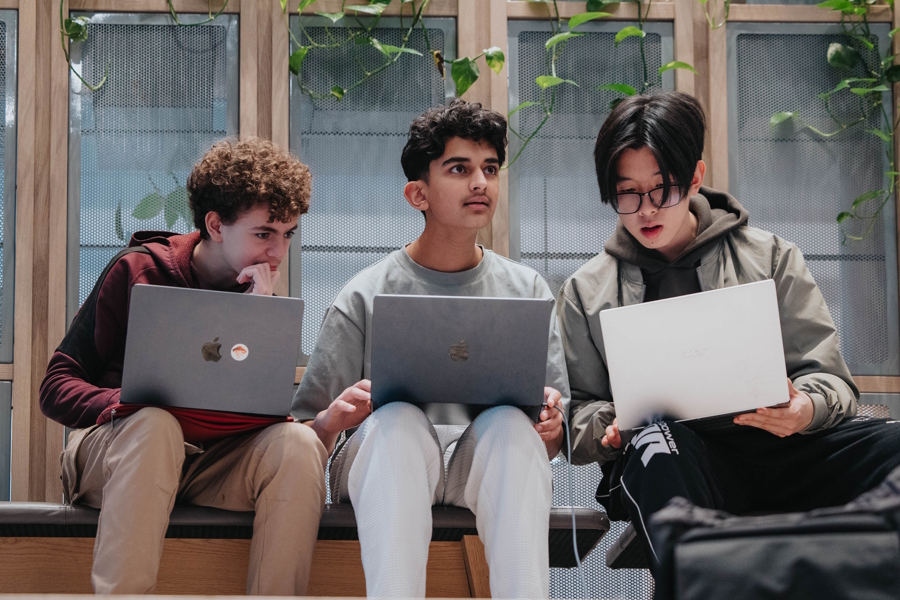
“It was something my mom found on the internet, and she thought it was a good idea because I didn’t exactly know what I wanted to do,” says Blanksby. “Originally my project was going to be in artificial intelligence. But I felt like AI was being passed around so much as a buzz word and I was not as interested in it as you want to be for something you want to pursue [professionally].”
Once he found his topic, Kim helped Max identify local experts in that field and coached him in how to present himself professionally before he made contact.
“I reached out to a professor nearby who has a pod seminar with high school students where they do work on stuff like this,” says Blanksby. By ‘stuff like this,’ Blanksby means oracle functions in quantum computing.
“In very simple terms, an oracle is basically like your answer finder. The way I’ve been using them lately is what’s called a phase tag oracle and it takes all of your cubits that are in superposition, and it runs them through the oracle, which basically tags the state that you are looking for with a negative probability,” he explained. “When you’re designing a chip on a computer you want your logic circuits to be very efficient, especially for quantum computing. That’s what my project was about.”
Blanksby describes it as too “classically oriented” to qualify as the kind of work people are being hired for right now. But the most important result of the project was that “I gained a passion,” says Blanksby.
Aside from finding his purpose, Blanksby values the communication skills he practiced at TKS, like writing professional emails and doing cold outreach.
“It was also about building your image; you had to have a LinkedIn profile and Medium account. All the posts you made for your project had to be public. I don’t think school urges you to view your image early enough. In school you only start to work on selling yourself going into junior year when you start applying to colleges. Building up this practice in TKS you are going to get used to trying to sell yourself,” says Blanksby.
For many teens, technical and social skills feel like very different things, and it’s easy to focus on one or the other. But for Kim, both are prerequisites to effective changemaking.
“Yes, we are science and STEM focused. But if your student is not a very technical person, if they’re really interested in helping people, we teach that. For example, there was a student named Elizabeth who came into our program, and she tried out all the tech stuff, but she felt very tied to this one country in Africa. With her project she developed this very rudimentary infrastructure proposal for clean water and sent that to WHO. They responded and said, ‘We love your proposal, we’d love to fund this. Please go build it,’ And that’s what she’s doing right now,” says Kim.
Helping teens find their passion and build a portfolio that will give them an edge in college admissions is what The Knowledge Society does. But Kim says the reason they do it goes back to the potential impact that young people can have on the world.
“We love supporting students that want to help. Because I think helping the human condition is the best thing that we can do.”
Sponsored by: