 Seattle Family Calendar
 Subscribe

That book is so last-century
I have learned that a surefire way to have my middle-grade reader refuse to open what could be the best book she has ever read is to hold it up and say, “I loved this book when I was your age!”
This utterance is typically met with skepticism, possibly an eye-roll, because what I like couldn’t possibly be cool.
Go straight to the books:
- “Are You There God? It’s Me, Margaret.” by Judy Blume
- “Sweet Valley High #1: Double Love” by Francine Pascal
- “Where the Red Fern Grows” by Wilson Rawls
- “Homecoming” by Cynthia Voight
- “Locked in Time” by Lois Duncan
- “Dear Mr. Henshaw” by Beverly Cleary
- “The Baby-Sitters Club: Claudia and Mean Janine” by Ann M. Martin
So it was a surprise earlier this summer when I saw that my daughter had put Judy Blume’s “Are You There God? It’s Me, Margaret” on hold at the library. I later learned she had heard about the book, not from a trusted parent, but from a middle-grade book published in 2017, Alan Gratz’s “Ban This Book.” Gratz has the right idea: To get a kid to read a book, tell them they shouldn’t read it.
I have been skimming the same reading-level books as my daughter for some time now. It provides us with some common ground and gives me a way to be part of something she’s passionate about. I like to know what she’s comprehending and help explain troubling or questionable characters or scenes.
After my daughter read the Judy Blume classic, we discussed it lightly. I would have discussed it more in-depth with her but, truthfully, I couldn’t remember much of it. I sheepishly started the book again because I wanted to see if the novel, first written in 1970, had withstood the test of time.
It got me thinking about the other books that we, as a collective group of kids in the ‘80s, read and raved about. Do they still hold up, or should I end my pursuit of pushing books published last century? I took a week and reread some favorites and am here to tell you, yes and no. Read on.
‘Are You There God? It’s Me, Margaret.’ by Judy Blume
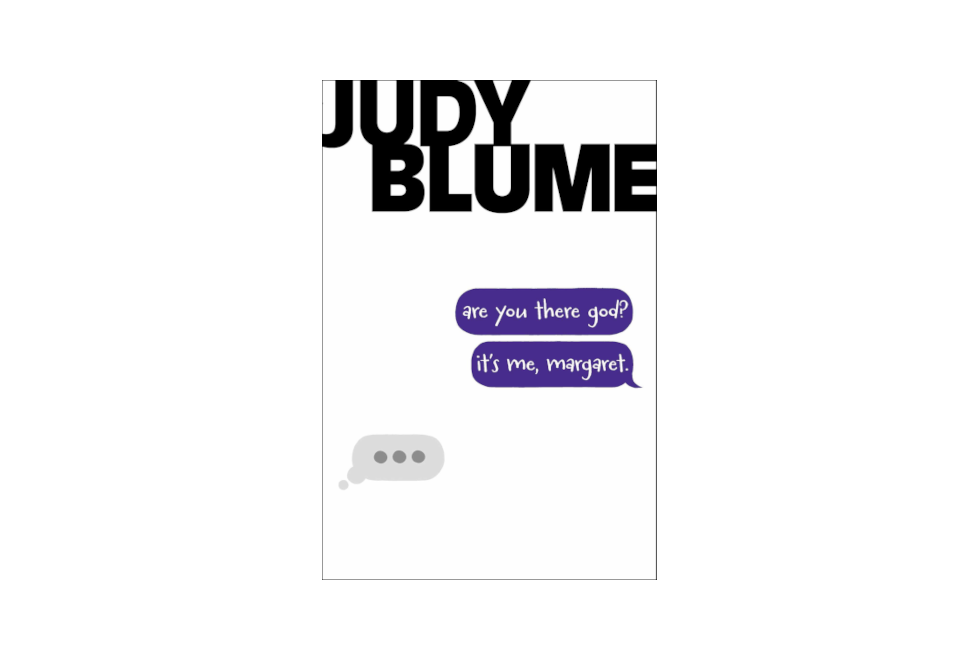
This novel is a coming-of-age tale about a sixth-grader who moves to the suburbs from New York City. Margaret shares a one-sided conversation with God as she tries to navigate her way through the intricacies of friendships, crushes, religion and incipient puberty. There are a handful of themes that still ring true today. Mean girls also existed back in the ‘70s and ‘80s, for one. Margaret’s confusion about religion (one of her parents comes from a Christian background and the other is Jewish) is another topic that families face, and Blume provides an opportunity to openly discuss the questions that face an 11- or 12-year-old.
Discussions around religion and sex are the primary reasons why this book was challenged so frequently. Later editions have updated some references, including parts where Margaret practices using a feminine hygiene product. For girls who do not feel comfortable talking about periods or menstruation with an adult, Blume’s depiction of how to use a pad doubles as a how-to guide. Judy Blume remains a master of this type of writing.
‘Sweet Valley High #1: Double Love’ by Francine Pascal
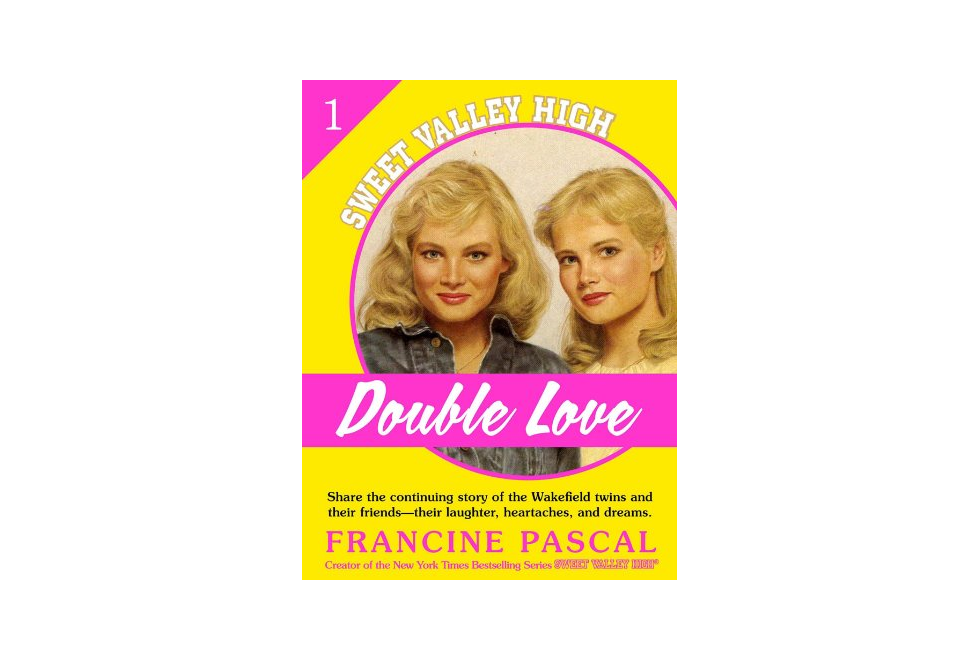
The Sweet Valley High series boasts over 150 million copies sold and has been published worldwide, so no matter where you grew up in the ‘80s, there was a good chance you read or knew someone who read the series. The franchise details the trials and tribulations of blonde-haired, blue-eyed identical twins and their friends who attend a high school that draws both the super-rich and those from the “wrong side of the tracks.” The books were published at a frenzied pace, and were beloved by tweens around the world. I remember I owned a few different volumes and swapped them with friends who owned others. We read and reread them until the cheap paperback spines cracked. I loved Elizabeth (so sweet!) yet couldn’t’ get enough of Jessica’s antics (so wicked).
It should be noted that for the purposes of this trip down literary lane, I reread the very first book in the series, published in 1983. The series ran until 2003, and one has to imagine it continued to find relevance throughout its 20 years in publication. (Those kids were in high school for a very long time!) Rereading the young romance novel that kicked off a 150+ book series (and countless spinoffs), my quick summation: SVH does not stand the test of time!
Jessica Wakefield, a conniving narcissist, is willing to lie to get what she wants, and that includes her twin sister’s crush. Elizabeth accepts being gaslighted by her sister and continues to stand by her when she really should instead stand up for herself. Also, the entire cast of characters is — how shall I say this? — very white.
My recommendation: Leave SVH in the past and suggest instead a newer franchise, such as “The Princess Diaries.”
‘Where the Red Fern Grows’ by Wilson Rawls
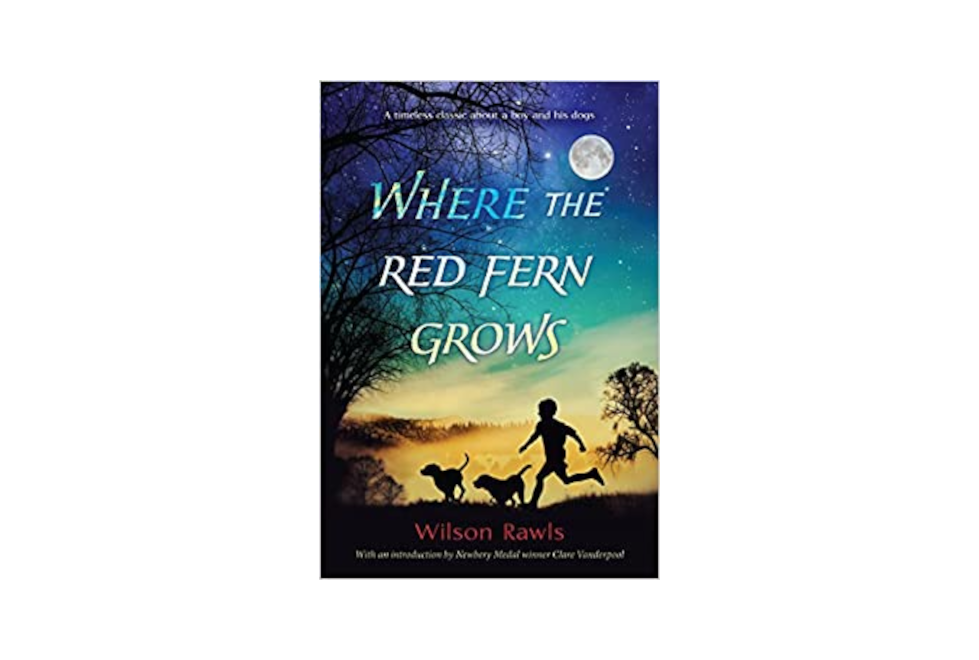
This cherished novel recounts the adventures of Billy Colman, a young boy raised in the Ozarks, and the two coonhound puppies — Old Dan and Little Ann — he raises to become the best hunting dogs around. WTRFG was at least 20 years old when Gen Xers picked it up in the 1980s. It is fondly remembered by many for being the first book to elicit emotions and tears (also see: “A Day No Pigs Would Die” by Robert Newton Peck, another tearjerker). As it takes place during the Great Depression, the dated references are contained within a historical bubble, allowing your imagination to picture a time when kids roamed the woods all night long; journeyed alone on foot 30 miles (barefoot!) to the next town with nothing more than a gunny sack filled with a few supplies (and then walked back!).
One theme I paid more attention to as a grownup is the Colman family’s focus on God and prayer. Billy offers up many prayers, in ways that you would expect a boy to pray: asking for his puppies, for strength to cut down a tree and to will his dogs to make it through perilous adventures. Billy questions if the end results of some predicaments are indeed a sign from God. For families where religion or prayer hasn’t been discussed, this element may raise questions from curious kids.
The adventures are gripping and seemingly dangerous, and some of the depictions of violence, as well as the sorrowful ending may make this a difficult read for sensitive children, but the story is as unforgettable now as it was decades ago upon first reading.
‘Homecoming’ by Cynthia Voight
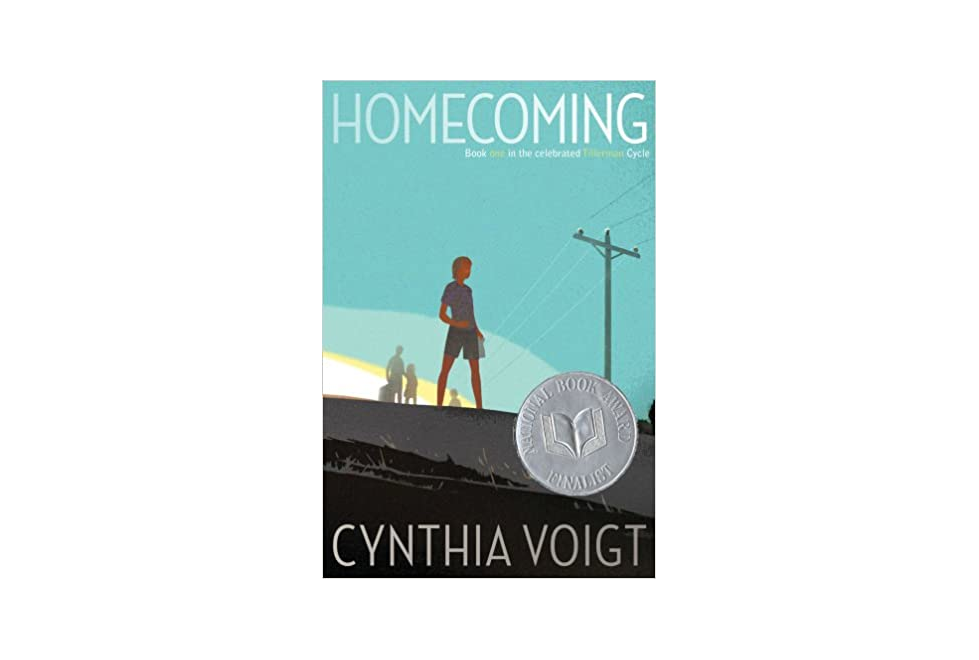
“Homecoming” comes in as the longest book on this list, at 482 pages, and is divided into two parts. On their way to visit their great Aunt Cilla for the first time, Dicey Tillerman’s mother deserts her four kids at a shopping center in an unfamiliar town. In part one of the book, Dicey decides to continue down the Connecticut shoreline towards Bridgeport to find the relative she and her three siblings have never met. The second part of the book details the children’s experiences after they arrive at Bridgeport. “Homecoming” is the first in a seven-book series about the Tillermans; the second book, “Dicey’s Song,” won the Newbery Medal in 1983.
So many children have imagined how they might navigate life if their parents were not around to take care of them, and in this novel Voight explores such an experience in depth. One very obvious time warp that I marveled at was that Dicey and her siblings were able to get so far down their path with just 11 dollars and 50 cents to start. A box of doughnuts and four apples cost 88 cents!? Making money by carrying people’s groceries, Dicey proves to be incredibly resourceful and resilient. Children (and adults) could learn a thing or two about her protective instinct and courage. It is a wild adventure in which the siblings need to rely on each other, and on strangers. Reading this decades later as a parent had a much more angst-inducing effect on me than it did when I was a child.
“Homecoming” grapples with mental illness (their mother eventually is found in a “mental hospital”) in a manner that feels dated now that mental illness is treated differently today.
Note that there is an angry encounter with a racist villain who has nefarious plans for the kids (it includes a racial epithet. If your child has never seen or heard the N-word, you’ve been forewarned). There are also multiple uses of the “R-word” to incorrectly describe one of the siblings.
‘Locked in Time’ by Lois Duncan
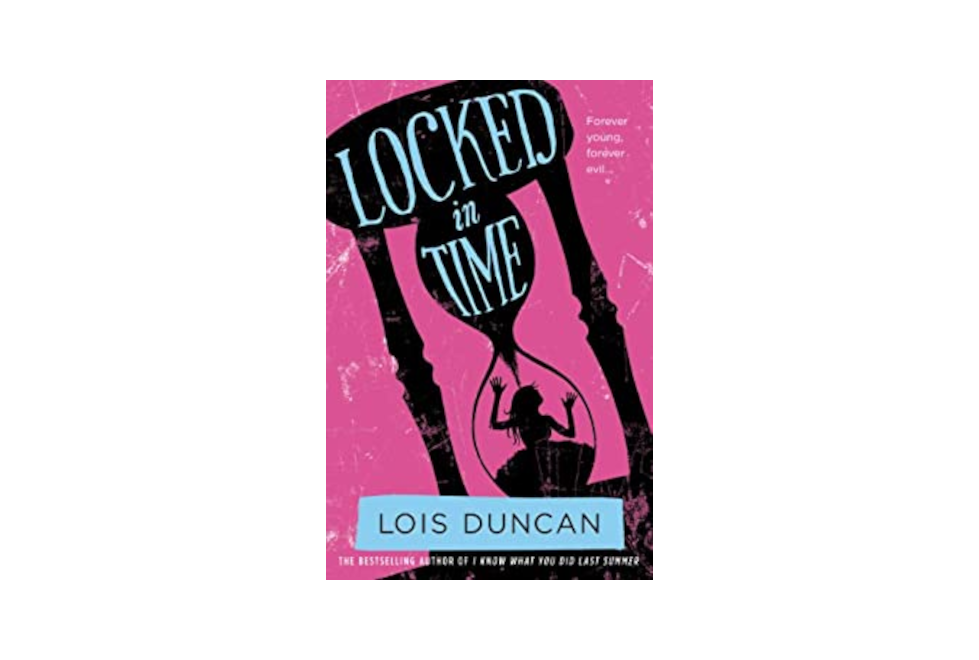
Back in the mid-‘80s, Lois Duncan’s books were widely shared among my classmates. Duncan’s famous teen novel “I Know What You Did Last Summer” spawned a popular movie franchise. Her books often left teenaged main characters in peril, pursued by killers while attempting to unravel plot-twisting mysteries. In “Locked in Time,” protagonist Nore Roberts, fresh from boarding school and still mourning the death of her mother, travels to Louisiana to visit her dad and his new bride. She can tell immediately that something is wrong with the family. I’ll spoil it here, because the hints Duncan provides early in the storytelling, while perhaps not as obvious to me as a tween, were quite obvious as an adult: Her stepfamily doesn’t age and has been around for generations. Nore’s goal is to convince her father that something is amiss and to escape from this rural backcountry without losing her life.
Duncan has done a good job updating her books. In the revised version published in 2011, Nore communicates with her dad over email instead of by writing letters, and she has a cell phone (however, there’s no service in the backcountry where the family estate is located — how convenient). The slight edits help bridge the story to a modern audience, but it’s the genre itself (thrills and chills!) that will resonate for those who love to be scared. Most of the story takes place in Louisiana, specifically on a former plantation. References to Creole culture and the deplorable history of slavery and slave owners is brought up but not explored in depth.
‘Dear Mr. Henshaw’ by Beverly Cleary
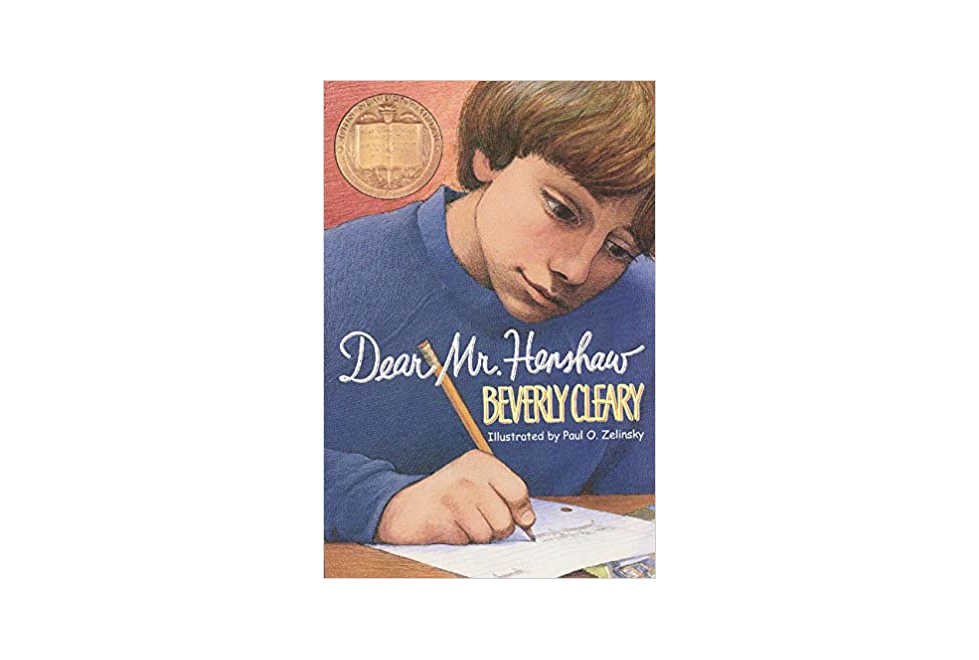
Beverly Cleary’s first Ramona Quimby book was published in the 1950s and has found a permanent place in our hearts. However, in the mid-‘80s, it was Cleary’s book “Dear Mr. Henshaw” that garnered her a 1984 Newberry Medal.
Told through letters that Leigh Botts writes to his favorite author (and eventually letters he writes in a journal), DMH tells a tale of a boy living with a single mom — friends few and far between and fathers who don’t always come through.
The storylines still resonate today. Perhaps Leigh would have written an email or Instagram DM instead of a letter today, but the story’s emotional range and themes are still relevant, whether he is entering a school writing contest, setting a trap for a lunch thief, or managing disappointment and loneliness. This is one that is worth rereading and encouraging your kids to read. For those who are Leigh Botts fans, Cleary wrote a sequel, “Strider,” which takes place when Leigh is in high school.
‘The Baby-Sitters Club: Claudia and Mean Janine’ by Ann M. Martin
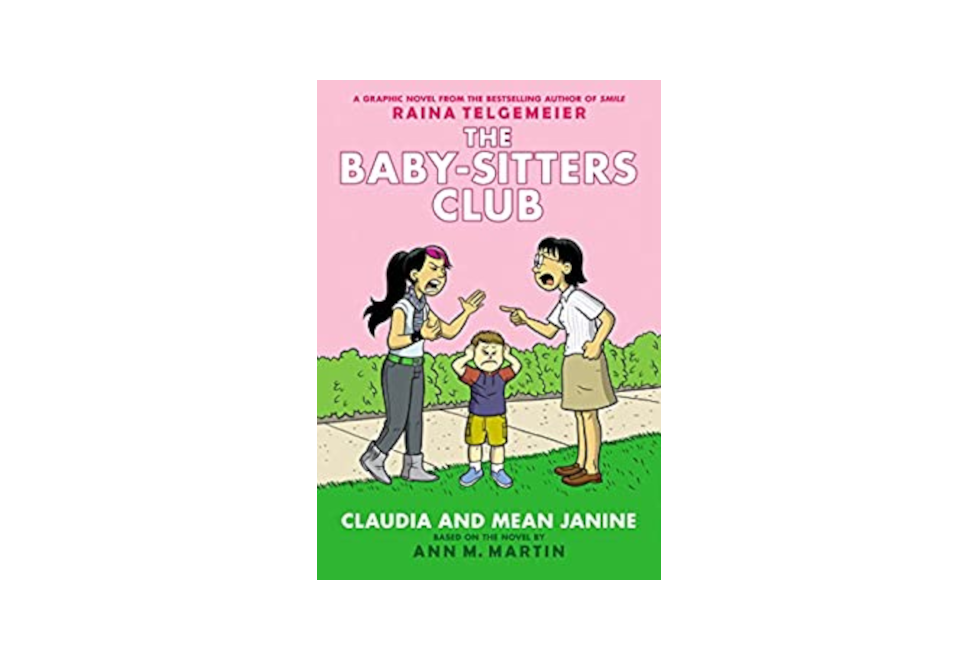
This is not the first in the “Club” franchise that kicked off in 1986 (it is No. 7 out of 131 of the original series), however “Claudia and Mean Janine” provides much-needed diversity in what is a rather homogeneous range of middle-grade books. Much of the concept behind the BSC franchise relies on ‘80s technology to make sense: Middle-school girls meet as a club a few times a week and answer (landline) phone calls from families in the neighborhood looking for a sitter. No cell phones, texting or YouTube to tell their stories.
What is timeless is the friendship of the girls, and the still-relevant themes of divorce, stepfamilies, widowed parents, sibling rivalry, crushes and responsibility. In “Claudia and Mean Janine,” the Kishi family is forced to adjust their lives when 13-year-old Claudia’s grandmother, Mimi, suffers a stroke. In this particular story, Claudia and her 16-year old sister Janine struggle with unspoken jealousy and resentment, as each believes the other to be “the favorite” in the family.
While the original series is fun to go back to, there isn’t really a need, as Ann M. Martin has found a new lease on the franchise with a series of popular graphic novels (adapted by Raina Telgemeier and later Gale Galligan) and a 2020 Netflix adaptation for which she serves as producer. The television series does take some liberties in the storytelling (for instance, in the “Claudia and Mean Janine” episode, the writers incorporate a backstory for Mimi that she had been in a Japanese internment camp during World War II). The new series also provides more diversity in its casting and storylines than Martin did decades ago in the books.
Both remixes of the ‘80s classic are excellent, keep with the spirit of the original and give us old parents another way to share a part of our childhood with our kids.