
 Seattle Family Calendar
 Subscribe

E-bikes and electric scooters are popping up on streets and trails all over Puget Sound — and parents have opinions. Some love the independence these devices give teens; others worry they are a little too much power on two wheels. With the holidays coming up, you might be wondering: Should an e-bike be on your gift list this year?
What you need to know about micromobility devices
E-bike classes:
- Class 1: Pedal-assist only, with a maximum speed of 20 mph.
- Class 2: Features both pedal-assist and a throttle that can propel the bike without pedaling, up to a maximum speed of 20 mph.
- Class 3: Pedal-assist only, but with a higher maximum speed of 28 mph.
E-bikes are bicycles with pedals assisted by an electric motor. They are divided into three classes, based primarily on their maximum speed. Electric scooters don’t have pedals and are powered by a motor with a maximum speed of 20 mph on level ground. Sometimes lumped together as micromobility devices, e-bikes and electric scooters are usually marketed and regulated as different things. But William Prince a pediatric emergency medicine physician and trauma specialist at Seattle Children’s Hospital says, “I like to lump them together because they are both in the same category in terms of their risk to children.”
Battery-powered bicycles have existed since the late 19th century, but it’s only in the past few years that they’ve gone mainstream.
“Now they are stylized to appear more like a motorcycle or a dirt bike, which in my opinion is directly geared toward kids and prompting them to ask their parents for these sorts of things,” says Prince. “And because they kind of look like motorcycles, I feel like more of these kids are inclined to increase risk-taking behavior when they use them.”
Rules of the road
Washington state law explicitly defers to city ordinances on micromobility regulations. In the absence of local restrictions, 16 is the minimum age to operate a motorized scooter or a class 3 electric bicycle. In Bellevue, there is no age restriction on class 1 and 2 devices, but helmets are required for all riders of any type of bike. Mercer Island’s detailed rules are based on vehicle classification and will take effect Jan. 1, 2026. In Seattle and most of King County, class 1 and 2 e-bikes and scooters are permitted on multi-use trails, except electric scooters, which are banned from trails constructed with federal funding. In Seattle, e-bikes can only be used on streets, while in Bellevue only class 3 e-bikes must remain on the road.
“There is no consistency,” says Prince. And the patchwork of rules that do exist are not consistently enforced. While many municipalities have yet to address the issue of micromobility devices, the American Academy of Pediatrics is unequivocal — no one younger than age 16 should ride them. “At Children’s, we track the trauma that comes into the emergency department,” says Prince. “Two years ago, e-bike accidents were few and far between. Now we see them weekly.”
Elevated risk factors
While a fit teenager can reach 20 mph for short bursts on a traditional bike, e-bikes, “go at the same speed as you would on a public road in a car. Class 3 e-bikes can go up to 28 miles an hour,” says Prince. That’s fast enough to get a speeding ticket on most neighborhood streets and even some arterials. Adding to the risk, simple instructions for disconnecting the speed restriction on e-bikes are readily available online.
And while a typical bicycle weighs between 20 to 30 pounds, an e-bike can weigh up to 80 pounds. Since force equals mass times acceleration, crashing a heavy, fast e-bike results in a much more forceful crash than a regular bicycle. And teens are more likely to crash when they’re riding an e-bike: Faster speeds require faster reaction times and better judgement — something teenagers distinctly lack.
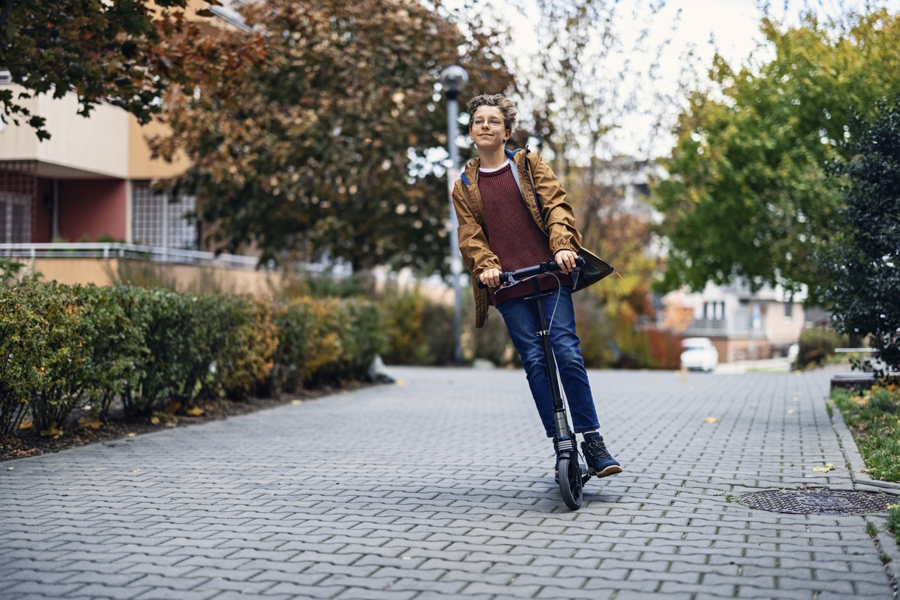
“Children inherently have developing brains and immature judgment. And kids who are riding these scooters and e-bikes tend to be more aggressive. They tend to ride in the street, as opposed to the sidewalk where they might ride normal bikes. That places them in harm’s way because they’re going to be interacting with traffic more,” says Prince. “Kids under 16 also don’t know traffic laws.”
E-bike riders often don’t even wear helmets.
“You have to mention that it is much, much, much more common for kids to wear helmets on their regular bikes,” says Prince. Observational and injury data suggest that teens riding e-bikes are less likely to wear helmets than those on regular bicycles — though direct survey comparisons are scarce.
Parents have had years of public education on the importance of bike helmets, but Prince says e-bikes are still viewed as a sort of novelty item. “Parents and kids see people riding these things all over the city, and no one is wearing helmets. It is kind of reinforcing this idea that these are safe. And they are inherently not safe,” he says.
‘Two years ago, e-bike accidents were few and far between. Now we see them weekly.’
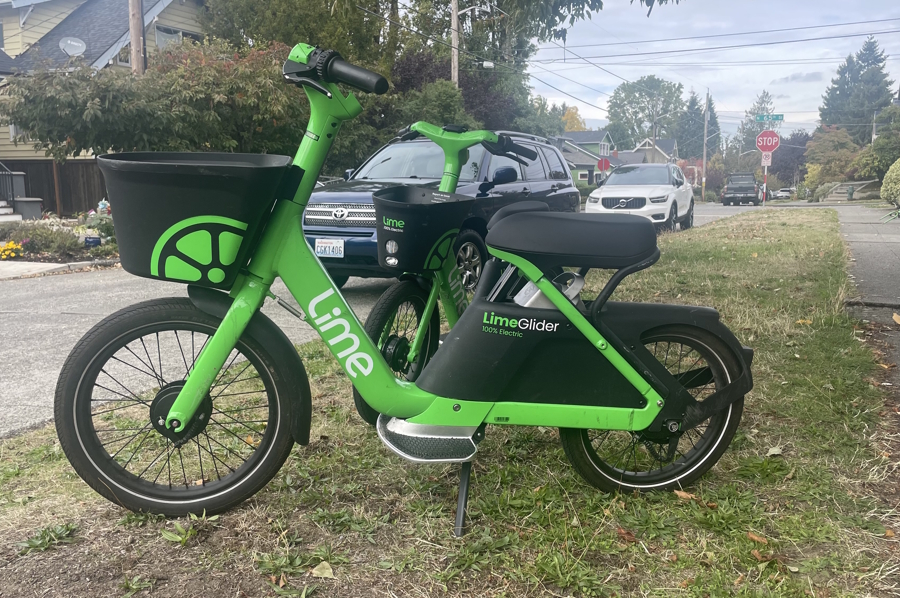
Helmet use can be even lower on rented devices. Rental companies all require riders to be 18 years old (the minimum legal age to sign a contract), but teens can easily bypass age requirements by using a parent’s account or falsifying information during the sign-up process.
“These machines sitting on the side of the road or in a park or in a parking lot, there are no helmets waiting for these kids, right? And kids are rarely just walking around carrying a helmet with them in their backpack. So, they’re going to get on this machine, just like they see everybody else doing, and ride around unhelmeted, which as we know is inherently a significant risk for serious injuries and brain trauma,” says Prince. In a Consumer Product Safety Commission study, only 13 percent of emergency room visits involving electric scooter riders were wearing helmets. In another study, only 44 percent of e-bike injuries involved riders wearing helmets, resulting in 49 times more incidences of head trauma in 2022 compared to 2017.
Serious repercussions
Head trauma is the most significant — and one of the most common — types of injury Prince sees from e-bike and electric scooter accidents. But it’s far from the only common injury; Prince also sees ”arm and leg fractures from going at high speeds and falling down; and then quite a bit of soft tissue injury and abrasions, road rash.” These are essentially the same injuries that result from a bicycle crash, but because of the higher speeds and heavier machines, e-bike injuries are more likely to be severe. The CPSC study found the number of fatalities increasing steadily each year from 5 in 2017 to 76 in 2022.
What should parents do?
So, what should you do if you’ve already bought your teenager a micromobility device, or if your child is begging for an e-bike?
“Aside from the fact that I feel that they really should not be used, I would recommend parents talk to their children about road safety and traffic laws, when to pull over and get out of the way of other cars,” says Prince. “The rules in my mind apply the same to motorcycles and cars and e-bikes.”
You can also enroll your child in drivers’ ed and consider having them take a Cascade Bicycle Club class and join a group ride to practice safe riding. The League of American Bicyclists also offers online safety classes. And no matter what else you do, absolutely require your teen to wear a helmet every time they ride, no exceptions. It’s a rule that could save their life.