 Seattle Family Calendar
 Subscribe
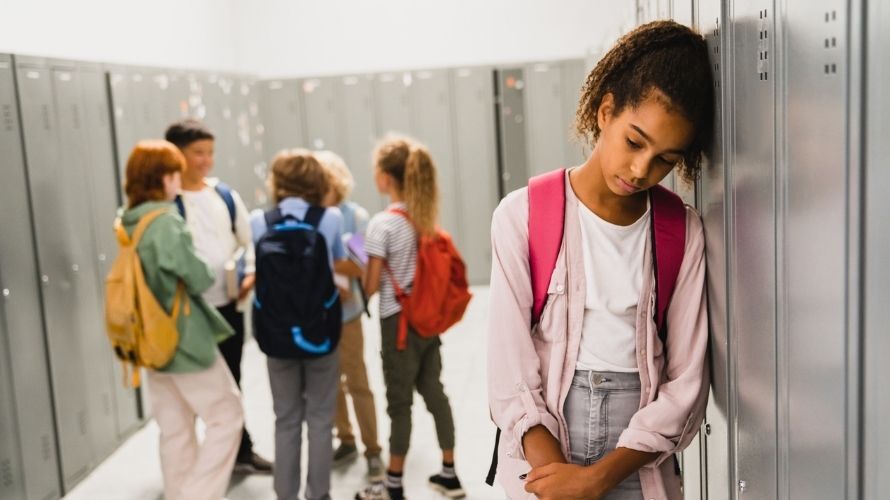

For children, times of transition and changes in routine can prompt anxiety — even when the change represents something as seemingly joyful as summer break.
These pre-summer jitters can impact children and parents alike as they face uncertainty about the months ahead. Previously structured schedules may fluctuate with a different camp every week. As they face summer uncertainties, students are swarmed with end-of-the-year projects, final grades, assemblies and goodbyes. Plus, a nagging question might disrupt the fun of the final stretch: What will happen to my friendships over the summer?
“Changes can increase anxiety,” explains psychologist Dr. Kalina Babeva, the codirector of Seattle Children’s Mood and Anxiety program. “There are certainly reasons to be nervous at the end of the school year.”
Understanding anxiety’s alarm
End-of-school anxiety can show up in a variety of ways depending on the child, the age and the intensity of the feelings.
Some children might try to avoid the situations triggering those strong feelings — including school itself — while others might go into overdrive with perfectionism. Safety behaviors might arise, too, like needing a parent to be nearby. Physical symptoms can appear, ranging from sweating and increased heart rate to dizziness and stomachaches.
For all children, communication and discussions around anxiety are key. Using kid-friendly language can normalize the experience. For example, you might explain that anxiety is a universal human emotion that people experience in response to real or imagined threats. Sometimes, though, the alarm becomes too sensitive, much like a smoke detector going off without a fire.
“Tell your kids that anxiety is natural — it’s the same as feeling scared, nervous or worried,” Babeva says. “Anxiety helped our ancestors stay safe when encountering a predator (e.g., a lion) and they had to run or fight to stay alive. In current times, there are fewer physical threats to our safety, but our bodies might still react like we are encountering a lion. We, thus, want to work on recognizing and treating anxieties that are out-of-proportion to the situation. ”
Spotting end-of-year stress
Even though the incidence of anxiety disorders has risen significantly over the past decade — and anxiety disorders now affect up to 30 percent of adolescents — they are often underrecognized, according to the American Academy of Pediatrics.
Identifying the symptoms of anxiety can be tricky since they vary and children do not always verbalize their worries. For some children, the end-of-year stress might lead to bigger emotional responses to things that don’t normally upset them. They might struggle to fall asleep, have a harder time sustaining attention or experience appetite changes. Others might say they feel sick and ask to stay home from school since spending time with parents can be comforting.
If your child does not have an acute illness, though, it’s important to respect their school routine, Babeva advised. That might mean encouraging them to go to school even if they’re not feeling their best. Emphasize they can do hard things and consider small rewards such as a post-school preferred treat.
“We acknowledge something is hard, and we express that they can handle it,” she says.
An older child experiencing end-of-school-year anxiety may focus obsessively on homework as a way of overcompensating and coping with uncertainty. This habit raises concerns if it’s crowding out other things they want or need to do such as socializing or sleep. If that’s the case, parents can work with teachers to find out how long assignments should take and set limits on schoolwork time.
For all children, sticking to consistent routines can help ease transitions. Even if daytime schedules shift during the summer, parents can ensure predictable mealtimes, bedtimes, family activities and exercise.
“Being consistent at home can alleviate some of the other anxieties,” Babeva says.
If anxiety symptoms persist beyond a few days and disrupt a child’s life — including their school attendance — it may be time to seek professional support, she advised.
Use anxiety to boost resilience
As parents, it’s tempting to want a child’s problems — in this case, anxiety — to vanish.
“When our child is feeling nervous or distressed, we really want to alleviate the discomfort and help them escape situations that make them feel nervous,” she says.
But excess accommodation isn’t the best approach. Take the example of a child who is fearful of having a babysitter come for a parent’s evening out. Staying home in response to a child’s anxieties strengthens the sense that the fear is valid. Likewise, avoiding school or summer activities due to worry poses a setback to a child’s long-term development.
“That tends to reinforce the anxiety over time,” Babeva says. “Instead, we recommend facing fears in a developmentally appropriate way.”
If a child fears a new summer camp, that might mean visiting the location in advance and walking through what the day might bring, instead of calling in the grandparents and scrapping the plan altogether. Parents might also coordinate with a child’s friends to ensure there is a friendly face at the camp. These steps can make anxiety feel more manageable.
“The goal isn’t to completely get rid of anxiety,” she says. “It is to build our children’s self-efficacy or belief that they can manage hard things.”
That approach reflects a broader mindset shift when it comes to anxiety: Don’t be afraid of it. Reducing or eliminating situations that provoke anxiety for children is not a recipe for long-term success, she emphasized.
Parents can also help by sharing stories from their own lives, describing how they coped with fears in a healthy way. Giving children the tools to address, rather than avoid, anxiety will offer lifelong benefits.
“We’re trying to build fear tolerance and resilience,” she says. “That is what will help our children thrive in the long term.”
Avoid these anxiety-related parenting traps
- Rescuing: Don’t save a child from doing the thing that’s spurring their anxiety if it is actually not dangerous. (e.g., ordering for themselves at a restaurant)
- Excessive assurance: Don’t tell a child repeatedly that they are okay or that something bad won’t happen. (e.g., “You will never get a bad grade.”)
- Overprotecting: Don’t go overboard to prevent a child’s distress.
- Teasing: Don’t make fun of a child for experiencing anxiety. (e.g., “It’s so silly to be afraid of those little bugs.”
Source: Seattle Children’s
Practice these strategies for facing fears
- Rescuing: Don’t save a child from doing the thing that’s spurring their anxiety if it is actually not dangerous. (e.g., ordering for themselves at a restaurant)
- Excessive assurance: Don’t tell a child repeatedly that they are okay or that something bad won’t happen. (e.g., “You will never get a bad grade.”)
- Overprotecting: Don’t go overboard to prevent a child’s distress.
- Teasing: Don’t make fun of a child for experiencing anxiety. (e.g., “It’s so silly to be afraid of those little bugs.”)
Source: Seattle Children’s
Additional resources:
- Anxiety in Children and Teens
- Seattle Children’s Mental health resource hub
- Psychiatric Urgent Care
- Youth Mental Health First Aid Class
Editor’s note: This article was sponsored by the Seattle Children’s Hospital.