 Seattle Family Calendar
 Subscribe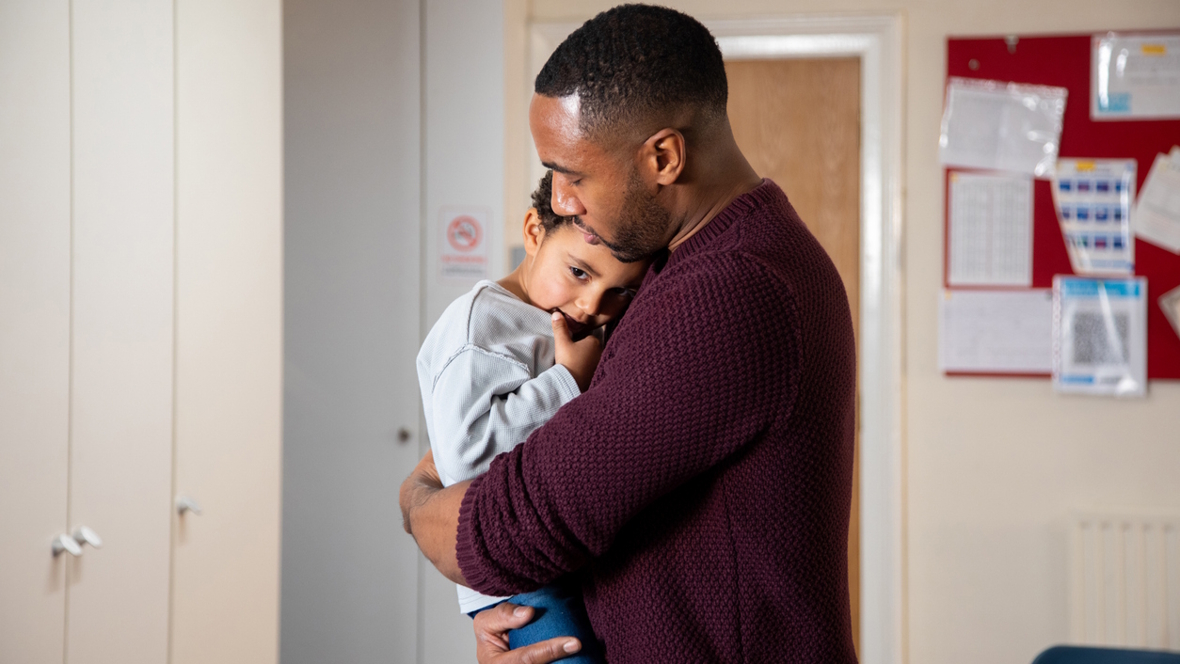

When we look at our kids, it’s almost impossible not to imagine their future and who they will be. What will they do? What will they love? We picture them getting their driver’s license, graduating, getting their first job and maybe even getting married. But what do we do when something unexpected forces us to shift — or even let go entirely of — some of those hopes and dreams?
Dr. Imamu Tomlinson, an ER doctor, author of “Less Than One Percent: How Disruptors Defy the Odds,” and CEO of Vituity, a physician-owned healthcare partnership, experienced this when his 4-year-old son had more than 500 seizures in less than nine months. This wasn’t the parenting path Tomlinson imagined, but it’s what taught him how to relinquish control and support his child where he is, not where he imagined he’d be.
A parenting perspective shift
“Before my son’s diagnosis, I felt like a ‘typical’ parent,” says Tomlinson. “I had expectations about who he would become and what I thought he could do.”
Like many parents, Tomlinson had envisioned a future for his child and looked ahead to milestones, imagining his son’s life unfolding in a familiar, predictable pattern. But the seizures abruptly shifted everything. The road ahead was no longer clear, and the certainty he once held as a father (and as a physician) began to blur.
As the seizures continued, Tomlinson realized that his parenting perspective needed to shift in a fundamental way. “In many ways, before his diagnosis, my parenting was about my hopes and dreams for him, instead of his hopes and dreams for what he could accomplish,” he says.
His son’s seizures were frequent and often unexplained. “I think the severity of the seizures made me realize that I had no control very early on,” Tomlinson says. “He would have 20 seizures a day at one point with no reason for them starting.” Tomlinson says that epilepsy often doesn’t have an etiology, most causes are unknown. “As a physician, I absolutely felt helpless. This was beyond my expertise and even the experts didn’t have an explanation.”
It was a lesson in surrendering expectations, not out of defeat, but out of love and necessity.
“In many ways, before his diagnosis, my parenting was about my hopes and dreams for him, instead of his hopes and dreams for what he could accomplish.”
“The seizures grounded me and made me take the small everyday wins that typically I overlooked in the past,” he says.
Reframing his idea of success for his son was essential for moving forward. And it didn’t mean giving up on a hopeful future.
“Seizure-free days were the new goal. Once we achieved that we had to refocus and he had to learn how to cope with the medicines and their side effects,” he says.
That shift brought with it a new rhythm to their family life, grounded in gratitude for daily victories.
“We celebrated everything. So, the striving became constant celebration and gratefulness for every seizure free moment we had together. I feel like that’s our relationship now. Keep striving but stopping frequently to celebrate daily wins.”
Despite his professional background, even Tomlinson found himself overwhelmed by the emotional toll of walking this journey with his son.
“As a physician, I thought I knew how to navigate everything, but I had to let go and just cry sometimes. It’s ok to be sad. You don’t have to figure everything out, but you have to be there right beside your child helping them through this tough time. You will make it together,” he says.
Finding support
When families face a crisis, especially one involving a child, the emotional, physical and logistical strain can be overwhelming and often leaves parents feeling isolated. In these moments, outside support can be incredibly important.
For Tomlinson, much of that support came from those closest to him: his immediate family.
You don’t have to figure everything out, but you have to be there right beside your child helping them through this tough time. You will make it together.”
“The biggest support was our family unit,” he says. “We were very private about what we were going through. But we were committed to making whatever life we had work.”
But amid all the challenges, one of the most unexpected and powerful sources of support and strength came from the person at the center of the crisis: his young son.
“I’d say the biggest supporter was my son. He was so strong. To go through that every day and wake up and try again and have a positive attitude,” he says. “I was amazed at his resilience at such a young age. His seizures started when he was 4 and I’ve never seen strength like that. He inspired me to keep my spirits up.”
Watching his child face each day with determination and hope motivated Tomlinson and reminded him what true strength looks like.
Lessons to share
“Parents need to switch from what [they] want for my child, to what does the child want and how can the parent support that,” says Tomlinson. “Honestly, expectations are mostly about the parents. Our job as parents is to create the environment for kids to create their own expectations.”
And when we as parents can step back and not put our own fears and expectations on our kids, they might really surprise us.
“Celebrate the small wins. Stick together. Stay in the present and tackle each obstacle as it comes. Be flexible. Love each other.”
“One of the moments that I recall is when we were arguing with the nurse at a hospital stay because he had to take six pills and he never had taken pills before,” recalls Tomlinson. “We were concerned about our ability to get him to take them. By the time we looked around, he had already taken the six pills. I had no control. It was his journey, and I had to support him.”
This experience has driven home the fact that there is no one way to parent kids. Often even siblings in the same household require different parenting techniques and approaches. Tomlinson wishes there were more parenting books out there addressing parenting during challenging times, and he urges parents to remember that no one — no matter how certain they sound — has it all figured out.
“Any book or person who says they’ve figured it out isn’t telling the truth. I still make mistakes as a parent today, but my mindset is to constantly work to improve and get better,” says Tomlinson.

Moving forward
Tomlinson’s family is still learning what their new normal looks like. Living with a complex medical condition is not a linear journey, but one that involves constant adjustment and learning. But what has become clear is that letting go of traditional parenting expectations has allowed space for a new kind of joy to enter their lives.
“I celebrate really small things,” he says. “When I see my kids are happy. Sometimes I celebrate what they wear and that they had a good night’s sleep. I try to celebrate the things that we take for granted when things are good, but we pray for every day when things are bad.”
Of course, parenting still involves setting boundaries and learning from mistakes.
“It doesn’t mean I don’t correct them. And it doesn’t mean I don’t talk about their failures,” he explains. “But I make sure we celebrate things we couldn’t when we were seizing every day.”
This reframing is a powerful mindset shift for any parent. In a world that often pushes for perfection and performance, Tomlinson offers a grounding reminder of what truly matters.
“Celebrate the small wins. Stick together. Stay in the present and tackle each obstacle as it comes. Be flexible. Love each other.”