
 Seattle Family Calendar
 Subscribe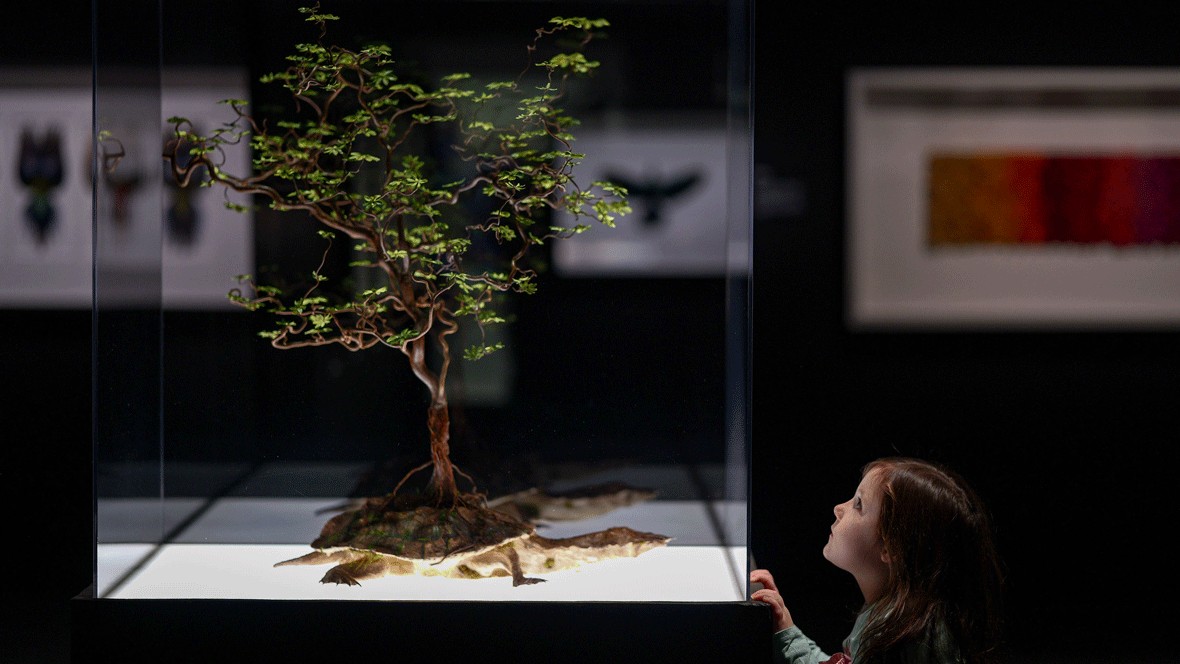

Many of our interactions with nature are fleeting, whether it’s a hummingbird that quickly sips from a feeder before flitting off, a small lizard that scurries under leaves at the sound of our approaching footsteps, or even a flower that blooms for a short period before the petals fall away. I’ve often found myself wanting to freeze time and get a closer look, especially with my young daughter.
That’s what intrigued me most about the “Exquisite Creatures” exhibit in Seattle: the opportunity to see preserved birds, reptiles, amphibians, insects and plants up close, pausing to appreciate their natural beauty and seeing them in a completely different way. I just knew I had to check it out with my family.
What families can expect
When we first walked into the exhibit, we were greeted warmly by the staff. Before viewing the exhibit, there is a short introductory video that gives a behind-the-scenes look at artist Christopher Marley’s process. We browsed the gift shop while waiting for our turn to be ushered into the mini theater (which was, admittedly, just long enough for my daughter to become emotionally attached to a plush axolotl).
The four-minute film gives a behind-the-scenes look at Marley’s approach to appreciating the natural world. He looks at it all from an artistic perspective — never once having taken a biology class — and allows each organism to tell its own story through his work. It’s a brief introduction to the artist and the exhibit, providing context ahead of viewing the art itself. After the film, we stepped inside the exhibit, where we were suddenly face-to-face with creatures in incredible displays.
Throughout “Exquisite Creatures,” you’ll see plants and animals from around the world, some of which we would otherwise not have the opportunity to see. Marley says, “I want [“Exquisite Creatures”] to be a catalyst for greater/renewed feeling of awe and wonder. This is why I’ve worked to source and represent species that are not widely known, and to creatively represent those that are, because discovery reignites such feelings. I want people to notice how nature, creativity, awe, wonder and gratitude are all connected.”
Marley’s work is hung in the gallery on black walls, with a layout that leads you naturally from piece to piece and ends back at the gift shop. Some of the organisms are displayed in glass cases on pedestals, drawing even more attention to the incredible detail found in nature (and allowing you to see it from all angles!).
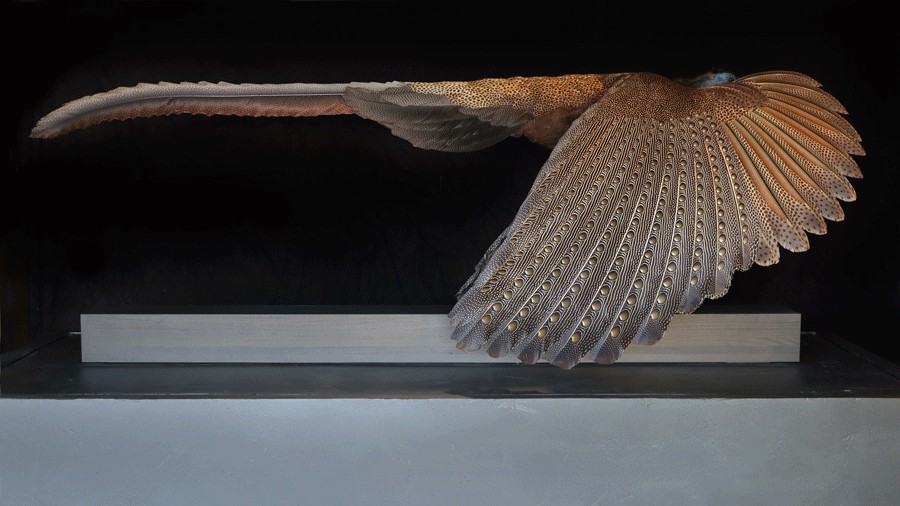
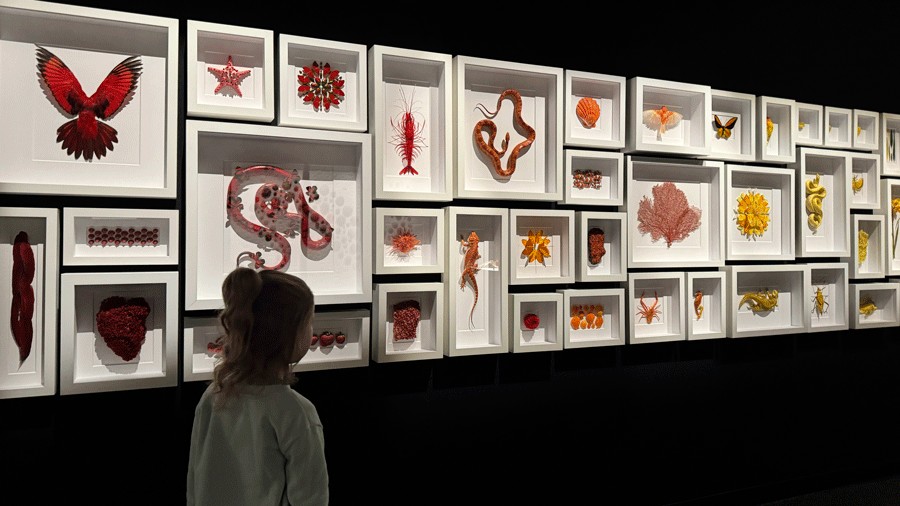
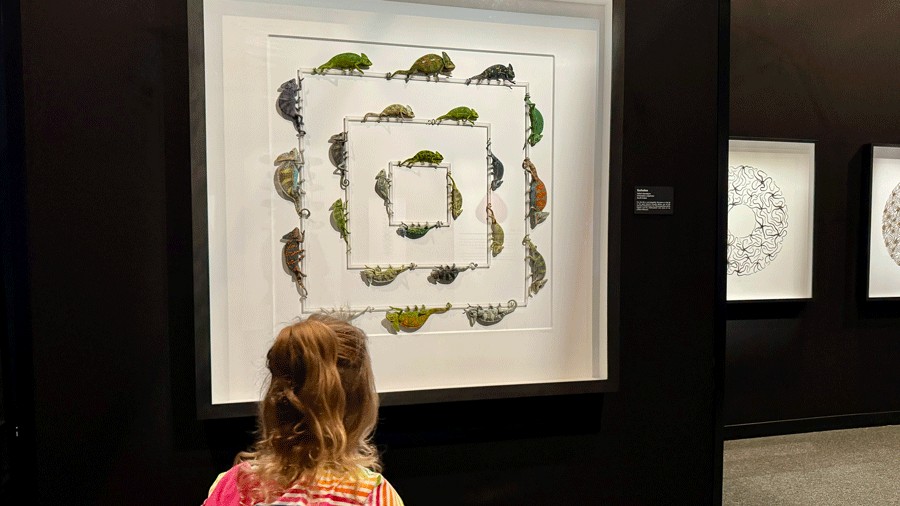
First, we were drawn to chameleons, gripping onto frames with their tails curled, as if they were midstep on a tree branch. There were birds in vibrant hues with their wings outstretched, and lizards racing toward the top of a frame. I was struck throughout the exhibit by the way Marley shows movement. It’s easy to forget that these animals are no longer alive.
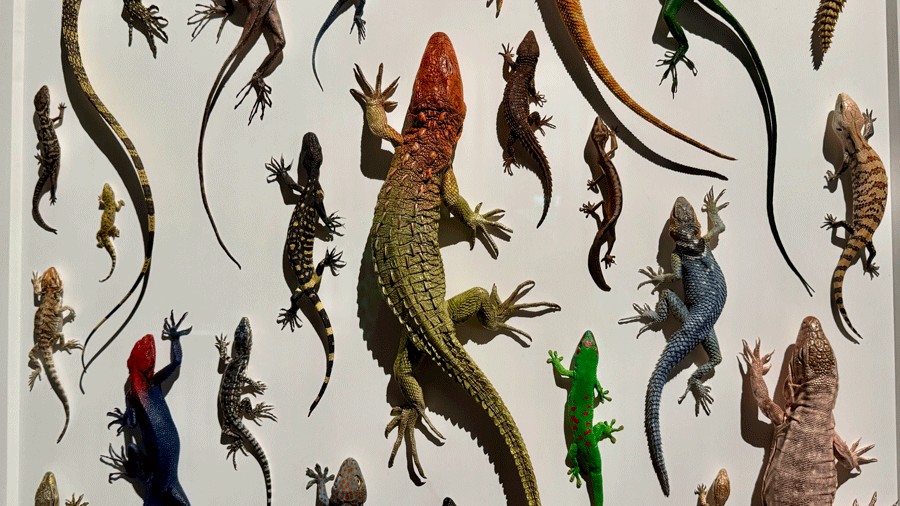
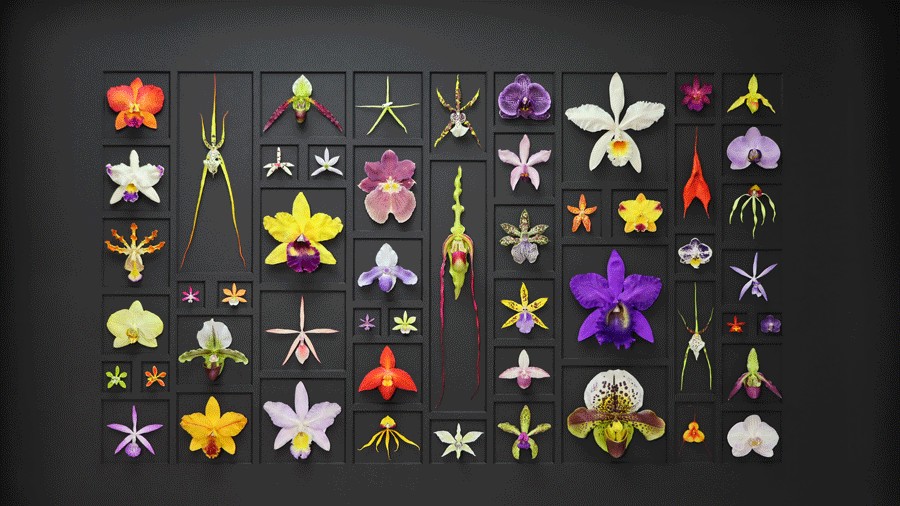
The exhibit is not limited to animals, either. In addition to the insects, reptiles, amphibians and oceanic creatures, you can expect to find stunning displays of flowers, cactuses, fossils and minerals. However, you won’t find any mammals (or, for different reasons that are explained, roaches).
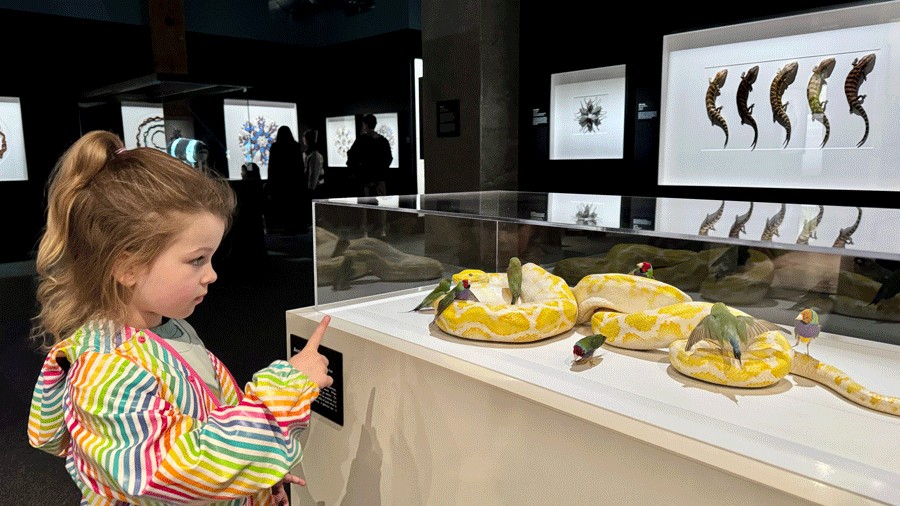
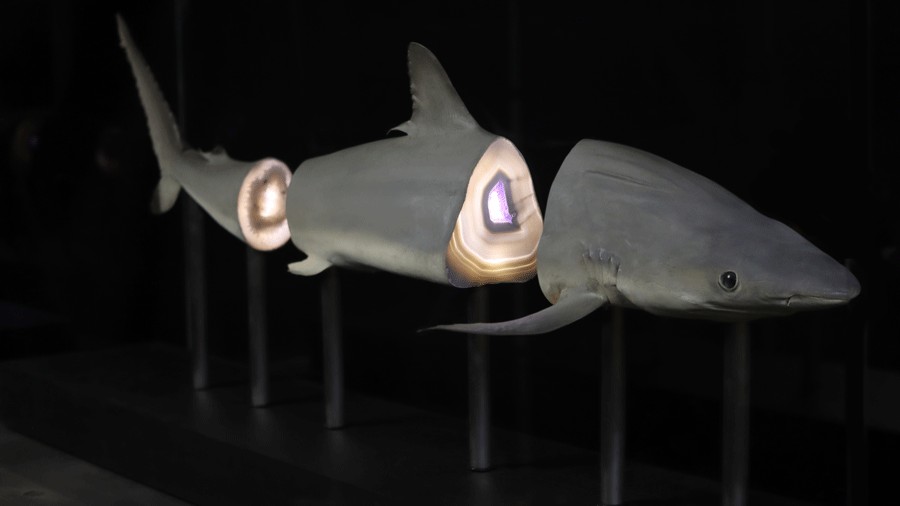
Nearly all the specimens in the exhibit are kept true to their natural form, but the artist does take a few creative liberties, from the preserved blacktip shark cut into sections with backlit agate, to a turtle with a contorted hazel tree growing from its back. Even a python appears to set aside its menacing ways as finches peacefully rest on it in Armistice.
Every color in the rainbow is represented in the exhibit, and vibrant hues are on full display. But even the color brown — what Marley refers to as “the most humble of hues” — gets a moment in the spotlight. Horned frogs, beetles, butterflies, parakeet eggs, katydids, turtles, damselflies and cowrie shells are carefully arranged in Marley’s Kaleidoscope in Brown. It’s worthy of close examination.
Soft music plays in the background, further encouraging reflection and slow movement through the exhibit. The exhibit balances this reverence for nature with clever quips and anecdotes on small black tiles next to each piece, bringing a bit of levity to the experience. For example, according to Marley, the blue tongue skink sticks out its tongue at potential predators “in an effort to make them feel so stupid that they attack some other animal instead.”
We spent an hour and a half exploring the exhibit, stopping at each work of art to admire the organisms and get a closer look at scales, feathers, petals and bones. I personally could have stayed even longer, as I felt like there were so many small details and more to appreciate the longer I looked at each piece of art. Alas, an hour and a half is about the limit for my little one’s attention span just before lunchtime.
Inspiring young artists and scientists
Marley’s work serves as an inspiration to budding artists and scientists alike. My young daughter was mesmerized by the geometric patterns, unique displays and creatures she had never seen before. The displays invited us to consider our own place in the Earth’s ecosystem and the incredible beauty found in nature.
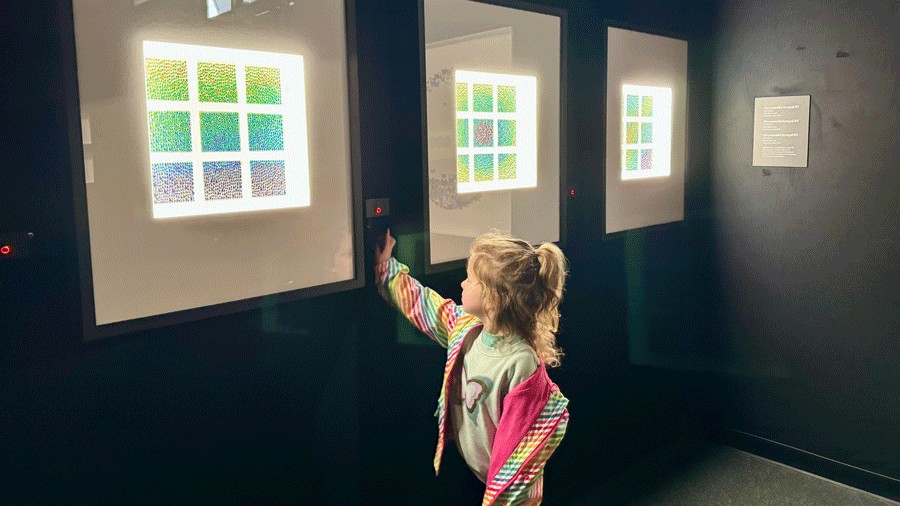
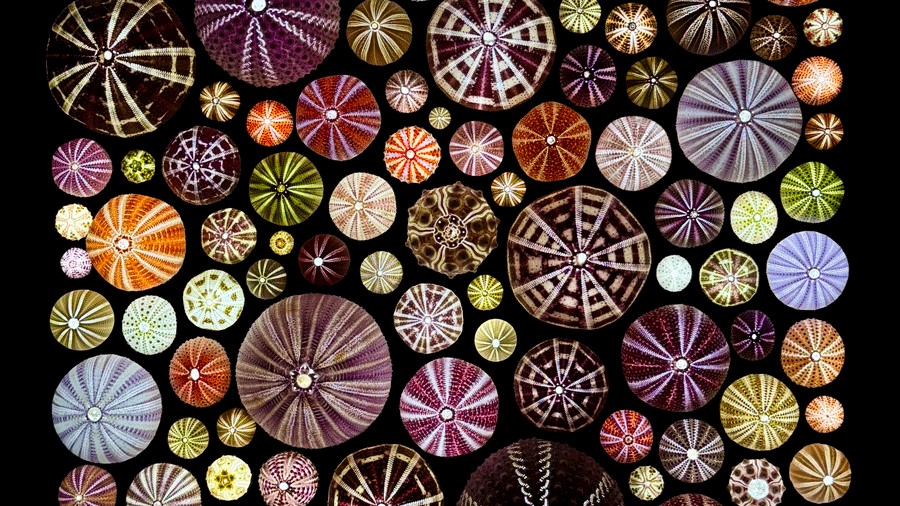
One of the pieces of artwork included a sliding magnifying glass, allowing us to pause and look closely at each insect in the frame. And the option to illuminate different works of art with the push of a button gave us another way to see the specimens and appreciate their natural beauty. The lighting, frames and displays are all made in-house by the artist and his team. (The backlit urchins were my favorite. My daughter, meanwhile, loved the snakes most.)
Marley has spent years developing his processes and evolving his art. His advice to young artists: “Create, create, create! Experiment with as many materials, ideas, techniques, mediums as you can. Don’t worry for one minute if it’s any good. No one cares and very few even know the difference.”
He adds, “The important thing is that you put as many hours in as you possibly can to first discover, then hone your skills. And the more volume you pile up and the faster you fail at as many things as you can, the quicker you can become truly excellent at what you love.”
Sourcing and preserving specimens
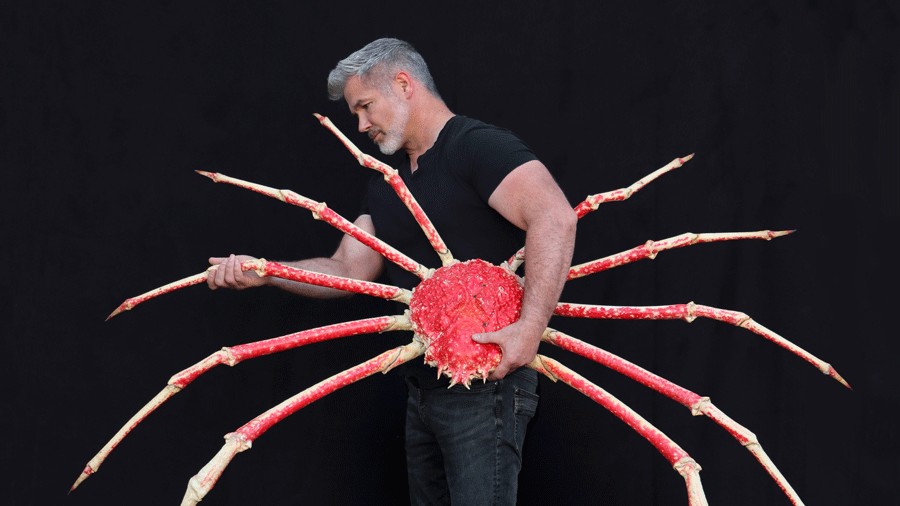
Marley ethically sources each specimen for the exhibit, relying on a network of institutions and individuals from around the world. (Two of the largest snakes in the exhibits were once beloved pets!) All of the vertebrates in the exhibit died of natural or incidental causes, including oceanic vertebrates that are bycatch from fishing vessels. Insects are farmed or collected in the wild by indigenous people. Marley is licensed by the U.S. Fish and Wildlife Service, and he keeps conservation efforts at the forefront of his work.
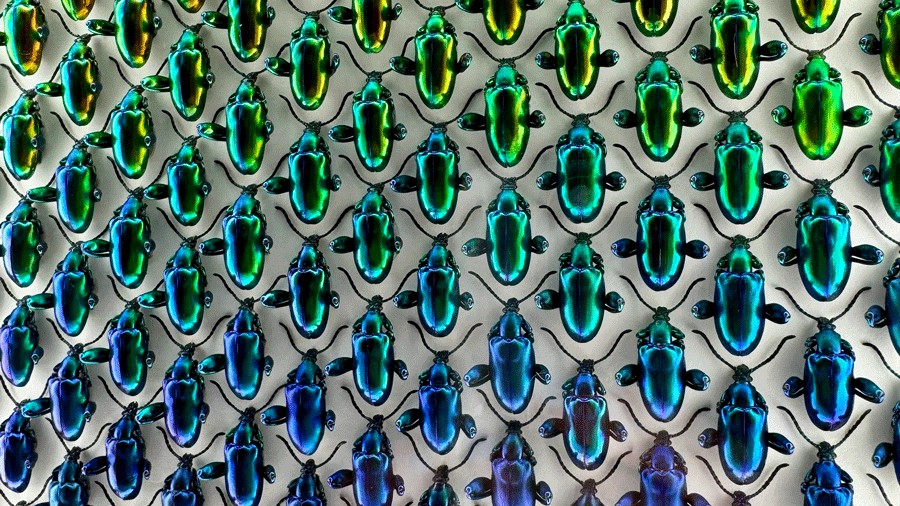
Marley’s process for preserving specimens differs from taxidermy, as each organism is kept intact and preserved in its original form. Marley explains, “Many of my processes are proprietary. I’ve been tinkering for nearly three decades and have been fortunate to stumble upon some methods that seem to work better. Nature herself seems to inform some of the preservation and restoration tricks that my team and I employ to make things look fresh forever. Again, nature and human creativity are intimately intertwined.”
What’s next for the exhibit
“Exquisite Creatures” has been temporarily displayed in museums and nature centers around the United States, most recently at the Oregon Museum of Science and Industry (OMSI) before landing in Seattle. Marley shares, “We’re most interested in creating a permanent home and Seattle is a top-tier contender! It is already looking like we will be extending our lease and staying longer than we’d planned. Perhaps forever!”
Marley is also continuously working on the exhibit and creating new pieces to share. He is planning a substantial update to the exhibit in April with 20 new pieces of art, giving visitors even more to appreciate (and an excuse to return!).
If you go to ‘Exquisite Creatures’ …
Location: “Exquisite Creatures” is located at 900 Alaskan Way in Seattle.
Dates: The exhibit has extended its run and will be open through March 30, 2027. New dates may be added; check the online calendar for up-to-date information.
Hours: The exhibit is open six days a week: Monday, Tuesday and Thursday from 10 a.m.–6 p.m.; Saturday, 10 a.m.–7 p.m.; and Sunday, 10 a.m.–5 p.m. It is closed on Wednesdays.
Cost: Timed-entry tickets can be purchased online and cost $34 for ages 13–64; $28 for ages 4–12; and $30 for ages 65 and older.
Parking: There is paid street parking as well as nearby paid parking lots. You can use SpotHero to find a parking spot in advance or take public transit.